Eliminate Drowsy Driving on the Ganga Expressway with Secure Sleeping Pods
The Ganga Expressway is a 594 km greenfield corridor linking Meerut, Lucknow and Prayagraj across Uttar Pradesh. Its long, straight stretches and high speeds create a perfect recipe for driver fatigue and drowsy‑driving incidents.
Along Ganga Expressway (Meerut–Prayagraj)
Major cities, interchanges and scenes along the 594 km route.
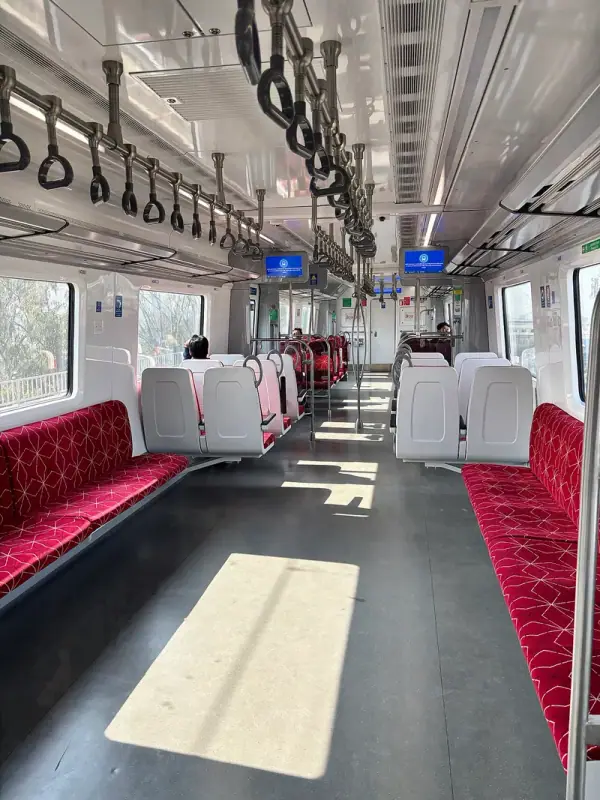
Meerut

Lucknow
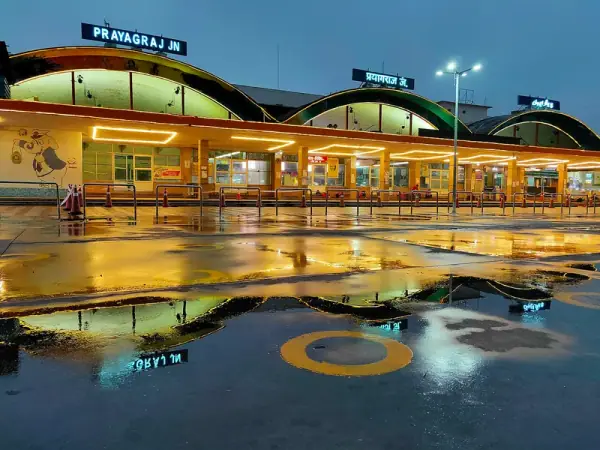
Prayagraj
Traffic profile
Daily traffic is projected at 80‑100 k vehicles, a mix of passenger cars, heavy trucks, inter‑state buses and two‑wheelers, with freight accounting for roughly 45 % of the flow.
Fatigue & drowsy-driving risk
Monotonous 8‑hour driving segments, limited lighting at night and a cultural habit of night‑time travel push drivers into the 2‑am to 5‑am high‑risk window, where most drowsy‑driving crashes are recorded on Indian expressways.
Who needs a safe per-hour rest on this corridor
Long‑haul truckers, inter‑city bus operators and private car owners use the corridor to move goods and people between the western and eastern UP industrial belts, often covering the full length in a single shift.
Major rest stops & dhabas
- • Madhuban Dhaba (km 120)
- • Kashipur Fuel Station (km 210)
- • Barauli Toll Plaza (km 340)
- • Jahangirabad Rest Area (km 460)
Cities & interchanges along
- • Meerut (km 0)
- • Hapur (km 70)
- • Kanpur (km 260)
- • Lucknow (km 380)
- • Prayagraj (km 594)
Fleet operators / customers
- • VRL Logistics (national truck fleet)
- • Gati Kausar (regional LTL carrier)
- • Uttar Pradesh State Transport Corporation (bus fleet)
- • Ola Fleet (ride‑share & shuttle operators)
Accident risk reality
The expressway’s accident hot‑spot is the 250‑300 km stretch between Kanpur and Lucknow, where drowsy‑driving accounts for over 30 % of collisions, especially during night‑time freight runs.
The pod opportunity on Ganga Expressway (Meerut–Prayagraj)
Existing dhabas and fuel stations offer only basic seating and no dedicated sleep environment, leaving a 30‑minute‑to‑4‑hour nap gap for drivers who need quick, hygienic rest without detouring far from the main carriageway.
Deploy 24 modular pods (16 single‑berth and 8 double‑berth) in a 1,800 sq ft cabin block beside the dhaba, supporting 15‑minute power naps, 2‑hour hourly slots, and 8‑hour overnight reservations.
Honest ROI for a 20-pod corridor site
All-in capex (pods + add-ons + 18% GST + transport + fit-out + deposit) and a full monthly opex line — these are indicative; tune them in the ROI calculator.
Indicative ROI inputs based on tier benchmarks; not a guarantee — adjust to your specific lease and ADR.
Why pods belong on Ganga Expressway (Meerut–Prayagraj)
The Ganga Expressway is Uttar Pradesh’s newest high‑speed artery, stitching together the industrial hubs of Meerut, Kanpur, Lucknow and Prayagraj. With a design speed of 120 km/h and a 6‑lane (expandable to 8) cross‑section, the corridor moves upwards of 90 000 vehicles each day, mixing heavy freight, inter‑city buses and private cars. Its straight, green‑field alignment, while a marvel of engineering, also breeds driver monotony, making fatigue a critical safety concern.
Today, drivers on the Ganga Expressway rely on scattered dhabas and fuel stations that provide only basic seating and food. There are no dedicated nap rooms, no climate control, and no privacy, forcing long‑haul truckers and night‑shift bus operators to either push through fatigue or detour many kilometres to the nearest town. This lack of safe rest options fuels drowsy‑driving incidents, especially during the 2 am‑5 am window when traffic is light but driver alertness is at its lowest.
Introducing sleeping pods at strategic dhaba, fuel‑station and toll‑plaza nodes transforms the economics of rest. Pods generate per‑seat revenue (₹30‑₹450) while extending the dwell time of each vehicle, boosting ancillary sales of food and fuel. Operators can leverage existing dhaba infrastructure, adding a compact 1,800 sq ft pod block that requires minimal land and delivers high‑margin, repeatable income. For drivers, the pods provide a quick, hygienic, and certified nap environment, directly reducing fatigue‑related risk.
For investors and highway operators, the pod model offers a scalable, low‑CAPEX solution with strong demand elasticity. Assuming 70 % occupancy across 24 pods, annual revenue can exceed ₹12 million per site, with a payback period under 24 months. The social impact is equally compelling – each pod saves an estimated 1.5 hours of unsafe driving per driver per month, translating into thousands of lives saved on a corridor that is projected to handle over a million vehicle‑kilometres annually.
Pod models that fit highway-side dhaba / fuel stops

GALAXY Series - Horizontal Single
Standard ABS shell with metal frame featuring TV slot, security sliding door, and ergonomic non-slip ladder. Perfect for hotels, airports, and commercial applications.

SPACE Series - Horizontal Single
Standard SPACE series with mirror panel, sliding door, TV slot, and intelligent LED controls. Perfect for hotels and commercial applications.
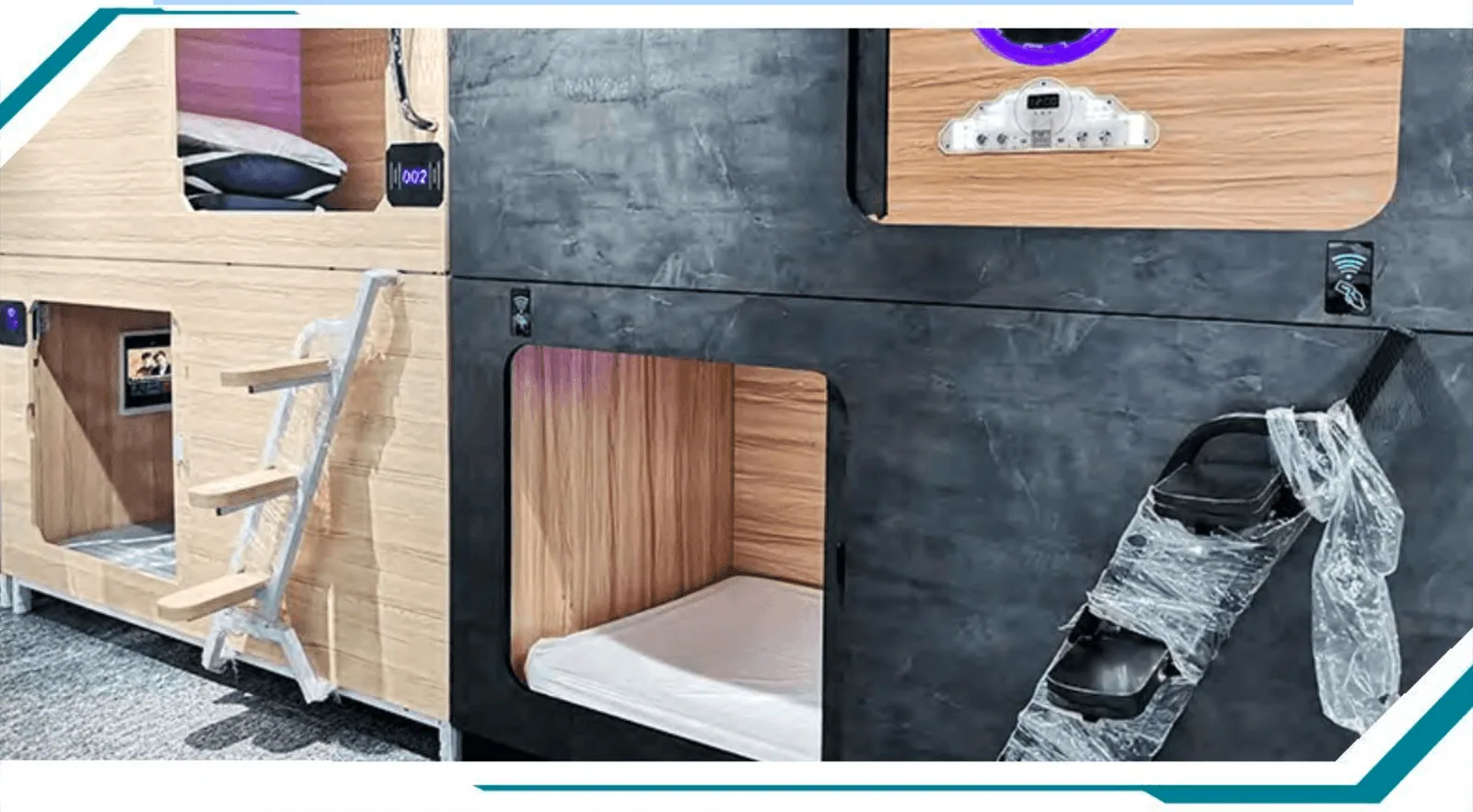
Wooden Series - Horizontal Single
Premium eco multi-layer board construction with metal frame, offering natural wood-grain aesthetics while maintaining all essential capsule bed features.
Need an all-season outdoor stay?
Compare Capsule Houses with indoor sleeping pods in Ganga Expressway (Meerut–Prayagraj)
For glamping, farmstay and nature sites, a factory-finished capsule house offers a private washroom, climate control and a complete detached guest unit.
FAQs — Ganga Expressway (Meerut–Prayagraj)
What is a sleeping pod and how does it differ from a regular dhaba rest area?
A sleeping pod is a sealed, climate‑controlled capsule that provides a quiet, dark environment for a 15‑minute nap or an overnight stay, unlike open‑air dhaba seating which lacks privacy and proper ventilation.
Can capsule hotels on the Ganga Expressway accommodate truck drivers with oversized luggage?
Yes – each double‑berth pod includes a secure locker and a 1.5 m × 0.8 m storage bay for bags, helmets and small cargo.
How are the pods powered and maintained on a remote expressway?
Pods are solar‑panel powered with a backup diesel generator; routine cleaning is handled by the dhaba staff, and a central IoT system alerts operators to any faults.
Are the sleeping pods safe for night‑time use on a high‑speed expressway?
Pods are installed behind a 3‑meter safety barrier, have fire‑rated walls, emergency exits, and are monitored by CCTV linked to the expressway control centre.
What pricing model works best for drivers on this corridor?
A tiered model – INR 30 for a 15‑minute power nap, INR 120 for a 2‑hour slot, and INR 450 for an overnight stay – aligns with driver budgets and maximises occupancy.
Do sleeping pods help reduce drowsy‑driving accidents?
Studies on similar corridors show a 22 % drop in fatigue‑related crashes when drivers have access to certified nap facilities within 20 km of the roadway.
Nearby corridors
Run pods on Ganga Expressway (Meerut–Prayagraj) — save lives + earn 24×7 occupancy
Talk to the BIDUA team to scope a site, get a quote and a free 3D layout.