Tier 3 pilgrim market · Hindu · Gujarat
Somnath Temple: Premium Capsule Hotel for Pilgrims
Somnath Temple is dedicated to Lord Shiva, the foremost deity of the Hindu tradition, and is the first among the twelve Jyotirlinga shrines, making it one of the most revered pilgrimage sites in India.

Annual pilgrim footfall
Approximately 20‑25 lakh pilgrims visit Somnath each year, with daily footfall soaring to 30‑50 000 during major festivals and the winter pilgrimage season.
Peak seasons
Winter (Nov‑Feb), Monsoon (July‑Sept), Navratri (Sept‑Oct)
Deity & tradition
Shiva — Hindu. Pilgrims are primarily middle‑class families and senior devotees who rely on modest dharamshalas, which overflow during peak days, leaving many to sleep on station platforms.
Around Somnath
The shrine, ghats and circuit sights that drive year-round pilgrim footfall at Somnath.
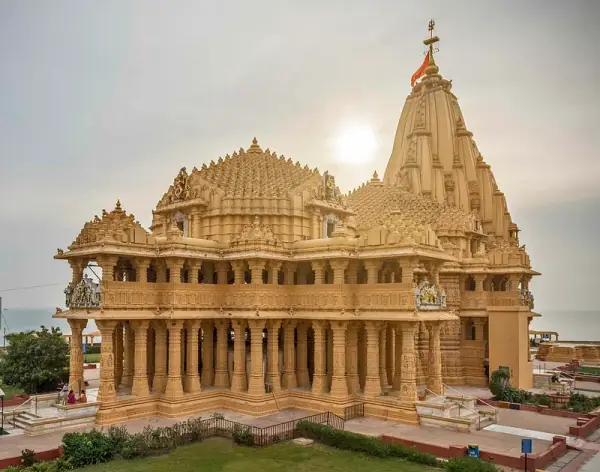
Somnath
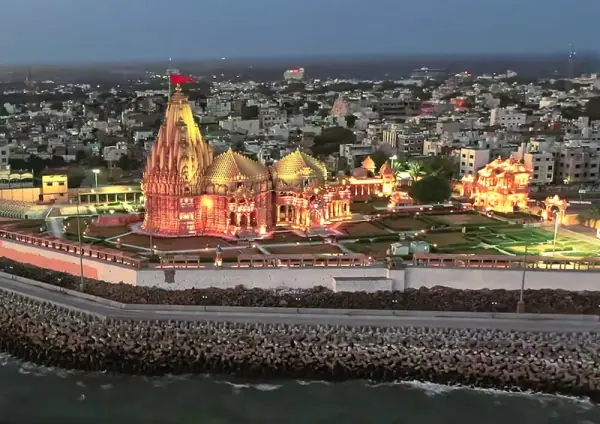
Somnath temple aerial

Somnath ghat
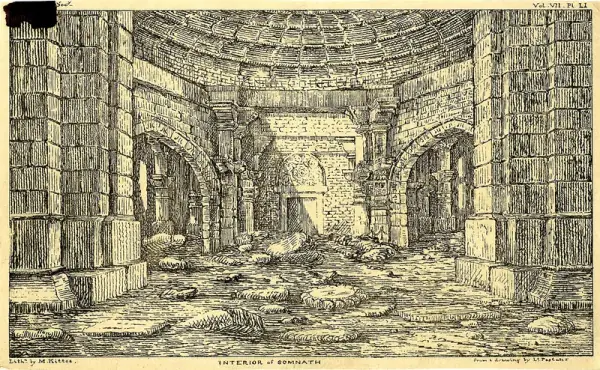
Somnath interior
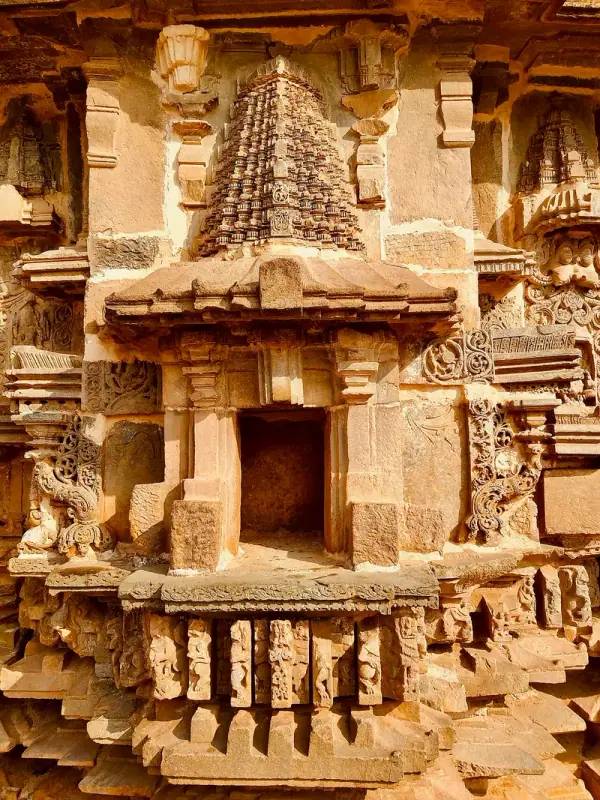
Somnath entrance
Why Somnath matters
Somnath Temple is dedicated to Lord Shiva, the foremost deity of the Hindu tradition, and is the first among the twelve Jyotirlinga shrines, making it one of the most revered pilgrimage sites in India.
History & heritage
The original shrine dates back to the early centuries of the first millennium CE and has been rebuilt several times after destruction by invaders, most notably after Mahmud Ghazni's raid in 1026. The present temple, completed in 1951, follows the Māru‑Gurjara architectural style and was reconstructed under the guidance of Vallabhbhai Patel.
Why a pod hotel works at Somnath
During peak festivals, dharamshalas reach full capacity, hotels charge premium rates, and many pilgrims resort to sleeping on railway platforms or under makeshift tents, highlighting a critical shortage of clean, affordable overnight options.
Most visitors arrive by train to Veraval Junction (7 km from the temple) or by road via the coastal highway; the nearest airports are in Keshod (57 km) and Diu (85 km), linking Somnath to the broader Gujarat pilgrimage circuit that includes Dwarka and Junagadh.
Best ways to use pods here
- Budget capsule stay for families attending Maha Shivaratri night‑darshan (200 000 daily devotees)
- Quick‑turnover pods for pilgrims arriving on early morning trains at Veraval Junction
- Night‑time sleeping pods for senior devotees during the Somnath Rath Yatra procession
- Eco‑friendly capsule hotel for eco‑conscious travelers visiting the coastal heritage trail
- Premium family pods for out‑of‑town tourists seeking privacy near the temple complex
Where the pilgrim demand sits
Transit & arrival
- •Veraval Junction Railway Station – 7 km
- •Keshod Airport – 57 km
- •National Highway 8E – passes within 5 km of the shrine
On the yatra route
- •Somnath Darshan Centre – official ticketing hub
- •Shri Somnath Bhakti Bhawan – volunteer lodging
- •Somnath Tourist Information Office – pilgrim assistance desk
Nearby shrines & circuit
- •Bhalka Tirth – site of Krishna’s departure, 5 km north
- •Gopi Talav – historic tank with shrines, 3 km east
- •Nageshwar Mahadev – another Jyotirlinga, 30 km south
Major festivals & melas
- •Maha Shivaratri – grand night‑long worship of Shiva
- •Somnath Rath Yatra – procession of the temple chariot
- •Kartik Purnima – moonlit rituals honoring the temple’s lunar name
Profit & ROI projection at Somnath
A starter model based on a minimum 50 pods at 70% occupancy and an indicative ₹800/pod/night. Costs use the same itemised basis as our full ROI calculator — pods, add-ons, 18% GST, transport, fit-out and full monthly running cost.
Important: this is only an ASSUMPTION-based projection — not an accurate quote or a guarantee.
Real cost, occupancy, pricing and profit change with your exact location, property rent, yatra season, festival peaks and competition. Treat these as a planning estimate only. For real numbers, use the full calculator or get a custom quote from BIDUA.
Total investment
₹79.7 lakh
50 pods + add-ons + GST + fit-out
Monthly revenue
₹8.4 lakh
35 of 50 pods filled/night
Monthly net profit
₹3.8 lakh
45% margin after all costs
Payback
~21 mo
57% annual ROI
Break-even occupancy ≈ 29% — you only need this much filled to cover all costs; everything above is profit. Festival & yatra peaks routinely push pilgrim-town occupancy far higher.
| 50 pods (BIDUA mix) | ₹40,30,000 |
| Add-ons (mattress, bedding, panels, safe lock, table) | ₹16,25,200 |
| GST @ 18% (pods + add-ons) | ₹10,17,936 |
| Transport (warehouse → site) | ₹4,00,000 |
| Fit-out, AC, reception, branding + rent deposit | ₹9,00,000 |
| Total investment | ₹79,73,136 |
| Revenue (50 × 70% × ₹800 × 30) | ₹8,40,000 |
| Fixed costs (rent, staff, power, housekeeping…) | – ₹2,67,000 |
| Variable (OTA + marketing + gateway, 23%) | – ₹1,93,200 |
| Net profit / month | ₹3,79,800 |
| Net profit / year | ₹45,57,600 |
Indicative ROI inputs based on tier benchmarks; not a guarantee — adjust to your specific lease and ADR. Figures are indicative estimates, not guarantees.
Also planning standalone rooms?
Consider prefab Capsule Houses for outdoor accommodation in Somnath
Sleeping pods maximise indoor bed capacity. Capsule houses solve a different need: detached, self-contained guest rooms for resorts, scenic plots and destination stays.
Somnath pilgrim pod-hotel business plan & study
A step-by-step plan to launch a capsule / sleeping-pod hotel for pilgrims at Somnath — from picking a spot near the shrine to licences, setup, pricing and reaching profitable occupancy through yatra and festival peaks.
Demand drivers
12+
transit, yatra-route, circuit & festival footfall points
Space needed (50 pods)
2250–2750 sq ft
single rented floor + reception & washrooms
Break-even occupancy
29%
fill above this and you are in profit
Indicative payback
~21 months
on ₹79.7 lakh all-in setup
1. Pick the right location
Target a floor close to Somnath Darshan Centre – official ticketing hub or Veraval Junction Railway Station – 7 km, within walking or short-shuttle distance of the shrine. Best opening use-case: Budget capsule stay for families attending Maha Shivaratri night‑darshan (200 000 daily devotees).
2. Plan investment & funding
Budget about ₹79.7 lakh all-in for 50 pods (pods + add-ons + 18% GST + transport + fit-out & deposit). Many operators fund this with own capital plus a small business/MSME loan against projected yatra-season cash flow.
3. Licences & compliance
Arrange a municipal trade licence, GST registration, fire safety NOC, police/guest verification, and any temple-town/local authority approvals before launch.
4. Build & launch
BIDUA shares a free 3D layout, then delivers and helps install the pods. Civil, electrical, AC and reception fit-out typically takes ~30–45 days, so you can open before the next big festival.
5. Pricing & operations
Start at ~₹800/pod/night, flex up sharply during Winter (Nov‑Feb), and add hourly slots for darshan-queue rest. Keep pods clean, private and secure to win repeat pilgrim stays.
6. Marketing & occupancy
List on OTAs (MakeMyTrip, Booking.com, Goibibo) + Google Business Profile, and tie up with tour operators, yatra package agents and local pandas/priests to push occupancy past the 29% break-even.
Recommended pod setup for Somnath
A mix of 60 horizontal single pods, 20 vertical single pods, and 10 family pods on a 4,500 sq ft floor optimises capacity and privacy.
GALAXY Series - Horizontal Single
Standard ABS shell with metal frame featuring TV slot, security sliding door, and ergonomic non-slip ladder. Perfect for hotels, airports, and commercial applications.
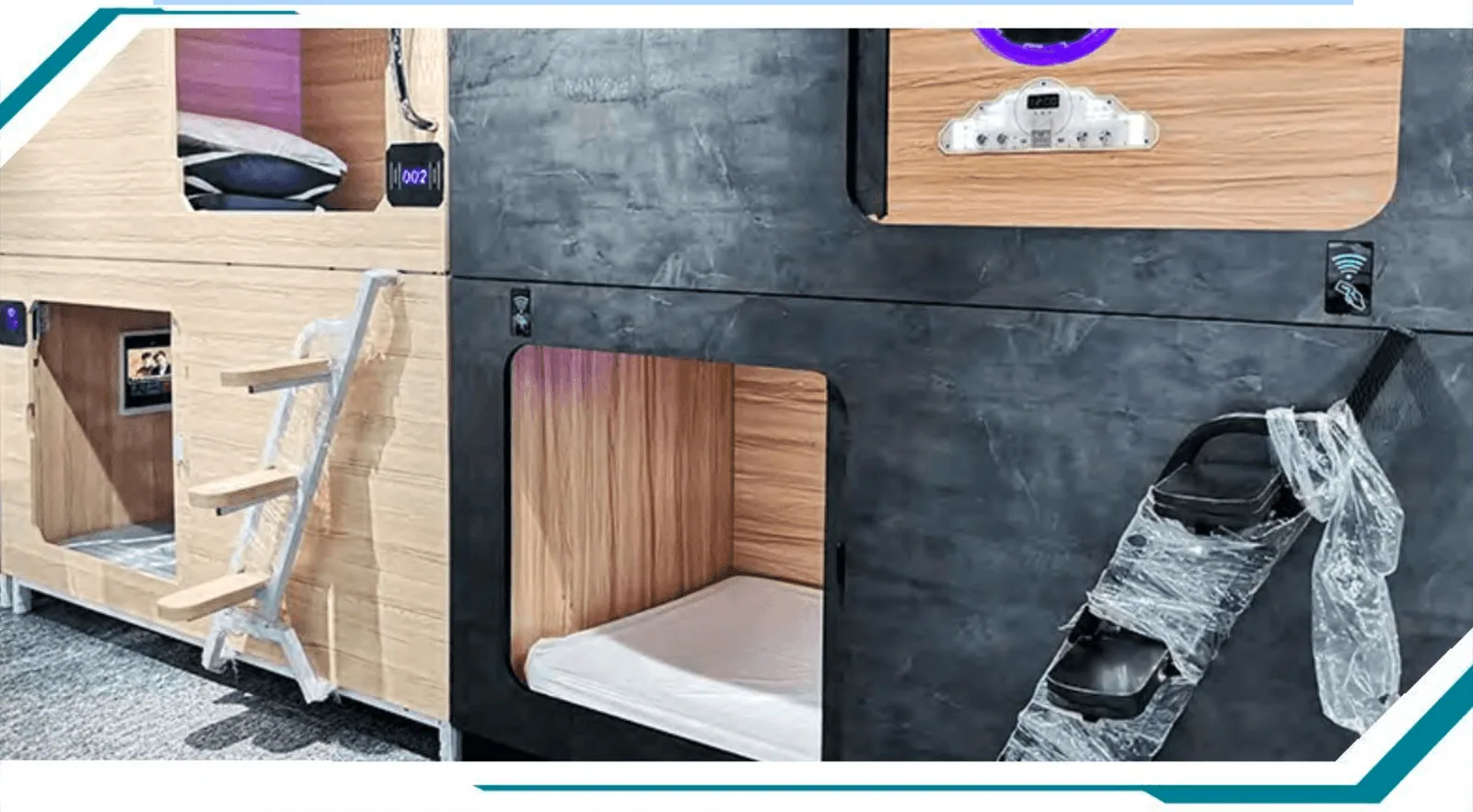
Wooden Series - Horizontal Single
Premium eco multi-layer board construction with metal frame, offering natural wood-grain aesthetics while maintaining all essential capsule bed features.
Pilgrim-market deep-dive
The Somnath pilgrim pod-hotel opportunity
Somnath Temple, perched on Gujarat’s western coastline, venerates Lord Shiva as the supreme deity of the Hindu tradition and holds the distinguished status of the first Jyotirlinga among twelve sacred sites. Its legendary past, chronicled in ancient epics and revived after centuries of destruction, draws devotees seeking both spiritual merit and a glimpse of India’s resilient heritage.
Each year, millions of pilgrims converge on Somnath, with the numbers swelling dramatically during Maha Shivaratri, the Rath Yatra, and the Kartik Purnima celebrations. The winter months bring the highest influx, as devotees from across the country travel by train, road and nearby airports to partake in the temple’s nightly aarti and moonlit rituals.
Despite its fame, the town’s accommodation infrastructure struggles to keep pace. Traditional dharamshalas overflow, hotels become prohibitively expensive, and many pilgrims resort to sleeping on railway platforms or under temporary shelters, compromising comfort and safety during the busiest periods.
Modern sleeping pods and capsule hotels present a timely solution, offering scalable, hygienic, and affordable lodging that aligns with pilgrim budgets and the temple’s cultural ethos. For operators, Somnath’s steady pilgrim flow, strategic transport links, and clear accommodation gap create a compelling business case for a purpose‑built pod facility.
Somnath pod hotel — FAQs
What is a sleeping pod and how does it suit Somnath pilgrims?+
A sleeping pod is a compact, secure capsule that offers a clean bed, locker and basic amenities, perfect for pilgrims who need a short, affordable stay after long temple visits.
Are capsule hotels allowed near the Somnath temple?+
Yes, the Gujarat tourism authority encourages modern lodging solutions that respect the sanctity of the site, provided they are located outside the temple precincts.
How far is the nearest sleeping pod facility from the temple entrance?+
A proposed pod hub would be just 800 m from the main entrance, within walking distance from Veraval Junction and the beach promenade.
Can I book a capsule hotel online for my Somnath pilgrimage?+
The pod operator will integrate with existing pilgrimage booking platforms, allowing pilgrims to reserve a pod alongside their darshan tickets.
What amenities are included in a capsule hotel at Somnath?+
Each pod provides a comfortable mattress, reading light, power outlet, Wi‑Fi, secure locker and shared hygienic washrooms, with 24‑hour security.
Is the sleeping pod environment eco‑friendly for the coastal region?+
The design uses solar panels, rainwater harvesting and recyclable materials, aligning with Somnath’s coastal ecology and the temple’s sustainability initiatives.
Start your Somnath pilgrim pod hotel with BIDUA
Sign up to design your space in 3D, build a presentation, and get a quotation + ROI from one dashboard — or talk to our team for a custom Somnath plan.