Tier 3 pod-hotel market · Madhya Pradesh
Sleeping Pod & Capsule Hotel in Dindori, Madhya Pradesh
Scheduled Tribes form 64.69% of the population (predominantly Gond, with the primitive Baiga group); Gondi is spoken by ~14%. This is a road-access, pilgrimage-transit and government/NGO-traffic market, not a metro hospitality market.
Population & catchment
District ~704,524 (2011 Census); estimated ~8.5 lakh in 2026. Dindori town itself is small at ~21,300 (2011).
Urban pull
Only 4.59% urban — one of the most rural, tribal districts in Madhya Pradesh.
Economic base
Dindori is a forest-and-farming tribal district on the upper Narmada with almost no organised industry — the 2011 Census records 64.69% Scheduled Tribes and just 4.59% urban population, and the district was officially classed among India's most backward districts. The real economy runs on rain-fed agriculture (paddy, kodo-kutki millets, maize), minor forest produce — tendu leaf, bamboo, lac, mahua — and government, NGO and tribal-welfare spending. Tourism around the Ghughua fossils, Narmada pilgrimage and the Kanha–Amarkantak circuit is the main outside-money inflow.
Around Dindori
Key landmarks and footfall hubs that drive short-stay demand in Dindori.
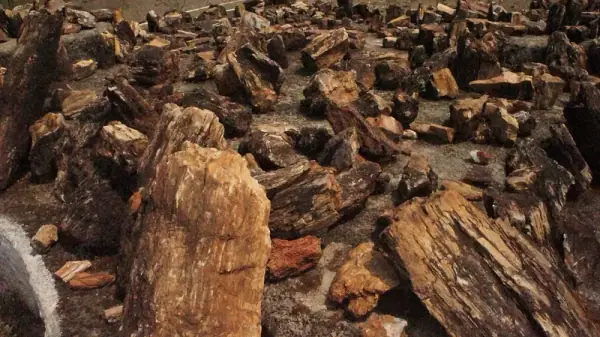
Ghughua National Fossil Park, Dindori
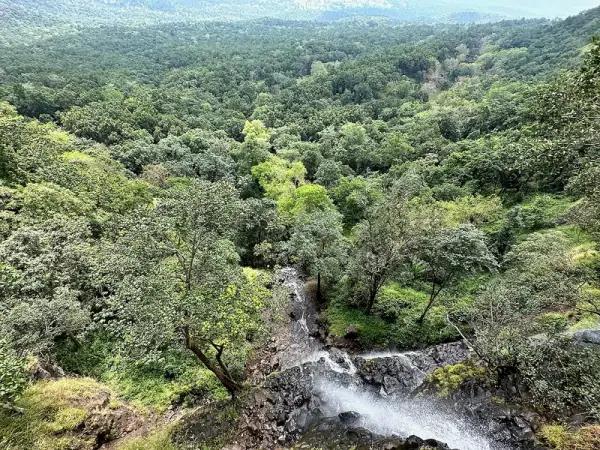
Narmada source temple at Amarkantak (~75 km from Dindori)
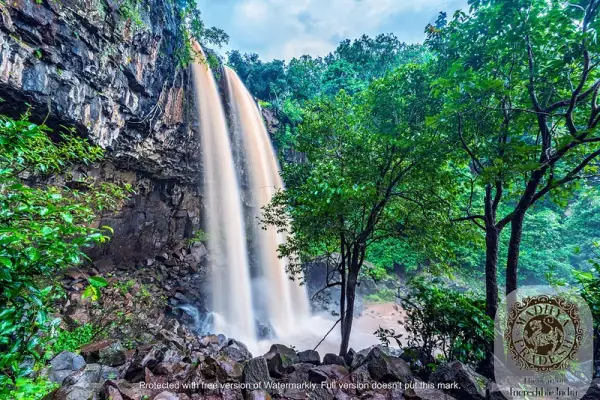
Kapildhara Falls, Amarkantak

Narmada River, Madhya Pradesh
Why a pod hotel works in Dindori
Dindori has no branded budget hotels and no organised stay infrastructure — visitors today choose between a handful of basic lodges in the town or driving 100+ km to Jabalpur. A clean, secure, low-footprint capsule-hotel fills the gap for road-transit travellers, hospital attendants, touring government/NGO staff and pilgrims heading to Amarkantak, none of whom are served by an affordable, dignified overnight option.
Dindori has no railway station and no airport of its own; the nearest railheads are Umaria (108 km), Pendra Road (115 km) and Jabalpur Junction (146 km), and the nearest airport is Jabalpur (Dumna, ~146 km). All inbound traffic arrives by road on NH-43/NH-45 and SH buses linking Jabalpur, Mandla, Shahdol and Bilaspur — so the district town is a genuine road-transit overnight point for travellers who miss connections or break the long Jabalpur–Bilaspur / Amarkantak journey.
Best ways to use pods here
- Road-transit travellers breaking the Jabalpur–Amarkantak–Bilaspur journey at the Dindori bus-junction (no railway, no airport)
- Pilgrims and tourists overnighting before the ~75 km run to the Narmada source at Amarkantak or the Kanha safari gates
- Attendants of patients at District Hospital Dindori needing safe, cheap nightly stay near the town
- Touring government officers, forest staff, NGO and survey teams working across the seven tribal blocks
- Visitors to Ghughua National Fossil Park, Karopani Deer Park and the Narmada riverfront wanting a short, low-cost stay
Where the demand sits in Dindori
Transit & travel
- •Dindori bus stand (Jabalpur–Bilaspur–Shahdol road junction)
- •Umaria railway station (108 km)
- •Pendra Road railway station (115 km)
- •Jabalpur Junction railway station (146 km)
- •Jabalpur Dumna Airport (146 km)
- •NH-43 / Jabalpur–Amarkantak highway corridor
Healthcare demand
- •District Hospital Dindori
- •Community Health Centres at Shahpura, Bajag and Karanjiya
- •Referral linkage to NSCB Medical College & Hospital, Jabalpur (146 km)
Education & coaching
- •Government PG College, Dindori
- •Government polytechnic / ITI Dindori
- •Eklavya Model Residential Schools (tribal) across blocks
- •Kendriya Vidyalaya Dindori
- •Coaching aspirants travelling to Jabalpur for higher studies
Industry & trade
- •Bamboo and tendu-leaf (beedi) collection economy
- •Lac and minor forest produce (MFP) trade
- •Kodo-kutki millet processing units
- •Khadi & handloom / Baiga-Gond craft clusters
- •Stone and minor-mineral quarrying
Tourism & pilgrimage
- •Ghughua National Fossil Park (65-million-year plant fossils, near Shahpura)
- •Kakurramath / Rinmukteshwar (Kukurramath) Shiva Temple
- •Karopani Natural Deer Park
- •Jhir Jhira, Devnala and Neosa waterfalls
- •Narmada riverfront at Dindori town
- •Ramgarh — Rani Avantibai Lodhi heritage site
- •Amarkantak Narmada source (~75 km, Anuppur)
- •Kanha Tiger Reserve (via Mandla, ~120 km)
Profit & ROI projection for Dindori
A starter model based on a minimum 50 pods at 70% occupancy and an indicative ₹750/pod/night. Costs use the same itemised basis as our full ROI calculator — pods, add-ons, 18% GST, transport, fit-out and full monthly running cost.
Important: this is only an ASSUMPTION-based projection — not an accurate quote or a guarantee.
The real cost, occupancy, pricing and profit will change with your exact location, property rent, season, competition and how you run the business. Treat these figures as a planning estimate only. For real numbers, use the full calculator or get a custom quote from BIDUA.
Total investment
₹88.7 lakh
50 pods + add-ons + GST + fit-out
Monthly revenue
₹7.9 lakh
35 of 50 pods filled/night
Monthly net profit
₹3.3 lakh
42% margin after all costs
Payback
~27 mo
45% annual ROI
Break-even occupancy ≈ 32% — you only need this much filled to cover all costs; everything above is profit.
| 50 pods (BIDUA mix) | ₹40,30,000 |
| Add-ons (mattress, bedding, panels, safe lock, table) | ₹16,25,200 |
| GST @ 18% (pods + add-ons) | ₹10,17,936 |
| Transport (warehouse → site) | ₹4,00,000 |
| Fit-out, AC, reception, branding + rent deposit | ₹18,00,000 |
| Total investment | ₹88,73,136 |
| Revenue (50 × 70% × ₹750 × 30) | ₹7,87,500 |
| Fixed costs (rent, staff, power, housekeeping…) | – ₹2,77,000 |
| Variable (OTA + marketing + gateway, 23%) | – ₹1,81,125 |
| Net profit / month | ₹3,29,375 |
| Net profit / year | ₹39,52,500 |
Indicative Tier-3 tribal-town assumptions for Dindori — actual ADR, rent and fit-out depend on the exact site, season (Narmada/Amarkantak pilgrim peaks) and local demand; not a guaranteed return. Figures are indicative estimates, not guarantees.
Dindori pod-hotel business plan & study
A step-by-step plan to launch a capsule / sleeping-pod hotel in Dindori — from picking the right location to licences, setup, pricing and reaching profitable occupancy.
Demand drivers
22+
transit, hospital, student & tourism footfall points
Space needed (50 pods)
2250–2750 sq ft
single rented floor + reception & washrooms
Break-even occupancy
32%
fill above this and you are in profit
Indicative payback
~27 months
on ₹88.7 lakh all-in setup
1. Pick the right location
Target a floor near District Hospital Dindori or Umaria railway station (108 km). Best opening use-case: Road-transit travellers breaking the Jabalpur–Amarkantak–Bilaspur journey at the Dindori bus-junction (no railway, no airport).
2. Plan investment & funding
Budget about ₹88.7 lakh all-in for 50 pods (pods + add-ons + 18% GST + transport + fit-out & deposit). Many operators fund this with a mix of own capital + a small business/MSME loan against projected cash flow.
3. Licences & compliance
Arrange a municipal trade licence, GST registration, fire safety NOC, police/guest verification (where required), and basic building & sanitation approvals before launch.
4. Build & launch
BIDUA shares a free 3D layout, then delivers and helps install the pods. Civil, electrical, AC and reception fit-out typically takes ~30–45 days, so you can open quickly on a leased floor.
5. Pricing & operations
Start at ~₹750/pod/night, and add hourly slots near hospitals for day-rest demand. Run lean with a small reception + housekeeping team; keep pods clean, private and secure to earn repeat stays.
6. Marketing & occupancy
List on OTAs (MakeMyTrip, Booking.com, OYO, Goibibo) + Google Business Profile, and tie up with nearby hospitals, coaching institutes and tour operators to push occupancy past the 32% break-even quickly.
Key risks & how to manage them
Low occupancy in early months. Open with OTA listings + hospital/coaching tie-ups; use hourly pricing to fill day-time.
High rent eating margins. Choose a slightly off-main but accessible floor near Dindori bus stand (Jabalpur–Bilaspur–Shahdol road junction); rent is the biggest lever.
Seasonality / exam & festival peaks. Flex pricing up in peak weeks; offer weekly/monthly pod rentals to students for a stable base.
Cleanliness & safety complaints. Invest in housekeeping, safe locks and CCTV — reputation drives repeat and OTA ratings.
Recommended pod setup for Dindori
A compact ~50-pod single-storey or single-floor unit (~3,000–3,500 sqft) near the Dindori bus stand / District Hospital axis, mixing standard sleeping pods with a few hourly nap pods for daytime bus travellers and attendants; lean staffing suited to a Tier-3 town.

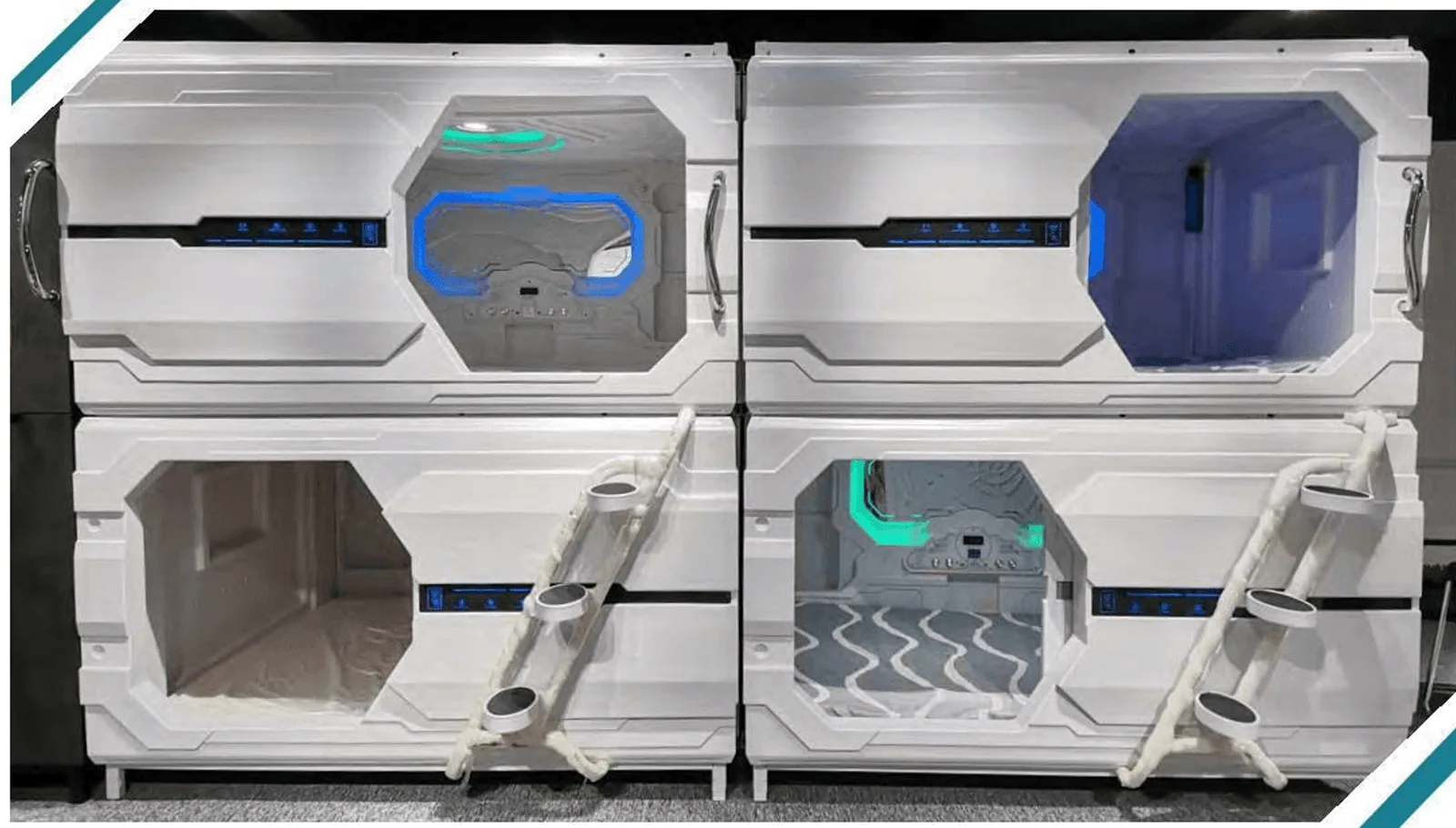
GALAXY Series - Horizontal Single
Standard ABS shell with metal frame featuring TV slot, security sliding door, and ergonomic non-slip ladder. Perfect for hotels, airports, and commercial applications.
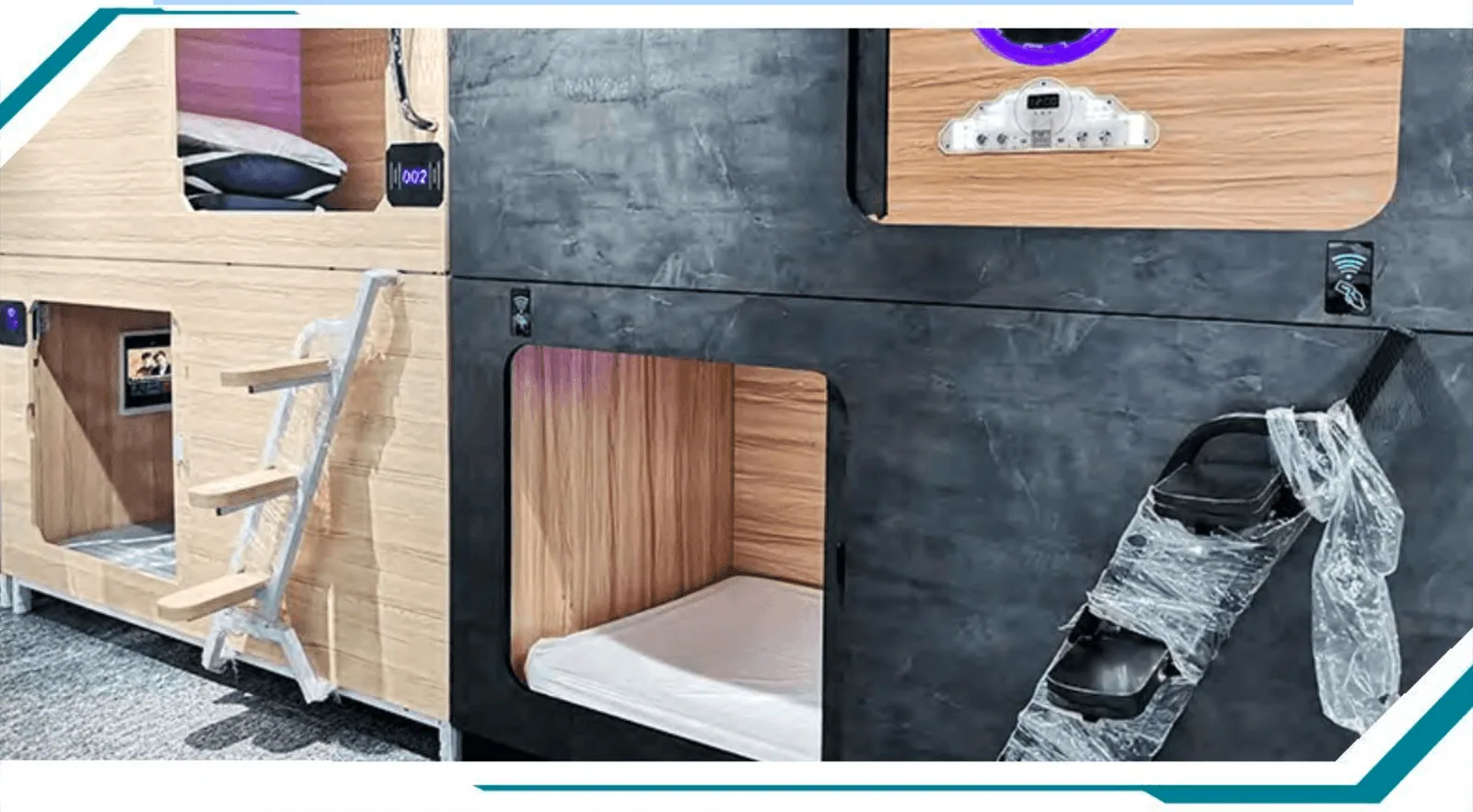
Wooden Series - Horizontal Single
Premium eco multi-layer board construction with metal frame, offering natural wood-grain aesthetics while maintaining all essential capsule bed features.
Market deep-dive
The Dindori pod-hotel opportunity
Dindori is one of Madhya Pradesh's most distinctly tribal districts — perched at about 640 metres on the upper Narmada, with Scheduled Tribes making up nearly 65% of its 7-lakh population and Gondi spoken across its villages. Carved out of Mandla in 1998, it is the land of the Gond and the primitive Baiga, of mahua and millet, and of folk legend: the warrior-queen Rani Avantibai Lodhi of Ramgarh, who rose against the British in 1857, is its proudest historical name. With only 4.59% of people living in towns and almost no organised industry, this is a forest-and-farming economy where outside money arrives through pilgrims, tourists and government welfare — exactly the road-borne, overnight-seeking traffic a capsule hotel is built to capture.
The district's own attractions are unusually special. At Ghughua, declared a National Fossil Park in 1983, plant fossils from 31 genera and 18 families lie preserved in stone — a 65-million-year-old window into deep time that draws students, researchers and curious travellers. Nearby, Karopani Natural Deer Park shelters black and spotted deer along the Jabalpur–Bilaspur road, while the Kakurramath (Rinmukteshwar) Shiva temple and the Jhir Jhira, Devnala and Neosa waterfalls give the district a quiet pilgrimage-and-nature draw. None of these sites has a single branded budget stay nearby; visitors either crowd basic lodges in Dindori town or drive back to Jabalpur, leaving an obvious, unserved gap for clean, affordable pod accommodation.
Geography makes Dindori a natural overnight hinge. The town has no railway station and no airport of its own — the nearest railheads are Umaria (108 km), Pendra Road (115 km) and Jabalpur (146 km), and every visitor therefore arrives by road on NH-43 and the Jabalpur–Amarkantak–Bilaspur highways. Crucially, the Narmada's sacred source at Amarkantak — the 'Tirthraj' where the Narmada and Sone rivers are born — lies only about 75 km away, and the famous Kanha Tiger Reserve is reachable via Mandla, roughly 120 km off. Pilgrims and safari tourists routinely need a cheap, safe place to break the journey, and Dindori sits squarely on that line of travel.
For an operator, Dindori is a low-cost, low-competition Tier-3 entry with several stacked demand drivers: road-transit travellers at the bus junction, pilgrims staging for Amarkantak, attendants at the District Hospital, and the steady churn of forest, survey, NGO and government teams working the district's seven tribal blocks. A compact ~50-pod unit near the bus stand–hospital axis, blending overnight sleeping pods with hourly nap pods for daytime bus passengers, can run on modest Tier-3 rent and lean staffing. In a town that has never had an organised budget hotel, BIDUA's capsule format offers a dignified, secure, genuinely first-of-its-kind stay — and a defensible first-mover position on the Narmada pilgrimage and Kanha tourism corridor.
Dindori pod hotel — FAQs
Is there a capsule hotel or sleeping pod hotel in Dindori, Madhya Pradesh?+
Not yet — Dindori currently has only basic lodges. A BIDUA sleeping-pod hotel (the Japanese/Chinese-style capsule-hotel concept) would be the district's first organised budget stay, offering clean, secure, air-conditioned pods near the bus stand and District Hospital.
Why does a small tribal town like Dindori need a pod hotel?+
Dindori has no railway station and no airport, so everyone arrives by road on the Jabalpur–Amarkantak–Bilaspur highways. Transit travellers, pilgrims, hospital attendants and touring government/NGO staff all need an affordable overnight option that simply does not exist here today.
How much would a nap pod or nightly capsule cost in Dindori?+
As a Tier-3 town, indicative pricing is around ₹750 per night for a sleeping pod, with hourly nap-pod options for daytime bus travellers and patient attendants — far cheaper than driving 146 km to a Jabalpur hotel.
Is a pod hotel good for pilgrims going to Amarkantak and the Narmada source?+
Yes. Amarkantak — the revered source of the Narmada and Sone rivers — is roughly 75 km away, and Dindori sits on the Narmada itself. A budget capsule hotel makes an ideal, low-cost overnight base before the early-morning pilgrimage run.
What tourist spots near a Dindori pod hotel would guests visit?+
Inside the district: Ghughua National Fossil Park (65-million-year-old plant fossils), Karopani Natural Deer Park, the Kakurramath Shiva temple, and Jhir Jhira/Devnala/Neosa waterfalls. Nearby: Amarkantak (~75 km) and Kanha Tiger Reserve via Mandla (~120 km).
Is a capsule hotel safe and suitable for solo or female travellers in Dindori?+
Yes — BIDUA pods offer individually lockable, CCTV-monitored capsules with options for women-only zones, making them a safer, more private budget-hotel alternative to shared dormitory lodges in a small town like Dindori.
Start your Dindori pod hotel with BIDUA
Sign up to design your space in 3D, build a presentation, and get a quotation + ROI from one dashboard — or talk to our team for a custom Dindori plan.