Tier 2 pod-hotel market · Madhya Pradesh
Sleeping Pod & Capsule Hotel Business in Gwalior, Madhya Pradesh
Gwalior is the cultural capital of the Gwalior-Chambal belt and is globally branded as India's City of Music — the seat of the oldest Hindustani classical gharana, the home of Tansen, and a UNESCO Creative City of Music (2023). The district pairs a dense, well-educated urban core (77.9% literacy) with the historic Scindia legacy, a hilltop fort Babur called 'the pearl in the necklace of the forts of Hind', and a steady year-round churn of pilgrims, students, patients and traders that no single hotel category currently serves at the budget end.

Population & catchment
Approximately 2.03 million (2011 Census), the district ranks among the most populous in Madhya Pradesh with a 24.4% decadal growth, reflecting fast in-migration into the Gwalior urban agglomeration.
Urban pull
62.7% urban — one of the highest urbanisation rates in MP, concentrated in Gwalior city which functions as the divisional headquarters and the commercial gateway to the Chambal region.
Economic base
Gwalior is a diversified Tier-2 economy anchored by government and divisional administration, education, healthcare, tourism and a manufacturing belt that rings the city. Its industrial estates at Sitholi, plus the adjoining Malanpur and Banmore zones in neighbouring Bhind/Morena, host plants such as JK Tyre, Surya Roshni and Cadbury (Mondelez), while the legacy textile and engineering base (the old JC Mills, Grasim, Cimmco era) has given way to a counter-magnet development push to draw industry away from Delhi-NCR. Layered on top is a powerful services economy: a major rail junction, the largest state-owned airport terminal in MP, a cluster of national institutes, and a tourism circuit spanning the Fort, Jai Vilas Palace and the annual Tansen Samaroh. This blend of administrative, industrial and pilgrimage/tourist footfall produces exactly the kind of high-volume, value-conscious overnight demand a capsule-pod hotel monetises best.
Around Gwalior
Key landmarks and footfall hubs that drive short-stay demand in Gwalior.
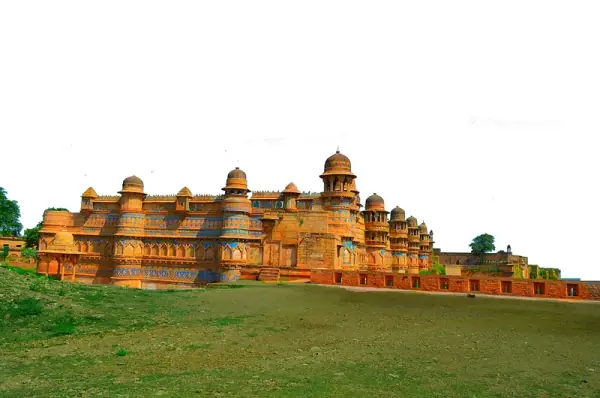
Gwalior Fort morning view
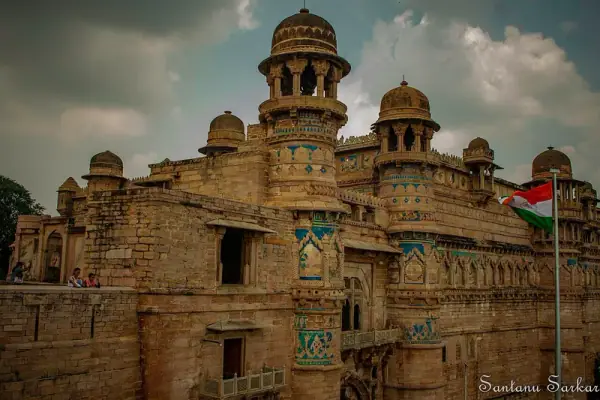
Gwalior Fort (Fortress of Gwalior)
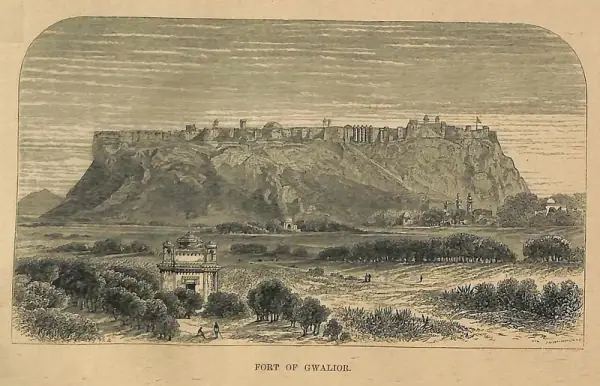
Gwalior Fort historic plate, 1865
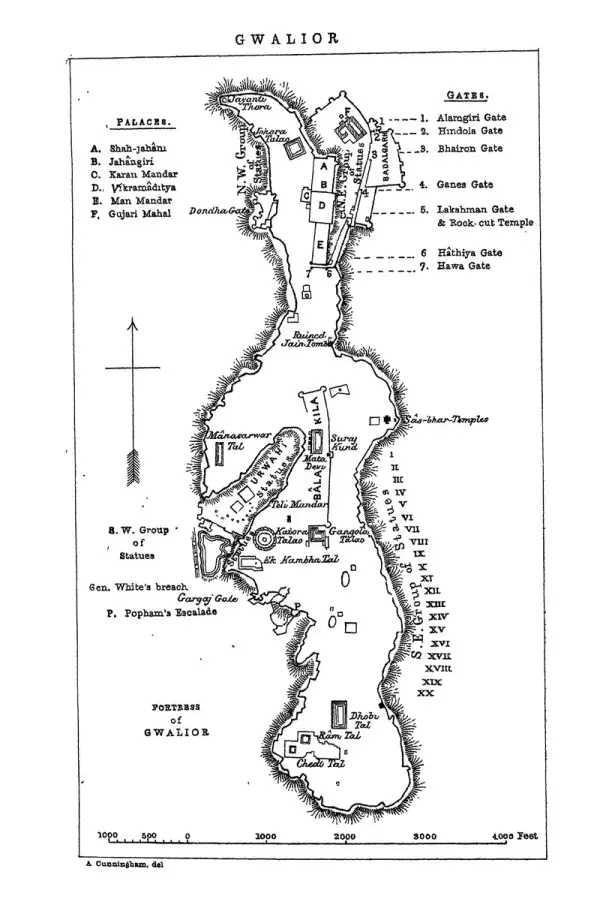
Map / plan of Gwalior Fort
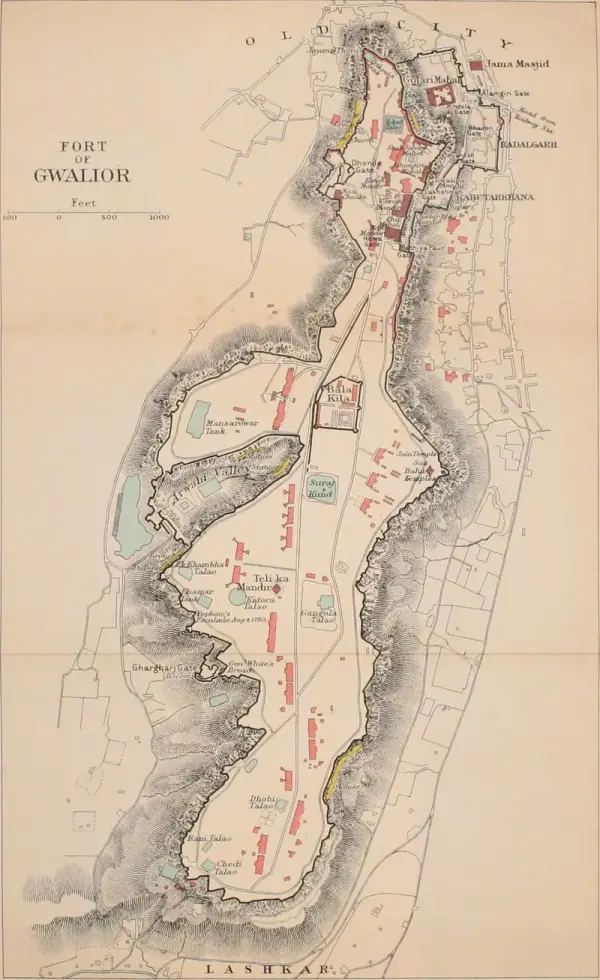
Gwalior Fort plan, 1911
Why a pod hotel works in Gwalior
Gwalior has heritage hotels and a thin band of mid-range business hotels, but almost nothing engineered for the high-volume, low-spend overnight traveller: the exam aspirant, the patient's attendant sleeping rough outside JA Hospital, the parent visiting an IIITM/MITS/Scindia child, the pilgrim breaking journey to Datia or Orchha, and the factory contractor at Banmore/Malanpur. Dormitories near the station are unsafe and unhygienic; budget hotels start at far higher price points. A clean, app-bookable capsule-pod hotel near Gwalior Junction or the City Centre hospital belt directly fills this gap.
Gwalior sits on the Delhi-Bhopal-Indore trunk corridor of Indian Railways and on NH-44/NH-46, roughly 320 km south of Delhi and 4 hours by Vande Bharat/Shatabdi. The Rajmata Vijaya Raje Scindia Airport (the largest state airport terminal in MP) runs daily flights to Delhi, Mumbai, Bengaluru, Hyderabad, Kolkata, Pune, Ahmedabad, Jaipur, Indore and more. This makes Gwalior a natural overnight hub for budget travellers, families visiting students, exam aspirants, medical attendants and pilgrims fanning out to Datia, Orchha, Shivpuri and the Bundelkhand temple circuit — all of whom need clean, cheap, safe beds near the station, hospitals and institutes rather than full-service hotel rooms.
Best ways to use pods here
- Medical attendants and outstation patients visiting JA Hospital, Cancer Hospital & Research Institute and the upcoming AIIMS — needing weeks of cheap, safe beds
- Parents, exam candidates and visitors tied to Jiwaji University, IIITM, MITS, LNIPE and The Scindia School during admissions, exams and parents' weekends
- Rail and air transit travellers needing a clean overnight stay between Delhi-Bhopal-Indore connections at Gwalior Junction / Scindia Airport
- Pilgrims and heritage tourists doing the Gwalior Fort + Datia Pitambara Peeth + Orchha + Sonagiri circuit on a budget
- Contract engineers, sales staff and skilled workers cycling through the Banmore, Malanpur and Sitholi industrial estates
Where the demand sits in Gwalior
Transit & travel
- •Gwalior Junction railway station (one of India's busiest A-grade junctions on the Delhi-Chennai route)
- •Rajmata Vijaya Raje Scindia Airport (Maharajpura)
- •Gwalior ISBT / inter-state bus terminus
- •NH-44 and NH-46 highway corridors
- •Dabra junction and town (district sub-hub)
Healthcare demand
- •Gajara Raja Medical College & Jaya Arogya (JA) Hospital group
- •Kamla Raja Hospital (women & children)
- •Cancer Hospital & Research Institute, Gwalior (national oncology centre)
- •Upcoming AIIMS Gwalior (second AIIMS sanctioned in MP)
- •Birla Institute / private multispecialty hospitals along City Centre
Education & coaching
- •Jiwaji University
- •ABV-Indian Institute of Information Technology & Management (IIITM)
- •Madhav Institute of Technology & Science (MITS)
- •Lakshmibai National Institute of Physical Education (LNIPE)
- •Indian Institute of Tourism & Travel Management (IITTM)
- •The Scindia School (Fort) and Amity University Gwalior
Industry & trade
- •Sitholi industrial estate
- •Banmore industrial area (JK Tyre)
- •Malanpur industrial growth centre (Surya Roshni, Cadbury)
- •Gwalior West counter-magnet / new industrial corridor
- •Dabra agro and stone-crushing belt
Tourism & pilgrimage
- •Gwalior Fort with Man Mandir Palace, Sas-Bahu Temples and Teli ka Mandir
- •Jai Vilas Palace & Scindia Museum
- •Gopachal Parvat / Siddhachal Jain rock sculptures
- •Tomb of Tansen & annual Tansen Sangeet Samaroh
- •Tigra Dam, and nearby Mitaoli-Padhavali-Bateshwar temple cluster
- •Pitambara Peeth Shakti shrine, Datia (~78 km)
- •Orchha (Ram Raja Temple, Betwa cenotaphs, ~120 km)
- •Sonagiri Jain pilgrimage hill (~60 km)
Profit & ROI projection for Gwalior
A starter model based on a minimum 50 pods at 70% occupancy and an indicative ₹1,000/pod/night. Costs use the same itemised basis as our full ROI calculator — pods, add-ons, 18% GST, transport, fit-out and full monthly running cost.
Important: this is only an ASSUMPTION-based projection — not an accurate quote or a guarantee.
The real cost, occupancy, pricing and profit will change with your exact location, property rent, season, competition and how you run the business. Treat these figures as a planning estimate only. For real numbers, use the full calculator or get a custom quote from BIDUA.
Total investment
₹92.7 lakh
50 pods + add-ons + GST + fit-out
Monthly revenue
₹10.5 lakh
35 of 50 pods filled/night
Monthly net profit
₹5.0 lakh
48% margin after all costs
Payback
~18 mo
65% annual ROI
Break-even occupancy ≈ 27% — you only need this much filled to cover all costs; everything above is profit.
| 50 pods (BIDUA mix) | ₹40,30,000 |
| Add-ons (mattress, bedding, panels, safe lock, table) | ₹16,25,200 |
| GST @ 18% (pods + add-ons) | ₹10,17,936 |
| Transport (warehouse → site) | ₹4,00,000 |
| Fit-out, AC, reception, branding + rent deposit | ₹22,00,000 |
| Total investment | ₹92,73,136 |
| Revenue (50 × 70% × ₹1,000 × 30) | ₹10,50,000 |
| Fixed costs (rent, staff, power, housekeeping…) | – ₹3,07,000 |
| Variable (OTA + marketing + gateway, 23%) | – ₹2,41,500 |
| Net profit / month | ₹5,01,500 |
| Net profit / year | ₹60,18,000 |
Tier-2 assumptions for Gwalior: blended nightly rate of Rs 1,000 reflects a premium-of-dormitory, fraction-of-hotel position that medical, student and pilgrim demand will sustain at 70% occupancy across the year, lifted by exam seasons, the December Tansen Samaroh and the Datia/Orchha pilgrimage calendar. Monthly rent of ~Rs 1,00,000 assumes a 4,000-5,000 sq ft floor near the Junction or City Centre; fit-out plus deposit of ~Rs 22 lakh covers 50 steel pods, secure female zone, plumbing, HVAC and reception. At these figures gross monthly revenue is roughly Rs 10.5 lakh, supporting healthy operator margins after rent, staff and utilities. Figures are indicative estimates, not guarantees.
Gwalior pod-hotel business plan & study
A step-by-step plan to launch a capsule / sleeping-pod hotel in Gwalior — from picking the right location to licences, setup, pricing and reaching profitable occupancy.
Demand drivers
24+
transit, hospital, student & tourism footfall points
Space needed (50 pods)
2250–2750 sq ft
single rented floor + reception & washrooms
Break-even occupancy
27%
fill above this and you are in profit
Indicative payback
~18 months
on ₹92.7 lakh all-in setup
1. Pick the right location
Target a floor near Gajara Raja Medical College & Jaya Arogya (JA) Hospital group or Rajmata Vijaya Raje Scindia Airport (Maharajpura). Best opening use-case: Medical attendants and outstation patients visiting JA Hospital, Cancer Hospital & Research Institute and the upcoming AIIMS — needing weeks of cheap, safe beds.
2. Plan investment & funding
Budget about ₹92.7 lakh all-in for 50 pods (pods + add-ons + 18% GST + transport + fit-out & deposit). Many operators fund this with a mix of own capital + a small business/MSME loan against projected cash flow.
3. Licences & compliance
Arrange a municipal trade licence, GST registration, fire safety NOC, police/guest verification (where required), and basic building & sanitation approvals before launch.
4. Build & launch
BIDUA shares a free 3D layout, then delivers and helps install the pods. Civil, electrical, AC and reception fit-out typically takes ~30–45 days, so you can open quickly on a leased floor.
5. Pricing & operations
Start at ~₹1,000/pod/night, and add hourly slots near hospitals for day-rest demand. Run lean with a small reception + housekeeping team; keep pods clean, private and secure to earn repeat stays.
6. Marketing & occupancy
List on OTAs (MakeMyTrip, Booking.com, OYO, Goibibo) + Google Business Profile, and tie up with nearby hospitals, coaching institutes and tour operators to push occupancy past the 27% break-even quickly.
Key risks & how to manage them
Low occupancy in early months. Open with OTA listings + hospital/coaching tie-ups; use hourly pricing to fill day-time.
High rent eating margins. Choose a slightly off-main but accessible floor near Gwalior Junction railway station (one of India's busiest A-grade junctions on the Delhi-Chennai route); rent is the biggest lever.
Seasonality / exam & festival peaks. Flex pricing up in peak weeks; offer weekly/monthly pod rentals to students for a stable base.
Cleanliness & safety complaints. Invest in housekeeping, safe locks and CCTV — reputation drives repeat and OTA ratings.
Recommended pod setup for Gwalior
A 50-pod single-property layout split into a male zone, a dedicated secure female zone (critical for the patient-attendant and parent segments) and a few premium double pods, sited within 1.5 km of Gwalior Junction or the City Centre hospital cluster, with luggage lockers, 24x7 reception, hot showers and an app booking flow priced at roughly one-third of a budget hotel room.

GALAXY Series - Horizontal Single
Standard ABS shell with metal frame featuring TV slot, security sliding door, and ergonomic non-slip ladder. Perfect for hotels, airports, and commercial applications.

SPACE Series - Horizontal Single
Standard SPACE series with mirror panel, sliding door, TV slot, and intelligent LED controls. Perfect for hotels and commercial applications.
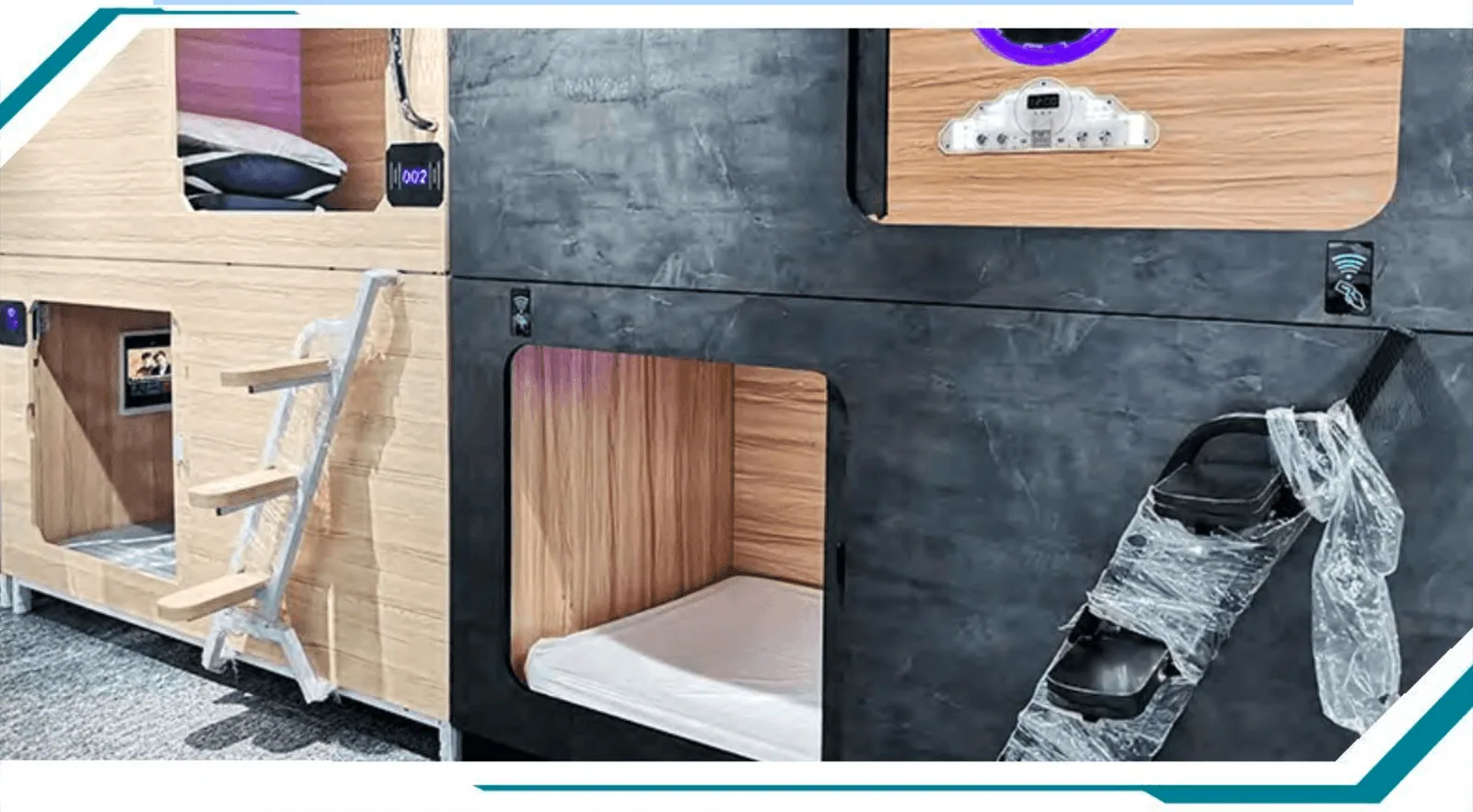
Wooden Series - Horizontal Single
Premium eco multi-layer board construction with metal frame, offering natural wood-grain aesthetics while maintaining all essential capsule bed features.
Market deep-dive
The Gwalior pod-hotel opportunity
Gwalior is the historic heart of northern Madhya Pradesh and the cultural capital of the Gwalior-Chambal region. Crowning the city is the Gwalior Fort, a sandstone citadel on a flat-topped hill that the Mughal emperor Babur called 'the pearl in the necklace of the forts of Hind', wrapped around the painted Man Mandir Palace, the twin Sas-Bahu Temples and the 30-metre Teli ka Mandir. Below it sprawls the Scindia legacy: the opulent Jai Vilas Palace, modelled on Versailles, and a city that India formally celebrates as its City of Music — the seat of the oldest Hindustani classical gharana, the burial place of the legend Tansen, and since 2023 a UNESCO Creative City of Music. Every December the Tansen Sangeet Samaroh fills the city with performers and visitors, and the Gopachal Parvat Jain rock-cut colossi add a devotional dimension that keeps Gwalior on the national travel map year-round.
Beneath the heritage, Gwalior runs as a serious working city. It is a divisional administrative headquarters, an Indian Air Force base town, and one of the most urbanised districts in Madhya Pradesh at nearly 63% urban with almost 78% literacy. Its economy spans government and defence, a manufacturing belt at Sitholi and the neighbouring Banmore and Malanpur estates — home to JK Tyre, Surya Roshni and Cadbury (Mondelez) — and a deliberate counter-magnet push to pull industry south from Delhi-NCR after the older textile and engineering mills wound down. Add a major rail junction, the largest state-owned airport terminal in MP, and national-level institutes, and Gwalior generates a constant flow of administrators, engineers, sales teams and contract workers who need somewhere clean and affordable to spend the night.
The most acute, least-served demand comes from healthcare and education. Gwalior is the medical hub for the entire Chambal belt: the Gajara Raja Medical College and Jaya Arogya hospital group, the women-and-children Kamla Raja Hospital, the nationally recognised Cancer Hospital & Research Institute, and a sanctioned AIIMS that will pull patients from across central and north India. Families of patients routinely sleep in corridors and on pavements for want of cheap lodging nearby. In parallel, Jiwaji University, IIITM, MITS, LNIPE, IITTM, The Scindia School and Amity University bring waves of exam aspirants and visiting parents who currently overpay for hotel rooms or settle for unsafe dormitories. A 50-pod capsule hotel with a dedicated, secure female zone speaks directly to both groups.
Gwalior's reach extends well beyond its own boundaries, which is what makes it a true pod-hotel hub rather than a one-night stop. It is the gateway to the Datia Pitambara Peeth, one of the most visited Shakti shrines in the region (~78 km), to the Sonagiri Jain pilgrimage hill, and to the riverside palaces and Ram Raja Temple of Orchha on the Betwa (~120 km), with the nearby Mitaoli-Padhavali-Bateshwar temple cluster and Tigra Dam adding day-trip appeal. Sitting on the Delhi-Bhopal-Indore rail trunk and NH-44, it is the natural overnight base for pilgrims, heritage tourists, medical visitors and transit travellers alike. A clean, app-bookable capsule property near the Junction or the hospital belt, priced at roughly a third of a budget hotel room, converts all of these overlapping streams into stable, year-round occupancy.
Gwalior pod hotel — FAQs
How much does it cost to set up a 50-pod capsule hotel in Gwalior?+
Budget around Rs 20-24 lakh for a 50-pod property in Gwalior. That covers 50 fabricated steel sleeping pods, a secure partitioned female zone, plumbing and hot-water systems, HVAC, lockers, reception and basic interiors for a 4,000-5,000 sq ft floor. Monthly rent for such a space near Gwalior Junction or the City Centre hospital belt runs about Rs 90,000-1,10,000.
How much can a pod hotel in Gwalior realistically earn?+
At a Rs 1,000 blended nightly rate and a conservative 70% occupancy, 50 pods generate roughly Rs 10-11 lakh in gross monthly revenue. Gwalior's steady mix of medical attendants, exam aspirants, pilgrims and industrial contractors keeps occupancy stable year-round, with spikes during university admissions, the December Tansen Samaroh and the Datia-Orchha pilgrimage season.
Where is the best location in Gwalior to open a sleeping-pod hotel?+
Two zones stand out. First, within 1.5 km of Gwalior Junction to capture rail and bus transit plus pilgrims. Second, the City Centre / Jaya Arogya hospital and Cancer Hospital belt, where patient attendants need affordable beds for days or weeks. A site close to Jiwaji University, IIITM or MITS also works well during the academic and exam calendar.
Who are the main customers for a capsule hotel in Gwalior?+
Five core groups: patients and attendants at JA Hospital, the Cancer Hospital and the upcoming AIIMS; parents and exam candidates linked to Jiwaji University, IIITM, MITS, LNIPE and The Scindia School; rail and air transit travellers; budget heritage tourists and pilgrims doing the Fort-Datia-Orchha-Sonagiri circuit; and contract workers at the Banmore, Malanpur and Sitholi industrial estates.
Is Gwalior a good market for budget pod accommodation specifically?+
Yes. Gwalior is 62.7% urban with 77.9% literacy, a major medical and education hub, and a tourism magnet as India's City of Music — yet it has almost no clean, safe, app-bookable budget accommodation between unhygienic station dormitories and pricier hotels. That gap, combined with high transit and patient-attendant volumes, makes it well suited to capsule pods.
What makes Gwalior's tourism demand different from a typical Tier-2 city?+
Gwalior is anchored by world-class heritage that draws repeat and seasonal crowds: the hilltop Gwalior Fort with the Sas-Bahu Temples and Teli ka Mandir, the Versailles-inspired Jai Vilas Palace, the Gopachal Jain sculptures, and the UNESCO-recognised music legacy peaking at the December Tansen Sangeet Samaroh. It is also the launchpad for the Datia Pitambara Peeth, Sonagiri and Orchha pilgrimage circuit, layering devotional travel on top of cultural tourism.
Start your Gwalior pod hotel with BIDUA
Sign up to design your space in 3D, build a presentation, and get a quotation + ROI from one dashboard — or talk to our team for a custom Gwalior plan.