Tier 3 pod-hotel market · Uttar Pradesh
Kushinagar Pod Hotel — Capsule Accommodation at Buddhism's Holiest Farewell Site
Population density of 1,240/km² is extremely high for a rural district, signalling intense demand for services and infrastructure that far outstrips current supply — including quality accommodation.
Population & catchment
35.6 lakh (2011 Census); estimated ~42-44 lakh by 2026 based on 23% decadal growth rate
Urban pull
Only 4.87% urban — overwhelmingly rural district with Padrauna (pop ~50,000) as the sole significant town; Kushinagar/Kasia is a pilgrimage town, not a commercial centre
Economic base
Kushinagar's economy is overwhelmingly agrarian — 77% of land is under cultivation, dominated by small and marginal farmers who own 91% of operational holdings. Sugarcane is the district's primary cash crop (68,700+ hectares), historically feeding sugar mills like Kanpur Sugar Works (now closed), while paddy, wheat, potato, mango, and litchi form the food-crop base. The district was officially classified among India's 250 most backward districts, receiving Backward Regions Grant Fund support, though Buddhist pilgrimage tourism and the new international airport represent emerging economic pillars.
Around Kushinagar
Key landmarks and footfall hubs that drive short-stay demand in Kushinagar.
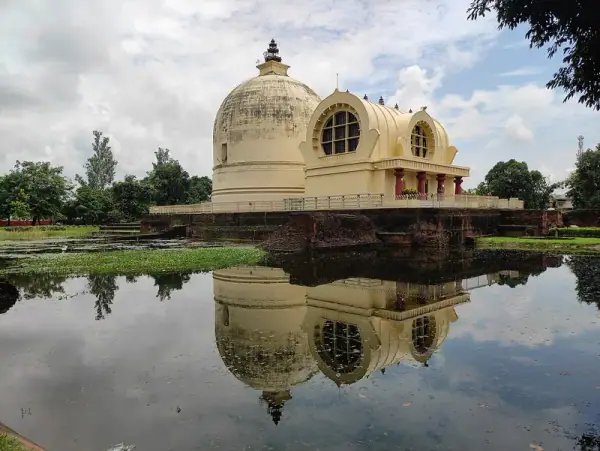
Parinirvana Stupa, Kushinagar
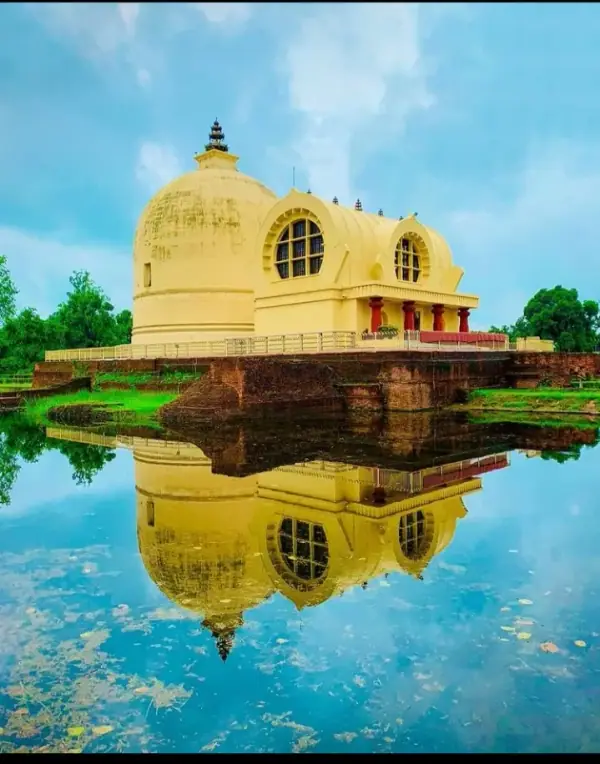
Mahaparinirvana Temple, Kushinagar
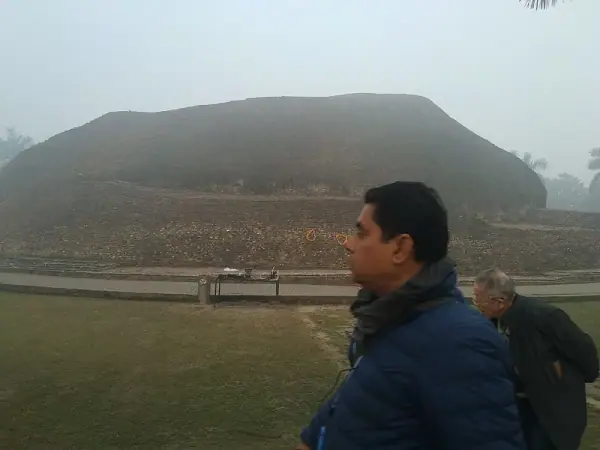
Ramabhar Stupa (Buddha's Cremation Site)
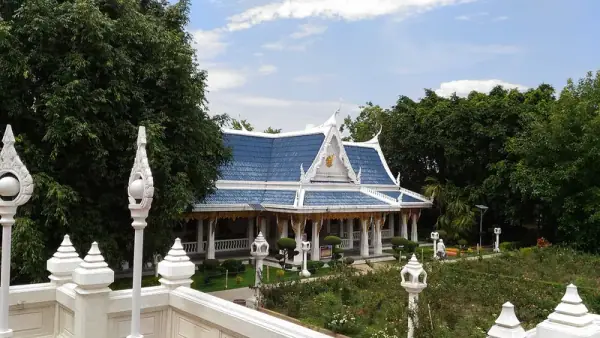
Wat Thai Temple, Kushinagar
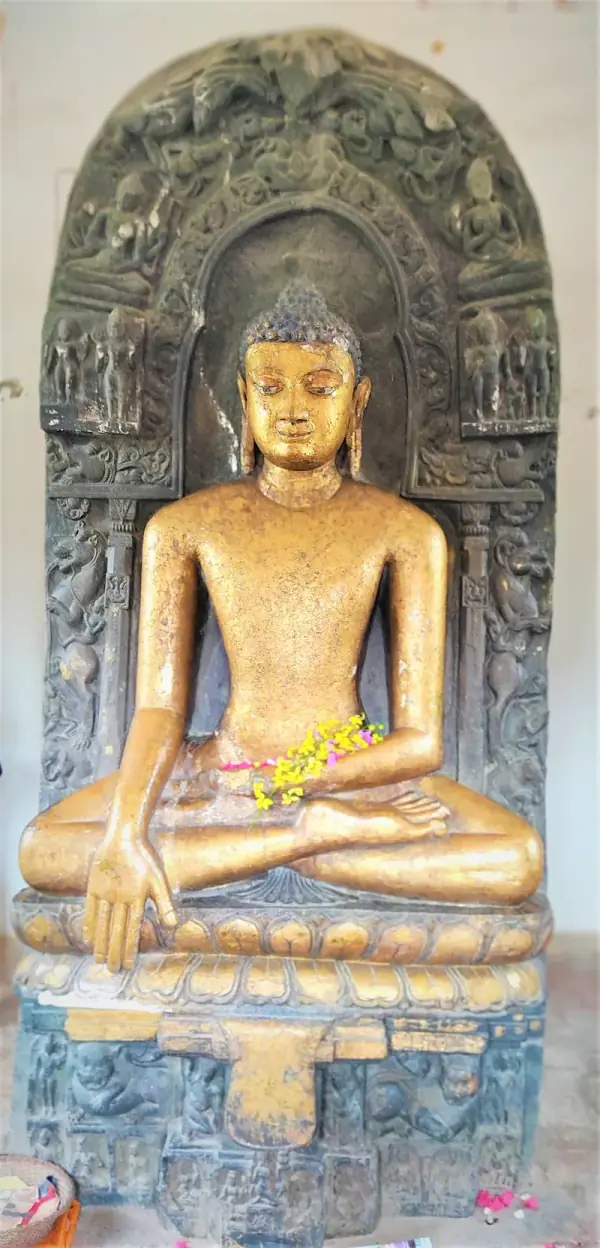
Matha Kuar Shrine — Seated Buddha
Why a pod hotel works in Kushinagar
Kushinagar receives international Buddhist pilgrims from 40+ countries yet has virtually zero branded, hygienic, affordable accommodation — most visitors either day-trip from Gorakhpur or stay in basic dharamshalas and monastery guest houses. The gap between the district's global religious significance (one of only four sites where the Buddha lived key life events) and its accommodation infrastructure is enormous. With the international airport built but underutilised, and Air India Express planning Delhi-Kushinagar flights, the accommodation supply must be ready before scheduled services resume. Sleeping pods offer pilgrims and transit travellers a clean, private, affordable option that dharamshalas and monastery guest rooms cannot match.
Kushinagar is one of the four holiest Buddhist pilgrimage sites on earth — the place where Gautama Buddha attained Mahaparinirvana. It anchors the international Buddhist Circuit (Lumbini-Bodh Gaya-Sarnath-Kushinagar) and draws monks, scholars, and devotees from Sri Lanka, Thailand, Myanmar, Japan, China, and South Korea year-round. The Kushinagar International Airport (inaugurated 2021) was built expressly to channel this demand. NH-27 funnels heavy truck and pilgrim traffic between Gorakhpur and Bihar, while the Indo-Nepal border at Sonauli (via Maharajganj) brings cross-border pilgrims heading to/from Lumbini. The district HQ Padrauna is a rail junction connecting Gorakhpur, Chhapra, and Katihar, generating constant transit overnight demand from travellers, traders, and government officers.
Best ways to use pods here
- Buddhist pilgrim accommodation near Mahaparinirvana Temple — international monks and devotees visiting for 1-3 nights need clean, affordable, private pods instead of shared dharamshalas
- Transit pods at Padrauna Railway Station / Kaptanganj Junction — overnight travellers on Gorakhpur-Chhapra-Katihar rail routes need rest between connections
- Airport transit pods near Kushinagar International Airport — as UDAN flights resume, departing/arriving passengers will need short-stay accommodation within 19 km
- Medical attendant pods near ASMC Kushinagar and District Hospital Padrauna — families accompanying patients from surrounding villages for multi-day treatments
- Seasonal worker/trader pods during sugarcane crushing season and mandi harvest peaks — traders at Padrauna mandi and 9 rural markets need temporary overnight stays
Where the demand sits in Kushinagar
Transit & travel
- •Kaptanganj Junction — major rail junction linking Gorakhpur-Chhapra-Katihar lines
- •Padrauna Railway Station — district HQ station with connections to Gorakhpur, Lucknow, Delhi, Jalandhar
- •Kushinagar International Airport (KBK) — India's newest international airport, 19 km from Padrauna, UDAN routes planned to Delhi, Agra, Gaya
- •NH-27 (old NH-28) corridor — heavy freight and pilgrim traffic between Gorakhpur and Bihar border
- •NH-727 linking Kushinagar to Deoria and onward to Varanasi/Sarnath
Healthcare demand
- •Autonomous State Medical College (ASMC) Kushinagar — new government medical college generating patient-attendant demand
- •District Hospital Padrauna — primary referral centre for 35-lakh population
- •AIIMS Gorakhpur (53 km) and BRD Medical College Gorakhpur — tertiary referral hospitals drawing Kushinagar patients; attendants need overnight stays
- •Community Health Centres across 14 blocks with limited in-patient beds
Education & coaching
- •Buddha Postgraduate College — largest higher-education institution in the district
- •Udit Narayan Intermediate College Padrauna — largest intermediate college in the district
- •Kendriya Vidyalaya and Navodaya Vidyalaya — central schools drawing staff from outside
- •Students travelling to Gorakhpur (DDU University, MMMUT, AIIMS) for coaching and exams need affordable transit stays
Industry & trade
- •Sugarcane cultivation belt — 68,700+ hectares of cane feeding regional sugar mills during crushing season
- •2,311 registered MSMEs in food processing, wood furniture, garments, and repair services
- •Padrauna mandi and 9 rural agricultural markets — seasonal trader influx during paddy, wheat, and mango harvests
- •Dairy and livestock sector — 948,000 MT annual milk production, 91 milk societies, 1,552 poultry units generating supply-chain worker travel
Tourism & pilgrimage
- •Mahaparinirvana Temple & 6.1 m Reclining Buddha — the holiest site in Kushinagar, where the Buddha passed away
- •Ramabhar Stupa (Mukutbandhana) — cremation site of Gautama Buddha, 1.5 km east of the main temple
- •Matha Kuar Shrine — 10th-century monolithic blue-stone seated Buddha in bhumisparsha mudra
- •Wat Thai Temple — Thai-style Buddhist complex with golden Buddha and meditation park
- •Indo-Japan-Sri Lanka Temple — modern international Buddhist architecture
- •Kushinagar Museum — archaeological collection of Gupta-era Buddhist artefacts
- •Lumbini, Nepal (birthplace of Buddha) — ~170 km via Maharajganj-Sonauli border crossing, paired on every Buddhist Circuit itinerary
- •Sarnath/Varanasi (~290 km) and Bodh Gaya (~250 km via Bihar) — the other two pillars of the Buddhist Circuit
Profit & ROI projection for Kushinagar
A starter model based on a minimum 50 pods at 70% occupancy and an indicative ₹750/pod/night. Costs use the same itemised basis as our full ROI calculator — pods, add-ons, 18% GST, transport, fit-out and full monthly running cost.
Important: this is only an ASSUMPTION-based projection — not an accurate quote or a guarantee.
The real cost, occupancy, pricing and profit will change with your exact location, property rent, season, competition and how you run the business. Treat these figures as a planning estimate only. For real numbers, use the full calculator or get a custom quote from BIDUA.
Total investment
₹74.7 lakh
50 pods + add-ons + GST + fit-out
Monthly revenue
₹7.9 lakh
35 of 50 pods filled/night
Monthly net profit
₹3.7 lakh
47% margin after all costs
Payback
~20 mo
59% annual ROI
Break-even occupancy ≈ 27% — you only need this much filled to cover all costs; everything above is profit.
| 50 pods (BIDUA mix) | ₹40,30,000 |
| Add-ons (mattress, bedding, panels, safe lock, table) | ₹16,25,200 |
| GST @ 18% (pods + add-ons) | ₹10,17,936 |
| Transport (warehouse → site) | ₹4,00,000 |
| Fit-out, AC, reception, branding + rent deposit | ₹4,00,000 |
| Total investment | ₹74,73,136 |
| Revenue (50 × 70% × ₹750 × 30) | ₹7,87,500 |
| Fixed costs (rent, staff, power, housekeeping…) | – ₹2,37,000 |
| Variable (OTA + marketing + gateway, 23%) | – ₹1,81,125 |
| Net profit / month | ₹3,69,375 |
| Net profit / year | ₹44,32,500 |
Indicative Tier 3 assumptions — actual ADR may be higher during Buddha Purnima and Abhidhamma Day peak seasons. These figures are not a guarantee of returns. Figures are indicative estimates, not guarantees.
Kushinagar pod-hotel business plan & study
A step-by-step plan to launch a capsule / sleeping-pod hotel in Kushinagar — from picking the right location to licences, setup, pricing and reaching profitable occupancy.
Demand drivers
21+
transit, hospital, student & tourism footfall points
Space needed (50 pods)
2250–2750 sq ft
single rented floor + reception & washrooms
Break-even occupancy
27%
fill above this and you are in profit
Indicative payback
~20 months
on ₹74.7 lakh all-in setup
1. Pick the right location
Target a floor near Autonomous State Medical College (ASMC) Kushinagar — new government medical college generating patient-attendant demand or Padrauna Railway Station — district HQ station with connections to Gorakhpur, Lucknow, Delhi, Jalandhar. Best opening use-case: Buddhist pilgrim accommodation near Mahaparinirvana Temple — international monks and devotees visiting for 1-3 nights need clean, affordable, private pods instead of shared dharamshalas.
2. Plan investment & funding
Budget about ₹74.7 lakh all-in for 50 pods (pods + add-ons + 18% GST + transport + fit-out & deposit). Many operators fund this with a mix of own capital + a small business/MSME loan against projected cash flow.
3. Licences & compliance
Arrange a municipal trade licence, GST registration, fire safety NOC, police/guest verification (where required), and basic building & sanitation approvals before launch.
4. Build & launch
BIDUA shares a free 3D layout, then delivers and helps install the pods. Civil, electrical, AC and reception fit-out typically takes ~30–45 days, so you can open quickly on a leased floor.
5. Pricing & operations
Start at ~₹750/pod/night, and add hourly slots near hospitals for day-rest demand. Run lean with a small reception + housekeeping team; keep pods clean, private and secure to earn repeat stays.
6. Marketing & occupancy
List on OTAs (MakeMyTrip, Booking.com, OYO, Goibibo) + Google Business Profile, and tie up with nearby hospitals, coaching institutes and tour operators to push occupancy past the 27% break-even quickly.
Key risks & how to manage them
Low occupancy in early months. Open with OTA listings + hospital/coaching tie-ups; use hourly pricing to fill day-time.
High rent eating margins. Choose a slightly off-main but accessible floor near Kaptanganj Junction — major rail junction linking Gorakhpur-Chhapra-Katihar lines; rent is the biggest lever.
Seasonality / exam & festival peaks. Flex pricing up in peak weeks; offer weekly/monthly pod rentals to students for a stable base.
Cleanliness & safety complaints. Invest in housekeeping, safe locks and CCTV — reputation drives repeat and OTA ratings.
Recommended pod setup for Kushinagar
50 pods in a Premium-Economy configuration: 30 Standard Pods (pilgrims, transit travellers, traders) + 15 Premium Pods (international Buddhist tourists, government officers) + 5 Family/Accessible Pods (patient attendants, families). Install near the Kushinagar pilgrimage zone or Padrauna town centre for maximum dual-purpose capture.

GALAXY Series - Horizontal Single
Standard ABS shell with metal frame featuring TV slot, security sliding door, and ergonomic non-slip ladder. Perfect for hotels, airports, and commercial applications.
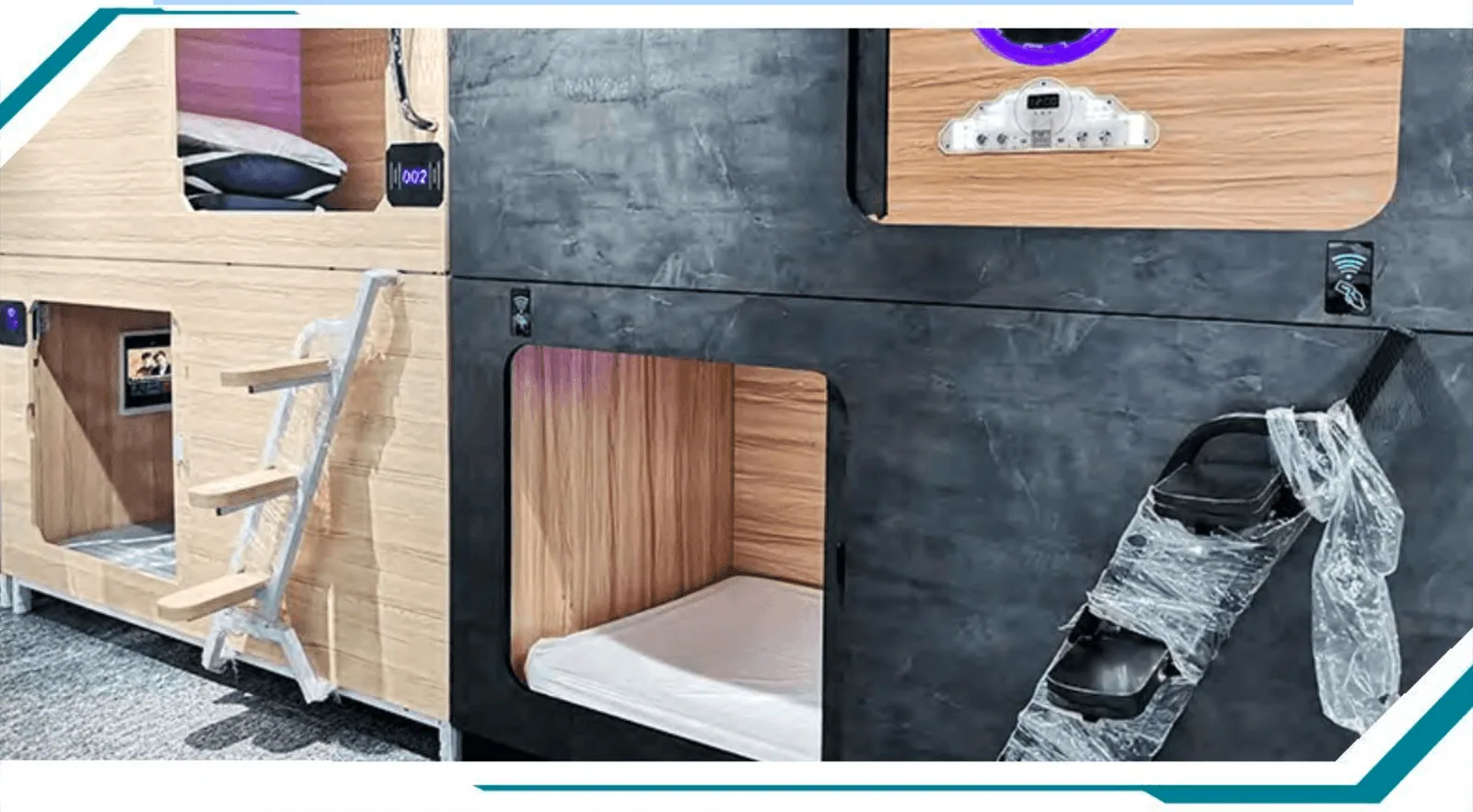
Wooden Series - Horizontal Single
Premium eco multi-layer board construction with metal frame, offering natural wood-grain aesthetics while maintaining all essential capsule bed features.
Market deep-dive
The Kushinagar pod-hotel opportunity
Kushinagar holds a place in world history that few Indian districts can claim: it is where Gautama Buddha drew his final breath around 483 BCE, attaining Mahaparinirvana and setting in motion 2,500 years of pilgrimage. The Mahaparinirvana Temple, rebuilt by the Indian government in 1956 to mark the 2,500th Buddhist Era, shelters a six-metre reclining Buddha carved from a single block of red sandstone — unearthed by British archaeologist Archibald Carlleyle in 1876 from centuries of forest growth. Nearby, the Ramabhar Stupa marks the cremation site, while the Matha Kuar Shrine preserves a tenth-century seated Buddha. These are not replicas or reconstructions; they are primary archaeological evidence of one of humanity's most influential spiritual events, drawing monks and devotees from Sri Lanka, Thailand, Myanmar, Japan, and China.
Yet Kushinagar's accommodation infrastructure remains stubbornly mismatched with its global significance. Most pilgrims day-trip from Gorakhpur (53 km west) or sleep in shared dharamshalas and basic monastery guest rooms — the Myanmar Buddha Vihar, the Wat Thai Guest House, the Birla Hindu Dharamshala. The district's sole formal hospitality corridor offers fewer than ten hotels, none of them branded. Meanwhile, the Kushinagar International Airport — inaugurated by Prime Minister Modi in October 2021 with a 3.2-km runway capable of handling Boeing 737-900 aircraft — stands largely idle, awaiting the scheduled commercial flights that UDAN routes to Delhi, Agra, and Gaya promise to deliver. This is the gap a BIDUA Pods installation fills: clean, private, tech-enabled sleeping pods at a fraction of hotel pricing, ready before the next wave of air connectivity arrives.
Beyond pilgrimage, the district pulses with the rhythms of an intensely agrarian economy. Over 68,700 hectares of sugarcane roll across its flat Gangetic alluvial plains, historically feeding mills like the now-shuttered Kanpur Sugar Works and generating seasonal demand from crushing-season workers and cane traders. Paddy and wheat dominate the kharif and rabi cycles, while mango orchards (16,191 MT annual production) and litchi groves add horticultural depth. The Padrauna mandi and nine satellite rural markets draw traders from across eastern UP and Bihar during harvest peaks — traders who currently have nowhere hygienic to sleep between early-morning auction rounds. The Autonomous State Medical College (ASMC) Kushinagar adds a new demand vector: patient attendants from surrounding villages who need overnight stays while family members receive treatment, just as AIIMS and BRD Medical College in Gorakhpur already generate attendant demand 53 km away.
For a pod-hotel investor, Kushinagar offers something rare: a Tier 3 cost base with Tier 1 international visibility. Monthly commercial rent in Padrauna runs around Rs 30,000 for a 3,000-4,000 sqft floor — a fraction of Gorakhpur or Varanasi rates — while the district's position on the four-site Buddhist Circuit (Lumbini, Bodh Gaya, Sarnath, Kushinagar) guarantees a baseline of foreign tourist traffic that no other Tier 3 town in India can match. The Kaptanganj rail junction and Padrauna station add year-round transit demand, and the Indo-Nepal border at Sonauli (via neighbouring Maharajganj) funnels cross-border pilgrims heading to Lumbini, Buddha's birthplace 170 km north. A 50-pod installation near the pilgrimage zone or Padrauna town centre captures pilgrims, transit passengers, medical attendants, and seasonal traders — four distinct demand streams that collectively smooth occupancy across the calendar and justify an early-mover bet on one of India's most underserved sacred destinations.
Kushinagar pod hotel — FAQs
Why does Kushinagar need a sleeping pod hotel when it already has dharamshalas and monastery guest houses?+
Kushinagar's existing accommodation is mostly shared dharamshalas (like Birla Hindu Dharamshala) or monastery guest rooms (Myanmar Buddha Vihar, Wat Thai Guest House) with limited privacy and basic facilities. A Japanese-style capsule hotel or sleeping pod setup offers individual climate-controlled pods with personal charging points and luggage storage — a massive upgrade for international Buddhist pilgrims from Thailand, Sri Lanka, Japan, and Myanmar who expect hygiene and privacy but cannot find branded budget hotels in the area.
Where is the best location for a pod hotel or nap pod facility in Kushinagar district?+
Two locations make strong business cases: (1) Near the Mahaparinirvana Temple complex in Kasia/Kushinagar town, where international pilgrims concentrate; (2) Padrauna town centre near the railway station and District Hospital, capturing transit travellers, government officials, and medical attendants. Both offer commercial rent under Rs 35,000/month for 3,000-4,000 sqft, making pod hotel economics highly attractive at Tier 3 pricing.
How many tourists visit Kushinagar annually and what is the demand for budget accommodation?+
Kushinagar is one of the four holiest Buddhist pilgrimage sites globally, drawing an estimated 10-15 lakh domestic and international visitors annually during festivals like Buddha Purnima and Abhidhamma Day. In November 2025 alone, over 10,000 devotees from 40 countries arrived for the funeral of Mahasthavir Bhadanta Gyaneshwar. Despite this footfall, the town has fewer than 10 formal hotels — creating a massive gap that Chinese-style pod hotels or capsule accommodation can fill affordably.
Is a capsule hotel near Kushinagar International Airport a viable business?+
Yes, with caveats on timing. The airport (inaugurated October 2021, 3.2 km runway, capacity for five Boeing 737-900s) currently lacks regular scheduled flights but has UDAN routes planned to Delhi, Agra, Gaya, and Kanpur, with Air India Express targeting a Delhi-Kushinagar service. Once commercial flights resume, a pod hotel or hourly rest facility within the 19-km airport-to-Padrauna corridor will capture pre-flight, post-flight, and layover demand — particularly from international Buddhist tour groups.
What makes pod hotels different from regular budget hotels in small towns like Padrauna or Kasia?+
Pod hotels (also called sleeping pods, nap pods, or capsule hotels) are space-efficient, tech-enabled accommodation units that fit 50 individual pods in the same floor area where a traditional hotel manages only 15-20 rooms. Each pod includes a personal ventilation system, USB charging, reading light, and privacy curtain or door — at roughly half the nightly rate of a budget hotel. For Kushinagar's mix of pilgrims, railway transit passengers, and mandi traders, this means clean private rest from Rs 600-900/night instead of Rs 1,500+ at the few available hotels.
Can a sleeping pod business in Kushinagar serve both pilgrims and local commercial travellers?+
Absolutely — this dual-demand model is what makes Kushinagar uniquely attractive. During pilgrim season (October-March, especially Buddha Purnima and Abhidhamma Day), international and domestic Buddhist tourists fill pods near the temple zone. Year-round, the Padrauna location captures railway transit passengers (Kaptanganj Junction handles Gorakhpur-Chhapra-Katihar traffic), ASMC medical attendants, sugarcane traders during crushing season, and government officers visiting the district headquarters. This diversified demand smooths occupancy across seasons.
Start your Kushinagar pod hotel with BIDUA
Sign up to design your space in 3D, build a presentation, and get a quotation + ROI from one dashboard — or talk to our team for a custom Kushinagar plan.