Tier 3 pod-hotel market · Uttar Pradesh
Pod Hotel in Lalitpur — Bundelkhand's NH-44 Gateway to Deogarh, Orchha & Khajuraho
Low urbanisation but high transit footfall thanks to NH-44 and mainline rail; the 1,980 MW Bajaj Energy thermal plant and ASMC medical college generate steady non-resident worker and student inflow that far outstrips the town's limited hotel supply.

Population & catchment
~12.2 lakh (1,221,592 per 2011 Census; estimated ~14-15 lakh by 2026)
Urban pull
Only 14.4% urban — overwhelmingly rural district (85.6%) with Lalitpur town (1.33 lakh) as the sole significant urban centre
Economic base
Lalitpur's economy rests on three pillars: agriculture (wheat, pulses, oilseeds across the Bundelkhand plateau), heavy power generation (the 1,980 MW Bajaj Energy supercritical thermal plant is UP's largest private-sector power station), and mineral extraction (granite, pyrophyllite, and sandstone quarried for domestic and export markets). The district's ODOP product is the Zari Silk Saree — a Chanderi-style handloom craft practised by 400-plus weaver families since the 15th century — while cottage industries include tanning, sawmilling, ironsmithing, and soapmaking.
Around Lalitpur
Key landmarks and footfall hubs that drive short-stay demand in Lalitpur.
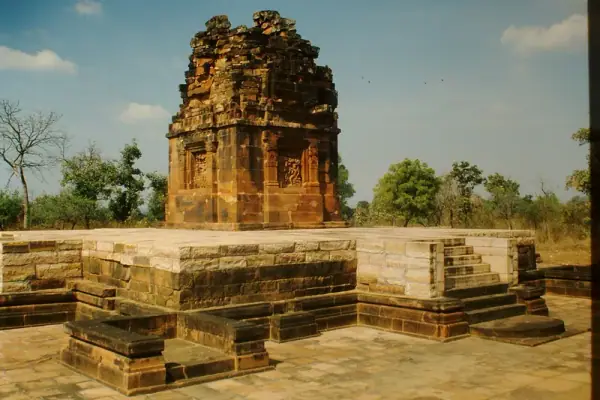
Dashavatara Temple, Deogarh — 6th-century Gupta-era Vishnu shrine
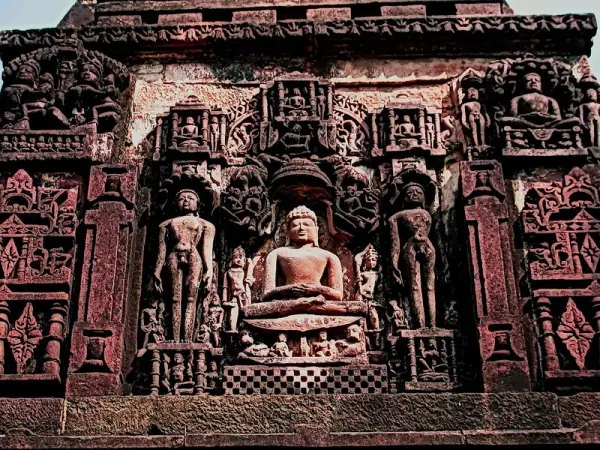
Deogarh Jain Temple Complex — 31 hilltop temples with 2,000+ sculptures
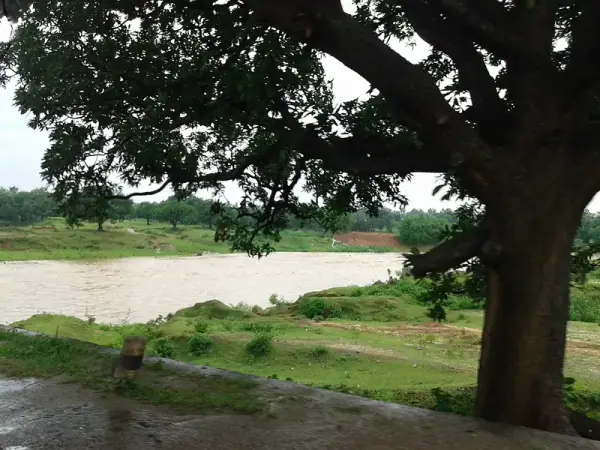
Betwa River at Deogarh — scenic valley setting of the temple sites
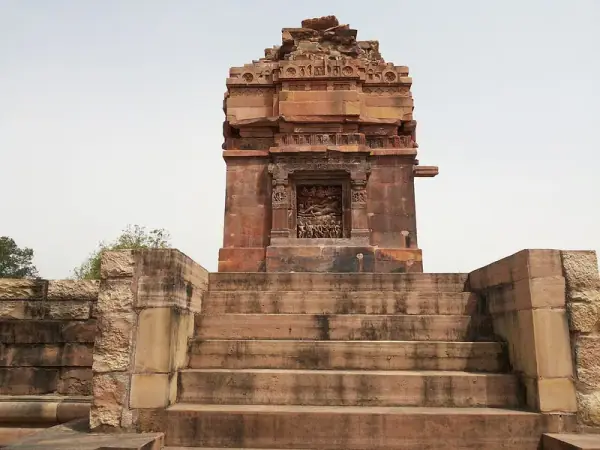
Front elevation of the Dashavatara Temple, Deogarh
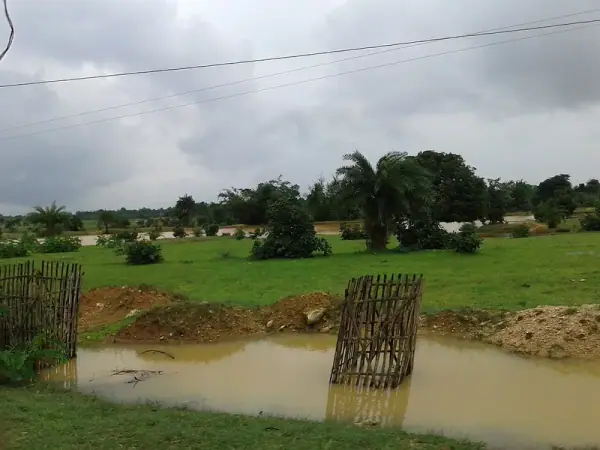
Deogarh landscape — Betwa River valley and Vindhya foothills
Why a pod hotel works in Lalitpur
Lalitpur town has virtually no branded or organised accommodation — a handful of dharamshalas and basic lodges serve over 12 lakh district residents, thousands of thermal-plant contract workers, ASMC medical students, Deogarh heritage tourists, and the constant stream of NH-44 highway travellers. The gap between demand and supply is extreme: Jhansi (97 km away) is the nearest town with any semblance of hotel infrastructure, leaving Lalitpur's own transit and industrial corridor completely underserved.
Lalitpur sits on NH-44 (Kashmir-to-Kanyakumari corridor) and the Delhi-Mumbai mainline rail route, making it a natural stopover for long-distance highway travellers and rail passengers. The district draws archaeology enthusiasts to the UNESCO-tentative-listed Dashavatara Temple at Deogarh, Jain pilgrims to the 31-temple complex on Deogarh Hill, Hindu devotees to Neelkantheshwar and Muchkund Cave, and water-sports visitors to Rajghat Dam. Proximity to Jhansi (97 km), Orchha (110 km), and Khajuraho (175 km) positions Lalitpur as a base camp for the Bundelkhand heritage circuit.
Best ways to use pods here
- NH-44 highway rest stop — round-the-clock pods for truck drivers and long-distance bus passengers on India's longest national highway
- Lalitpur Junction railway transit pods — affordable overnight stay for passengers on break-of-journey between Delhi, Mumbai, Chennai, and Kolkata
- Thermal power plant contractor housing — shift-rotation pods for LPGCL's rotating workforce of engineers, technicians, and construction crews
- Medical college student and patient-attendant stay — affordable pods near ASMC hospital for MBBS students, exam candidates, and families of referred patients
- Deogarh heritage and pilgrimage base camp — pods for archaeology tourists, Jain pilgrims, and Bundelkhand circuit travellers visiting Deogarh, Orchha, and Khajuraho
Where the demand sits in Lalitpur
Transit & travel
- •Lalitpur Junction railway station — mainline halt on Delhi-Mumbai route with Shatabdi, Malwa Express, and daily services to 15+ major cities
- •NH-44 (North-South Corridor / Golden Quadrilateral) passes through the town, heavy truck and bus traffic 24/7
- •Lalitpur Airstrip — only AAI-operated airstrip in the Bundelkhand region
- •UPSRTC and private bus depot with direct services to Jhansi, Kanpur, Agra, Gwalior, Bhopal, Sagar, and Indore
- •Tikamgarh-Khajuraho rail extension (via Lalitpur) opened new tourist rail corridor
Healthcare demand
- •Autonomous Government Medical College (ASMC) Lalitpur — NMC-recognised MBBS campus with attached multi-speciality teaching hospital at Amarpur (26-acre campus)
- •District Hospital Lalitpur — primary public referral centre for the entire district
- •16+ registered hospitals and nursing homes across Lalitpur town serving 1.2 million district residents
Education & coaching
- •Government Polytechnic Lalitpur — diploma programmes in civil, mechanical engineering and office management on Mehroni Road
- •Government Polytechnic Talbehat — established 2013, offers computer science, electronics, electrical, and mining engineering diplomas
- •ASMC Lalitpur — draws MBBS students and interns from across UP and neighbouring states
- •Multiple degree colleges affiliated to Bundelkhand University, Jhansi
Industry & trade
- •Lalitpur Thermal Power Station (LPGCL / Bajaj Energy) — 1,980 MW supercritical coal plant, largest private-sector thermal station in UP, employs thousands
- •Lalitpur Solar Power Plant — 30 MW photovoltaic installation (commissioned 2015)
- •Altratech Cement manufacturing facility
- •Granite and pyrophyllite mining belt — marble-granite exported overseas
- •Zari Silk Saree (Chanderi) handloom cluster — ODOP product, 400+ weaver households, craft dating to 15th century
Tourism & pilgrimage
- •Dashavatara Temple, Deogarh — 6th-century Gupta-era Vishnu temple, earliest known Panchayatan shrine in North India, on UNESCO tentative list
- •Deogarh Jain Temple Complex — 31 temples (8th-17th century) with 2,000+ sculptures on hilltop fort overlooking the Betwa River
- •Rajghat Dam (Rani Laxmi Bai Dam) — inter-state dam on Betwa with boating, water sports, and boat club facilities
- •Fort of Talbehat — 1857 freedom-struggle fort of Raja Mardan Singh Bundela with Angad, Hanuman, and Narasimha temples inside
- •Neelkantheshwar Trimurti Temple, Pali — Chandel-era Shiva shrine with massive Kailash-mounted sculpture, 45 km south of Lalitpur
- •Muchkund Cave — natural cave complex in forested valley near Dhaujari, associated with Mahabharata-era Krishna legend
- •Dudhai — 56-foot rock-cut Narasimha Avatar sculpture carved into a hillside, 40 km from Deogarh
Profit & ROI projection for Lalitpur
A starter model based on a minimum 50 pods at 70% occupancy and an indicative ₹750/pod/night. Costs use the same itemised basis as our full ROI calculator — pods, add-ons, 18% GST, transport, fit-out and full monthly running cost.
Important: this is only an ASSUMPTION-based projection — not an accurate quote or a guarantee.
The real cost, occupancy, pricing and profit will change with your exact location, property rent, season, competition and how you run the business. Treat these figures as a planning estimate only. For real numbers, use the full calculator or get a custom quote from BIDUA.
Total investment
₹74.7 lakh
50 pods + add-ons + GST + fit-out
Monthly revenue
₹7.9 lakh
35 of 50 pods filled/night
Monthly net profit
₹3.6 lakh
46% margin after all costs
Payback
~21 mo
59% annual ROI
Break-even occupancy ≈ 28% — you only need this much filled to cover all costs; everything above is profit.
| 50 pods (BIDUA mix) | ₹40,30,000 |
| Add-ons (mattress, bedding, panels, safe lock, table) | ₹16,25,200 |
| GST @ 18% (pods + add-ons) | ₹10,17,936 |
| Transport (warehouse → site) | ₹4,00,000 |
| Fit-out, AC, reception, branding + rent deposit | ₹4,00,000 |
| Total investment | ₹74,73,136 |
| Revenue (50 × 70% × ₹750 × 30) | ₹7,87,500 |
| Fixed costs (rent, staff, power, housekeeping…) | – ₹2,42,000 |
| Variable (OTA + marketing + gateway, 23%) | – ₹1,81,125 |
| Net profit / month | ₹3,64,375 |
| Net profit / year | ₹43,72,500 |
Indicative Tier 3 assumptions for a small Bundelkhand town — actual rates will vary with exact location, property condition, and seasonality. These figures feed the shared ROI model and are not a guarantee of returns. Figures are indicative estimates, not guarantees.
Lalitpur pod-hotel business plan & study
A step-by-step plan to launch a capsule / sleeping-pod hotel in Lalitpur — from picking the right location to licences, setup, pricing and reaching profitable occupancy.
Demand drivers
19+
transit, hospital, student & tourism footfall points
Space needed (50 pods)
2250–2750 sq ft
single rented floor + reception & washrooms
Break-even occupancy
28%
fill above this and you are in profit
Indicative payback
~21 months
on ₹74.7 lakh all-in setup
1. Pick the right location
Target a floor near Autonomous Government Medical College (ASMC) Lalitpur — NMC-recognised MBBS campus with attached multi-speciality teaching hospital at Amarpur (26-acre campus) or NH-44 (North-South Corridor / Golden Quadrilateral) passes through the town, heavy truck and bus traffic 24/7. Best opening use-case: NH-44 highway rest stop — round-the-clock pods for truck drivers and long-distance bus passengers on India's longest national highway.
2. Plan investment & funding
Budget about ₹74.7 lakh all-in for 50 pods (pods + add-ons + 18% GST + transport + fit-out & deposit). Many operators fund this with a mix of own capital + a small business/MSME loan against projected cash flow.
3. Licences & compliance
Arrange a municipal trade licence, GST registration, fire safety NOC, police/guest verification (where required), and basic building & sanitation approvals before launch.
4. Build & launch
BIDUA shares a free 3D layout, then delivers and helps install the pods. Civil, electrical, AC and reception fit-out typically takes ~30–45 days, so you can open quickly on a leased floor.
5. Pricing & operations
Start at ~₹750/pod/night, and add hourly slots near hospitals for day-rest demand. Run lean with a small reception + housekeeping team; keep pods clean, private and secure to earn repeat stays.
6. Marketing & occupancy
List on OTAs (MakeMyTrip, Booking.com, OYO, Goibibo) + Google Business Profile, and tie up with nearby hospitals, coaching institutes and tour operators to push occupancy past the 28% break-even quickly.
Key risks & how to manage them
Low occupancy in early months. Open with OTA listings + hospital/coaching tie-ups; use hourly pricing to fill day-time.
High rent eating margins. Choose a slightly off-main but accessible floor near Lalitpur Junction railway station — mainline halt on Delhi-Mumbai route with Shatabdi, Malwa Express, and daily services to 15+ major cities; rent is the biggest lever.
Seasonality / exam & festival peaks. Flex pricing up in peak weeks; offer weekly/monthly pod rentals to students for a stable base.
Cleanliness & safety complaints. Invest in housekeeping, safe locks and CCTV — reputation drives repeat and OTA ratings.
Recommended pod setup for Lalitpur
50-pod mixed-configuration unit near Lalitpur Junction or the NH-44 bypass: 30 standard single capsules for highway transit and rail passengers, 10 double/family pods for tourist groups and patient attendants, 10 premium pods for power-plant executives and visiting professionals. Include 24/7 reception, luggage storage, and a travel desk for Deogarh-Orchha-Khajuraho day-trip bookings.
GALAXY Series - Horizontal Single
Standard ABS shell with metal frame featuring TV slot, security sliding door, and ergonomic non-slip ladder. Perfect for hotels, airports, and commercial applications.
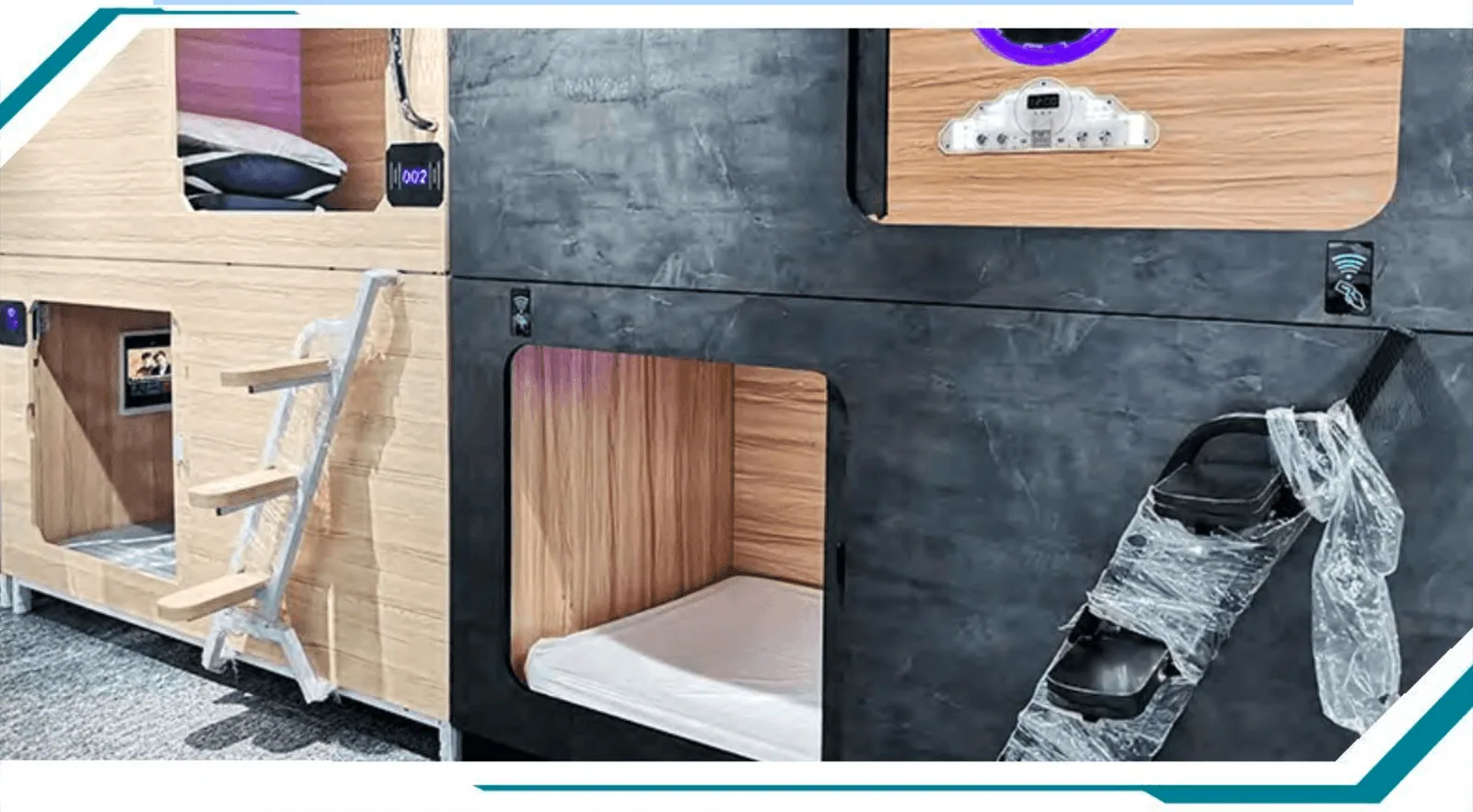
Wooden Series - Horizontal Single
Premium eco multi-layer board construction with metal frame, offering natural wood-grain aesthetics while maintaining all essential capsule bed features.
Market deep-dive
The Lalitpur pod-hotel opportunity
Lalitpur is the quiet powerhouse of Bundelkhand — a district where the Vindhya foothills flatten into the Betwa River valley, where Gupta-era sculptors carved one of India's earliest stone temples, and where a modern 1,980-megawatt supercritical thermal plant now hums on the same ancient plateau. Founded by Raja Sumer Singh Bundela and named after his queen Lalita Devi, the town was a princely stronghold, a colonial district headquarters from 1844, and a flashpoint of the 1857 uprising under the rebel chieftain Raja Mardan Singh. Today it sits on NH-44, the Kashmir-to-Kanyakumari spine of India, and on the Delhi-Mumbai mainline rail route — twin arteries that push an extraordinary volume of transit traffic through a town with almost no organised accommodation.
The district's economy is anchored by the Lalitpur Power Generation Company (Bajaj Energy), whose three 660 MW units make it the largest private-sector thermal station in Uttar Pradesh, powering the state grid and employing thousands of engineers, technicians, and contract workers who rotate on shifts and need affordable short-stay housing. Around this industrial core, granite and pyrophyllite quarries export stone overseas, Altratech Cement feeds the region's construction boom, and a 30 MW solar farm adds to the energy cluster. In the lanes of the old town, 400-plus handloom families weave Zari Silk Sarees — a Chanderi-style craft dating to the 15th century and now Lalitpur's official ODOP product — while the newly established Autonomous Government Medical College draws MBBS students and patient attendants from across the state.
Thirty kilometres from town, the hilltop fortress of Deogarh commands the Betwa and hosts two of India's most significant temple clusters: the 6th-century Dashavatara Temple — the earliest known Panchayatan shrine in North India, now on UNESCO's tentative list — and a complex of 31 Jain temples spanning the 8th to 17th centuries, adorned with over 2,000 sculptures. The Rajghat Dam (Rani Laxmi Bai Dam) on the Betwa offers boating and water sports, Talbehat Fort preserves 1857-era cannons and inner temples, Neelkantheshwar's Chandel-era Shiva shrine rises near Pali, and the 56-foot rock-cut Narasimha at Dudhai stuns visitors with its sheer scale. With Orchha's Bundela palaces 110 km north and Khajuraho's World Heritage temples 175 km east, Lalitpur is the natural overnight node for the emerging Bundelkhand heritage circuit.
For BIDUA Pods, Lalitpur presents a textbook Tier 3 opportunity: massive latent demand from highway haulers, rail passengers, power-plant contractors, medical students, and heritage tourists, set against near-zero branded supply and some of the lowest commercial rents in Uttar Pradesh. A 50-pod unit near Lalitpur Junction or the NH-44 bypass could serve round-the-clock check-ins at around Rs 750 per night — a price point that undercuts even the town's basic lodges on quality while delivering hotel-grade privacy, climate control, and digital convenience. As Bundelkhand's infrastructure improves and Deogarh moves closer to full UNESCO recognition, the district's visitor numbers will only climb — and the first mover with modern pod accommodation will own the market.
Lalitpur pod hotel — FAQs
Why does Lalitpur need a sleeping pod hotel when it is a small town?+
Lalitpur punches above its weight in transit traffic: NH-44 (India's longest highway) and the Delhi-Mumbai mainline rail route pass through daily, the 1,980 MW Bajaj Energy thermal plant brings hundreds of rotating contract workers, and ASMC medical college draws students and patient families. The town has almost no organised accommodation — a capsule hotel fills an acute gap that conventional hotels have ignored.
What is a Japanese-style pod hotel and how does it work in a place like Lalitpur?+
A Japanese pod hotel (also called a capsule hotel or nap pod hotel) provides compact, fully private sleeping capsules with AC, charging points, and personal lighting at a fraction of traditional hotel cost. In Lalitpur, this format is ideal for highway travellers needing a quick rest, rail passengers on overnight break-of-journey, and thermal-plant workers on shift rotation — all groups that need clean, affordable, short-stay beds rather than full hotel rooms.
Where in Lalitpur would a pod hotel be most effective?+
Three zones offer the strongest demand: (1) near Lalitpur Junction railway station to capture mainline rail passengers, (2) along the NH-44 bypass for round-the-clock highway traffic, and (3) near ASMC Medical College at Amarpur for student and patient-attendant stays. A Deogarh-adjacent satellite unit could also serve heritage tourists visiting the Dashavatara Temple and Jain temple complex.
Can tourists use BIDUA Pods as a base to visit Deogarh, Orchha, and Khajuraho?+
Absolutely. Deogarh's UNESCO-tentative-listed Dashavatara Temple is just 30 km from Lalitpur town, Orchha's Bundela palaces are 110 km away, and Khajuraho's World Heritage temples are reachable in under 3 hours by road or direct rail. A budget pod hotel in Lalitpur gives heritage-circuit travellers an affordable overnight base that the Bundelkhand region currently lacks.
How is a Chinese-style pod hotel different from a budget hotel or dharamsala in Lalitpur?+
Unlike Lalitpur's existing dharamshalas and basic lodges, a modern pod hotel (whether Japanese or Chinese capsule-hotel style) offers climate-controlled private pods with digital locks, USB charging, fresh linen, and app-based booking — all at nightly rates starting around Rs 750. It delivers hotel-grade hygiene and privacy at hostel-level pricing, which no current option in the town provides.
What is the expected return on investment for a 50-pod nap pod hotel in Lalitpur?+
At an indicative nightly rate of Rs 750 and 70% occupancy — conservative for a town on NH-44 with year-round power-plant and rail traffic — the shared ROI model projects healthy unit economics. Lalitpur's low commercial rents (around Rs 35,000/month for a 3,000-4,000 sq ft floor) keep operating costs well below Tier 1 cities, improving margins. Exact returns depend on location, fit-out quality, and management.
Start your Lalitpur pod hotel with BIDUA
Sign up to design your space in 3D, build a presentation, and get a quotation + ROI from one dashboard — or talk to our team for a custom Lalitpur plan.