Tier 3 pod-hotel market · Sikkim
Pakyong District: Gateway to Sikkim’s Himalayas
The predominant community is Nepali, with a rich cultural heritage influenced by Tibetan Buddhism.
Population & catchment
Pakyong ≈ 74,583 people (2011 census; ~80,000 current estimate) — among the smallest districts in Sikkim.
Urban pull
≈30% urban; HQ town Pakyong is the largest settlement.
Economic base
Pakyong's economy is driven by agriculture (cardamom, ginger), tourism, and the newly operational Pakyong Airport which fuels connectivity and local business growth.
Around Pakyong
Key landmarks and footfall hubs that drive short-stay demand in Pakyong.
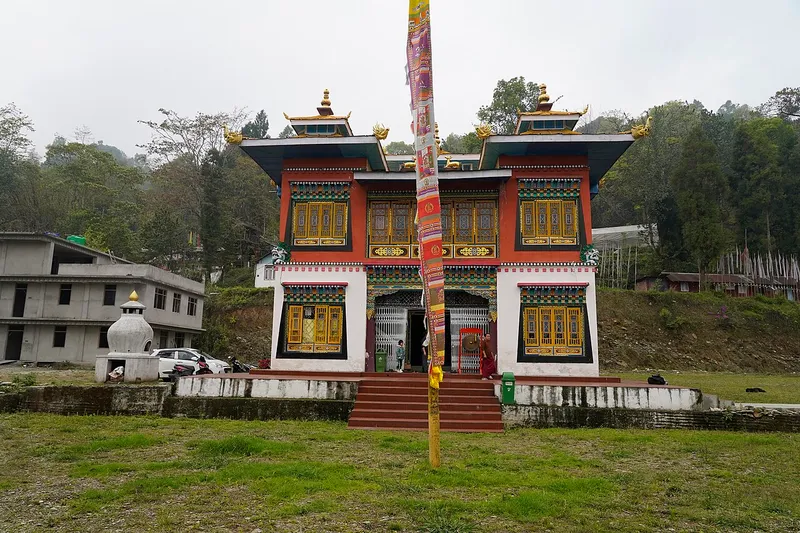
Pakyong Monastery
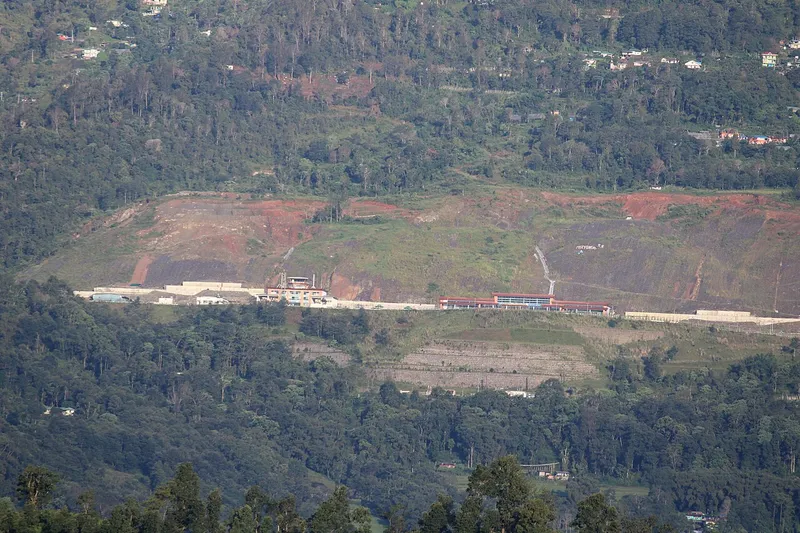
Pakyong Airport

Mt. Kanchenjunga

Pendam village
Why a pod hotel works in Pakyong
Pod hotels win here due to limited mid‑range hotels and seasonal surges of tourists and airport travelers seeking clean, affordable, secure sleep spaces.
Growing influx of tourists, trekkers and airport passengers creates demand for affordable, short‑stay accommodation.
Best ways to use pods here
- Budget stay for pilgrims at Pakyong Monastery (≈100‑year‑old cultural site)
- Capsule lodging for travelers using Pakyong Airport
- Accommodation for trekkers heading to Mt. Kanchenjunga
- Pods for visitors to scenic Pendam village
- Hourly pods for local workers and students during peak periods
Where the demand sits in Pakyong
Transit & travel
- •Pakyong Airport (PYG)
- •NH 10
- •NH 717A
- •Pakyong Bus Stand
Healthcare demand
- •Pakyong District Hospital
- •Sikkim Manipal Institute of Medical Sciences (nearby)
- •Private clinics in Pakyong town
Education & coaching
- •Pakyong Government College
- •Sikkim Government Secondary School
- •Local primary schools
Industry & trade
- •Cardamom processing units
- •Horticulture farms
- •Handicraft workshops
Tourism & pilgrimage
- •Pakyong Monastery
- •Mt. Kanchenjunga viewpoint
- •Pendam village
Profit & ROI projection for Pakyong
A starter model based on a minimum 50 pods at 70% occupancy and an indicative ₹800/pod/night. Costs use the same itemised basis as our full ROI calculator — pods, add-ons, 18% GST, transport, fit-out and full monthly running cost.
Important: this is only an ASSUMPTION-based projection — not an accurate quote or a guarantee.
The real cost, occupancy, pricing and profit will change with your exact location, property rent, season, competition and how you run the business. Treat these figures as a planning estimate only. For real numbers, use the full calculator or get a custom quote from BIDUA.
Total investment
₹78.7 lakh
50 pods + add-ons + GST + fit-out
Monthly revenue
₹8.4 lakh
35 of 50 pods filled/night
Monthly net profit
₹4.0 lakh
48% margin after all costs
Payback
~20 mo
61% annual ROI
Break-even occupancy ≈ 27% — you only need this much filled to cover all costs; everything above is profit.
| 50 pods (BIDUA mix) | ₹40,30,000 |
| Add-ons (mattress, bedding, panels, safe lock, table) | ₹16,25,200 |
| GST @ 18% (pods + add-ons) | ₹10,17,936 |
| Transport (warehouse → site) | ₹4,00,000 |
| Fit-out, AC, reception, branding + rent deposit | ₹8,00,000 |
| Total investment | ₹78,73,136 |
| Revenue (50 × 70% × ₹800 × 30) | ₹8,40,000 |
| Fixed costs (rent, staff, power, housekeeping…) | – ₹2,47,000 |
| Variable (OTA + marketing + gateway, 23%) | – ₹1,93,200 |
| Net profit / month | ₹3,99,800 |
| Net profit / year | ₹47,97,600 |
These are indicative assumptions and not a guarantee. Figures are indicative estimates, not guarantees.
Pakyong pod-hotel business plan & study
A step-by-step plan to launch a capsule / sleeping-pod hotel in Pakyong — from picking the right location to licences, setup, pricing and reaching profitable occupancy.
Demand drivers
13+
transit, hospital, student & tourism footfall points
Space needed (50 pods)
2250–2750 sq ft
single rented floor + reception & washrooms
Break-even occupancy
27%
fill above this and you are in profit
Indicative payback
~20 months
on ₹78.7 lakh all-in setup
1. Pick the right location
Target a floor near Pakyong District Hospital or NH 10. Best opening use-case: Budget stay for pilgrims at Pakyong Monastery (≈100‑year‑old cultural site).
2. Plan investment & funding
Budget about ₹78.7 lakh all-in for 50 pods (pods + add-ons + 18% GST + transport + fit-out & deposit). Many operators fund this with a mix of own capital + a small business/MSME loan against projected cash flow.
3. Licences & compliance
Arrange a municipal trade licence, GST registration, fire safety NOC, police/guest verification (where required), and basic building & sanitation approvals before launch.
4. Build & launch
BIDUA shares a free 3D layout, then delivers and helps install the pods. Civil, electrical, AC and reception fit-out typically takes ~30–45 days, so you can open quickly on a leased floor.
5. Pricing & operations
Start at ~₹800/pod/night, and add hourly slots near hospitals for day-rest demand. Run lean with a small reception + housekeeping team; keep pods clean, private and secure to earn repeat stays.
6. Marketing & occupancy
List on OTAs (MakeMyTrip, Booking.com, OYO, Goibibo) + Google Business Profile, and tie up with nearby hospitals, coaching institutes and tour operators to push occupancy past the 27% break-even quickly.
Key risks & how to manage them
Low occupancy in early months. Open with OTA listings + hospital/coaching tie-ups; use hourly pricing to fill day-time.
High rent eating margins. Choose a slightly off-main but accessible floor near Pakyong Airport (PYG); rent is the biggest lever.
Seasonality / exam & festival peaks. Flex pricing up in peak weeks; offer weekly/monthly pod rentals to students for a stable base.
Cleanliness & safety complaints. Invest in housekeeping, safe locks and CCTV — reputation drives repeat and OTA ratings.
Recommended pod setup for Pakyong
20 horizontal singles + 10 vertical singles + 5 double pods on a single floor of ~3,000 sq ft

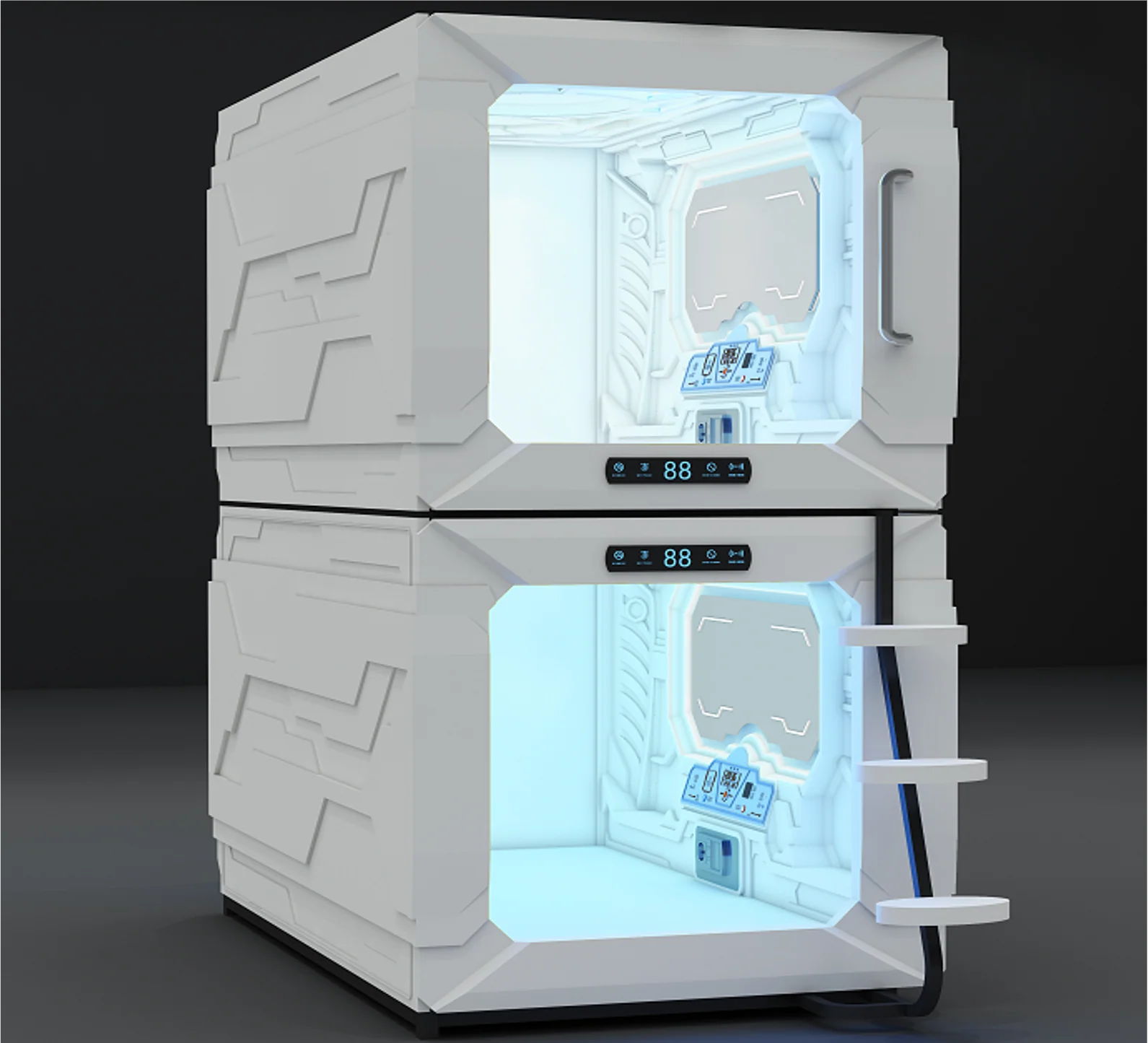
GALAXY Series - Horizontal Single
Standard ABS shell with metal frame featuring TV slot, security sliding door, and ergonomic non-slip ladder. Perfect for hotels, airports, and commercial applications.
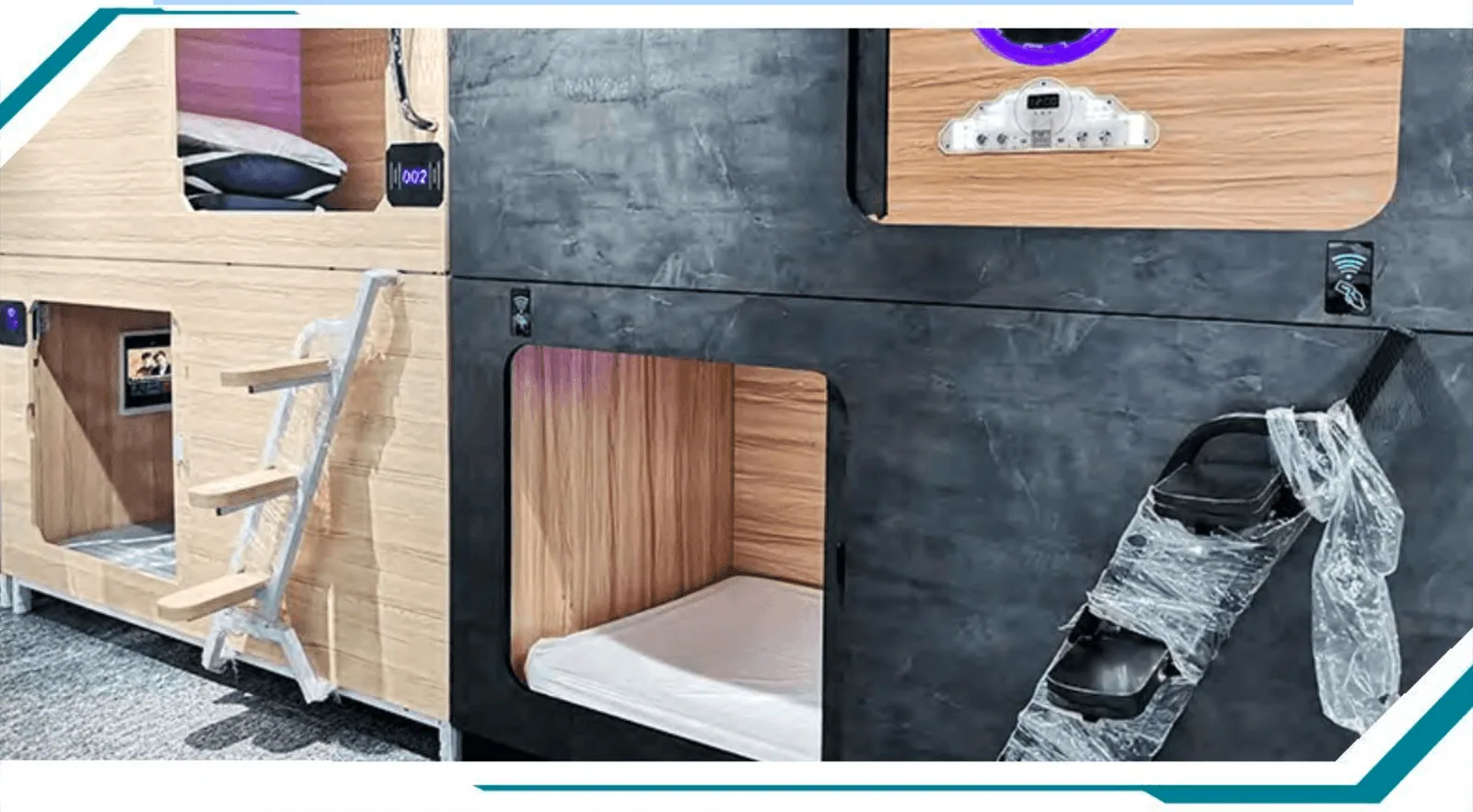
Wooden Series - Horizontal Single
Premium eco multi-layer board construction with metal frame, offering natural wood-grain aesthetics while maintaining all essential capsule bed features.
Market deep-dive
The Pakyong pod-hotel opportunity
Pakyong district, nestled in the eastern foothills of Sikkim, blends verdant tea‑garden valleys with towering Himalayan peaks. With a modest population of about 74,583 (2011 census) and an estimated 80,000 today, it remains one of the state’s smallest districts, yet its Nepali‑majority community preserves a vibrant mix of Tibetan Buddhist traditions and local festivals. The district’s crown jewel, Pakyong Airport, opened in 2018, links the region to major Indian metros, spurring tourism and commerce while the nearby NH 10 and NH 717A ensure road connectivity to Gangtok and beyond.
Agriculture forms the backbone of Pakyong’s economy, especially the cultivation of high‑value cardamom and ginger, while horticulture farms produce prized orchids and other floriculture items. The airport’s presence has catalysed ancillary services—logistics, hospitality, and retail—creating jobs and attracting investors. Handicraft workshops, often centred around Buddhist motifs, add cultural depth to the local market, and the Pakyong Monastery draws pilgrims seeking spiritual solace.
Tourists are drawn to Pakyong for its panoramic views of Mt. Kanchenjunga, trekking routes that wind through pristine forests, and the serene Pendam village known for its tea gardens and riverine charm. These attractions generate a steady flow of visitors, especially during the spring and autumn trekking seasons, creating a clear demand for clean, affordable lodging that traditional hotels struggle to meet.
Pod hotels can uniquely address this gap by offering compact, climate‑controlled capsules that cater to pilgrims, airport passengers, and trekkers alike. Their modular design allows rapid scaling, while hourly and nightly rates suit both short‑stopovers and longer stays. As Pakyong’s tourism infrastructure expands, sleeping pods present a sustainable, low‑cost accommodation solution poised for strong occupancy and steady returns.
Pakyong pod hotel — FAQs
What are sleeping pods?+
Sleeping pods, also called capsule hotels, are compact private rooms offering a bed, lighting and lockable storage for short stays.
How much does a pod cost per night in Pakyong?+
Rates typically range from ₹600 to ₹950 per night, depending on season and pod type.
Can I book a pod for a few hours only?+
Yes, many pod hotels provide hourly rates for travelers needing a quick rest.
Are pods safe and secure?+
Pods are equipped with personal lockers and secure entry systems, ensuring guest safety.
Is Wi‑Fi available in the pods?+
Free high‑speed Wi‑Fi is usually provided in all pod areas.
Do pods have climate control?+
Modern pods include air‑conditioning or heating to suit Pakyong’s cool climate.
Start your Pakyong pod hotel with BIDUA
Sign up to design your space in 3D, build a presentation, and get a quotation + ROI from one dashboard — or talk to our team for a custom Pakyong plan.