Tier 3 pod-hotel market · Uttar Pradesh
Sleeping Pod Hotel in Pilibhit — Gateway to India's TX2 Tiger Reserve
23.8% decadal growth (2001-11), significant Sikh minority (4.2%), and 24.1% Muslim population create diverse pilgrim and trade flows year-round

Population & catchment
~20.3 lakh (2,031,007 — Census 2011); estimated ~24 lakh by 2026
Urban pull
Only 17.3% urban; 82.7% rural — a deeply agrarian Terai district
Economic base
Pilibhit's economy rests on three pillars: sugarcane cultivation and processing (four sugar factories across Majhola, Puranpur, Bisalpur, and the city), India's largest flute-manufacturing cluster that earned it the title 'Bansuri Nagari' (producing an estimated 95% of the country's bansuri), and forest-based eco-tourism anchored by the TX2-award-winning Pilibhit Tiger Reserve. Cross-border agricultural trade with Nepal through the Sharda River corridor adds a seasonal logistics dimension.
Around Pilibhit
Key landmarks and footfall hubs that drive short-stay demand in Pilibhit.
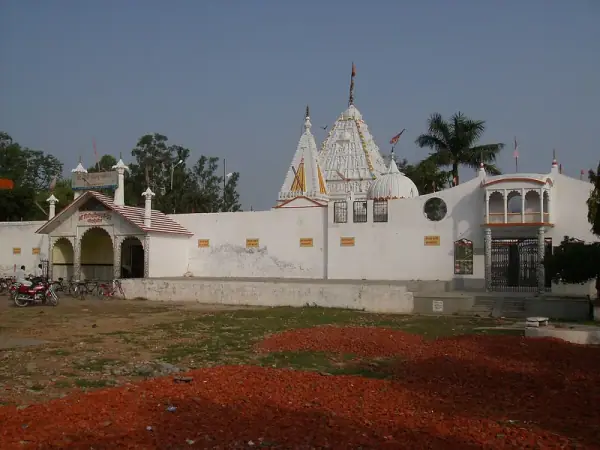
Gauri Shankar Temple, Pilibhit
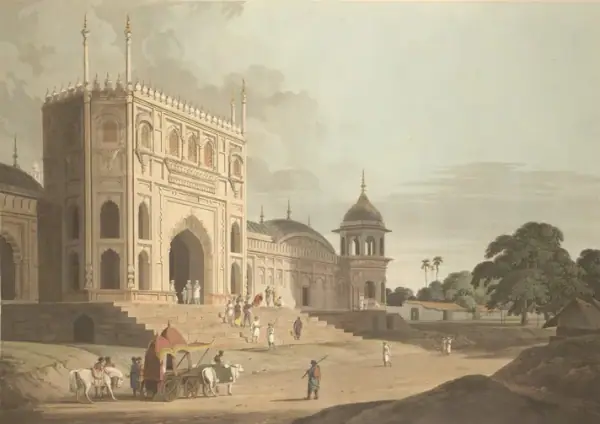
Jama Masjid built by Hafiz Rahmat Khan (1780s)
Chuka Beach, Pilibhit Tiger Reserve
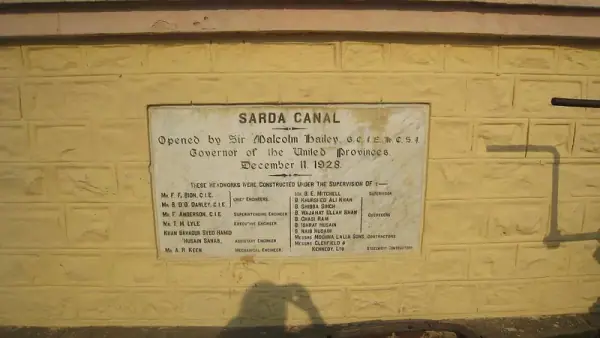
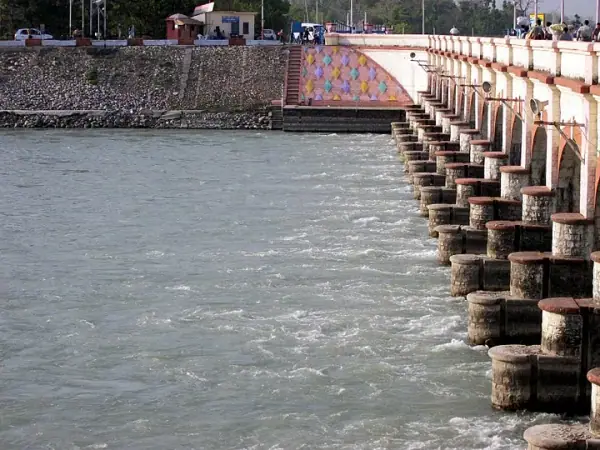
Sharda Canal at Pilibhit
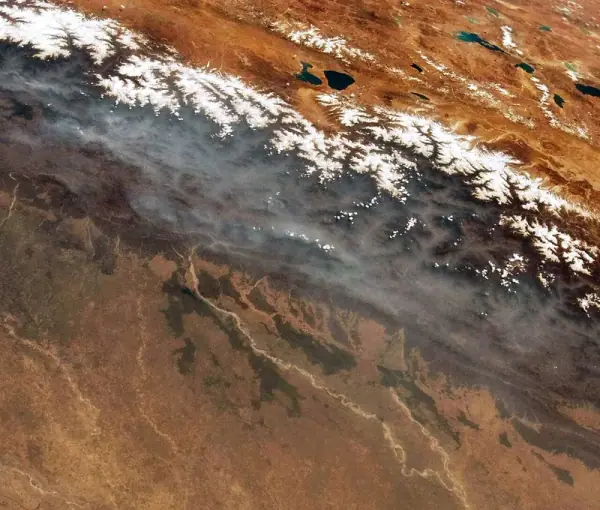
Pilibhit Tiger Reserve from space — Sharda River and Gangetic Plain
Why a pod hotel works in Pilibhit
Pilibhit receives 38,000+ tiger reserve visitors, year-round pilgrim traffic to Gomat Taal and Nanakmatta Sahib, and seasonal sugar-mill labour — yet has zero branded budget accommodation. The nearest chain hotel is in Bareilly, 48 km away. A pod hotel would be the district's first climate-controlled, hygienic micro-stay option, capturing safari tourists, rail transit passengers, medical college attendants, and industrial short-stays that currently go unserved or leak to Bareilly.
Pilibhit sits at the crossroads of wildlife tourism (India's TX2-award-winning tiger reserve), Sikh pilgrimage (Nanakmatta Sahib, 55 km), Indo-Nepal border trade, and the sugar-belt agri-economy of the Terai. NH-74 funnels traffic between Bareilly and the Kumaon hills, while Pilibhit Junction links rail travellers heading to Tanakpur, Shahjahanpur, and Mailani. Safari visitors, flute-trade buyers, sugarcane procurement agents, and cross-border traders all pass through, yet the town has zero branded accommodation below 3-star pricing.
Best ways to use pods here
- Tiger reserve gateway pods — near Mahof Gate or Chuka Beach entry for pre-dawn safari travellers (38,000+ annual visitors)
- Pilibhit Junction transit pods — overnight and nap-pod stays for rail passengers connecting to Bareilly, Tanakpur, and Shahjahanpur
- Medical college attendant pods — affordable stays for patient families at the new 330-bed Autonomous State Medical College hospital
- Sugar-season worker dormitory pods — short-term housing for migrant labour and procurement agents during Nov-Apr crushing season across four mills
- NH-74 highway rest pods — rest-stop capsules for truck drivers and travellers on the Haridwar-Bareilly national highway corridor
Where the demand sits in Pilibhit
Transit & travel
- •Pilibhit Junction railway station — trains to Bareilly, Tanakpur, Shahjahanpur, Mailani
- •NH-74 (Haridwar–Bareilly corridor) passes through the district
- •Bareilly Airport (BEK) 40 km — flights to Delhi, Mumbai, Bengaluru
- •UPSRTC bus depots at Pilibhit, Puranpur, Bisalpur, and Amaria
Healthcare demand
- •Autonomous State Medical College Pilibhit — new 330-bed teaching hospital (est. 2024)
- •District Hospital Pilibhit — primary referral centre for the district
- •Community Health Centres at Amaria and Bilsanda
Education & coaching
- •Autonomous State Medical College Pilibhit (MBBS, affiliated to Atal Bihari Vajpayee Medical University)
- •D.G. Inter College (DGIC) — oldest collegiate institution in the city
- •St. Aloysius College Pilibhit — established degree college
- •Rama College and SVM College — degree and sports facilities
Industry & trade
- •Four sugar factories at Majhola, Puranpur, Bisalpur, and Pilibhit city (Lalit Hari Sugar Factory)
- •Flute-manufacturing cluster — 95% of India's bansuri production ('Bansuri Nagari')
- •Three solvent extraction plants, one flour mill, one steel plant, one alcohol distillery
- •Cross-border agricultural trade with Nepal via the Sharda River corridor
Tourism & pilgrimage
- •Pilibhit Tiger Reserve — India's 46th tiger reserve, TX2 global award winner, 65+ tigers, 450 bird species
- •Chuka Beach — forest eco-tourism spot on Sharda Sagar Dam, 'only beach in UP'
- •Gomat Taal (Fulhar Jheel) at Madhotanda — sacred origin of the 900 km Gomti River
- •Gauri Shankar Temple — 250-year-old Shiva temple on the Devha–Khakra river confluence
- •Gurudwara Nanakmatta Sahib (55 km) — major Sikh pilgrimage, Guru Nanak's 3rd Udasi halt (1514 CE)
- •Dudhwa National Park (134 km) and Kishanpur Wildlife Sanctuary — Terai safari corridor
Profit & ROI projection for Pilibhit
A starter model based on a minimum 50 pods at 70% occupancy and an indicative ₹750/pod/night. Costs use the same itemised basis as our full ROI calculator — pods, add-ons, 18% GST, transport, fit-out and full monthly running cost.
Important: this is only an ASSUMPTION-based projection — not an accurate quote or a guarantee.
The real cost, occupancy, pricing and profit will change with your exact location, property rent, season, competition and how you run the business. Treat these figures as a planning estimate only. For real numbers, use the full calculator or get a custom quote from BIDUA.
Total investment
₹74.7 lakh
50 pods + add-ons + GST + fit-out
Monthly revenue
₹7.9 lakh
35 of 50 pods filled/night
Monthly net profit
₹3.7 lakh
47% margin after all costs
Payback
~20 mo
59% annual ROI
Break-even occupancy ≈ 27% — you only need this much filled to cover all costs; everything above is profit.
| 50 pods (BIDUA mix) | ₹40,30,000 |
| Add-ons (mattress, bedding, panels, safe lock, table) | ₹16,25,200 |
| GST @ 18% (pods + add-ons) | ₹10,17,936 |
| Transport (warehouse → site) | ₹4,00,000 |
| Fit-out, AC, reception, branding + rent deposit | ₹4,00,000 |
| Total investment | ₹74,73,136 |
| Revenue (50 × 70% × ₹750 × 30) | ₹7,87,500 |
| Fixed costs (rent, staff, power, housekeeping…) | – ₹2,37,000 |
| Variable (OTA + marketing + gateway, 23%) | – ₹1,81,125 |
| Net profit / month | ₹3,69,375 |
| Net profit / year | ₹44,32,500 |
Tier 3 Terai town estimates — actual ADR, occupancy, and rent will vary by exact location (near tiger reserve gates vs city centre) and season (Nov-Jun safari peak vs Jul-Oct monsoon low). Figures are indicative estimates, not guarantees.
Pilibhit pod-hotel business plan & study
A step-by-step plan to launch a capsule / sleeping-pod hotel in Pilibhit — from picking the right location to licences, setup, pricing and reaching profitable occupancy.
Demand drivers
17+
transit, hospital, student & tourism footfall points
Space needed (50 pods)
2250–2750 sq ft
single rented floor + reception & washrooms
Break-even occupancy
27%
fill above this and you are in profit
Indicative payback
~20 months
on ₹74.7 lakh all-in setup
1. Pick the right location
Target a floor near Autonomous State Medical College Pilibhit — new 330-bed teaching hospital (est. 2024) or NH-74 (Haridwar–Bareilly corridor) passes through the district. Best opening use-case: Tiger reserve gateway pods — near Mahof Gate or Chuka Beach entry for pre-dawn safari travellers (38,000+ annual visitors).
2. Plan investment & funding
Budget about ₹74.7 lakh all-in for 50 pods (pods + add-ons + 18% GST + transport + fit-out & deposit). Many operators fund this with a mix of own capital + a small business/MSME loan against projected cash flow.
3. Licences & compliance
Arrange a municipal trade licence, GST registration, fire safety NOC, police/guest verification (where required), and basic building & sanitation approvals before launch.
4. Build & launch
BIDUA shares a free 3D layout, then delivers and helps install the pods. Civil, electrical, AC and reception fit-out typically takes ~30–45 days, so you can open quickly on a leased floor.
5. Pricing & operations
Start at ~₹750/pod/night, and add hourly slots near hospitals for day-rest demand. Run lean with a small reception + housekeeping team; keep pods clean, private and secure to earn repeat stays.
6. Marketing & occupancy
List on OTAs (MakeMyTrip, Booking.com, OYO, Goibibo) + Google Business Profile, and tie up with nearby hospitals, coaching institutes and tour operators to push occupancy past the 27% break-even quickly.
Key risks & how to manage them
Low occupancy in early months. Open with OTA listings + hospital/coaching tie-ups; use hourly pricing to fill day-time.
High rent eating margins. Choose a slightly off-main but accessible floor near Pilibhit Junction railway station — trains to Bareilly, Tanakpur, Shahjahanpur, Mailani; rent is the biggest lever.
Seasonality / exam & festival peaks. Flex pricing up in peak weeks; offer weekly/monthly pod rentals to students for a stable base.
Cleanliness & safety complaints. Invest in housekeeping, safe locks and CCTV — reputation drives repeat and OTA ratings.
Recommended pod setup for Pilibhit
50-pod mixed configuration: 30 single AC capsules (solo safari visitors, transit passengers), 12 double/couple pods (tourist couples, visiting faculty), 8 dormitory-cluster pods (sugar-mill workers, student groups). Install near Pilibhit Junction or NH-74 bypass. Add luggage lockers, sunrise safari booking desk, and mobile charging stations.

GALAXY Series - Horizontal Single
Standard ABS shell with metal frame featuring TV slot, security sliding door, and ergonomic non-slip ladder. Perfect for hotels, airports, and commercial applications.
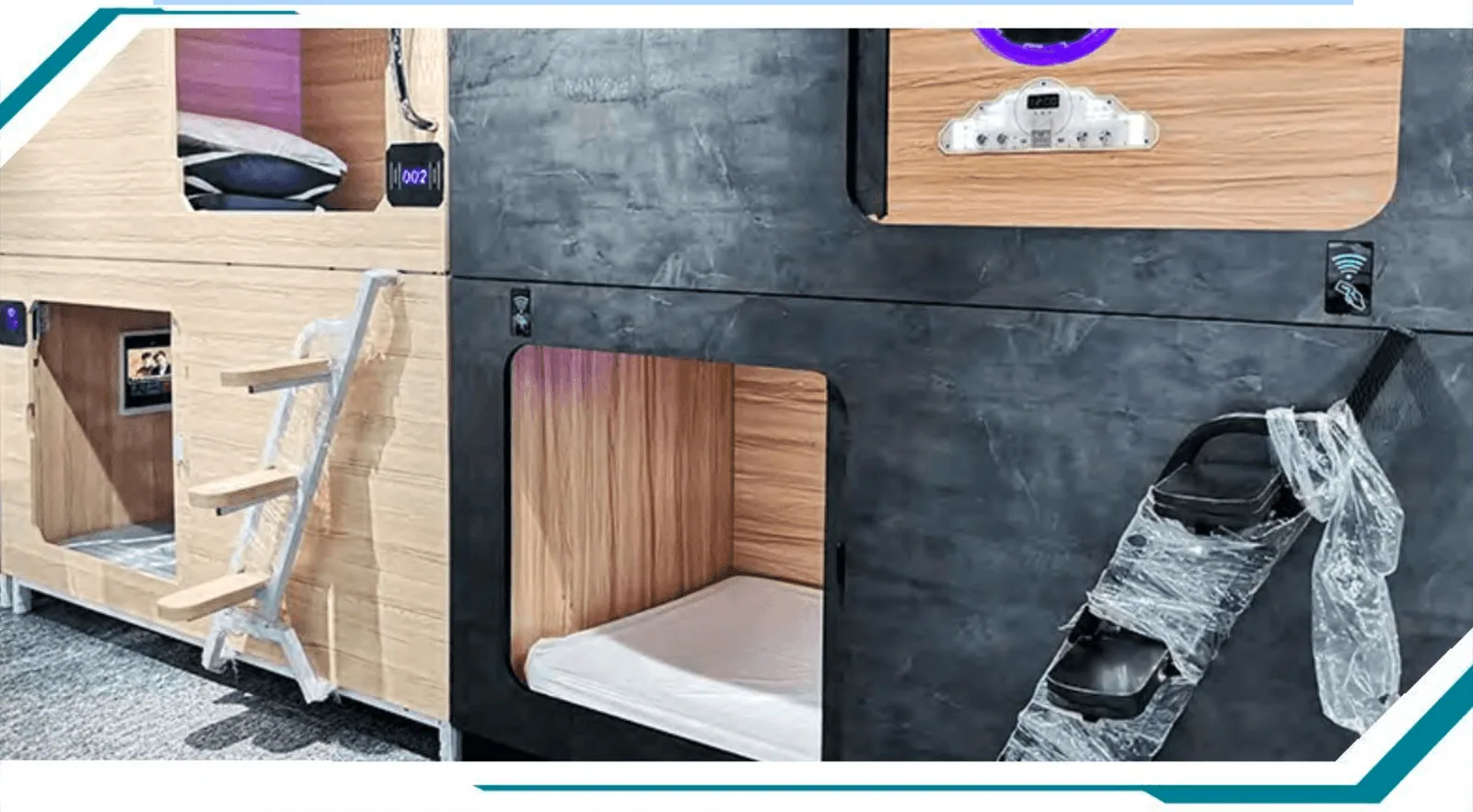
Wooden Series - Horizontal Single
Premium eco multi-layer board construction with metal frame, offering natural wood-grain aesthetics while maintaining all essential capsule bed features.
Market deep-dive
The Pilibhit pod-hotel opportunity
Pilibhit is a Terai district where the sal forests of the Himalayan foothills meet the fertile sugarcane plains of Rohilkhand. Known across India as 'Bansuri Nagari' — the City of Flutes — this small town once produced an estimated 95 percent of the country's bamboo flutes, its artisans sourcing raw stalks by narrow-gauge rail all the way from Assam's Barak Valley. Four sugar factories at Majhola, Puranpur, Bisalpur, and the city itself anchor the agrarian economy, while the mighty Gomti River begins its 900-kilometre journey to the Ganga from the sacred Gomat Taal lake at Madhotanda, just 30 kilometres south. For investors, this layered identity — craft hub, agri-processor, and river-origin pilgrimage point — signals diverse, year-round accommodation demand that no existing hotel adequately serves.
The headline draw is the Pilibhit Tiger Reserve, India's 46th Project Tiger reserve and the first in the world to win the TX2 global award for doubling its tiger population in just four years. Spread across 730 square kilometres of core and buffer forest along the Indo-Nepal border, the reserve shelters over 65 tigers, leopards, sloth bears, barasingha deer, gharials, and some 450 bird species. Chuka Beach — a unique forest-framed stretch along the Sharda Sagar Dam billed as 'the only beach in Uttar Pradesh' — pulls picnickers and Instagram travellers alike. Safari season runs November to June, and the reserve logged over 38,000 visitors in 2024. Yet the nearest branded stay is in Bareilly, 48 kilometres away, leaving a gaping overnight gap that a pod hotel at Mahof Gate or the city's railway station could fill instantly.
Pilgrimage and heritage add another layer. The 250-year-old Gauri Shankar Temple, perched where the Devha and Khakra rivers meet, draws Shiva devotees during Shravan Mas and Shivratri, while its twin entrance gates — carved in Islamic geometric style — quietly celebrate Pilibhit's Hindu-Muslim cultural fusion. Fifty-five kilometres north, Gurudwara Nanakmatta Sahib marks the spot where Guru Nanak halted during his third Udasi in 1514 CE; the nearby Nanak Sagar Dam and its migratory-bird wetlands make this a combined spiritual-nature circuit. The Jama Masjid, a 1780s Mughal-era mosque built by Rohilla chief Hafiz Rahmat Khan with a distinctive Bengali curved roof, rounds out a heritage triangle that keeps religious tourists circulating through the district year-round.
From a BIDUA Pods standpoint, Pilibhit is a textbook Tier 3 opportunity: land and labour costs are low, yet footfall drivers are genuinely strong and diversifying. The new Autonomous State Medical College (330-bed teaching hospital, opened 2024) will pull patient attendants and visiting faculty who need affordable overnight stays. Bareilly Airport, just 40 kilometres west, now serves Delhi, Mumbai, and Bengaluru, funnelling domestic tourists who previously bypassed the district. NH-74 highway traffic between Haridwar and Bareilly passes through daily. A 50-pod installation near Pilibhit Junction — configured with a mix of single capsules for solo safari-goers, double pods for couples, and dormitory clusters for sugar-mill seasonal workers — could realistically target 70 percent occupancy at Rs 700-800 per night, offering the district's first branded, air-conditioned micro-stay experience.
Pilibhit pod hotel — FAQs
Why does Pilibhit need a sleeping pod hotel?+
Pilibhit receives 38,000+ tiger reserve visitors annually, plus pilgrim traffic to Nanakmatta Sahib and Gomat Taal, yet has no branded budget accommodation. A sleeping pod hotel fills this gap with clean, affordable, hourly or nightly capsules near the railway station or tiger reserve entry gates.
Where is the best location for a capsule hotel in Pilibhit?+
Three high-footfall zones stand out: near Pilibhit Junction railway station (transit travellers and safari-goers arriving by train), on the NH-74 bypass corridor (highway traffic between Bareilly and the Kumaon hills), and near the Mahof Gate or Chuka Beach entry of the tiger reserve (wildlife tourists needing early-morning check-in).
How much does a Japanese pod hotel cost per night in Pilibhit?+
BIDUA Pods targets an ADR of around Rs 700-800 per pod per night in Pilibhit — roughly 40-60% cheaper than the few available guest houses, while offering air-conditioned privacy, personal charging ports, and a clean, secure capsule environment.
Is there demand for nap pods or hourly hotels near Pilibhit Tiger Reserve?+
Absolutely. Safari jeeps depart at dawn, and visitors often arrive the night before from Bareilly or Lucknow. A nap pod near the reserve gate lets them rest for a few hours without paying for a full hotel night. The reserve hosted over 38,000 visitors in 2024 alone, and numbers are rising.
Can a budget pod hotel in Pilibhit serve the sugar-factory and flute-industry workforce?+
Yes. Pilibhit's four sugar mills run crushing seasons from November to April, drawing migrant labour and procurement agents who need short-stay beds. Flute artisans also host bamboo traders from Assam and bulk buyers from across India — a pod hotel near Bansuri Chowk or the industrial belt serves both groups affordably.
What is the ROI timeline for a Chinese pod hotel or capsule hotel investment in Pilibhit?+
With 50 pods at 70% occupancy, the indicative model projects annual revenue of around Rs 89 lakh before costs. After rent, operations, GST, and fit-out amortisation, a Tier 3 location like Pilibhit can target breakeven within 18-24 months — though actual returns depend on location, marketing, and operational execution.
Start your Pilibhit pod hotel with BIDUA
Sign up to design your space in 3D, build a presentation, and get a quotation + ROI from one dashboard — or talk to our team for a custom Pilibhit plan.