Tier 3 pod-hotel market · Uttar Pradesh
Pod Hotel in Sultanpur — Smart Sleeping Pods for Ayodhya Pilgrims, Rail Travellers & Highway Stopovers
Overwhelmingly rural yet strategically positioned on the Lucknow-Varanasi rail/road corridor and Purvanchal Expressway, Sultanpur draws heavy transit and pilgrim traffic from far larger neighbours like Ayodhya (65 km) and Prayagraj (170 km).

Population & catchment
Sultanpur district had a 2011 Census population of ~22.5 lakh (post-bifurcation after Amethi was carved out in 2010); projected estimates for 2025 place it around 28-30 lakh. The city itself had 1.07 lakh residents in 2011.
Urban pull
Only 6.5% of the district is urbanised — Sultanpur city, Dostpur, Kadipur, Lambhua and Koeripur are the main urban centres. Over 93% of residents live in rural areas across 1,727 villages.
Economic base
Sultanpur's economy is rooted in agriculture — rice, wheat, sugarcane, barley and pulses dominate the alluvial Gomti-Sai floodplain. Handloom weaving, brassware, and small-scale sugar processing form the traditional industrial base. The nearby Jagdishpur Industrial Area (50 km, now in Amethi) hosts Indo Gulf Fertilisers (Aditya Birla Group) and BHEL, providing ancillary employment across the district, while KNIT Sultanpur anchors a growing services and education ecosystem.
Around Sultanpur
Key landmarks and footfall hubs that drive short-stay demand in Sultanpur.
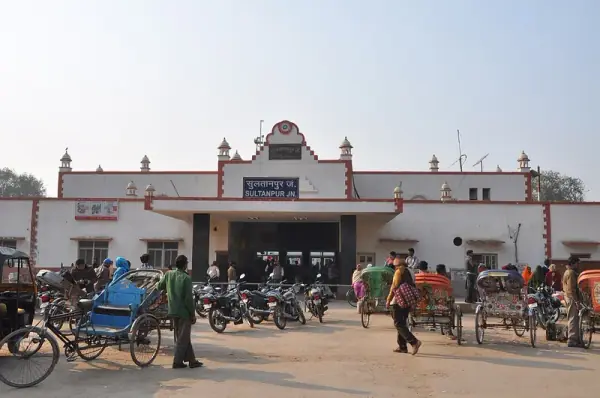
Sultanpur Junction Railway Station
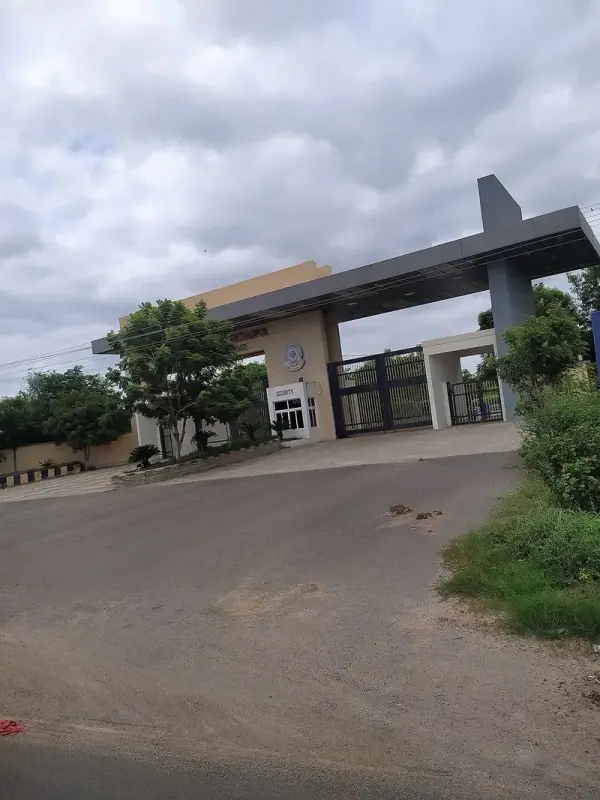
KNIT Sultanpur Campus Gate
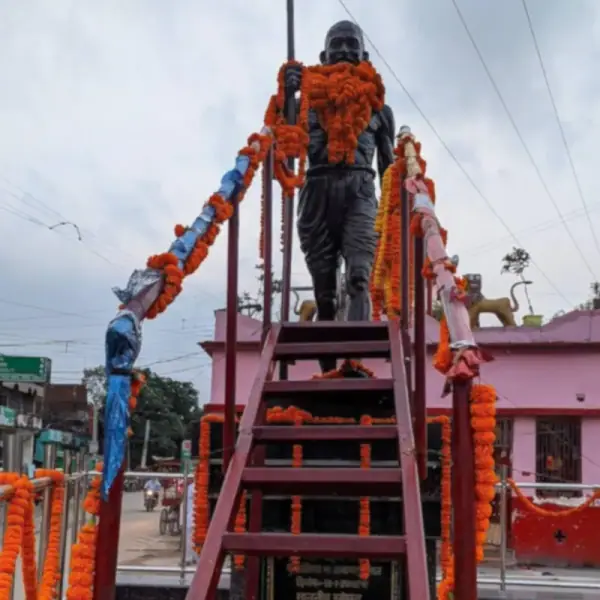
Pandit Devi Deen Pandey Memorial

Dostpur Bridge over Gomti River
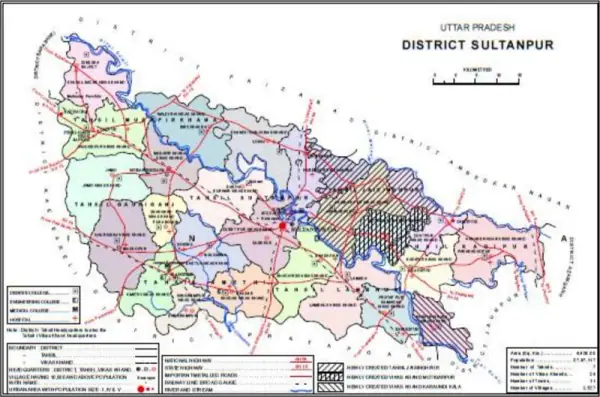
Sultanpur District Map
Why a pod hotel works in Sultanpur
Sultanpur has zero branded budget hotels and no capsule-hotel concept despite 25,000+ daily rail passengers, a booming Ayodhya pilgrim overflow (65 km), the Purvanchal Expressway driving highway travellers through the district, and a 210-bed government medical college generating constant patient-attendant demand. Existing lodging is limited to unbranded dharamshalas and basic guest houses — a BIDUA Pod hotel would be the first clean, tech-enabled, hourly-bookable rest option in the entire district.
Sultanpur sits on the Lucknow-Varanasi mainline (97+ daily trains through SLN Junction) and the 340 km Purvanchal Expressway passes directly through the district — complete with a 3.2 km emergency airstrip at Kurebhar. With Ayodhya's Ram Mandir just 65 km north drawing millions of pilgrims annually, and the new Ayodhya International Airport only 60 km away, transit-overflow demand for clean, affordable short-stay rest is surging.
Best ways to use pods here
- Ayodhya pilgrim overflow — millions visiting Ram Mandir need affordable overnight stays within 65 km radius; Sultanpur is the closest rail junction town
- Rail transit rest — 25,000+ daily passengers at SLN Junction, many with 2-6 hour layovers on Lucknow-Varanasi route, need clean nap pods
- Medical attendant stays — families accompanying patients to the new Government Medical College (210-bed) need affordable overnight rest near the hospital
- KNIT student & visitor accommodation — exam seasons, placement drives (Adobe, Samsung, Amazon recruiters) and parent visits create surge demand
- Purvanchal Expressway highway stopover — long-haul drivers and travellers on the 340 km expressway need rest stops near the Sultanpur/Kurebhar stretch
Where the demand sits in Sultanpur
Transit & travel
- •Sultanpur Junction (SLN) — 97+ trains daily, 25,000+ daily passengers, 4 platforms
- •Purvanchal Expressway (6-lane, passes through district with Kurebhar airstrip)
- •NH 731 (4-lane Lucknow-Jaunpur corridor)
- •NH 330 (Prayagraj-Ayodhya route)
- •Ayodhya International Airport — 60 km
- •UPSRTC Sultanpur Bus Depot
Healthcare demand
- •Government Medical College & District Hospital (210-bed, G+6 new building)
- •Karunashray Multispecialty Hospital (24/7 emergency, cardiology, orthopaedics)
- •46+ registered hospitals across the district
- •Patient attendants needing overnight rest from rural catchment of 22+ lakh
Education & coaching
- •KNIT Sultanpur (NAAC A-grade, recruiters include Adobe, Samsung, Amazon, Infosys)
- •Government Polytechnic Kenaura
- •Multiple degree colleges across tehsils
- •Competitive exam aspirants travelling from eastern UP
Industry & trade
- •Indo Gulf Fertilisers, Jagdishpur — 50 km (Aditya Birla Group)
- •BHEL service centre, Jagdishpur Industrial Area
- •Handloom weaving clusters (Lambhua, Kadipur tehsils)
- •Brassware and small-scale sugar processing units
Tourism & pilgrimage
- •Dhopap Temple & Gomti Ghat (ASI-protected, Rama pilgrimage, Dussehra mela)
- •Bijethua Mahaviran Temple (Ramayana legend, largest bell collection in any temple)
- •Sitakund Ghat (Sita-Rama exile legend, Kartik Purnima bathing)
- •Lohramau Devi Temple (ancient Durga shrine, Navratri crowds)
- •Satthin Sharif Dargah (10-day annual Urs fair)
- •Parijaat Vriksh — mythical wish-fulfilling tree
- •Ayodhya Ram Mandir overflow — 65 km north
Profit & ROI projection for Sultanpur
A starter model based on a minimum 50 pods at 70% occupancy and an indicative ₹750/pod/night. Costs use the same itemised basis as our full ROI calculator — pods, add-ons, 18% GST, transport, fit-out and full monthly running cost.
Important: this is only an ASSUMPTION-based projection — not an accurate quote or a guarantee.
The real cost, occupancy, pricing and profit will change with your exact location, property rent, season, competition and how you run the business. Treat these figures as a planning estimate only. For real numbers, use the full calculator or get a custom quote from BIDUA.
Total investment
₹78.7 lakh
50 pods + add-ons + GST + fit-out
Monthly revenue
₹7.9 lakh
35 of 50 pods filled/night
Monthly net profit
₹3.6 lakh
46% margin after all costs
Payback
~22 mo
56% annual ROI
Break-even occupancy ≈ 28% — you only need this much filled to cover all costs; everything above is profit.
| 50 pods (BIDUA mix) | ₹40,30,000 |
| Add-ons (mattress, bedding, panels, safe lock, table) | ₹16,25,200 |
| GST @ 18% (pods + add-ons) | ₹10,17,936 |
| Transport (warehouse → site) | ₹4,00,000 |
| Fit-out, AC, reception, branding + rent deposit | ₹8,00,000 |
| Total investment | ₹78,73,136 |
| Revenue (50 × 70% × ₹750 × 30) | ₹7,87,500 |
| Fixed costs (rent, staff, power, housekeeping…) | – ₹2,42,000 |
| Variable (OTA + marketing + gateway, 23%) | – ₹1,81,125 |
| Net profit / month | ₹3,64,375 |
| Net profit / year | ₹43,72,500 |
Tier 3 indicative estimates based on Sultanpur's small-town rental market and transit-driven demand. Actual rates, occupancy and returns will vary with location, season and execution — these are assumptions, not a guarantee. Figures are indicative estimates, not guarantees.
Sultanpur pod-hotel business plan & study
A step-by-step plan to launch a capsule / sleeping-pod hotel in Sultanpur — from picking the right location to licences, setup, pricing and reaching profitable occupancy.
Demand drivers
21+
transit, hospital, student & tourism footfall points
Space needed (50 pods)
2250–2750 sq ft
single rented floor + reception & washrooms
Break-even occupancy
28%
fill above this and you are in profit
Indicative payback
~22 months
on ₹78.7 lakh all-in setup
1. Pick the right location
Target a floor near Government Medical College & District Hospital (210-bed, G+6 new building) or Purvanchal Expressway (6-lane, passes through district with Kurebhar airstrip). Best opening use-case: Ayodhya pilgrim overflow — millions visiting Ram Mandir need affordable overnight stays within 65 km radius; Sultanpur is the closest rail junction town.
2. Plan investment & funding
Budget about ₹78.7 lakh all-in for 50 pods (pods + add-ons + 18% GST + transport + fit-out & deposit). Many operators fund this with a mix of own capital + a small business/MSME loan against projected cash flow.
3. Licences & compliance
Arrange a municipal trade licence, GST registration, fire safety NOC, police/guest verification (where required), and basic building & sanitation approvals before launch.
4. Build & launch
BIDUA shares a free 3D layout, then delivers and helps install the pods. Civil, electrical, AC and reception fit-out typically takes ~30–45 days, so you can open quickly on a leased floor.
5. Pricing & operations
Start at ~₹750/pod/night, and add hourly slots near hospitals for day-rest demand. Run lean with a small reception + housekeeping team; keep pods clean, private and secure to earn repeat stays.
6. Marketing & occupancy
List on OTAs (MakeMyTrip, Booking.com, OYO, Goibibo) + Google Business Profile, and tie up with nearby hospitals, coaching institutes and tour operators to push occupancy past the 28% break-even quickly.
Key risks & how to manage them
Low occupancy in early months. Open with OTA listings + hospital/coaching tie-ups; use hourly pricing to fill day-time.
High rent eating margins. Choose a slightly off-main but accessible floor near Sultanpur Junction (SLN) — 97+ trains daily, 25,000+ daily passengers, 4 platforms; rent is the biggest lever.
Seasonality / exam & festival peaks. Flex pricing up in peak weeks; offer weekly/monthly pod rentals to students for a stable base.
Cleanliness & safety complaints. Invest in housekeeping, safe locks and CCTV — reputation drives repeat and OTA ratings.
Recommended pod setup for Sultanpur
50-pod mixed configuration: 60% single horizontal pods near Sultanpur Junction or NH 731 corridor for transit and pilgrim traffic, 30% double/couple pods for family visitors, 10% premium pods for KNIT placement-season corporate visitors. Include luggage lockers, phone charging, and Ayodhya shuttle-booking kiosk.

GALAXY Series - Horizontal Single
Standard ABS shell with metal frame featuring TV slot, security sliding door, and ergonomic non-slip ladder. Perfect for hotels, airports, and commercial applications.
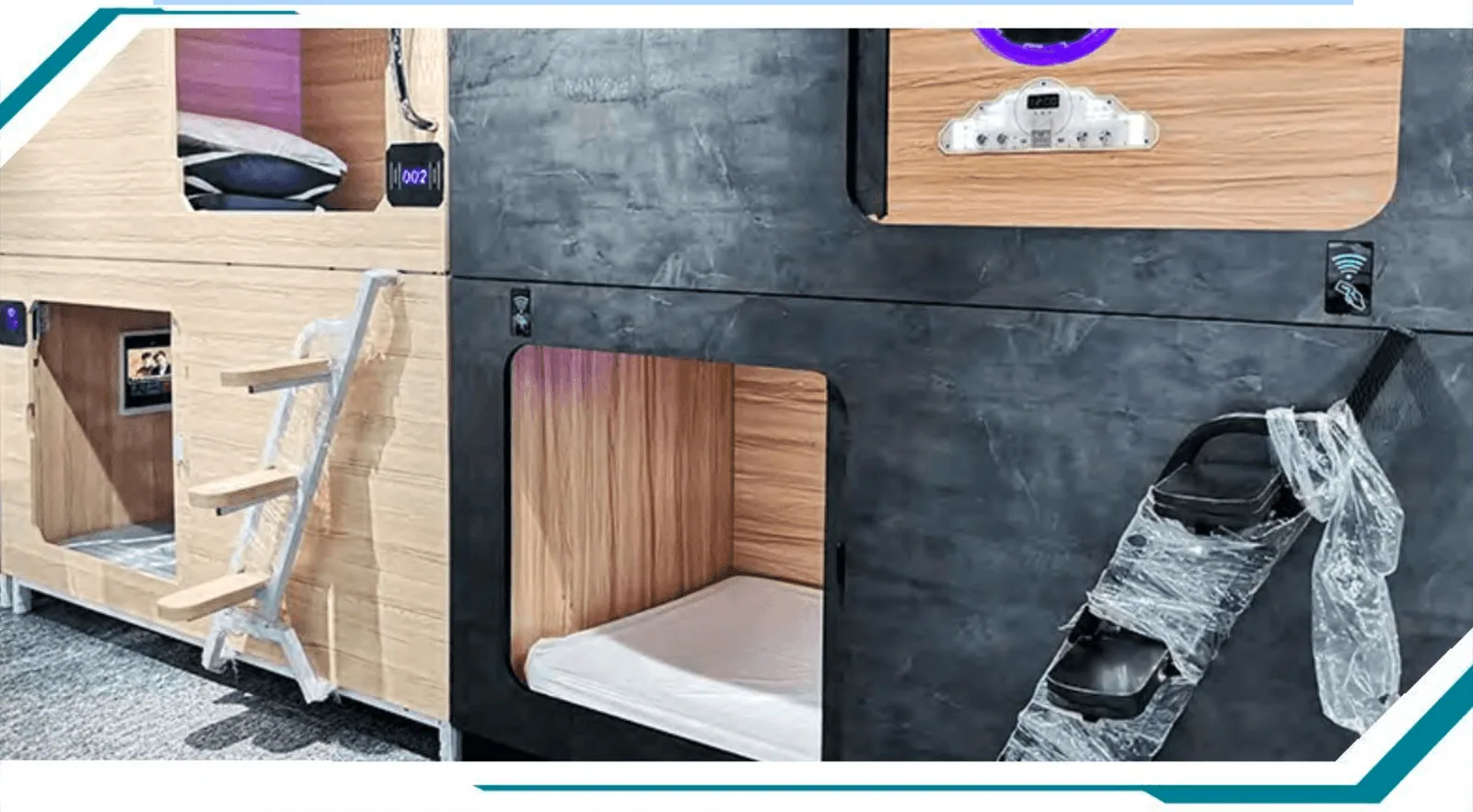
Wooden Series - Horizontal Single
Premium eco multi-layer board construction with metal frame, offering natural wood-grain aesthetics while maintaining all essential capsule bed features.
Market deep-dive
The Sultanpur pod-hotel opportunity
Sultanpur — the Land of Maharaja Kush, as the district's own government portal calls it — traces its identity to the Ramayana itself. Local tradition holds that Kusa, son of Lord Rama, was born on the banks of the Gomti here, and Gautama Buddha is said to have taught at Kusapura for six months, with Emperor Ashoka erecting a stupa to mark the site. The town was renamed Sultanpur after Alauddin Khalji's forces established control in 1305, and the Nawabs of Awadh later governed it through a chain of 27 nizams. This layered Hindu-Buddhist-Mughal-Nawabi heritage is not just academic — the Dhopap Ghat, where Rama reportedly performed brahma-hatya-dosha penance on the Gomti, still draws thousands during Dussehra, and the Bijethua Mahaviran Temple holds the record for the largest collection of bells in any Indian temple. These pilgrimage streams, combined with heavy railway transit, create a year-round demand base that no branded accommodation currently serves.
The real economic engine of Sultanpur is its position as a transit corridor between two of India's most significant cities: Lucknow (140 km west) and Varanasi (200 km east). Sultanpur Junction railway station handles over 97 trains and 25,000 passengers daily, making it one of eastern UP's busiest junctions. The six-lane Purvanchal Expressway now slices through the district — with a 3.2 km emergency landing airstrip built near Kurebhar — while NH 731 provides a four-lane link to Jaunpur and NH 330 connects directly to Prayagraj and Ayodhya. The game-changer is the Ayodhya International Airport just 60 km north: as Ram Mandir tourism explodes past projections, Sultanpur's role as an affordable, well-connected spillover base is growing month by month. For a pod hotel operator, this convergence of rail, expressway, national highway and airport catchment in a single Tier 3 town is an unusual density of transit demand.
Beyond transit, Sultanpur generates its own institutional demand. The NAAC A-graded Kamla Nehru Institute of Technology (KNIT) draws placement recruiters from Adobe, Samsung, Amazon and Infosys, creating seasonal accommodation surges. The new Government Medical College and 210-bed District Hospital has transformed Sultanpur into a regional healthcare node — patient families from 1,727 surrounding villages need overnight rest but find only basic dharamshalas. The Lohramau Devi Temple packs in Navratri devotees, Sitakund Ghat sees Kartik Purnima bathing crowds, and the Satthin Sharif Dargah hosts a ten-day Urs fair that draws both Hindu and Muslim visitors. Meanwhile, the Jagdishpur Industrial Area — home to Indo Gulf Fertilisers (Aditya Birla Group) and BHEL — sits just 50 km away, sending contract workers and vendor teams through Sultanpur's station regularly.
A BIDUA Pods installation in Sultanpur would be the district's first branded, tech-enabled accommodation product — entering a market where the alternative is a Rs 300-500 unbranded room with no guaranteed hygiene, no digital check-in, and no hourly flexibility. The recommended 50-pod configuration near SLN Junction captures five distinct revenue streams simultaneously: Ayodhya pilgrim overflow (especially during Ram Navami, Diwali and Kartik Purnima), rail transit nap demand, medical attendant stays, KNIT placement-season visitors, and Purvanchal Expressway highway rest. At a Tier 3 nightly rate of Rs 750 with 70% occupancy, the unit economics benefit from Sultanpur's low rentals (approximately Rs 35,000/month for suitable floor space) and manageable fit-out costs, while the diversified demand base reduces seasonal risk. Sultanpur is not glamorous — but it is exactly the kind of high-transit, under-served, low-cost town where pod hotels deliver their strongest risk-adjusted returns.
Sultanpur pod hotel — FAQs
Why does Sultanpur need a sleeping pod hotel when it is a small town?+
Sultanpur may be a small town, but its railway junction handles 25,000+ passengers daily on the busy Lucknow-Varanasi corridor. With Ayodhya's Ram Mandir just 65 km away drawing millions of pilgrims, the Purvanchal Expressway running through the district, and a new 210-bed Government Medical College, the demand for clean, affordable short-stay rest far exceeds what existing dharamshalas and basic guest houses can offer. A sleeping pod hotel fills this gap perfectly.
How is a capsule hotel in Sultanpur different from a regular budget hotel?+
A Japanese-style capsule hotel (or pod hotel) offers private, climate-controlled sleeping pods at a fraction of regular hotel prices — typically Rs 750 per night or bookable by the hour. Unlike Sultanpur's existing unbranded guest houses, BIDUA Pods provide individual pods with USB charging, fresh linen, digital check-in and 24/7 security. Ideal for train passengers needing a 3-4 hour nap, Ayodhya pilgrims resting overnight, or medical attendants at the District Hospital.
Where would a nap pod facility be best located in Sultanpur?+
The prime location is within 500 metres of Sultanpur Junction railway station (SLN), which serves 97+ trains daily. A secondary high-demand zone is along the NH 731 corridor near the Government Medical College, serving patient attendants and highway travellers. The Purvanchal Expressway service area near Kurebhar is a third strong option for highway rest-stop pods.
Can Ayodhya pilgrims use a Chinese-style pod hotel in Sultanpur as a base?+
Absolutely. Sultanpur is only 65 km from Ayodhya and connected by NH 330 (about 75 minutes by road). During peak pilgrimage seasons like Ram Navami and Diwali, Ayodhya's accommodation fills up completely. Sultanpur's SLN Junction is on the same rail line, so pilgrims can book an affordable pod, rest comfortably, and take a morning train or bus to Ayodhya — saving significantly over Ayodhya hotel rates.
What is the expected return on investment for a pod hotel in Sultanpur?+
Based on a 50-pod setup at Rs 750/night with 70% occupancy, the shared ROI model projects healthy returns even at Tier 3 rental rates (approximately Rs 35,000/month for a 3,000-4,000 sq ft floor). The year-round demand from rail transit, Ayodhya pilgrim overflow, medical attendants, and KNIT college visitors provides diversified revenue streams. These are indicative assumptions — actual returns depend on location, execution and seasonal variation.
Are hourly-bookable budget hotel pods suitable for Sultanpur's travel patterns?+
Hourly booking is precisely what Sultanpur needs. Most SLN Junction passengers have 2-6 hour layovers between connecting trains on the Lucknow-Varanasi route. Medical attendants at the District Hospital often need 4-8 hour rest blocks between visiting hours. Purvanchal Expressway drivers need 2-3 hour power naps. An hourly pod model at Rs 150-200 per 3-hour block captures this demand that traditional hotels — with rigid 24-hour check-in cycles — completely miss.
Start your Sultanpur pod hotel with BIDUA
Sign up to design your space in 3D, build a presentation, and get a quotation + ROI from one dashboard — or talk to our team for a custom Sultanpur plan.