Eliminate Drowsy Driving on NH 44 with Secure Sleeping Pods
NH 44 is India’s longest north‑south artery, spanning 3,745 km across 11 states and linking the Himalayan capital Srinagar to the southern tip Kanyakumari. The sheer length, mixed terrain and high traffic volumes create chronic drowsy‑driving risk, especially on monotonic stretches through the Deccan plateau and the night‑time freight corridors.
Along NH 44 (Srinagar–Kanyakumari)
Major cities, interchanges and scenes along the 3,745 km route.

Traffic profile
Daily traffic exceeds 150,000 vehicles on average, comprising a blend of passenger cars, two‑wheelers, long‑haul trucks, and inter‑city buses. Peak freight flow peaks between 22:00‑02:00 hrs, when driver fatigue is highest.
Fatigue & drowsy-driving risk
Long, straight segments such as the Delhi‑Agra and Bengaluru‑Krishnagiri corridors encourage highway hypnosis, while night‑time travel is common for truckers chasing delivery windows. Accident data shows a spike between 02:00‑05:00 hrs, a classic drowsy‑driving window.
Who needs a safe per-hour rest on this corridor
The corridor serves pilgrim traffic, inter‑state commuters, tourism convoys, and a massive fleet of logistics operators moving goods from the north to the south. Truckers, bus drivers and long‑distance car owners all need safe micro‑rest points.
Major rest stops & dhabas
- • Mohan Dhaba, Panipat (km 215)
- • Kashmir Fuel Station, Faridabad (km 280)
- • Shree Sai Rest Area, Agra (km 400)
- • Madhav Dhaba, Nagpur (km 1 200)
- • Raja’s Fuel Stop, Hyderabad (km 1 800)
- • Bangalore Highway Plaza, Hosur (km 2 350)
- • Kanyakumari Service Bay (km 3 745)
Cities & interchanges along
- • Panipat – km 215
- • Agra – km 400
- • Nagpur – km 1 200
- • Hyderabad – km 1 800
- • Bengaluru – km 2 250
- • Madurai – km 3 300
Fleet operators / customers
- • Gati Ltd – long‑haul refrigerated trucks
- • VRL Logistics – container fleets
- • Blue Dart – express road network
- • Mahanagar Motor Transport – state‑wide bus fleet
Accident risk reality
The Salem‑Thoppur ghat and the Delhi‑Panipat expressway have recorded the highest fatality rates, with drowsy‑driving cited in 27 % of night‑time crashes.
The pod opportunity on NH 44 (Srinagar–Kanyakumari)
Existing dhabas provide food but no dedicated, climate‑controlled sleep environment. Fuel stations lack privacy, and toll‑plazas have limited space. Pods deliver a hygienic, 30‑minute nap solution that fits within a 1,500‑sq‑ft footprint, directly addressing the unmet need for safe micro‑rest on NH 44.
Deploy 20 horizontal single pods (1.2 m × 0.8 m) plus 4 larger double pods for overnight stays, arranged in a 1500 sq‑ft modular cabin beside the dhaba, supporting hourly 30‑minute slots and 8‑hour overnight bookings.
Honest ROI for a 20-pod corridor site
All-in capex (pods + add-ons + 18% GST + transport + fit-out + deposit) and a full monthly opex line — these are indicative; tune them in the ROI calculator.
Indicative ROI inputs based on tier benchmarks; not a guarantee — adjust to your specific lease and ADR.
Why pods belong on NH 44 (Srinagar–Kanyakumari)
NH 44, the backbone of India’s north‑south logistics, stretches over 3,700 km and threads through bustling metros, industrial corridors and remote mountain passes. With daily traffic surpassing 150,000 vehicles, the highway sees a relentless mix of passenger cars, two‑wheelers, buses and heavy‑load trucks. The sheer length and high speed create a perfect storm for driver fatigue, especially during night‑time freight runs when vigilance naturally wanes.
Today, drivers on NH 44 rely on roadside dhabas and fuel‑station benches that offer no privacy, limited climate control, and little protection from road‑side hazards. Long‑haul truckers often push through 12‑hour shifts without a proper rest, leading to microsleeps that trigger accidents on accident‑prone sections like the Salem‑Thoppur ghat. The lack of dedicated rest infrastructure forces drivers to stop at unsafe spots or skip rest altogether, amplifying drowsy‑driving incidents.
Integrating BIDUA sleeping pods into dhabas, fuel stations and toll plazas transforms these stop‑overs into safe micro‑rest hubs. A driver can pull into a pod for a 30‑minute power nap, emerging refreshed and alert, or book an overnight cabin for a full rest. The pods’ modular design fits within existing service‑area footprints, while solar‑powered climate control and fire‑safety features meet regulatory standards, delivering a premium yet affordable solution for fatigued motorists.
For operators, each pod generates revenue through hourly and overnight bookings, with fleet contracts adding predictable bulk income. A 20‑pod configuration can earn upwards of ₹5 million per annum per site, while also reducing accident‑related costs for logistics firms. The social impact is equally compelling: safer highways, healthier drivers, and a new revenue stream for dhaba owners and fuel‑station operators along India’s most vital corridor.
Pod models that fit highway-side dhaba / fuel stops

GALAXY Series - Horizontal Single
Standard ABS shell with metal frame featuring TV slot, security sliding door, and ergonomic non-slip ladder. Perfect for hotels, airports, and commercial applications.
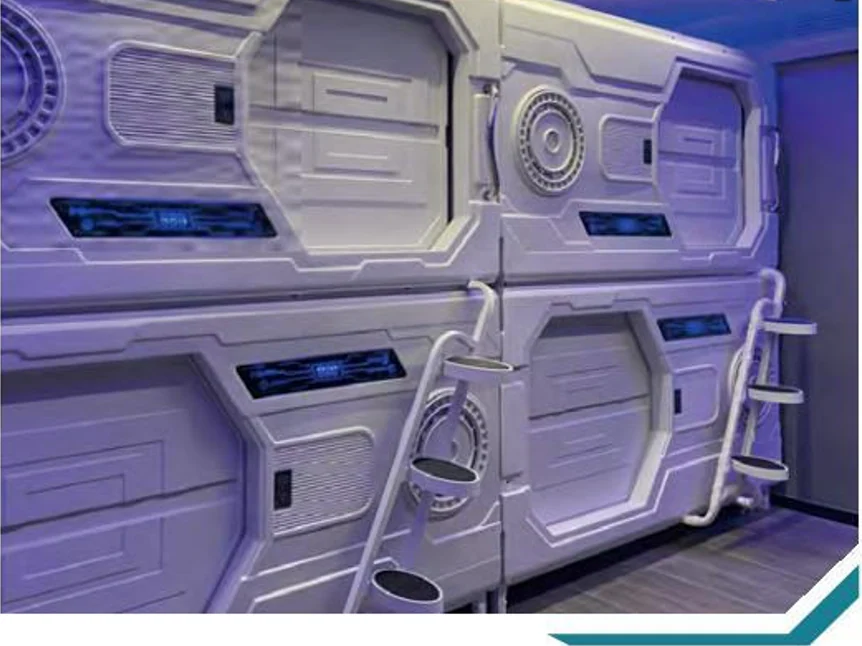
GALAXY Series - Horizontal Double
Spacious double variant with all premium GALAXY features, designed for couples or guests requiring extra space in commercial facilities.

SPACE Series - Horizontal Single
Standard SPACE series with mirror panel, sliding door, TV slot, and intelligent LED controls. Perfect for hotels and commercial applications.
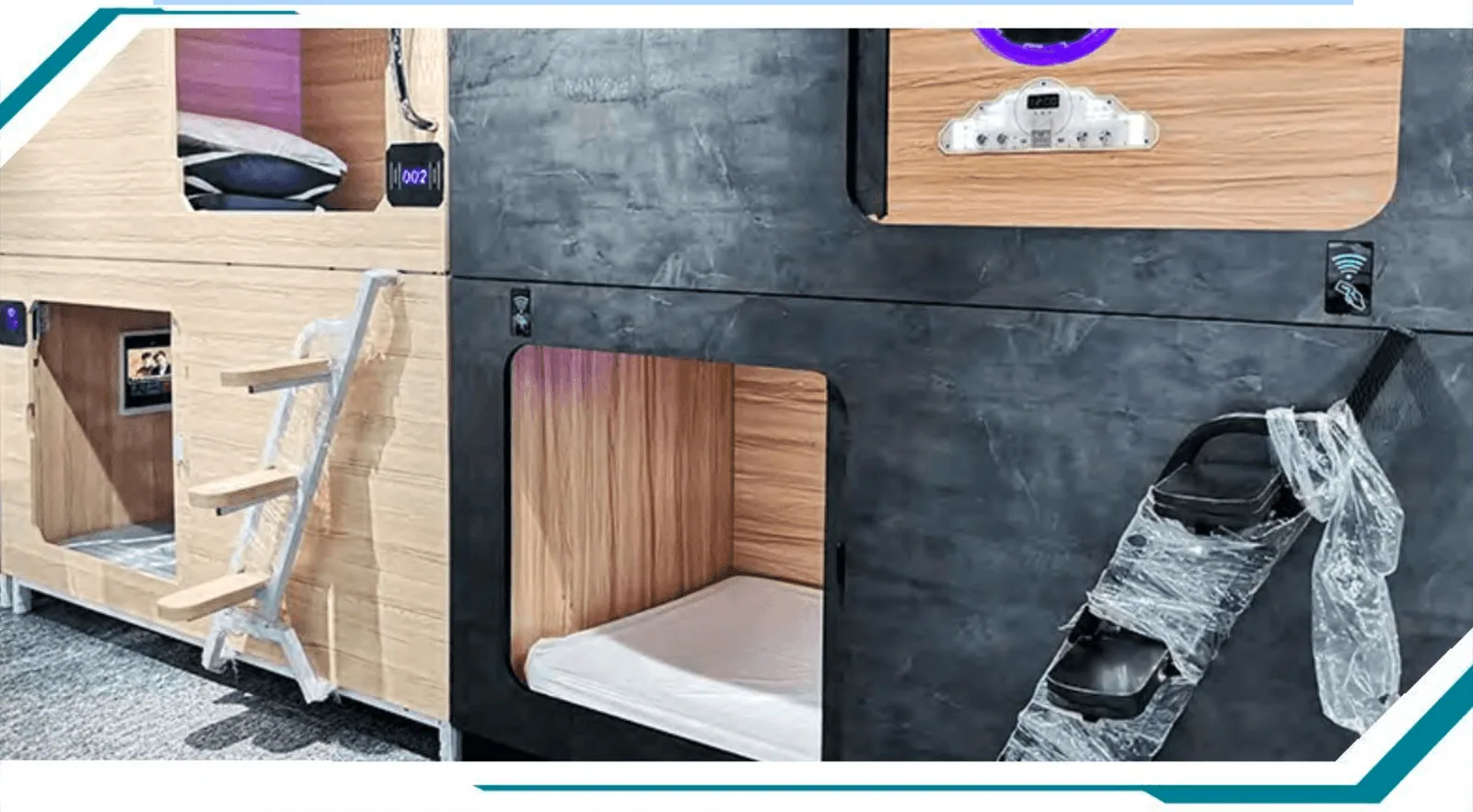
Wooden Series - Horizontal Single
Premium eco multi-layer board construction with metal frame, offering natural wood-grain aesthetics while maintaining all essential capsule bed features.
Need an all-season outdoor stay?
Compare Capsule Houses with indoor sleeping pods in NH 44 (Srinagar–Kanyakumari)
For glamping, farmstay and nature sites, a factory-finished capsule house offers a private washroom, climate control and a complete detached guest unit.
FAQs — NH 44 (Srinagar–Kanyakumari)
What is a sleeping pod and how does it differ from a regular dhaba rest area?
A sleeping pod is a sealed, climate‑controlled capsule that offers a 30‑minute power‑nap or an overnight stay, unlike open‑air dhaba benches that expose drivers to noise, pollution and security risks.
Can capsule hotels on NH 44 handle heavy‑truck traffic?
Yes – pods are built with reinforced flooring and wide entryways to accommodate truck drivers and their luggage, while maintaining a compact footprint for easy integration at fuel stations.
How are pods powered on remote highway sections?
Pods use solar panels on the roof and a grid‑connected inverter; backup diesel generators at fuel stations ensure uninterrupted operation.
What safety certifications do the pods have?
All pods meet IS 3025 fire‑safety standards, have emergency call buttons, and are monitored via CCTV linked to the site operator.
Are there pricing options for hourly vs overnight stays?
Hourly power‑nap rates start at ₹120, while overnight cabins are priced at ₹1,200, with bulk discounts for fleet operators.
How do pods improve driver fatigue on NH 44?
Research shows a 30‑minute nap reduces reaction‑time lag by 40 %; strategically placed pods cut cumulative fatigue on the 1,900 km north‑south stretch.
Nearby corridors
Run pods on NH 44 (Srinagar–Kanyakumari) — save lives + earn 24×7 occupancy
Talk to the BIDUA team to scope a site, get a quote and a free 3D layout.