Tier 3 pilgrim market · Hindu · Bihar
Bodh Gaya: Sacred Buddhist Site with Modern Capsule Hotel Solutions
Bodh Gaya is the holiest Buddhist pilgrimage site, revered by Buddhists and also visited by Hindus, famed as the place where Gautama Buddha attained enlightenment under the Bodhi Tree.

Annual pilgrim footfall
Approximately 15‑20 lakh pilgrims visit Bodh Gaya each year, swelling to 30‑40 thousand per day during Buddha Purnima and the spring pilgrimage season.
Peak seasons
Spring (March‑May), Autumn (September‑November), Winter (December‑February)
Deity & tradition
Buddhist — Hindu. Pilgrims range from domestic devotees to foreign tourists, but affordable clean lodging is scarce, especially during peak festivals.
Around Bodh Gaya
The shrine, ghats and circuit sights that drive year-round pilgrim footfall at Bodh Gaya.
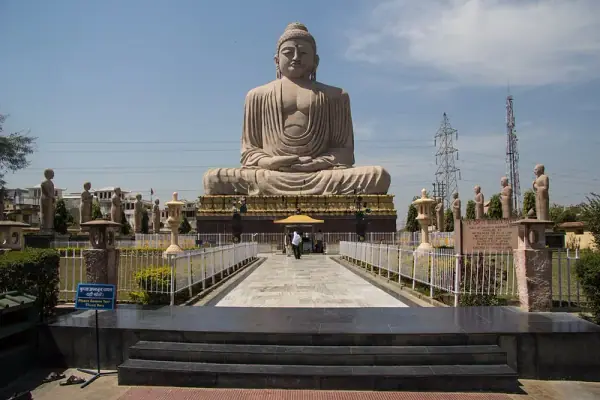
Bodh Gaya
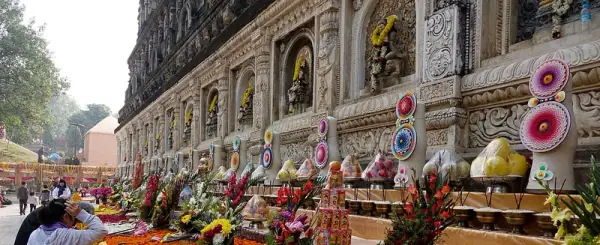
Bodh Gaya festival
Why Bodh Gaya matters
Bodh Gaya is the holiest Buddhist pilgrimage site, revered by Buddhists and also visited by Hindus, famed as the place where Gautama Buddha attained enlightenment under the Bodhi Tree.
History & heritage
The site dates back to the Maurya period when Emperor Ashoka erected the first temple; over centuries it attracted Chinese pilgrims, survived Turkic invasions, and was declared a UNESCO World Heritage Site in 2002.
Why a pod hotel works at Bodh Gaya
During peak days dharamshalas overflow, forcing pilgrims to sleep on temple floors or on nearby railway platforms; existing hotels are priced beyond the budget of most devotees, creating a clear demand for affordable, hygienic, 24‑hour stay options.
Most visitors arrive by train to Gaya Junction (≈30 km from the Mahabodhi complex) or by road from Patna and Kolkata; a small airport in Gaya serves chartered flights during festivals, linking the site to the larger Buddhist circuit of Lumbini‑Sarnath‑Kushinagar.
Best ways to use pods here
- Budget capsule stay for solo pilgrims arriving early for Buddha Purnima ceremonies
- Family pod units for small groups of 2‑4 members during the Mahabodhi Festival
- Night‑shift accommodation for volunteers and staff working at the temple complex
- Quick‑turnover pods for transit pilgrims moving on to Sarnath or Kushinagar
- Premium pod suites for foreign tourists seeking comfort near the UNESCO site
Where the pilgrim demand sits
Transit & arrival
- •Gaya Junction Railway Station – 5 km
- •Gaya Airport – 30 km
- •NH 19 Highway – 4 km
On the yatra route
- •Mahabodhi Temple Visitor Centre
- •Bodh Gaya Pilgrim Registration Office
- •Buddha Vihar Guest House
Nearby shrines & circuit
- •Thai Temple – colorful pagoda style, 1 km north
- •Japanese Nippon Temple – pagoda architecture, 1.2 km east
- •Myanmar Temple – sloping roof with bronze Buddha, 1.5 km south
Major festivals & melas
- •Buddha Purnima – celebration of enlightenment with massive crowds
- •Mahabodhi Festival – cultural performances and lighting of the Bodhi Tree
- •Vesak – international Buddhist gathering with prayers and offerings
Profit & ROI projection at Bodh Gaya
A starter model based on a minimum 50 pods at 70% occupancy and an indicative ₹800/pod/night. Costs use the same itemised basis as our full ROI calculator — pods, add-ons, 18% GST, transport, fit-out and full monthly running cost.
Important: this is only an ASSUMPTION-based projection — not an accurate quote or a guarantee.
Real cost, occupancy, pricing and profit change with your exact location, property rent, yatra season, festival peaks and competition. Treat these as a planning estimate only. For real numbers, use the full calculator or get a custom quote from BIDUA.
Total investment
₹79.7 lakh
50 pods + add-ons + GST + fit-out
Monthly revenue
₹8.4 lakh
35 of 50 pods filled/night
Monthly net profit
₹3.8 lakh
45% margin after all costs
Payback
~21 mo
57% annual ROI
Break-even occupancy ≈ 29% — you only need this much filled to cover all costs; everything above is profit. Festival & yatra peaks routinely push pilgrim-town occupancy far higher.
| 50 pods (BIDUA mix) | ₹40,30,000 |
| Add-ons (mattress, bedding, panels, safe lock, table) | ₹16,25,200 |
| GST @ 18% (pods + add-ons) | ₹10,17,936 |
| Transport (warehouse → site) | ₹4,00,000 |
| Fit-out, AC, reception, branding + rent deposit | ₹9,00,000 |
| Total investment | ₹79,73,136 |
| Revenue (50 × 70% × ₹800 × 30) | ₹8,40,000 |
| Fixed costs (rent, staff, power, housekeeping…) | – ₹2,67,000 |
| Variable (OTA + marketing + gateway, 23%) | – ₹1,93,200 |
| Net profit / month | ₹3,79,800 |
| Net profit / year | ₹45,57,600 |
Indicative ROI inputs based on tier benchmarks; not a guarantee — adjust to your specific lease and ADR. Figures are indicative estimates, not guarantees.
Also planning standalone rooms?
Consider prefab Capsule Houses for outdoor accommodation in Bodh Gaya
Sleeping pods maximise indoor bed capacity. Capsule houses solve a different need: detached, self-contained guest rooms for resorts, scenic plots and destination stays.
Bodh Gaya pilgrim pod-hotel business plan & study
A step-by-step plan to launch a capsule / sleeping-pod hotel for pilgrims at Bodh Gaya — from picking a spot near the shrine to licences, setup, pricing and reaching profitable occupancy through yatra and festival peaks.
Demand drivers
12+
transit, yatra-route, circuit & festival footfall points
Space needed (50 pods)
2250–2750 sq ft
single rented floor + reception & washrooms
Break-even occupancy
29%
fill above this and you are in profit
Indicative payback
~21 months
on ₹79.7 lakh all-in setup
1. Pick the right location
Target a floor close to Mahabodhi Temple Visitor Centre or Gaya Junction Railway Station – 5 km, within walking or short-shuttle distance of the shrine. Best opening use-case: Budget capsule stay for solo pilgrims arriving early for Buddha Purnima ceremonies.
2. Plan investment & funding
Budget about ₹79.7 lakh all-in for 50 pods (pods + add-ons + 18% GST + transport + fit-out & deposit). Many operators fund this with own capital plus a small business/MSME loan against projected yatra-season cash flow.
3. Licences & compliance
Arrange a municipal trade licence, GST registration, fire safety NOC, police/guest verification, and any temple-town/local authority approvals before launch.
4. Build & launch
BIDUA shares a free 3D layout, then delivers and helps install the pods. Civil, electrical, AC and reception fit-out typically takes ~30–45 days, so you can open before the next big festival.
5. Pricing & operations
Start at ~₹800/pod/night, flex up sharply during Spring (March‑May), and add hourly slots for darshan-queue rest. Keep pods clean, private and secure to win repeat pilgrim stays.
6. Marketing & occupancy
List on OTAs (MakeMyTrip, Booking.com, Goibibo) + Google Business Profile, and tie up with tour operators, yatra package agents and local pandas/priests to push occupancy past the 29% break-even.
Recommended pod setup for Bodh Gaya
60 horizontal single pods + 20 vertical single pods + 10 family pods on a single floor of ~4,500 sq ft.

GALAXY Series - Horizontal Single
Standard ABS shell with metal frame featuring TV slot, security sliding door, and ergonomic non-slip ladder. Perfect for hotels, airports, and commercial applications.
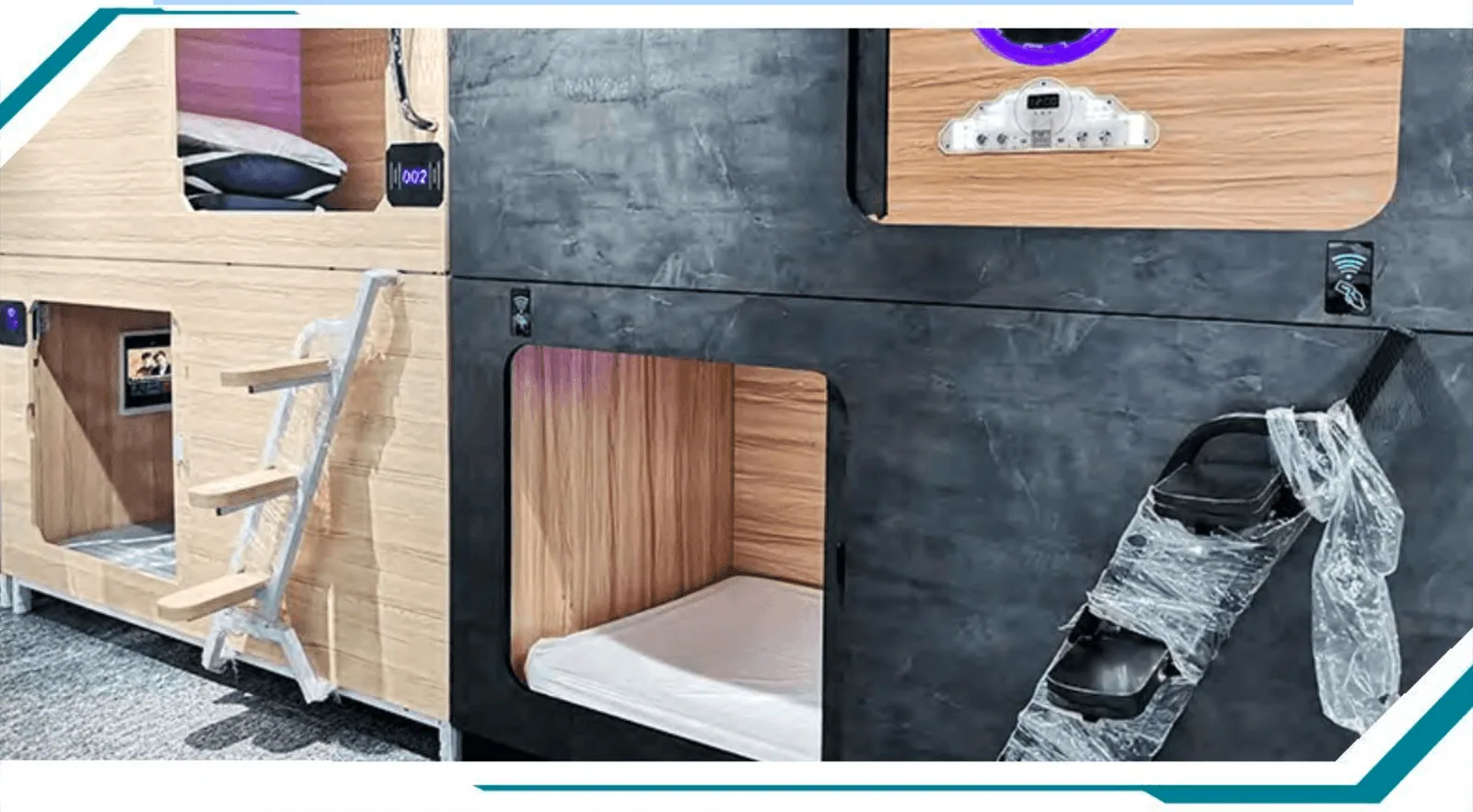
Wooden Series - Horizontal Single
Premium eco multi-layer board construction with metal frame, offering natural wood-grain aesthetics while maintaining all essential capsule bed features.
Pilgrim-market deep-dive
The Bodh Gaya pilgrim pod-hotel opportunity
Bodh Gaya, situated in Bihar’s Gaya district, is the most sacred Buddhist pilgrimage destination where Gautama Buddha attained enlightenment under the Bodhi Tree. Recognised by both Buddhist and Hindu traditions, the site houses the Mahabodhi Temple, a UNESCO World Heritage landmark that draws millions of seekers each year seeking spiritual awakening and cultural immersion.
Pilgrims arrive in massive numbers, especially during Buddha Purnima in May, the Mahabodhi Festival in October, and the Vesak celebrations in December. The spring season sees a surge of 30‑40 k daily visitors, while winter attracts international tourists following the Buddhist circuit that includes Lumbini, Sarnath, and Kushinagar.
Accommodation on the ground remains strained; dharamshalas overflow, local hotels command premium rates, and many devotees resort to sleeping on temple floors or railway platforms. This shortage leads to fatigue, safety concerns, and a diminished pilgrimage experience, highlighting an urgent need for clean, affordable lodging.
BIDUA Pods offers a perfect solution: modular capsule hotels that provide secure, hygienic, and cost‑effective stays. Their scalable design fits within heritage‑sensitive zones, delivers 24‑hour service, and aligns with the pilgrim’s need for quick turnover and comfort, presenting a lucrative opportunity for operators in a high‑demand market.
Bodh Gaya pod hotel — FAQs
What is a sleeping pod and how does it work at Bodh Gaya?+
A sleeping pod is a compact, self‑contained capsule with a bed, lighting, and charging points; at Bodh Gaya it offers pilgrims a clean, secure place to rest without the cost of a hotel.
Are capsule hotels allowed near the Mahabodhi Temple?+
Yes, the local authorities encourage modern, low‑impact lodging such as capsule hotels that respect the heritage zone and provide hygienic accommodation for the large influx of devotees.
What amenities are provided in a typical pod?+
Each pod includes a comfortable mattress, reading light, ventilation, power outlet, Wi‑Fi, and access to shared bathrooms and a 24‑hour reception desk.
Can foreign tourists book a capsule stay in advance?+
Bookings can be made online through the BIDUA platform, with options for early‑bird discounts and multilingual support for international visitors.
Is there a provision for families in capsule hotels?+
Family pods are designed for 2‑4 occupants, offering a larger interior space while retaining the privacy and safety standards of the capsule concept.
How does a sleeping pod contribute to sustainability at Bodh Gaya?+
Pods use energy‑efficient LED lighting, low‑flow fixtures, and modular construction that minimizes waste, aligning with the Buddhist principle of mindful consumption.
Start your Bodh Gaya pilgrim pod hotel with BIDUA
Sign up to design your space in 3D, build a presentation, and get a quotation + ROI from one dashboard — or talk to our team for a custom Bodh Gaya plan.