Tier 3 pilgrim market · Hindu · Uttarakhand
Hemkund Sahib: Modern Sleeping Pods for the Sacred Himalayan Trek
Hemkund Sahib is a revered Sikh gurdwara devoted to Guru Gobind Singh, situated in the Hindu‑dominated Himalayas of Uttarakhand and ranked as a Tier 3 pilgrimage destination due to its remote altitude and spiritual significance.
Annual pilgrim footfall
Approximately 150,000 Sikh pilgrims trek to Hemkund Sahib each season, with daily peaks of 20,000‑30,000 during the May‑June kar seva period.
Peak seasons
May, June, July
Deity & tradition
Sikh — Hindu. Pilgrims are predominantly young volunteers and families who rely on basic dharamshalas; limited lodging leads many to sleep on open grounds or under makeshift shelters.
Around Hemkund Sahib
The shrine, ghats and circuit sights that drive year-round pilgrim footfall at Hemkund Sahib.
Hemkund Sahib
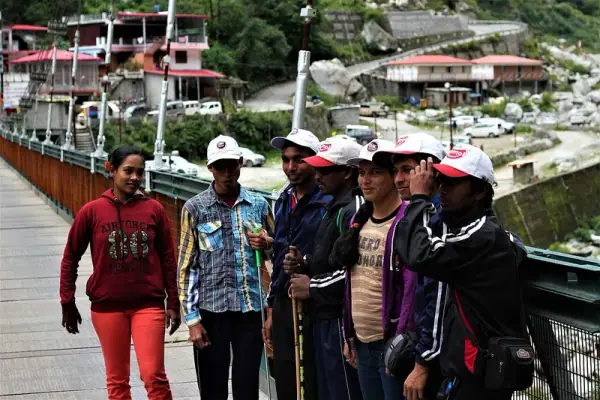
Hemkund Sahib ghat
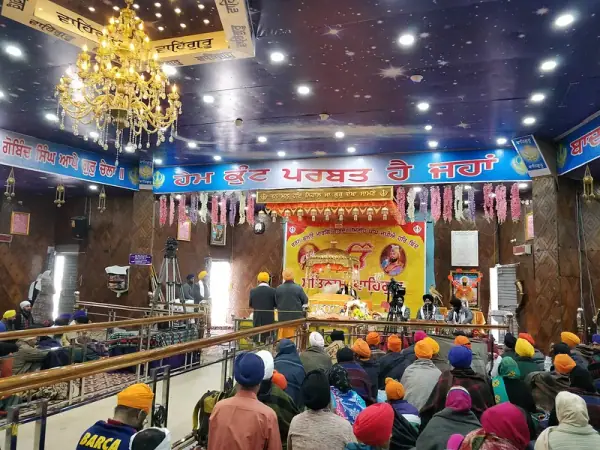
Hemkund Sahib interior
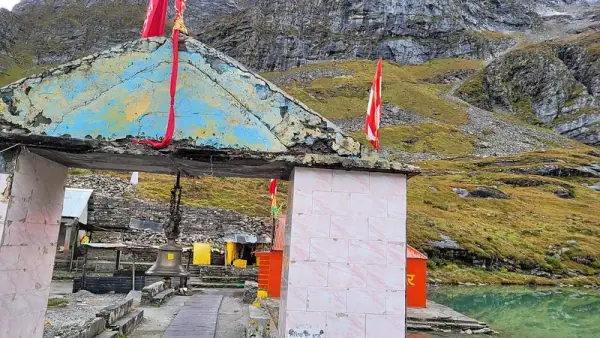
Hemkund Sahib entrance
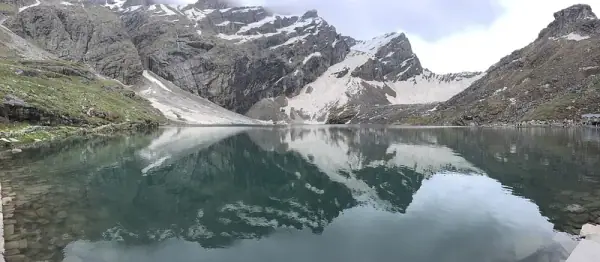
Hemkund Sahib Uttarakhand
Why Hemkund Sahib matters
Hemkund Sahib is a revered Sikh gurdwara devoted to Guru Gobind Singh, situated in the Hindu‑dominated Himalayas of Uttarakhand and ranked as a Tier 3 pilgrimage destination due to its remote altitude and spiritual significance.
History & heritage
The shrine traces its origins to the 17th‑century meditation of Guru Gobind Singh at the glacial lake, with the present stone‑clad gurdwara designed in the 1960s by Major General Harkirat Singh and architect Manmohan Singh Siali. Its construction overcame extreme weather, altitude and logistic challenges, becoming a landmark of Sikh engineering and devotion.
Why a pod hotel works at Hemkund Sahib
During the peak kar seva window, the limited dharamshalas in Ghangaria overflow, forcing pilgrims to camp on the trail or sleep on stone benches. Existing hotels are scarce, expensive, and lack winter‑proof facilities, creating a clear demand for safe, affordable, and weather‑sealed lodging.
Pilgrims reach Hemkund via a multi‑modal journey: a train to Haridwar, road bus to Govindghat, then a 13 km trek (partly by shared taxi) to Ghangaria, followed by a steep 6 km stone path to the lake. A new helicopter service shortens the Govindghat‑Ghangaria leg to five minutes.
Best ways to use pods here
- Budget capsule pods for early‑morning trekkers needing quick rest before the ascent.
- Family‑friendly pod suites for senior pilgrims and groups traveling together.
- High‑altitude insulated pods for overnight stays in Ghangaria during sudden weather changes.
- Rapid‑turnover pod stations near the helicopter landing zone to serve transit passengers.
- Eco‑friendly pod clusters powered by solar kits to align with the valley’s conservation ethos.
Where the pilgrim demand sits
Transit & arrival
- •Haridwar Railway Station – ~275 km from Govindghat, main rail gateway.
- •Dehradun Airport – ~300 km by road, serving domestic flights.
- •Rishikesh–Badrinath Highway – the arterial road linking Govindghat to the trekhead.
On the yatra route
- •Govindghat – the primary trailhead and registration point for kar seva.
- •Ghangaria – the base camp with basic lodging and a Sikh dharamshala.
- •Valley of Flowers – a secondary trek destination attracting nature‑tourists.
Nearby shrines & circuit
- •Gurudwara Govinddham – a modest shrine offering shelter to trekkers at Ghangaria.
- •Badrinath Temple – a major Hindu pilgrimage site within a day's drive from Govindghat.
- •Nanda Devi National Park – the protected area encompassing the Valley of Flowers.
Major festivals & melas
- •Guru Gobind Singh Jayanti – pilgrims gather to honor the tenth Guru with kirtan and langar.
- •Hemkund Sahib Yatra – a month‑long kar seva trek that draws volunteers from across India.
- •Baisakhi – the spring harvest festival sees a surge of devotees adding Hemkund to their pilgrimage circuit.
Profit & ROI projection at Hemkund Sahib
A starter model based on a minimum 50 pods at 70% occupancy and an indicative ₹800/pod/night. Costs use the same itemised basis as our full ROI calculator — pods, add-ons, 18% GST, transport, fit-out and full monthly running cost.
Important: this is only an ASSUMPTION-based projection — not an accurate quote or a guarantee.
Real cost, occupancy, pricing and profit change with your exact location, property rent, yatra season, festival peaks and competition. Treat these as a planning estimate only. For real numbers, use the full calculator or get a custom quote from BIDUA.
Total investment
₹79.7 lakh
50 pods + add-ons + GST + fit-out
Monthly revenue
₹8.4 lakh
35 of 50 pods filled/night
Monthly net profit
₹3.8 lakh
45% margin after all costs
Payback
~21 mo
57% annual ROI
Break-even occupancy ≈ 29% — you only need this much filled to cover all costs; everything above is profit. Festival & yatra peaks routinely push pilgrim-town occupancy far higher.
| 50 pods (BIDUA mix) | ₹40,30,000 |
| Add-ons (mattress, bedding, panels, safe lock, table) | ₹16,25,200 |
| GST @ 18% (pods + add-ons) | ₹10,17,936 |
| Transport (warehouse → site) | ₹4,00,000 |
| Fit-out, AC, reception, branding + rent deposit | ₹9,00,000 |
| Total investment | ₹79,73,136 |
| Revenue (50 × 70% × ₹800 × 30) | ₹8,40,000 |
| Fixed costs (rent, staff, power, housekeeping…) | – ₹2,67,000 |
| Variable (OTA + marketing + gateway, 23%) | – ₹1,93,200 |
| Net profit / month | ₹3,79,800 |
| Net profit / year | ₹45,57,600 |
Indicative ROI inputs based on tier benchmarks; not a guarantee — adjust to your specific lease and ADR. Figures are indicative estimates, not guarantees.
Also planning standalone rooms?
Consider prefab Capsule Houses for outdoor accommodation in Hemkund Sahib
Sleeping pods maximise indoor bed capacity. Capsule houses solve a different need: detached, self-contained guest rooms for resorts, scenic plots and destination stays.
Hemkund Sahib pilgrim pod-hotel business plan & study
A step-by-step plan to launch a capsule / sleeping-pod hotel for pilgrims at Hemkund Sahib — from picking a spot near the shrine to licences, setup, pricing and reaching profitable occupancy through yatra and festival peaks.
Demand drivers
12+
transit, yatra-route, circuit & festival footfall points
Space needed (50 pods)
2250–2750 sq ft
single rented floor + reception & washrooms
Break-even occupancy
29%
fill above this and you are in profit
Indicative payback
~21 months
on ₹79.7 lakh all-in setup
1. Pick the right location
Target a floor close to Govindghat – the primary trailhead and registration point for kar seva. or Haridwar Railway Station – ~275 km from Govindghat, main rail gateway., within walking or short-shuttle distance of the shrine. Best opening use-case: Budget capsule pods for early‑morning trekkers needing quick rest before the ascent..
2. Plan investment & funding
Budget about ₹79.7 lakh all-in for 50 pods (pods + add-ons + 18% GST + transport + fit-out & deposit). Many operators fund this with own capital plus a small business/MSME loan against projected yatra-season cash flow.
3. Licences & compliance
Arrange a municipal trade licence, GST registration, fire safety NOC, police/guest verification, and any temple-town/local authority approvals before launch.
4. Build & launch
BIDUA shares a free 3D layout, then delivers and helps install the pods. Civil, electrical, AC and reception fit-out typically takes ~30–45 days, so you can open before the next big festival.
5. Pricing & operations
Start at ~₹800/pod/night, flex up sharply during May, and add hourly slots for darshan-queue rest. Keep pods clean, private and secure to win repeat pilgrim stays.
6. Marketing & occupancy
List on OTAs (MakeMyTrip, Booking.com, Goibibo) + Google Business Profile, and tie up with tour operators, yatra package agents and local pandas/priests to push occupancy past the 29% break-even.
Recommended pod setup for Hemkund Sahib
A mixed layout of 60 horizontal singles, 20 vertical singles, and 10 family pods on a 4,500 sq ft floor provides optimal capacity and flexibility.

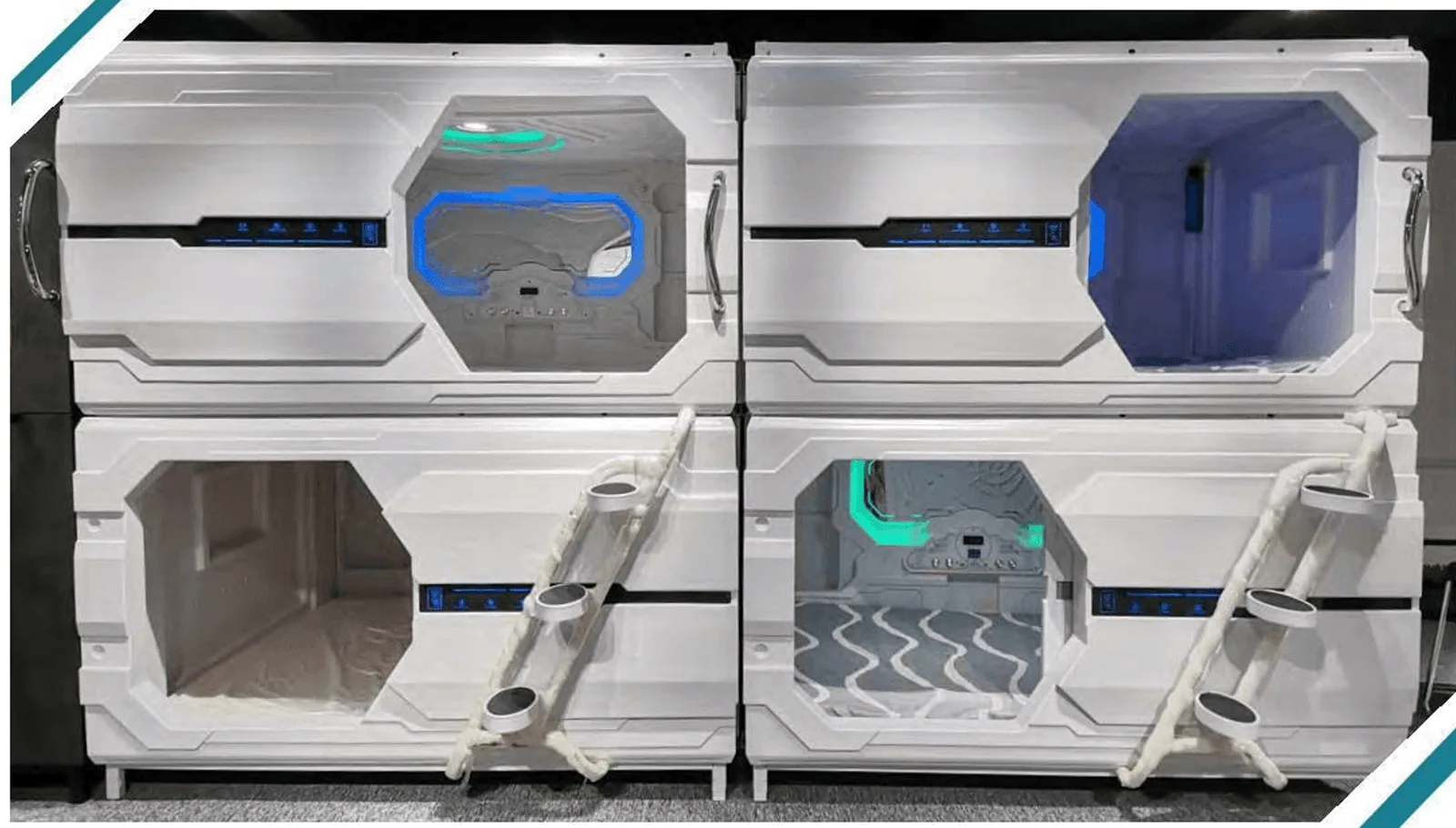
GALAXY Series - Horizontal Single
Standard ABS shell with metal frame featuring TV slot, security sliding door, and ergonomic non-slip ladder. Perfect for hotels, airports, and commercial applications.
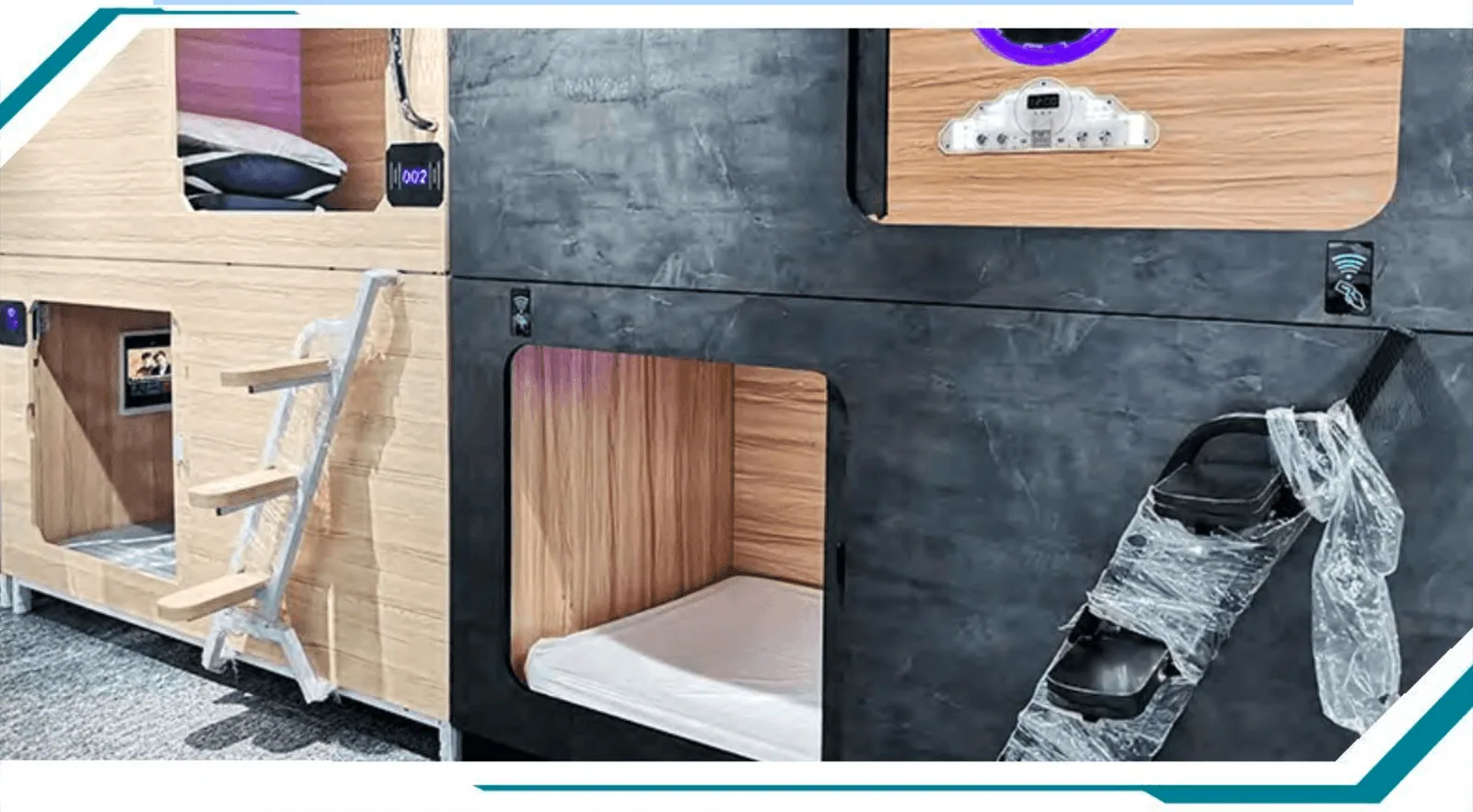
Wooden Series - Horizontal Single
Premium eco multi-layer board construction with metal frame, offering natural wood-grain aesthetics while maintaining all essential capsule bed features.
Pilgrim-market deep-dive
The Hemkund Sahib pilgrim pod-hotel opportunity
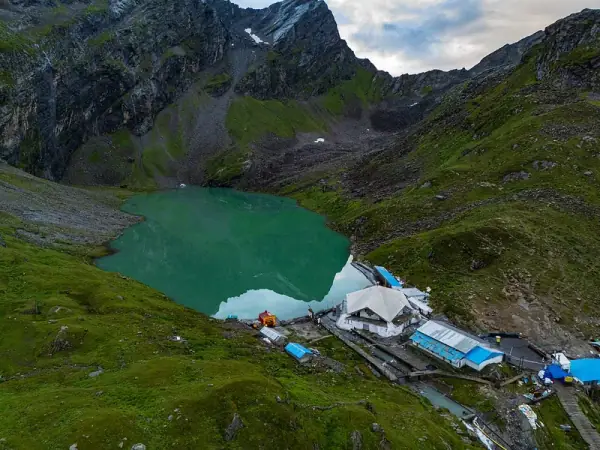
Hemkund Sahib, perched at 4,572 m in the Garhwal Himalayas, is a sacred Sikh shrine dedicated to Guru Gobind Singh. Its name, meaning ‘snow bowl’, reflects the glacial lake surrounded by seven peaks, each bearing a Nishan Sahib. Recognised as a Tier 3 pilgrimage site, it draws devotees seeking spiritual purification amid breathtaking alpine scenery.
Each year, roughly 150,000 pilgrims embark on the arduous trek from Govindghat to Ghangaria and onward to the lake, with the pilgrimage peaking in May, June, and July. Major festivals such as Guru Gobind Singh Jayanti, the Hemkund Yatra, and Baisakhi amplify footfall, creating dense crowds that strain the modest lodging infrastructure.
On the ground, pilgrims face a stark accommodation shortage: dharamshalas are overcrowded, hotels are scarce and pricey, and many are forced to camp on the trail or sleep on stone benches. The altitude and limited water exacerbate health risks, especially acute mountain sickness, underscoring the need for safe, hygienic rest facilities.
Sleeping pods and capsule hotels present a perfect solution, offering weather‑sealed, low‑maintenance, and scalable lodging that aligns with the pilgrimage’s short‑stay nature. Operators can capitalize on the high‑volume, high‑frequency demand while supporting sustainable tourism and enhancing pilgrim wellbeing.
Hemkund Sahib pod hotel — FAQs
What is a sleeping pod and how does it help pilgrims at Hemkund Sahib?+
A sleeping pod is a compact, climate‑controlled capsule that offers a clean, secure bed without the space of a full hotel room, ideal for the short‑duration, high‑altitude stays required by Hemkund trekkers.
Can capsule hotels operate at the high altitude of Hemkund Sahib?+
Yes, modular pod units can be pre‑fabricated, shipped to Ghangaria, and assembled with insulated panels and solar power, ensuring comfort even at 4,572 m.
Are sleeping pods safe for pilgrims with altitude‑related health concerns?+
Pods provide regulated temperature and ventilation, reducing exposure to cold and helping manage acute mountain sickness symptoms while allowing quick medical access.
How do capsule hotels fit into the existing pilgrim itinerary?+
Pods can be placed at Ghangaria, offering a rest point after the 13 km trek and before the final 6 km climb, aligning with the mandatory 2 pm departure rule.
What is the cost advantage of a capsule hotel versus traditional dharamshalas?+
Capsule hotels deliver higher hygiene standards at comparable or lower per‑night rates, reducing the need for pilgrims to pay premium prices for limited hotel rooms.
Will the pods affect the environmental sanctity of the Valley of Flowers?+
Designed with eco‑friendly materials and solar energy, the pods leave a minimal footprint and comply with park regulations, preserving the valley’s pristine condition.
Start your Hemkund Sahib pilgrim pod hotel with BIDUA
Sign up to design your space in 3D, build a presentation, and get a quotation + ROI from one dashboard — or talk to our team for a custom Hemkund Sahib plan.