Tier 3 pod-hotel market · Uttar Pradesh
Pod Hotel in Firozabad — Smart Stays for India's Glass Capital
High population density (~1,044/sq km), a large industrial working population concentrated in glass factories, constant inflow of trade buyers and raw-material suppliers, plus spillover tourism from Agra (44 km) create strong, year-round short-stay demand for affordable rest.
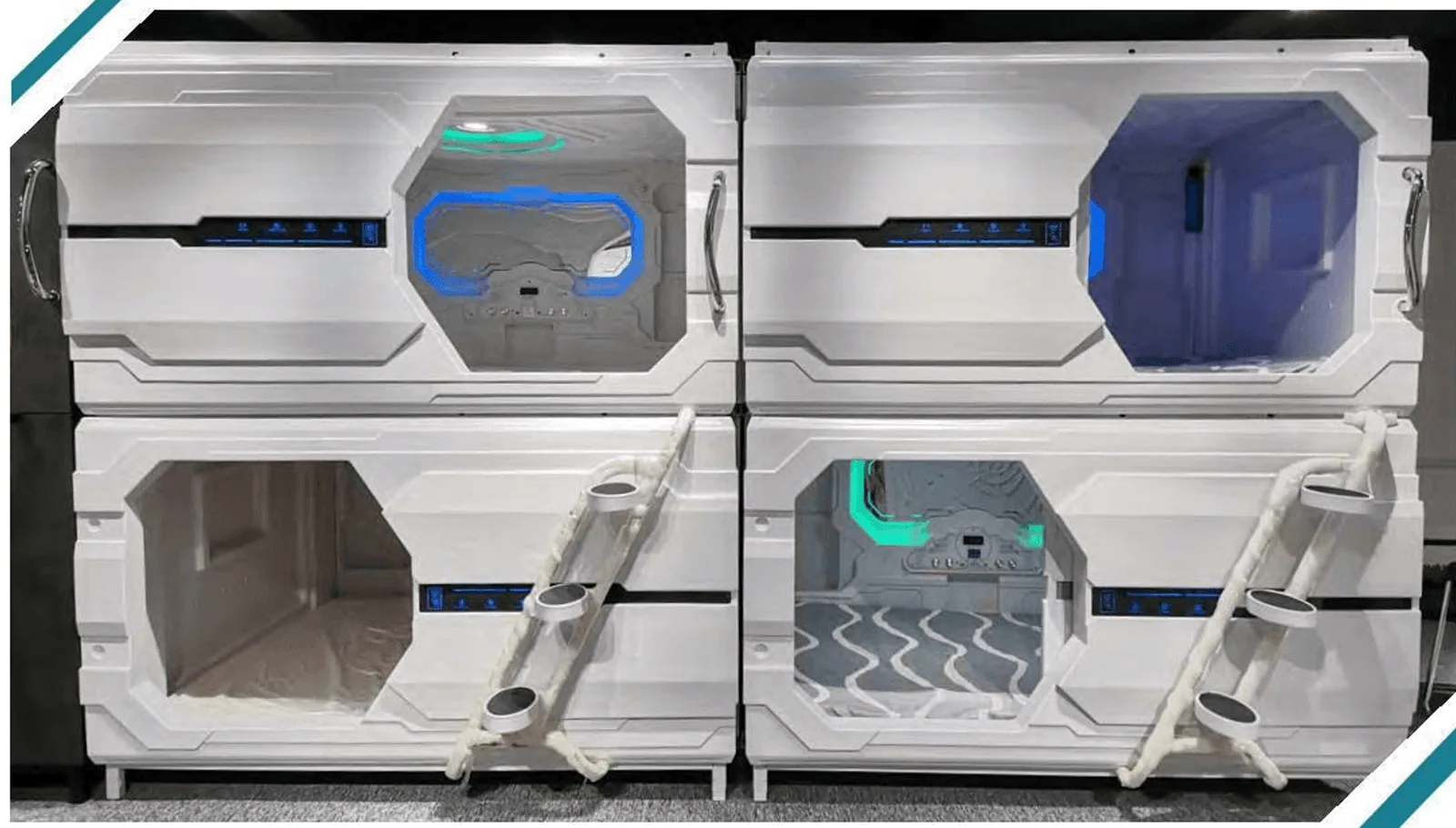
Population & catchment
Firozabad district: 24.98 lakh (2011 Census: 2,498,156; 2023 estimate ~34.7 lakh). Firozabad city alone houses over 6 lakh residents. District ranks 173rd among India's 640 districts by population.
Urban pull
33.35% of the district population lives in urban areas, but within Firozabad tehsil itself, 63.2% is urban. Six statutory towns: Firozabad, Tundla, Shikohabad (1.07 lakh), Sirsaganj, Jasrana, and Fariha.
Economic base
Firozabad is the undisputed Glass City of India — the largest glass manufacturing centre in the country, producing roughly 70% of India's unorganised-sector glass output and 46% of all bangles nationally. Over 400 registered glass factories employ more than 100,000 people directly, churning out 1,230 tonnes of finished glass products daily with annual revenue exceeding Rs 2,326 crore. Agriculture (wheat, rice, barley, bajra) on 2,874 sq km of cultivable land and an emerging service sector round out the economy.
Around Firozabad
Key landmarks and footfall hubs that drive short-stay demand in Firozabad.
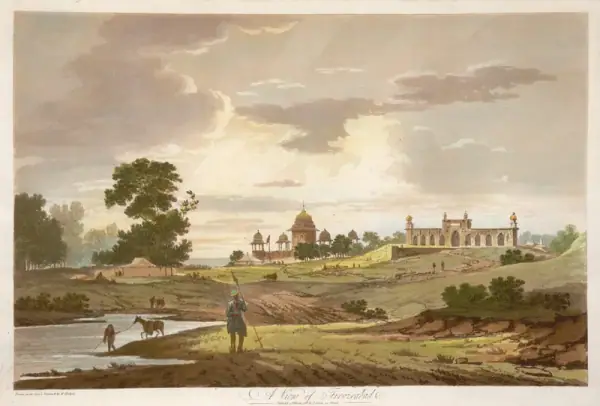
Historic View of Firozabad by William Hodges (1787)
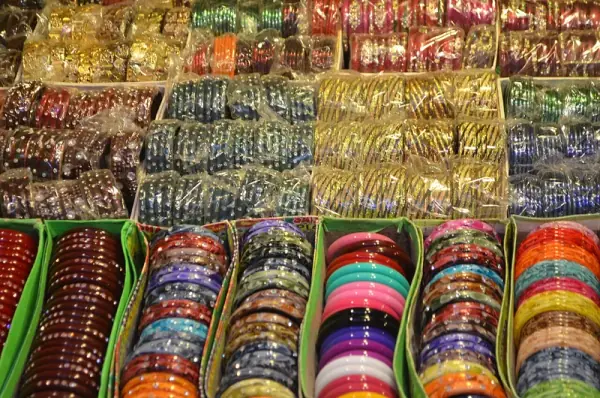
Colourful Indian Glass Bangles — Firozabad's signature craft
Why a pod hotel works in Firozabad
Firozabad has no branded capsule or pod hotel despite hosting one of India's largest industrial clusters. The 400+ glass factories draw a daily tide of domestic and international trade buyers, quality auditors, raw-material agents, and export logistics staff — all needing clean, affordable, short-duration rest that the city's limited budget hotels cannot efficiently provide. The upcoming Rs 47-crore Glass Museum will add a new wave of industrial tourists. Meanwhile, Tundla Junction (7-platform interchange serving nearly every Delhi-Howrah and Delhi-Lucknow train) strands thousands of transit passengers daily with no modern rest option. Agra's Taj Mahal tourism overflow, Mathura-Vrindavan pilgrim traffic, and a growing medical-attendant population around the new Government Medical College compound the gap.
Firozabad sits on National Highway 19 (the Delhi-Kolkata trunk route) and the Yamuna Expressway, making it a perpetual corridor of commercial and pilgrim traffic. Glass-trade buyers, raw-material suppliers, and factory audit teams flow in daily from across India. Agra (44 km) funnels Taj Mahal tourists looking for glass-bangle shopping excursions. Mathura-Vrindavan (80-90 km) and Fatehpur Sikri (70 km) pilgrim traffic spills over regularly. Tundla Junction — one of North Central Railway's busiest interchange points on the Delhi-Howrah main line — generates thousands of daily transit passengers who need short rest between connections. Medical attendants at the new Government Medical College and FH Medical College need affordable overnight stays, while students at J.S. University and coaching centres need hourly study-nap options.
Best ways to use pods here
- Glass-industry trade hub near the factory cluster — buyers, auditors, and export agents arriving for day-long factory visits need 4-12 hour rest pods between rounds
- Tundla Junction transit pod lounge — hourly nap pods for the thousands of daily interchange passengers waiting between Delhi-Howrah, Delhi-Lucknow and branch-line connections
- Medical attendant pods near ASMC/FH Medical College — overnight capsules for patient families at the 300-bed tertiary hospital who cannot afford or find hotel rooms
- Student and exam-season pods near J.S. University and coaching centres — affordable study-nap capsules during competitive-exam season (NEET, SSC, Railway, bank exams)
- Tourist overflow pods on the Agra-Firozabad glass-shopping corridor — budget capsule stay for Taj Mahal tourists extending their trip for Firozabad's famous bangle markets and the upcoming Glass Museum
Where the demand sits in Firozabad
Transit & travel
- •Tundla Junction — 7-platform interchange on Delhi-Howrah main line, technical halt for nearly all Delhi-DDU/Lucknow trains
- •Firozabad Railway Station — Delhi-Howrah trunk route, served by Magadh Express, Kalka Mail, Gomti Express and 20+ daily services
- •NH-19 (Delhi-Kolkata corridor) passing through the city, heavy commercial truck and bus traffic
- •Yamuna Expressway link to Delhi (274 km) and Taj Expressway link to Lucknow
- •Agra Airport (Kheria, 50 km) — nearest domestic air connectivity
- •Inter-state bus services to Rajasthan and Madhya Pradesh via Agra border proximity
Healthcare demand
- •Autonomous State Medical College (ASMC) Firozabad — 300-bed tertiary care hospital with 24/7 emergency, eye bank and blood bank (est. 2019)
- •FH Medical College and Hospital — private multi-specialty teaching hospital
- •S.N. Hospital, Jain Nagar — major government district hospital
- •Om Hospital & Research Centre — private multi-specialty on S.M. Road
- •Shanti Hospital — private facility on Swami Dayanand Road
Education & coaching
- •J.S. University Firozabad — private university drawing students district-wide
- •F.S. University — local higher-education institution
- •Autonomous State Medical College (MBBS intake draws exam-season visitors)
- •Dau Dayal Mahila PG College and C.L. Jain College — undergraduate hubs
- •Competitive-exam coaching centres (bank, SSC, railway, NEET prep) across the city
Industry & trade
- •400+ registered glass factories producing 1,230 tonnes of finished glass daily
- •Glass bangle cluster — 46% of India's total bangle output, 100,000+ direct workers
- •Glassware export units (tableware, lab glass, chandeliers, automotive glass) shipping 35-50% internationally
- •ODOP (One District One Product) scheme — government-backed glass industry promotion
- •Rs 47-crore Glass Museum under construction near Vikas Bhawan — India's first dedicated glass museum
Tourism & pilgrimage
- •Lord Bahubali Jain Temple, Suhag Nagari — 45-foot, 3,500-tonne granite Bahubali idol, largest in North India
- •Marsalganj Jain Atishaya Kshetra — historic Digambar Jain pilgrimage shrine dedicated to Bhagwan Rishabhdeo
- •Chandwar heritage site — Battle of Chandwar (1194) battlefield, Chauhan Rajput fort ruins on the Yamuna
- •Firoz Khwaja's white marble tomb on the Agra road — Mughal-era founder's monument (c. 1566)
- •Nearby: Taj Mahal & Agra Fort (44 km), Fatehpur Sikri UNESCO site (70 km), Mathura-Vrindavan Krishna circuit (80-90 km), Bateshwar Shiva temple complex (90 km)
Profit & ROI projection for Firozabad
A starter model based on a minimum 50 pods at 70% occupancy and an indicative ₹799/pod/night. Costs use the same itemised basis as our full ROI calculator — pods, add-ons, 18% GST, transport, fit-out and full monthly running cost.
Important: this is only an ASSUMPTION-based projection — not an accurate quote or a guarantee.
The real cost, occupancy, pricing and profit will change with your exact location, property rent, season, competition and how you run the business. Treat these figures as a planning estimate only. For real numbers, use the full calculator or get a custom quote from BIDUA.
Total investment
₹75.7 lakh
50 pods + add-ons + GST + fit-out
Monthly revenue
₹8.4 lakh
35 of 50 pods filled/night
Monthly net profit
₹3.9 lakh
47% margin after all costs
Payback
~19 mo
62% annual ROI
Break-even occupancy ≈ 27% — you only need this much filled to cover all costs; everything above is profit.
| 50 pods (BIDUA mix) | ₹40,30,000 |
| Add-ons (mattress, bedding, panels, safe lock, table) | ₹16,25,200 |
| GST @ 18% (pods + add-ons) | ₹10,17,936 |
| Transport (warehouse → site) | ₹4,00,000 |
| Fit-out, AC, reception, branding + rent deposit | ₹5,00,000 |
| Total investment | ₹75,73,136 |
| Revenue (50 × 70% × ₹799 × 30) | ₹8,38,950 |
| Fixed costs (rent, staff, power, housekeeping…) | – ₹2,52,000 |
| Variable (OTA + marketing + gateway, 23%) | – ₹1,92,959 |
| Net profit / month | ₹3,93,992 |
| Net profit / year | ₹47,27,898 |
Indicative Tier 3 assumptions for Firozabad; actual ADR, rent, and deposit will vary by exact location (Tundla Junction vs city centre vs factory belt). Not a guarantee of returns. Figures are indicative estimates, not guarantees.
Firozabad pod-hotel business plan & study
A step-by-step plan to launch a capsule / sleeping-pod hotel in Firozabad — from picking the right location to licences, setup, pricing and reaching profitable occupancy.
Demand drivers
21+
transit, hospital, student & tourism footfall points
Space needed (50 pods)
2250–2750 sq ft
single rented floor + reception & washrooms
Break-even occupancy
27%
fill above this and you are in profit
Indicative payback
~19 months
on ₹75.7 lakh all-in setup
1. Pick the right location
Target a floor near Autonomous State Medical College (ASMC) Firozabad — 300-bed tertiary care hospital with 24/7 emergency, eye bank and blood bank (est. 2019) or Firozabad Railway Station — Delhi-Howrah trunk route, served by Magadh Express, Kalka Mail, Gomti Express and 20+ daily services. Best opening use-case: Glass-industry trade hub near the factory cluster — buyers, auditors, and export agents arriving for day-long factory visits need 4-12 hour rest pods between rounds.
2. Plan investment & funding
Budget about ₹75.7 lakh all-in for 50 pods (pods + add-ons + 18% GST + transport + fit-out & deposit). Many operators fund this with a mix of own capital + a small business/MSME loan against projected cash flow.
3. Licences & compliance
Arrange a municipal trade licence, GST registration, fire safety NOC, police/guest verification (where required), and basic building & sanitation approvals before launch.
4. Build & launch
BIDUA shares a free 3D layout, then delivers and helps install the pods. Civil, electrical, AC and reception fit-out typically takes ~30–45 days, so you can open quickly on a leased floor.
5. Pricing & operations
Start at ~₹799/pod/night, and add hourly slots near hospitals for day-rest demand. Run lean with a small reception + housekeeping team; keep pods clean, private and secure to earn repeat stays.
6. Marketing & occupancy
List on OTAs (MakeMyTrip, Booking.com, OYO, Goibibo) + Google Business Profile, and tie up with nearby hospitals, coaching institutes and tour operators to push occupancy past the 27% break-even quickly.
Key risks & how to manage them
Low occupancy in early months. Open with OTA listings + hospital/coaching tie-ups; use hourly pricing to fill day-time.
High rent eating margins. Choose a slightly off-main but accessible floor near Tundla Junction — 7-platform interchange on Delhi-Howrah main line, technical halt for nearly all Delhi-DDU/Lucknow trains; rent is the biggest lever.
Seasonality / exam & festival peaks. Flex pricing up in peak weeks; offer weekly/monthly pod rentals to students for a stable base.
Cleanliness & safety complaints. Invest in housekeeping, safe locks and CCTV — reputation drives repeat and OTA ratings.
Recommended pod setup for Firozabad
50-pod mixed configuration: 30 horizontal single-bed pods (glass-trade visitors, transit passengers), 10 double-bed pods (medical attendants, couples on tourist stopovers), 10 vertical/economy nap pods (students, hourly rest). Premium hygiene-grade interiors to differentiate sharply from existing budget lodges. Two ideal locations: (1) near Tundla Junction for transit capture, (2) near the glass factory cluster / upcoming Glass Museum for trade and industrial-tourism capture.
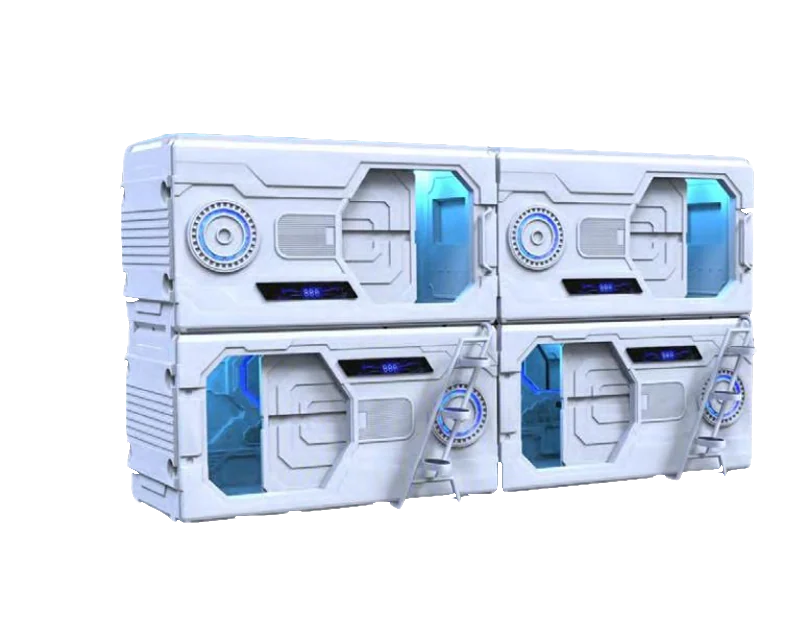
GALAXY Series - Horizontal Single
Standard ABS shell with metal frame featuring TV slot, security sliding door, and ergonomic non-slip ladder. Perfect for hotels, airports, and commercial applications.
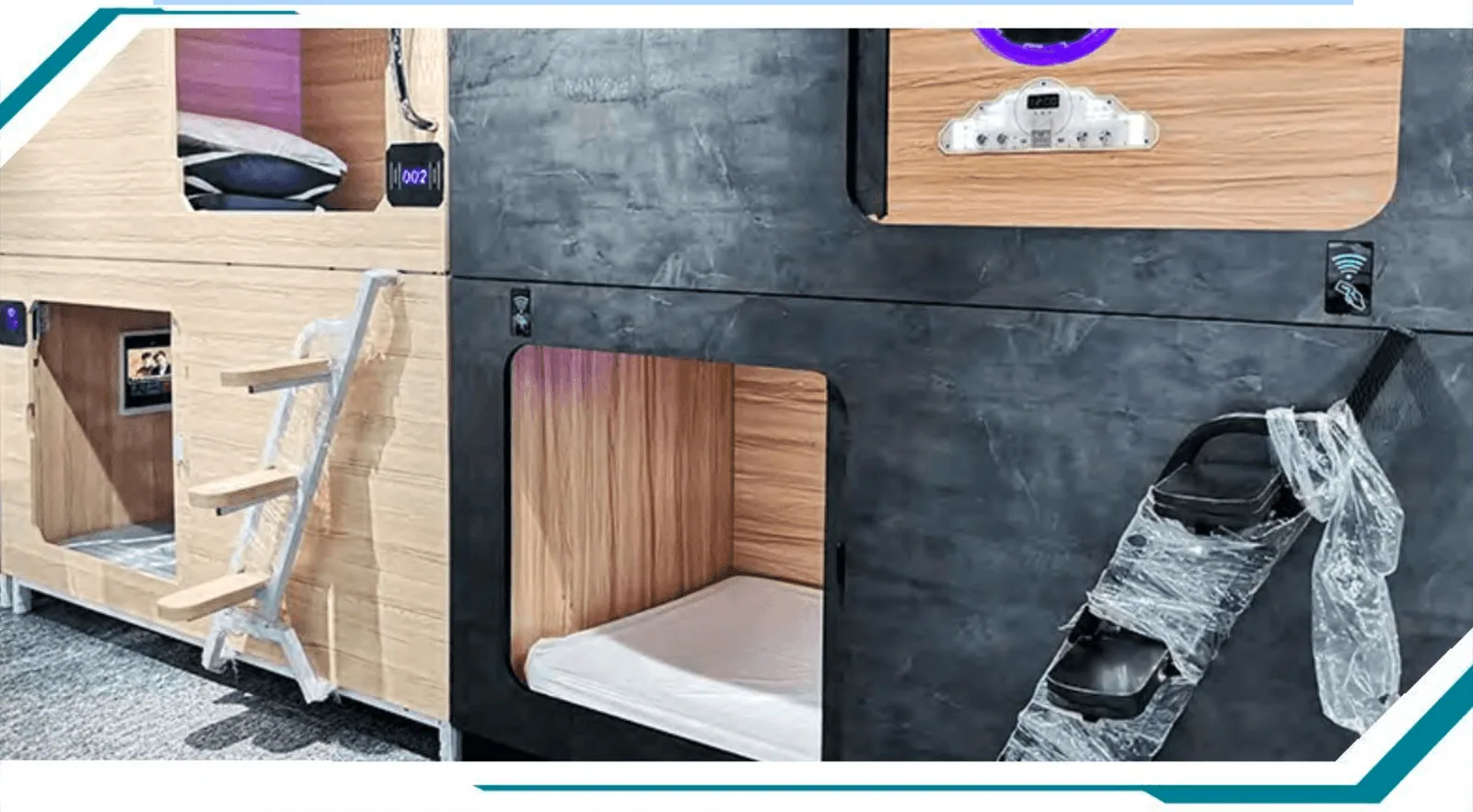
Wooden Series - Horizontal Single
Premium eco multi-layer board construction with metal frame, offering natural wood-grain aesthetics while maintaining all essential capsule bed features.
Market deep-dive
The Firozabad pod-hotel opportunity
Firozabad is not a place you pass through and forget — it is a place that makes what half of India wears on its wrists. This Uttar Pradesh district, carved from Agra and Mainpuri in 1989, is the undisputed Glass City of India: over 400 registered factories here churn out 1,230 tonnes of finished glass daily, accounting for 46 percent of every glass bangle sold in the country. The industry traces its roots to the Mughal era, when rejected glass was melted in traditional bhainsa bhatti furnaces to forge bangles and bottles. Today, Firozabad's output spans chandeliers, laboratory glassware, automotive glass, and decorative tableware — with 35 to 50 percent shipped to international markets. This relentless industrial rhythm generates a daily tide of trade buyers, quality auditors, raw-material suppliers, and export logistics staff, all of whom need clean, affordable, short-duration rest that the city's tired budget lodges simply cannot provide.
What makes Firozabad's pod-hotel opportunity uniquely compelling is its transit architecture. Tundla Junction, a 7-platform railway interchange built by the British in 1866 and still essentially unchanged, sits just 20 kilometres west of the city on the Delhi-Howrah main line. Nearly every long-distance train between Delhi and eastern India makes a technical halt here for crew changes, stranding thousands of passengers daily in 2-to-6-hour connection windows with no modern rest facility. The city itself sits on National Highway 19, the Delhi-Kolkata trunk route, while the Yamuna Expressway and Taj Expressway provide high-speed links to Delhi and Lucknow respectively. This layered connectivity — rail junction, national highway, expressway — creates a rare convergence of stranded, tired travellers that a Japanese-style nap-pod lounge is purpose-built to serve.
Beyond glass and transit, Firozabad is quietly building institutional depth. The Autonomous State Medical College, established in 2019 with a 300-bed tertiary hospital, draws patients and their attendant families from across western UP — families who need overnight stays near the ICU, not a full hotel room. J.S. University and competitive-exam coaching centres pull students who need affordable study-nap capsules during NEET, SSC, and railway exam seasons. The city's Jain heritage — anchored by the 45-foot, 3,500-tonne Lord Bahubali granite idol at Suhag Nagari (the largest in North India) and the centuries-old Marsalganj Digambar Jain Atishaya Kshetra — brings a steady stream of pilgrims. And a Rs 47-crore Glass Museum, India's first, is under construction near Vikas Bhawan, poised to unlock an entirely new industrial-tourism channel.
The geographic context seals the case. Agra and the Taj Mahal are just 44 kilometres west; Fatehpur Sikri, a UNESCO World Heritage ghost city of Akbar, is 70 kilometres away; the Mathura-Vrindavan Krishna pilgrimage circuit lies 80 to 90 kilometres north; and the ancient Bateshwar complex of over 100 Shiva temples sits 90 kilometres south along the Yamuna. Firozabad is not competing with these mega-hubs — it is feeding off their overflow. Tourists who have seen the Taj extend their trip to shop for glass bangles in Firozabad's famous bazaars. Vrindavan pilgrims pass through Tundla Junction. Export buyers fly into Agra's Kheria airport and drive 50 kilometres east to audit glass factories. Each of these flows deposits travellers who need a few hours of rest in a clean, private, affordable capsule — and today, that capsule does not exist in Firozabad. That is the gap BIDUA Pods is built to fill.
Firozabad pod hotel — FAQs
Why does Firozabad need a sleeping pod hotel when it already has budget lodges?+
Firozabad's 400+ glass factories draw thousands of trade buyers, quality auditors, and export agents daily, yet the city has no branded, hygienic short-stay accommodation. Existing budget lodges lack hourly booking, pod-level privacy, and modern amenities. A Japanese-style capsule hotel fills this gap with clean, affordable 4-12 hour rest — ideal for factory visitors, Tundla Junction transit passengers, and medical attendants at the new Government Medical College.
Where is the best location for a capsule hotel or nap pod lounge in Firozabad district?+
Two locations stand out: (1) Near Tundla Junction, the 7-platform railway interchange on the Delhi-Howrah main line where thousands of passengers daily need short rest between connections, and (2) Near the glass factory cluster or the upcoming Rs 47-crore Glass Museum, to capture trade visitors and the new wave of industrial tourists. A third option is near ASMC hospital for medical-attendant overnight stays.
How much does it cost to stay in a pod hotel in Firozabad?+
A typical BIDUA sleeping pod in a Tier 3 city like Firozabad is priced around Rs 600-950 per night — significantly cheaper than even budget hotels, while offering better privacy, hygiene, and climate control. Hourly rates for nap pods can start as low as Rs 150-250, making them ideal for glass-trade visitors needing a few hours of rest between factory rounds or transit passengers at Tundla Junction.
Is there demand for a Chinese or Japanese-style pod hotel near Tundla Junction?+
Absolutely. Tundla Junction is a critical interchange on the Delhi-Howrah and Delhi-Lucknow routes where nearly all long-distance trains make a technical halt for crew changes. Thousands of passengers transfer here daily, often facing 2-6 hour connection waits with no modern rest facility. A pod hotel or nap pod lounge at Tundla would capture this stranded-traveller demand — a proven model at major railway junctions across Japan, China, and now Indian metros.
Can pod hotels serve Firozabad's glass industry visitors and export buyers?+
Yes — this is one of the strongest use cases. Firozabad produces 46% of India's glass bangles and exports 35-50% of its output internationally. Domestic and foreign buyers routinely visit for multi-day factory audits, sample approvals, and trade negotiations. A pod hotel near the industrial cluster offers them clean, affordable accommodation without the overhead of a full hotel, with flexible hourly and nightly booking that matches the unpredictable rhythm of factory visits.
What tourist attractions near Firozabad make a budget pod hotel viable for visitors?+
Firozabad is just 44 km from the Taj Mahal in Agra and 70 km from Fatehpur Sikri (UNESCO World Heritage Site). The Mathura-Vrindavan Krishna pilgrimage circuit is 80-90 km away, and the ancient Bateshwar Shiva temple complex is 90 km south. Within the city, the 45-foot Bahubali Jain idol (largest in North India), Chandwar fort ruins, and Firozabad's famous glass-bangle bazaars attract heritage and shopping tourists. The upcoming Glass Museum will further boost visitor numbers.
Start your Firozabad pod hotel with BIDUA
Sign up to design your space in 3D, build a presentation, and get a quotation + ROI from one dashboard — or talk to our team for a custom Firozabad plan.