Tier 3 pod-hotel market · Uttar Pradesh
Pod Hotel in Ghazipur — Capsule Accommodation for India's Opium Capital
High population density of 1,072/sq km on fertile Gangetic plains; 66% Bhojpuri-speaking; strong outward migration creates a returning-worker transit demand
Population & catchment
36.2 lakh (2011 Census); estimated ~42-43 lakh by 2026
Urban pull
Only 7.6% urban (2011) — overwhelmingly rural district with Ghazipur city population ~1.1 lakh (estimated ~1.55 lakh by 2024)
Economic base
Ghazipur's economy is anchored by the Government Opium and Alkaloid Works — the world's largest legal opium processing facility, established in 1820, employing ~900 workers and generating Rs 200 crore in annual turnover from pharmaceutical alkaloid exports. Agriculture dominates the broader district, with paddy, wheat, sugarcane, and guava orchards thriving on alluvial Gangetic soils. The district was historically renowned for rose cultivation and Gulab Jal (rose water) perfume production, alongside traditional handloom weaving, though these cottage industries have declined.
Around Ghazipur
Key landmarks and footfall hubs that drive short-stay demand in Ghazipur.
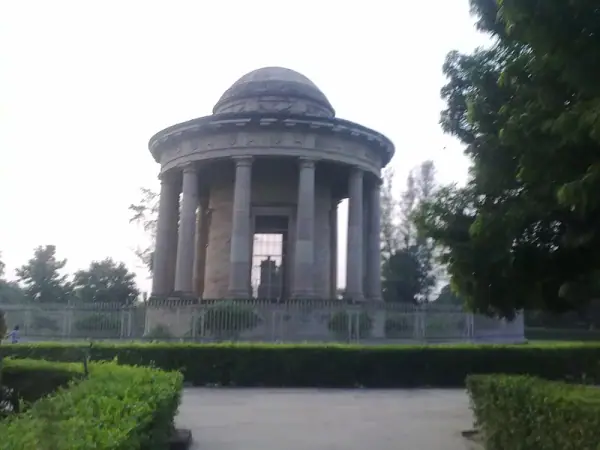
Tomb of Lord Cornwallis, Ghazipur
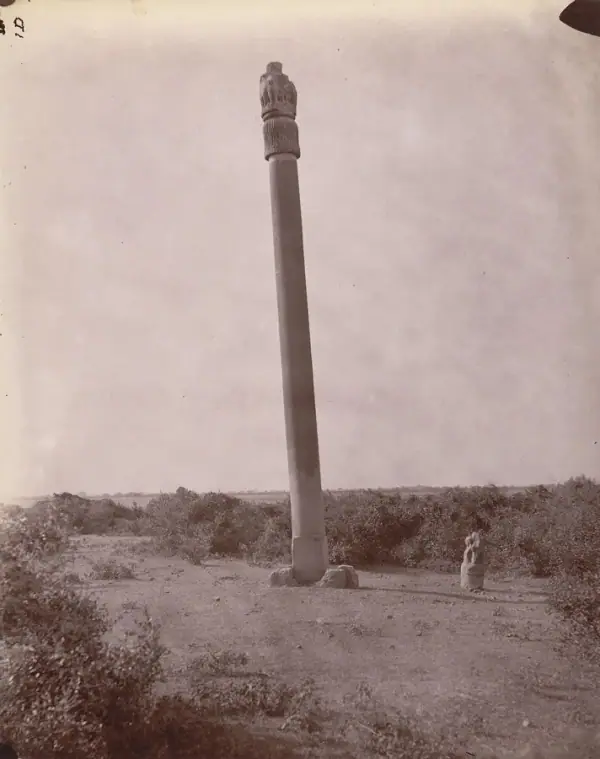
Lathiya Pillar with lion capital, Ghazipur District
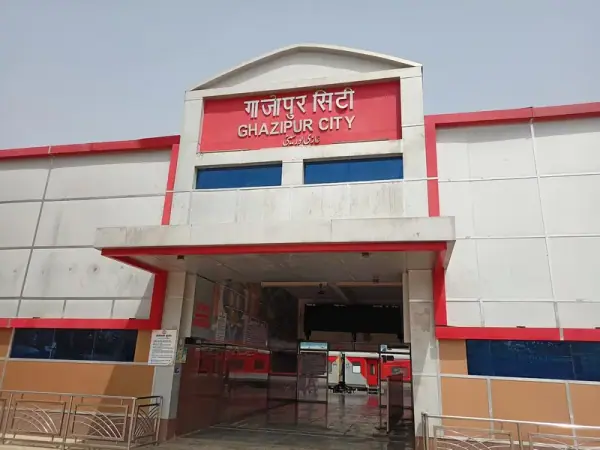
Ghazipur City Railway Station
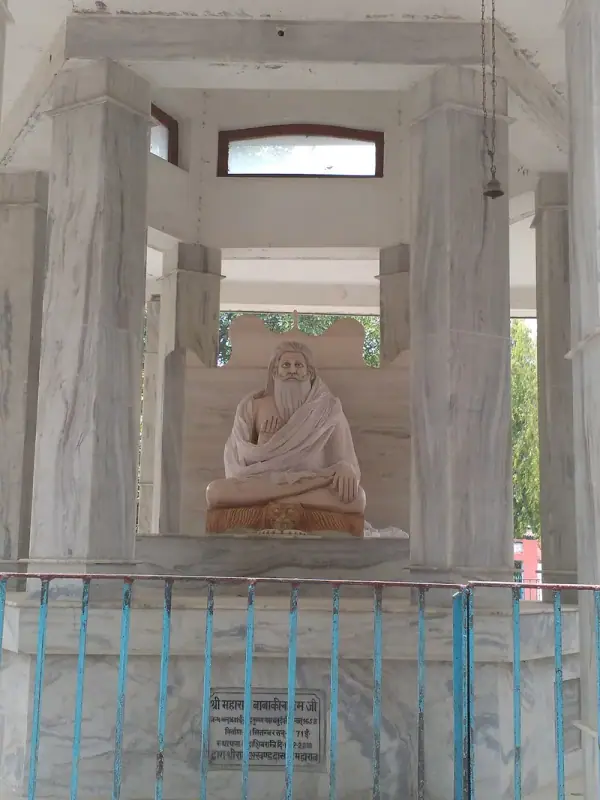
Baba Kinaram Mandir, Ghazipur
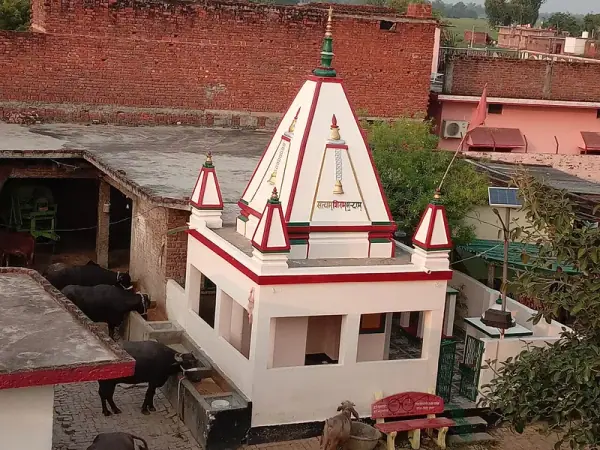
Shiv Shakti Temple, Kamalpur, Ghazipur
Why a pod hotel works in Ghazipur
Ghazipur has only 2 branded budget hotels (OYO-listed) for a district of 36 lakh people sitting on the Varanasi-Ballia highway corridor. The GOAW factory draws government inspectors, pharmaceutical buyers, and researchers year-round with no quality short-stay option. The 430-bed medical college generates constant attendant overflow, and Dildarnagar Junction's 218 daily trains create unserved transit demand. Pod hotels fill this gap with clean, affordable, hourly-bookable capsules — a format this market has never seen.
Ghazipur sits on the Varanasi-Ballia corridor of NH-19 (Grand Trunk Road), making it a natural overnight halt for highway travellers, government officials visiting the world-famous opium factory, patients and attendants at the district medical college hospital, pilgrims heading to Varanasi/Sarnath (~80 km west) or Kushinagar (~200 km north), and families of students enrolled in the growing number of degree colleges across the district.
Best ways to use pods here
- Near Dildarnagar Junction or Ghazipur City Railway Station — capturing 218+ daily train passengers needing short rest or overnight stays on the Delhi-Howrah mainline
- Adjacent to Maharshi Vishwamitra Medical College & Hospital — serving patient attendants, visiting specialists, and MBBS students needing affordable accommodation near the 430-bed facility
- On NH-19 (Grand Trunk Road) corridor — highway pod motel for truckers, bus passengers, and travellers between Varanasi and Bihar border
- Near the GOAW Opium Factory campus — housing visiting government officials, pharmaceutical inspectors, researchers, and factory contract workers
- Ghazipur city centre near Cornwallis Tomb and Ganges Ghats — budget capsule hotel for domestic tourists, pilgrims en route to Varanasi/Sarnath, and returning diaspora visiting family
Where the demand sits in Ghazipur
Transit & travel
- •Ghazipur City Railway Station — trains to Delhi, Mumbai, Kolkata, Chennai, Ahmedabad, Amritsar, and Jammu
- •Dildarnagar Junction — major junction 24 km away with 218+ daily trains on the Delhi-Howrah mainline
- •NH-19 (Grand Trunk Road) passes through the district connecting Varanasi to Ballia and Bihar
- •NH-29 links Ghazipur northward to Gorakhpur
- •NH-97 connects southward to Chandauli and Mirzapur
- •Lal Bahadur Shastri International Airport, Varanasi (Babatpur) — ~90 km, the nearest commercial airport
- •Ghazipur Airstrip on Ghazipur-Mau Road (AAI-operated, currently non-commercial)
Healthcare demand
- •Maharshi Vishwamitra Autonomous State Medical College & Hospital — 430-bed government teaching hospital, 100 MBBS intake annually
- •District Hospital Ghazipur — multi-specialty facility under the Chief Medical Officer
- •State Homeopathic Medical College & Hospital, Rauza — BHMS college treating 250+ patients daily
- •Community Health Centres across 7 tehsils serving the 36-lakh rural population
Education & coaching
- •PG College Ghazipur — oldest degree college, affiliated to Mahatma Gandhi Kashi Vidyapith
- •Technical Education and Research Institute (TERI) — engineering and polytechnic programmes
- •Maharshi Vishwamitra State Medical College — draws students from across eastern UP
- •State Homeopathic Medical College, Rauza — BHMS programme attracting students from multiple states
- •Multiple intermediate and degree colleges spread across Mohammadabad, Zamania, Saidpur, and Jakhania tehsils
Industry & trade
- •Government Opium and Alkaloid Works (GOAW) — world's largest legal opium factory, ~900 workers, Rs 200 crore annual turnover, exporting pharmaceutical alkaloids globally
- •Rose water (Gulab Jal) and traditional attar/perfume cottage industry — historically one of UP's largest rose-cultivation centres
- •Handloom weaving clusters — traditional Bhojpuri textile and sari production
- •Rice milling and agro-processing — paddy, wheat, sugarcane, guava orchards across fertile Gangetic alluvial plains
Tourism & pilgrimage
- •Tomb of Lord Cornwallis — ASI-protected Doric-columned monument with Flaxman cenotaph overlooking the Ganges
- •Chihal Satun (Hall of 40 Pillars) — 18th-century Nawabi palace ruins of Sheikh Abdullah
- •Lathiya Pillar, Zamania — 6-metre Ashoka-era polished sandstone monolith with lion capital, declared national monument
- •Bhitari Pillar & Gupta-era inscriptions — Skanda Gupta's red sandstone monolith 32 km from city
- •Pavhari Baba Ashram & underground meditation caves near ChitNath Ghat
- •Historic Ganges Ghats — ChitNath Ghat (oldest), Mahadeva Ghat, Dadri Ghat, Collector Ghat, Posta Ghat
- •Gauspur Buddhist monastery ruins — site identified by Xuanzang (7th century)
- •Varanasi (Kashi Vishwanath, Dashashwamedh Ghat) — 80 km west
- •Sarnath (Dhamek Stupa, Buddha's first sermon) — 72 km west
- •Chunar Fort, Mirzapur — ~95 km southwest
Profit & ROI projection for Ghazipur
A starter model based on a minimum 50 pods at 70% occupancy and an indicative ₹699/pod/night. Costs use the same itemised basis as our full ROI calculator — pods, add-ons, 18% GST, transport, fit-out and full monthly running cost.
Important: this is only an ASSUMPTION-based projection — not an accurate quote or a guarantee.
The real cost, occupancy, pricing and profit will change with your exact location, property rent, season, competition and how you run the business. Treat these figures as a planning estimate only. For real numbers, use the full calculator or get a custom quote from BIDUA.
Total investment
₹74.7 lakh
50 pods + add-ons + GST + fit-out
Monthly revenue
₹7.3 lakh
35 of 50 pods filled/night
Monthly net profit
₹3.2 lakh
44% margin after all costs
Payback
~23 mo
52% annual ROI
Break-even occupancy ≈ 30% — you only need this much filled to cover all costs; everything above is profit.
| 50 pods (BIDUA mix) | ₹40,30,000 |
| Add-ons (mattress, bedding, panels, safe lock, table) | ₹16,25,200 |
| GST @ 18% (pods + add-ons) | ₹10,17,936 |
| Transport (warehouse → site) | ₹4,00,000 |
| Fit-out, AC, reception, branding + rent deposit | ₹4,00,000 |
| Total investment | ₹74,73,136 |
| Revenue (50 × 70% × ₹699 × 30) | ₹7,33,950 |
| Fixed costs (rent, staff, power, housekeeping…) | – ₹2,42,000 |
| Variable (OTA + marketing + gateway, 23%) | – ₹1,68,809 |
| Net profit / month | ₹3,23,142 |
| Net profit / year | ₹38,77,698 |
Indicative Tier 3 assumptions — actual ADR, occupancy, and costs will vary by exact location, season, and operator efficiency. These figures are not a guarantee of returns. Figures are indicative estimates, not guarantees.
Ghazipur pod-hotel business plan & study
A step-by-step plan to launch a capsule / sleeping-pod hotel in Ghazipur — from picking the right location to licences, setup, pricing and reaching profitable occupancy.
Demand drivers
26+
transit, hospital, student & tourism footfall points
Space needed (50 pods)
2250–2750 sq ft
single rented floor + reception & washrooms
Break-even occupancy
30%
fill above this and you are in profit
Indicative payback
~23 months
on ₹74.7 lakh all-in setup
1. Pick the right location
Target a floor near Maharshi Vishwamitra Autonomous State Medical College & Hospital — 430-bed government teaching hospital, 100 MBBS intake annually or Dildarnagar Junction — major junction 24 km away with 218+ daily trains on the Delhi-Howrah mainline. Best opening use-case: Near Dildarnagar Junction or Ghazipur City Railway Station — capturing 218+ daily train passengers needing short rest or overnight stays on the Delhi-Howrah mainline.
2. Plan investment & funding
Budget about ₹74.7 lakh all-in for 50 pods (pods + add-ons + 18% GST + transport + fit-out & deposit). Many operators fund this with a mix of own capital + a small business/MSME loan against projected cash flow.
3. Licences & compliance
Arrange a municipal trade licence, GST registration, fire safety NOC, police/guest verification (where required), and basic building & sanitation approvals before launch.
4. Build & launch
BIDUA shares a free 3D layout, then delivers and helps install the pods. Civil, electrical, AC and reception fit-out typically takes ~30–45 days, so you can open quickly on a leased floor.
5. Pricing & operations
Start at ~₹699/pod/night, and add hourly slots near hospitals for day-rest demand. Run lean with a small reception + housekeeping team; keep pods clean, private and secure to earn repeat stays.
6. Marketing & occupancy
List on OTAs (MakeMyTrip, Booking.com, OYO, Goibibo) + Google Business Profile, and tie up with nearby hospitals, coaching institutes and tour operators to push occupancy past the 30% break-even quickly.
Key risks & how to manage them
Low occupancy in early months. Open with OTA listings + hospital/coaching tie-ups; use hourly pricing to fill day-time.
High rent eating margins. Choose a slightly off-main but accessible floor near Ghazipur City Railway Station — trains to Delhi, Mumbai, Kolkata, Chennai, Ahmedabad, Amritsar, and Jammu; rent is the biggest lever.
Seasonality / exam & festival peaks. Flex pricing up in peak weeks; offer weekly/monthly pod rentals to students for a stable base.
Cleanliness & safety complaints. Invest in housekeeping, safe locks and CCTV — reputation drives repeat and OTA ratings.
Recommended pod setup for Ghazipur
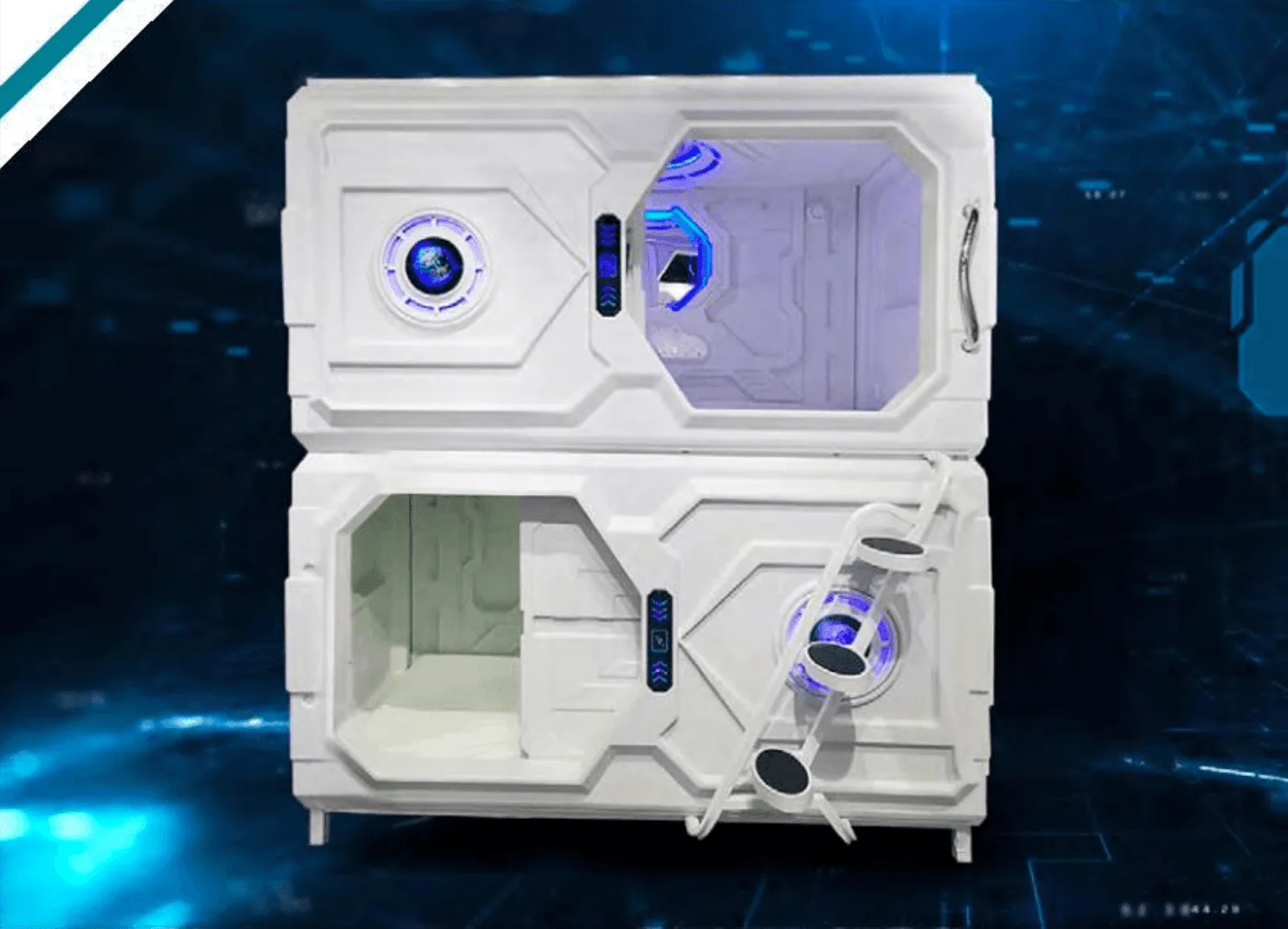
50-pod Standard configuration: 70% single pods + 30% double pods, AC throughout, hourly and nightly booking, digital check-in kiosks, luggage lockers, and attached washrooms — optimised for transit travellers and medical attendants in a Tier 3 market

GALAXY Series - Horizontal Single
Standard ABS shell with metal frame featuring TV slot, security sliding door, and ergonomic non-slip ladder. Perfect for hotels, airports, and commercial applications.
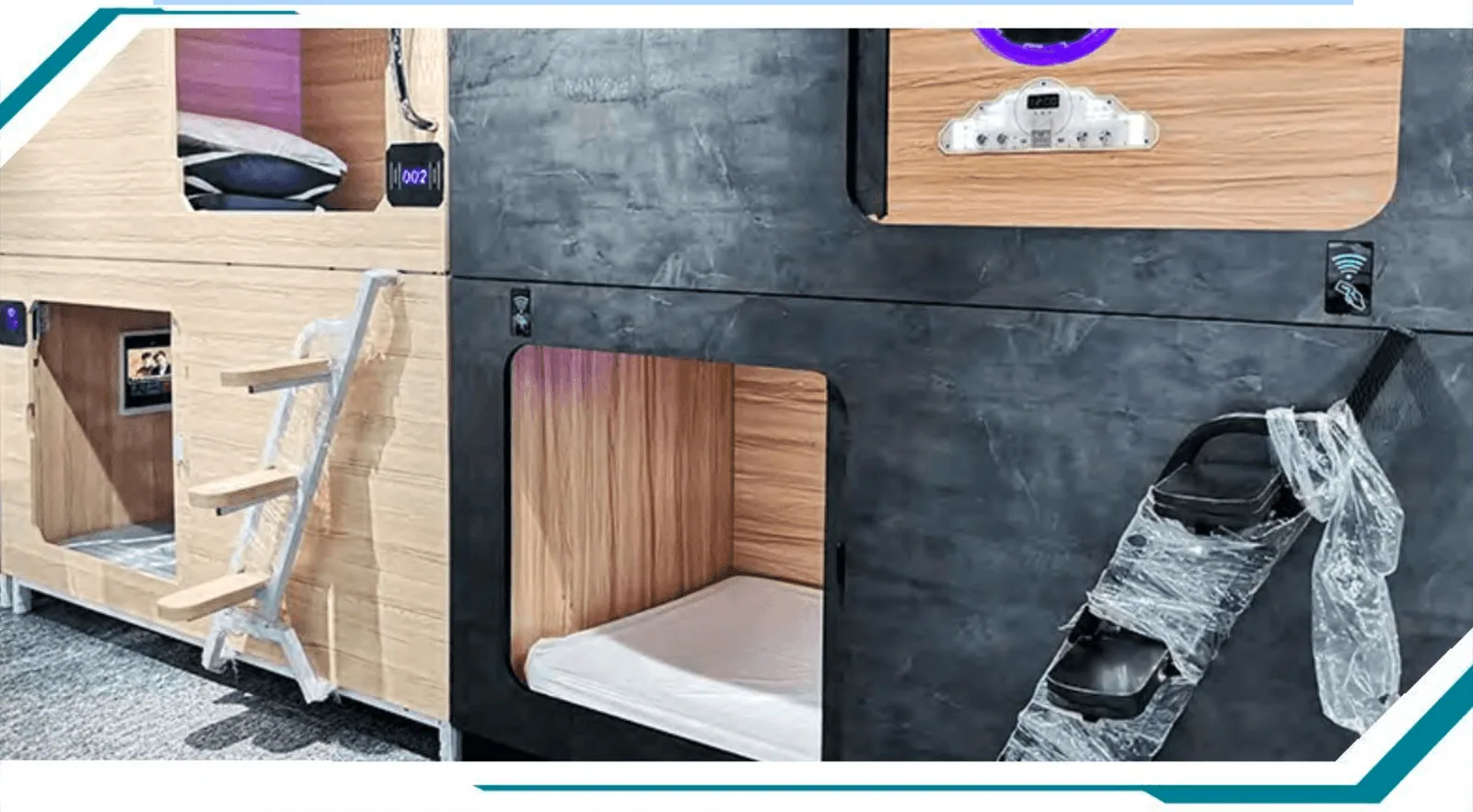
Wooden Series - Horizontal Single
Premium eco multi-layer board construction with metal frame, offering natural wood-grain aesthetics while maintaining all essential capsule bed features.
Market deep-dive
The Ghazipur pod-hotel opportunity
Ghazipur is no ordinary Tier 3 district — it is home to the world's largest legal opium processing facility, the Government Opium and Alkaloid Works, established by the British East India Company in 1820 on a sprawling 43-acre campus along the Ganges. This factory, which inspired Amitav Ghosh's Booker-shortlisted novel Sea of Poppies, employs around 900 workers and exports pharmaceutical-grade codeine, morphine, and thebaine to nations including the United States. Year-round, it draws government inspectors from the Ministry of Finance, international pharmaceutical buyers, and researchers — all of whom currently find only two basic OYO-listed hotels in a city of 1.5 lakh people. A pod hotel near the GOAW campus would capture this unique, recurring institutional demand.
The district's heritage runs deep through Gangetic history. The ASI-protected Tomb of Lord Cornwallis, a neoclassical dome raised on twelve Doric columns above a cenotaph sculpted by the great John Flaxman, overlooks the river where the Governor-General died in 1805. Thirty-two kilometres south at Bhitari stands a red sandstone Gupta-era pillar bearing Skanda Gupta's inscriptions, while at Zamania the Lathiya Pillar — a six-metre Ashoka-period monolith crowned with eight outward-facing lions — has been declared a national monument. Gauspur preserves traces of a Buddhist monastery documented by the Chinese pilgrim Xuanzang in the seventh century. These sites, combined with Ghazipur's six named Ganges ghats and the underground caves of Pavhari Baba's ashram, create a heritage corridor that generates steady, if modest, domestic tourism.
Transit infrastructure amplifies the pod opportunity. Dildarnagar Junction, just 24 kilometres from the city, handles 218-plus trains daily on the Delhi-Howrah mainline — one of Indian Railways' busiest routes. Ghazipur City station connects directly to Mumbai, Chennai, Kolkata, Ahmedabad, Amritsar, and Jammu. NH-19 (the ancient Grand Trunk Road) threads through the district linking Varanasi 80 kilometres to the west with Ballia and Bihar to the east, while NH-29 reaches Gorakhpur to the north. The nearest commercial airport at Varanasi-Babatpur is 90 kilometres away, ensuring that most visitors arrive by rail or road and often need a clean, affordable rest stop. Maharshi Vishwamitra State Medical College, with its 430-bed hospital and annual intake of 100 MBBS students, adds a constant flow of patient attendants and visiting specialists who currently have nowhere decent to stay.
For a pod hotel investor, Ghazipur offers the rare combination of genuine unmet demand and Tier 3 affordability. Monthly commercial rents around Rs 35,000 for a suitable floor, a modest fit-out deposit of Rs 4 lakh, and a realistic nightly rate of Rs 699 keep the entry barrier low while a 50-pod unit at 70% occupancy can target gross room revenue approaching Rs 89 lakh per year. The district's 36-lakh population, its position on the Varanasi pilgrimage and Sarnath Buddhist circuit overflow route, the industrial demand from the opium factory, and the medical-attendant need from the government hospital collectively create five distinct, year-round demand streams. Ghazipur has never seen a capsule hotel — the first mover here owns the market.
Ghazipur pod hotel — FAQs
What is a sleeping pod hotel and is there one in Ghazipur?+
A sleeping pod hotel (also called a capsule hotel or Japanese pod hotel) offers compact, private, fully-enclosed sleeping capsules with AC, USB charging, and bedding — at a fraction of traditional hotel rates. Ghazipur currently has no pod hotel, which is exactly the opportunity: BIDUA Pods brings this globally-proven format to serve the district's 36 lakh residents, medical college visitors, railway passengers, and highway travellers.
Where would a capsule hotel work best in Ghazipur district?+
The strongest locations are near Dildarnagar Junction (218+ daily trains), adjacent to Maharshi Vishwamitra Medical College (430-bed hospital with constant attendant demand), along the NH-19 Varanasi-Ballia highway corridor, or in Ghazipur city near the Cornwallis Tomb tourism zone and the GOAW opium factory campus where government visitors frequently arrive.
How much does a nap pod or budget hourly hotel room cost in Ghazipur?+
BIDUA Pods capsules in a Tier 3 market like Ghazipur are projected at around Rs 699 per night — significantly cheaper than the Rs 1,100-1,800 charged by the only two OYO-listed hotels in town. Hourly booking options make pods even more affordable for short rest stops by train passengers or highway travellers.
Is Ghazipur close enough to Varanasi to benefit from its tourist traffic?+
Yes — Ghazipur is just 80 km east of Varanasi and 72 km from Sarnath (Buddha's first sermon site) via NH-19. During peak pilgrimage seasons when Varanasi hotels overflow, budget-conscious pilgrims and backpackers seek nearby alternatives. A pod hotel in Ghazipur offers an affordable base with easy day-trip access to Kashi Vishwanath, Dashashwamedh Ghat, and Sarnath's Dhamek Stupa.
Why is Ghazipur famous and what drives visitor demand?+
Ghazipur is internationally known for housing the world's largest legal opium factory (established 1820), the ASI-protected Tomb of Lord Cornwallis with its Flaxman cenotaph, and its historic Gulab Jal rose water industry. It is also the birthplace of Param Vir Chakra hero Abdul Hamid and Indian cricket captain Suryakumar Yadav. These draw government officials, researchers, heritage tourists, and media visitors year-round.
What is the ROI potential for a Chinese-style pod hotel or capsule hotel franchise in Ghazipur?+
With 50 pods at 70% occupancy and Rs 699/night ADR, gross room revenue reaches approximately Rs 89 lakh annually. Low Tier 3 rents (~Rs 35,000/month) and a modest fit-out deposit (~Rs 4 lakh) keep the investment threshold accessible. The unserved demand from Dildarnagar Junction's 218 trains, the medical college, and the opium factory workforce makes Ghazipur a compelling early-mover opportunity. All figures are indicative estimates.
Start your Ghazipur pod hotel with BIDUA
Sign up to design your space in 3D, build a presentation, and get a quotation + ROI from one dashboard — or talk to our team for a custom Ghazipur plan.