Tier 3 pod-hotel market · Uttar Pradesh
Pod Hotel in Mau — Capsule Stay for India's Eastern Textile Capital
Bhojpuri-speaking heartland with 80% literacy rate and a Muslim-majority city core (56.7%) surrounded by Hindu-majority rural belt — this dual demographic drives demand for both textile-trade accommodation and pilgrimage stay

Population & catchment
22.06 lakh (2011 Census); estimated ~24-25 lakh by 2026
Urban pull
22.6% urban, 77.4% rural — Maunath Bhanjan city alone has 2.79 lakh residents with very high density (14,000/sq km)
Economic base
Mau is eastern Uttar Pradesh's textile capital, once called the 'Manchester of Handloom' by Jawaharlal Nehru. Its 75,000 powerlooms produce 1.5-2 lakh sarees daily — Sadiya silk sarees, zari-work, and kashidakari embroidery that compete with Banarasi weaves at accessible price points. The textile ecosystem, designated under UP's One District One Product (ODOP) programme, anchors an economy that also relies on Ghosi's agricultural grain trade and a growing services sector around the Mau Junction railway hub.
Around Mau
Key landmarks and footfall hubs that drive short-stay demand in Mau.
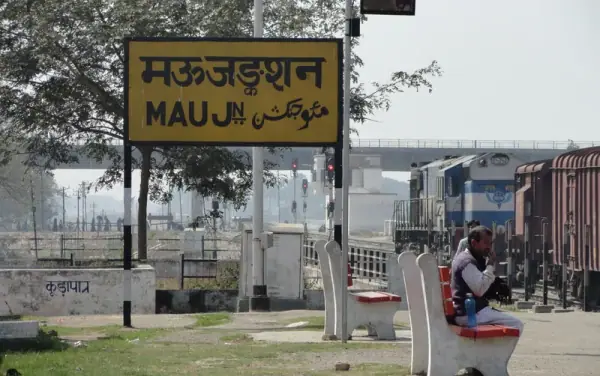
Mau Junction Railway Station
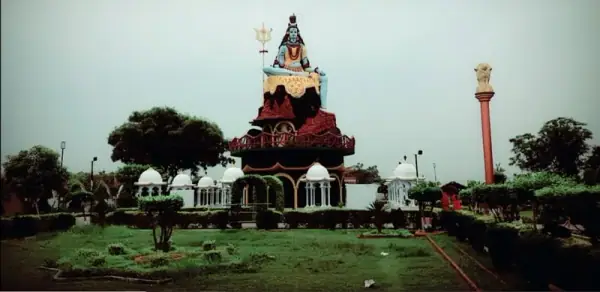
Doharighat Shiva Temple on the Ghaghra River
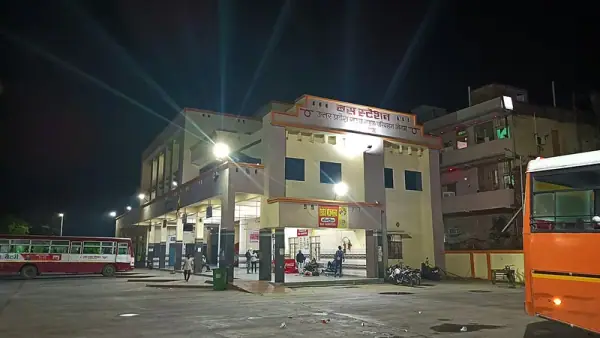
Mau Bus Station

Ghaghra River, Uttar Pradesh
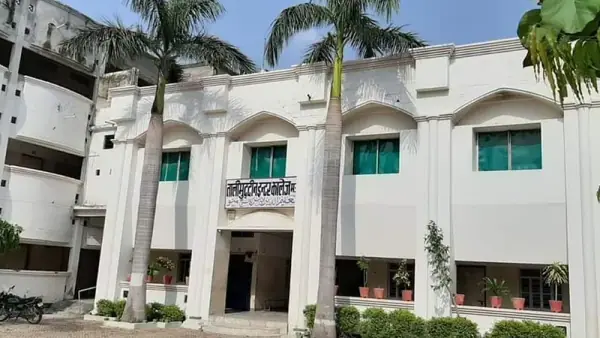
Talimuddin Inter College, Mau — Historic Educational Institution
Why a pod hotel works in Mau
Mau has zero capsule hotels, zero branded budget-stay chains, and zero hourly-rest options despite 58,000 daily railway passengers, 75,000 active powerlooms drawing thousands of textile traders, and a position on the Varanasi-Gorakhpur pilgrimage corridor. The only accommodation options are unbranded lodges and dharamshalas — leaving a wide-open gap for a clean, tech-enabled, hourly-bookable pod-hotel format.
Mau sits on the Varanasi-Gorakhpur rail corridor (NH-29) making it a natural stopover for pilgrims heading to Kashi Vishwanath, Sarnath, and Kushinagar. Its 75,000-powerloom textile cluster draws thousands of bulk saree buyers and raw-material traders from across India year-round. The Ghaghra-riverbank Muktidham temple at Dohrighat, Ramayana-linked Tamsa River ghats, and Sufi dargahs at Madhuban generate steady religious traffic.
Best ways to use pods here
- Near Mau Junction railway station — serving 58,000 daily transit passengers needing 4-8 hour rest between connections on the Prayagraj-Gorakhpur and Ballia lines
- In the Tajopur-Shahadatpura textile belt — hourly pods for bulk saree buyers and zari traders visiting 75,000 powerloom units for quick inspections
- Adjacent to District Hospital and upcoming Government Medical College — affordable overnight pods for patient attendants from rural Mau, Azamgarh, and Ballia
- On NH-29 Ghosi corridor — highway rest pods for truck drivers and intercity travellers on the Varanasi-Gorakhpur route
- Near Maharaja Suhel Dev State University and college clusters — exam-season and semester-start accommodation for students and visiting parents
Where the demand sits in Mau
Transit & travel
- •Mau Junction railway station — NSG-2 junction, 58,000 daily footfall, 3 main lines (Prayagraj-Gorakhpur, Aunrihar-Ballia, Ghazipur-Dildarnagar), 5 platforms, direct trains to Delhi, Mumbai, Kolkata, Surat, Ahmedabad
- •NH-29 (Varanasi-Gorakhpur highway) passes through Ghosi and Kopaganj, heavy truck and bus traffic
- •Gorakhpur Airport (88 km) — nearest commercial airport with flights to Delhi, Mumbai, Bengaluru
- •Varanasi (Lal Bahadur Shastri International Airport) — 93 km, major international gateway
- •State Highway 34 connecting Azamgarh (50 km) to Ballia (85 km) via Mau
Healthcare demand
- •District Hospital Mau — main government referral hospital for 22 lakh population
- •District Female Hospital — dedicated women's health facility
- •Fatima Hospital — private healthcare serving rural eastern UP
- •Upcoming Government Medical College Mau — 100-seat MBBS intake approved by UP government
- •CHC Kopaganj, CHC Ghosi, and 75+ healthcare facilities across district
Education & coaching
- •Maharaja Suhel Dev State University — state university (est. 2019) covering Mau and Azamgarh districts
- •Talimuddin Inter College — historic institution (both boys' and girls' branches)
- •SADHNA DHEERU PG College and D.C.S.K PG College — postgraduate education
- •Al-Jameatul Islamia Faiz-E-Aam and Darul Uloom Mau — major Islamic seminaries drawing students from across India
- •500+ colleges affiliated to Purvanchal University and AKTU for engineering and technical education
Industry & trade
- •75,000 powerlooms in Maunath Bhanjan producing 1.5-2 lakh sarees daily — India's eastern textile capital
- •ODOP (One District One Product) designated cluster for powerloom textiles under UP government
- •Tajopur and Shahadatpura industrial areas — concentrated weaving and zari-work units
- •Bulk saree trading mandis drawing buyers from Gujarat, Maharashtra, Rajasthan, and South India
- •Ghosi agricultural market — grain, oilseed, and sugarcane trade hub on NH-29
Tourism & pilgrimage
- •Muktidham Temple & Park, Dohrighat — Ghaghra riverbank pilgrimage and park complex (45 km from Mau city)
- •Tamsa (Tons) River — Ramayana-linked site where Lord Rama spent his first night of exile
- •Mira Shah Dargah, Madhuban — 10th-11th century Sufi shrine visited by Sher Shah Suri and Emperor Timur
- •Sheetla Mata Mandir and Van Devi Mandir — ancient Hindu temples drawing regional devotees
- •Varanasi (93 km) — Kashi Vishwanath, Sarnath, Ganga ghats; Kushinagar (150 km) — Buddha's Mahaparinirvana site
Profit & ROI projection for Mau
A starter model based on a minimum 50 pods at 70% occupancy and an indicative ₹750/pod/night. Costs use the same itemised basis as our full ROI calculator — pods, add-ons, 18% GST, transport, fit-out and full monthly running cost.
Important: this is only an ASSUMPTION-based projection — not an accurate quote or a guarantee.
The real cost, occupancy, pricing and profit will change with your exact location, property rent, season, competition and how you run the business. Treat these figures as a planning estimate only. For real numbers, use the full calculator or get a custom quote from BIDUA.
Total investment
₹78.7 lakh
50 pods + add-ons + GST + fit-out
Monthly revenue
₹7.9 lakh
35 of 50 pods filled/night
Monthly net profit
₹3.6 lakh
46% margin after all costs
Payback
~22 mo
55% annual ROI
Break-even occupancy ≈ 29% — you only need this much filled to cover all costs; everything above is profit.
| 50 pods (BIDUA mix) | ₹40,30,000 |
| Add-ons (mattress, bedding, panels, safe lock, table) | ₹16,25,200 |
| GST @ 18% (pods + add-ons) | ₹10,17,936 |
| Transport (warehouse → site) | ₹4,00,000 |
| Fit-out, AC, reception, branding + rent deposit | ₹8,00,000 |
| Total investment | ₹78,73,136 |
| Revenue (50 × 70% × ₹750 × 30) | ₹7,87,500 |
| Fixed costs (rent, staff, power, housekeeping…) | – ₹2,47,000 |
| Variable (OTA + marketing + gateway, 23%) | – ₹1,81,125 |
| Net profit / month | ₹3,59,375 |
| Net profit / year | ₹43,12,500 |
These are indicative assumptions for a Tier 3 eastern UP textile town, not a guarantee — actual returns depend on location, execution, seasonality, and local market conditions. Figures are indicative estimates, not guarantees.
Mau pod-hotel business plan & study
A step-by-step plan to launch a capsule / sleeping-pod hotel in Mau — from picking the right location to licences, setup, pricing and reaching profitable occupancy.
Demand drivers
20+
transit, hospital, student & tourism footfall points
Space needed (50 pods)
2250–2750 sq ft
single rented floor + reception & washrooms
Break-even occupancy
29%
fill above this and you are in profit
Indicative payback
~22 months
on ₹78.7 lakh all-in setup
1. Pick the right location
Target a floor near District Hospital Mau — main government referral hospital for 22 lakh population or NH-29 (Varanasi-Gorakhpur highway) passes through Ghosi and Kopaganj, heavy truck and bus traffic. Best opening use-case: Near Mau Junction railway station — serving 58,000 daily transit passengers needing 4-8 hour rest between connections on the Prayagraj-Gorakhpur and Ballia lines.
2. Plan investment & funding
Budget about ₹78.7 lakh all-in for 50 pods (pods + add-ons + 18% GST + transport + fit-out & deposit). Many operators fund this with a mix of own capital + a small business/MSME loan against projected cash flow.
3. Licences & compliance
Arrange a municipal trade licence, GST registration, fire safety NOC, police/guest verification (where required), and basic building & sanitation approvals before launch.
4. Build & launch
BIDUA shares a free 3D layout, then delivers and helps install the pods. Civil, electrical, AC and reception fit-out typically takes ~30–45 days, so you can open quickly on a leased floor.
5. Pricing & operations
Start at ~₹750/pod/night, and add hourly slots near hospitals for day-rest demand. Run lean with a small reception + housekeeping team; keep pods clean, private and secure to earn repeat stays.
6. Marketing & occupancy
List on OTAs (MakeMyTrip, Booking.com, OYO, Goibibo) + Google Business Profile, and tie up with nearby hospitals, coaching institutes and tour operators to push occupancy past the 29% break-even quickly.
Key risks & how to manage them
Low occupancy in early months. Open with OTA listings + hospital/coaching tie-ups; use hourly pricing to fill day-time.
High rent eating margins. Choose a slightly off-main but accessible floor near Mau Junction railway station — NSG-2 junction, 58,000 daily footfall, 3 main lines (Prayagraj-Gorakhpur, Aunrihar-Ballia, Ghazipur-Dildarnagar), 5 platforms, direct trains to Delhi, Mumbai, Kolkata, Surat, Ahmedabad; rent is the biggest lever.
Seasonality / exam & festival peaks. Flex pricing up in peak weeks; offer weekly/monthly pod rentals to students for a stable base.
Cleanliness & safety complaints. Invest in housekeeping, safe locks and CCTV — reputation drives repeat and OTA ratings.
Recommended pod setup for Mau
50 pods — 30 single capsules (textile traders, rail transit, students), 15 double/family pods (pilgrims, hospital attendants), 5 premium pods with workstation and charging (MSME officials, business travellers). Wi-Fi throughout, luggage lockers, 24/7 check-in kiosk. Target location: within 500m of Mau Junction or on the Tajopur-NH-29 axis.
GALAXY Series - Horizontal Single
Standard ABS shell with metal frame featuring TV slot, security sliding door, and ergonomic non-slip ladder. Perfect for hotels, airports, and commercial applications.
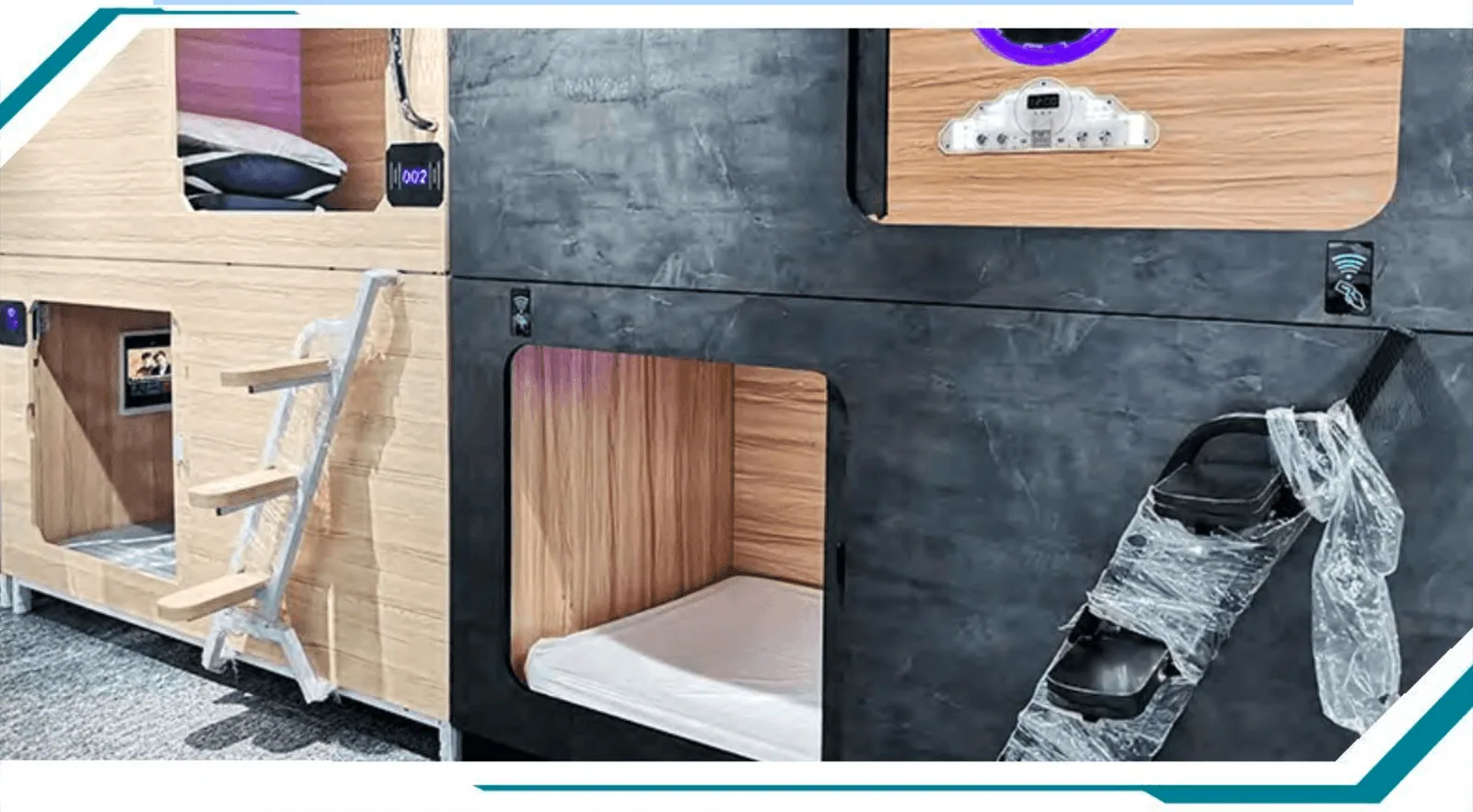
Wooden Series - Horizontal Single
Premium eco multi-layer board construction with metal frame, offering natural wood-grain aesthetics while maintaining all essential capsule bed features.
Market deep-dive
The Mau pod-hotel opportunity
Mau — formally Maunath Bhanjan — is eastern Uttar Pradesh's textile nerve centre, a city whose identity is woven, quite literally, into silk and zari thread. Jawaharlal Nehru called it the 'Manchester of Handloom' during a 1957 visit, and the title still resonates: an estimated 75,000 powerlooms clatter across Tajopur, Shahadatpura, and the dense lanes of the old city, producing up to two lakh sarees every single day. Sadiya silk sarees, ornate kashidakari embroidery, and gold-thread zari work compete directly with Banarasi weaves at more accessible prices, drawing bulk buyers from Gujarat, Maharashtra, Rajasthan, and the southern states. This ceaseless commercial churn — traders arriving by overnight trains, inspecting goods for a few hours, and departing — creates exactly the short-stay, high-turnover accommodation demand that sleeping pods are engineered to serve.
The district's transport spine reinforces this demand. Mau Junction, opened in 1872 and upgraded to broad gauge in 1992, today operates as an NSG-2 category junction with five platforms, ten tracks, and 58,000 daily passengers across three main lines linking Prayagraj, Gorakhpur, Varanasi, Ballia, and Ghazipur. NH-29 slices through the district via Kopaganj and Ghosi, carrying heavy freight and intercity bus traffic between Varanasi (93 km south) and Gorakhpur (101 km north). Gorakhpur Airport sits just 88 km away, while Varanasi's Lal Bahadur Shastri International Airport offers global connectivity at 93 km. Passengers transiting through Mau at odd hours — especially those on the Delhi-bound Mahananda Express or the Mumbai-bound Godan Express — need clean, affordable rest that traditional dharamshalas and roadside lodges simply cannot provide.
Beyond textiles and transit, Mau carries layers of history and pilgrimage that add a quieter but steady stream of visitors. The Tamsa River, flowing through the district, is the Ramayana site where Lord Rama spent his first night of exile from Ayodhya — and the very riverbank where Sage Valmiki composed his legendary first shloka. At Dohrighat, 45 km from the city, the Muktidham temple complex overlooks the Ghaghra River, drawing devotees for cremation rites and religious fairs. The 10th-century Mira Shah Dargah at Madhuban, visited by both Sher Shah Suri and Emperor Timur, exemplifies the district's syncretic Sufi heritage, while the ancient Sheetla Mata Mandir and Van Devi Mandir anchor Hindu devotion. This pilgrimage traffic, combined with Mau's position on the Varanasi-Kushinagar Buddhist circuit corridor, ensures year-round religious tourism demand.
For a pod-hotel operator, Mau presents an unmistakable first-mover opportunity in a market with zero capsule-hotel competition. Commercial rents remain modest — a 3,000-4,000 square-foot floor near Mau Junction or on NH-29 can be leased for Rs 30,000-50,000 per month, a fraction of Varanasi or Gorakhpur rates. The upcoming Government Medical College (100 MBBS seats approved) will add patient-attendant accommodation demand atop the existing District Hospital and Fatima Hospital footfall. Maharaja Suhel Dev State University, established in 2019, and over 500 affiliated colleges keep a young student population cycling through. A 50-pod installation — mixing single capsules for traders and transit passengers with family pods for pilgrims and hospital visitors — can realistically target 70% occupancy at Rs 700-800 per night, delivering healthy unit economics in a town where the concept is entirely novel and the demand drivers are already proven.
Mau pod hotel — FAQs
Why does Mau need sleeping pods or a capsule hotel when it already has traditional hotels?+
Mau's 75,000-powerloom textile cluster draws thousands of bulk saree buyers, raw-material suppliers, and zari traders who visit for just 8-16 hours to inspect goods and place orders. Traditional hotels require full-night bookings that these short-stay visitors overpay for. Sleeping pods near Mau Junction or the Tajopur-Shahadatpura weaving belt offer clean, hourly rest at a fraction of hotel cost — perfectly matching the textile trade's fast-turnover travel pattern.
What is the demand for a Japanese-style pod hotel near Mau Junction railway station?+
Mau Junction handles 58,000 passengers daily across 5 platforms and 3 railway lines (Prayagraj-Gorakhpur, Aunrihar-Ballia, Ghazipur-Dildarnagar). Passengers on overnight trains from Delhi, Mumbai, Kolkata, and Surat frequently arrive at odd hours needing a few hours of rest before onward travel. A Japanese-style pod hotel at the station area would serve this transit demand with affordable nap pods — a format already proven at major Indian railway stations.
Can a budget capsule hotel in Mau serve hospital visitors and patient attendants?+
The District Hospital, District Female Hospital, Fatima Hospital, and the upcoming Government Medical College collectively serve over 22 lakh district residents and referral patients from Azamgarh, Ballia, and Ghazipur. Patient attendants — often rural families — need overnight shelter but cannot afford hotel rooms or find them near hospitals. Budget nap pods placed within walking distance of these medical facilities fill a critical gap at Rs 600-800 per night.
Is there enough tourist and pilgrim traffic in Mau for a pod hotel to be viable?+
Mau itself has Muktidham Dohrighat (Ghaghra riverbank temple), the Ramayana-linked Tamsa River, the Mira Shah Dargah at Madhuban, and Sheetla Mata Mandir. More importantly, Mau sits on the Varanasi-Gorakhpur corridor — pilgrims and tourists travelling between Kashi Vishwanath (93 km), Sarnath, and Kushinagar (150 km) pass through Mau Junction. A Chinese-style pod hotel or capsule stay offers these transit pilgrims affordable, hygienic rest without detouring to city hotels.
What pod configuration works best for a small town like Mau (Maunath Bhanjan)?+
A 50-pod mixed configuration works well for Mau: 30 single capsule pods for textile traders, railway transit passengers, and student travellers; 15 double/family pods for pilgrim families and hospital attendants; and 5 premium pods with workstations for visiting MSME inspectors, ODOP officials, and business travellers. Locating near Mau Junction or the NH-29 Ghosi corridor maximises occupancy from both transit and destination demand.
How does Mau compare to nearby cities like Varanasi or Gorakhpur for a pod hotel investment?+
Varanasi and Gorakhpur are larger cities with higher rents, more hotel competition, and saturated hospitality markets. Mau offers a first-mover advantage: zero capsule hotel competition, lower commercial rents (Rs 30,000-50,000/month for 3,000-4,000 sq ft), and a concentrated demand base from the textile trade, railway junction, and pilgrimage corridor. The hourly hotel concept is entirely new to Mau, giving an early operator pricing power and brand recall across the eastern UP textile belt.
Start your Mau pod hotel with BIDUA
Sign up to design your space in 3D, build a presentation, and get a quotation + ROI from one dashboard — or talk to our team for a custom Mau plan.