Tier 3 pod-hotel market · Uttar Pradesh
Sleeping Pod Hotel in Mirzapur — Rest Smarter in the Land of Vindhyachal
A predominantly rural district whose actual daily throughput is dramatically higher than resident numbers suggest, thanks to 1 crore+ annual Vindhyachal pilgrims, Howrah-Delhi mainline rail traffic, and carpet-trade visitors needing affordable short-stay rest.

Population & catchment
Mirzapur district: ~25 lakh (2011 Census 24.97 lakh; estimated ~29 lakh by 2025). Mirzapur-Vindhyachal urban agglomeration ~3.5 lakh. District density 552 per sq km across 4,521 sq km.
Urban pull
Only 13.9% urban (3.48 lakh) with 86% rural, but the Vindhyachal pilgrimage corridor and Mirzapur city draw massive transient footfall year-round, far exceeding the resident base.
Economic base
Mirzapur's economy is anchored by the globally renowned Mirzapur-Bhadohi handmade carpet cluster (GI-tagged, engaging 3.2 million weavers regionally), Chunar sandstone quarrying that once supplied stone for Emperor Ashoka's pillars, and traditional brassware and lacquerware crafts. Agriculture (wheat, rice, pulses) sustains the rural majority, while Vindhyachal pilgrimage tourism has emerged as the fastest-growing sector with annual footfall exceeding 1 crore.
Around Mirzapur
Key landmarks and footfall hubs that drive short-stay demand in Mirzapur.
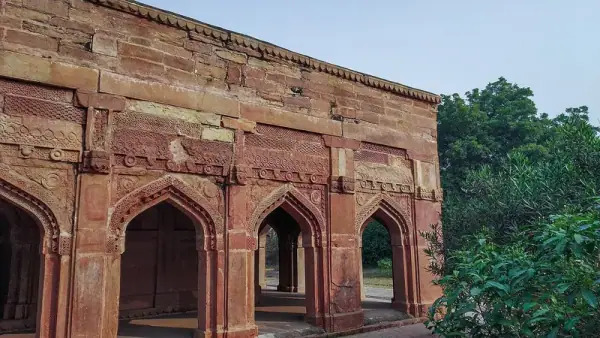
Chunar Fort overlooking the Ganges
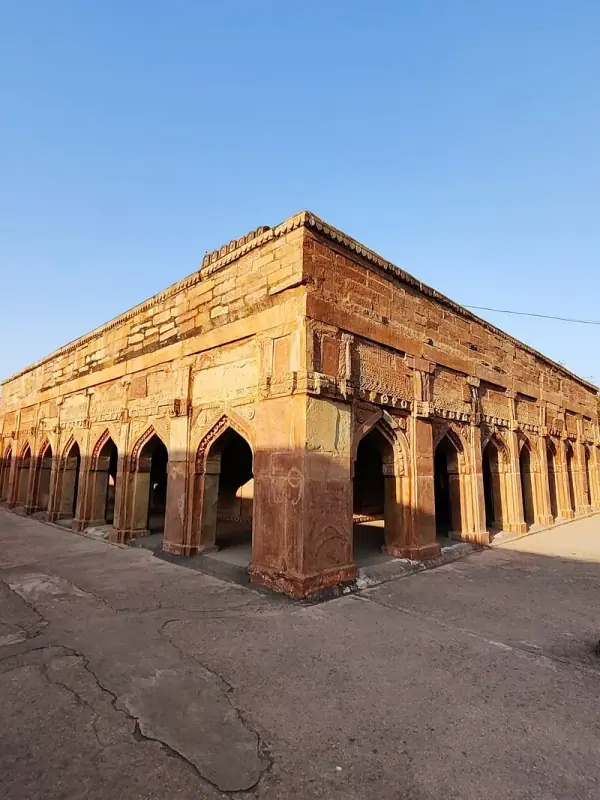
Sonwa Mandap pavilion inside Chunar Fort
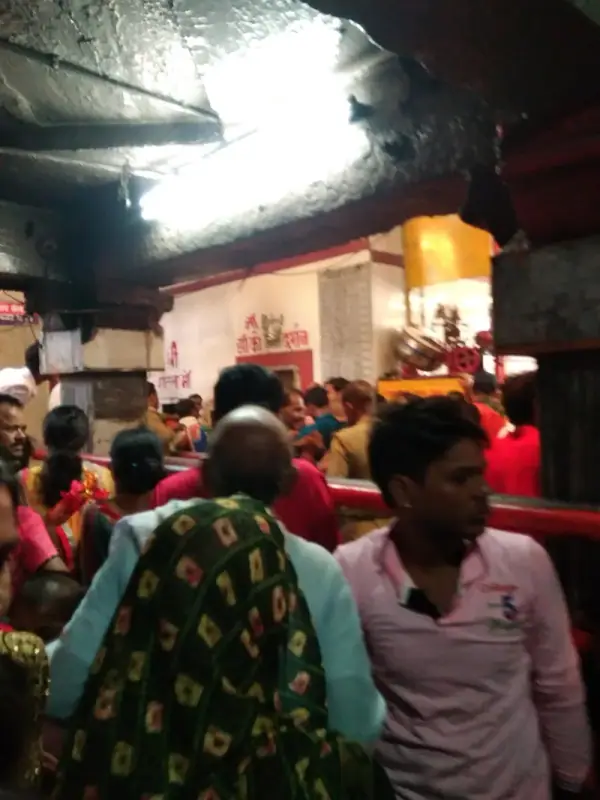
Vindhyavasini Devi Temple at Vindhyachal

Siddhanath ki Dari Falls in the Vindhya hills
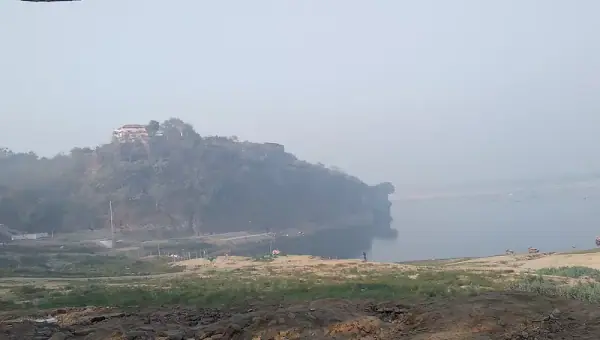
Panoramic view of Chunar Fort from the river
Why a pod hotel works in Mirzapur
Mirzapur receives over 1 crore pilgrims annually at Vindhyachal alone, yet accommodation is limited to dharamshalas, basic lodges, and unbranded guest houses with no branded, hygienic, hourly-rest option anywhere in the district. During Navratri peaks (4-7 lakh daily footfall), pilgrims sleep on temple grounds or in parked vehicles. Chunar Fort tourists, carpet-trade buyers, medical attendants at the state medical college, and rail passengers transiting on the Howrah-Delhi mainline similarly lack a clean affordable pod-rest facility.
Mirzapur sits at the geographic crossroads where the Vindhya mountains meet the Gangetic plain, funnelling three massive travel streams: over 1 crore annual pilgrims to Vindhyachal Shakti Peeth with Navratri peaks of 4-7 lakh daily, Howrah-Delhi mainline rail passengers transiting through Mirzapur and Chunar stations, and carpet trade buyers visiting loom clusters. Varanasi (65 km) and Prayagraj (85 km) add overflow demand during Kumbh Mela. Most travellers need clean, affordable rest for a few hours to one night.
Best ways to use pods here
- Pilgrim rest hub near Vindhyachal for Navratri overflow and year-round darshan visitors needing 4-8 hour stays between temple visits and train departures
- Railway station transit pods at Mirzapur Junction serving Howrah-Delhi mainline passengers with layover rest
- Medical attendant accommodation near Maa Vindhyavasini State Medical College and District Hospital for families accompanying patients
- Carpet trade and business traveller pods for visiting buyers and export agents touring the Mirzapur-Bhadohi loom belt
- Eco-tourism base camp near Wyndham Falls and Tanda Falls for monsoon-season trekkers and weekend visitors from Varanasi and Prayagraj
Where the demand sits in Mirzapur
Transit & travel
- •Mirzapur Railway Station (MZP) on Howrah-Delhi mainline with 12+ daily long-distance trains
- •Chunar Railway Station on Howrah-Delhi mainline
- •Vindhyachal Railway Station (BDL) dedicated pilgrim halt
- •NH-2 Grand Trunk Road and Delhi-Kolkata corridor
- •Lal Bahadur Shastri International Airport Varanasi at 72 km
- •Purvanchal Expressway improving Lucknow-Mirzapur access
Healthcare demand
- •Maa Vindhyavasini Autonomous State Medical College and Hospital
- •District Hospital Mirzapur (largest in Purvanchal region)
- •District Mahila Hospital
- •CHC Chunar and CHC Lalganj community health centres
Education & coaching
- •Rajiv Gandhi South Campus of Banaras Hindu University
- •K.B. Postgraduate College Mirzapur
- •G.D. Binani P.G. College
- •Maa Vindhyavasini Medical College
- •Government and private inter-colleges
Industry & trade
- •Mirzapur-Bhadohi handmade carpet weaving cluster (3.2 million workers)
- •Chunar sandstone quarries and stone-cutting units
- •Brassware and lacquerware workshops in Mirzapur city
- •Agri-mandis and wholesale grain markets
Tourism & pilgrimage
- •Vindhyavasini Devi Temple Vindhyachal (Shakti Peeth with 1 crore+ annual visitors)
- •Trikona Parikrama circuit: Vindhyavasini plus Kali Khoh cave temple plus Ashtabhuja temple
- •Chunar Fort (Mughal-era ASI-protected Ganges panorama)
- •Wyndham Falls and Tanda Falls in Vindhya foothills
- •Siddhanath ki Dari Falls and Sita Kund sacred spring
- •Bariya Ghat and Ghantaghar Clock Tower on IST meridian
Profit & ROI projection for Mirzapur
A starter model based on a minimum 50 pods at 70% occupancy and an indicative ₹799/pod/night. Costs use the same itemised basis as our full ROI calculator — pods, add-ons, 18% GST, transport, fit-out and full monthly running cost.
Important: this is only an ASSUMPTION-based projection — not an accurate quote or a guarantee.
The real cost, occupancy, pricing and profit will change with your exact location, property rent, season, competition and how you run the business. Treat these figures as a planning estimate only. For real numbers, use the full calculator or get a custom quote from BIDUA.
Total investment
₹76.7 lakh
50 pods + add-ons + GST + fit-out
Monthly revenue
₹8.4 lakh
35 of 50 pods filled/night
Monthly net profit
₹4.0 lakh
48% margin after all costs
Payback
~19 mo
63% annual ROI
Break-even occupancy ≈ 26% — you only need this much filled to cover all costs; everything above is profit.
| 50 pods (BIDUA mix) | ₹40,30,000 |
| Add-ons (mattress, bedding, panels, safe lock, table) | ₹16,25,200 |
| GST @ 18% (pods + add-ons) | ₹10,17,936 |
| Transport (warehouse → site) | ₹4,00,000 |
| Fit-out, AC, reception, branding + rent deposit | ₹6,00,000 |
| Total investment | ₹76,73,136 |
| Revenue (50 × 70% × ₹799 × 30) | ₹8,38,950 |
| Fixed costs (rent, staff, power, housekeeping…) | – ₹2,42,000 |
| Variable (OTA + marketing + gateway, 23%) | – ₹1,92,959 |
| Net profit / month | ₹4,03,992 |
| Net profit / year | ₹48,47,898 |
Indicative Tier 3 assumptions for a pilgrimage-heavy small city; actual rates depend on exact location, season (Navratri peaks can sustain premium pricing), and negotiated lease terms. Figures are indicative estimates, not guarantees.
Mirzapur pod-hotel business plan & study
A step-by-step plan to launch a capsule / sleeping-pod hotel in Mirzapur — from picking the right location to licences, setup, pricing and reaching profitable occupancy.
Demand drivers
21+
transit, hospital, student & tourism footfall points
Space needed (50 pods)
2250–2750 sq ft
single rented floor + reception & washrooms
Break-even occupancy
26%
fill above this and you are in profit
Indicative payback
~19 months
on ₹76.7 lakh all-in setup
1. Pick the right location
Target a floor near Maa Vindhyavasini Autonomous State Medical College and Hospital or Chunar Railway Station on Howrah-Delhi mainline. Best opening use-case: Pilgrim rest hub near Vindhyachal for Navratri overflow and year-round darshan visitors needing 4-8 hour stays between temple visits and train departures.
2. Plan investment & funding
Budget about ₹76.7 lakh all-in for 50 pods (pods + add-ons + 18% GST + transport + fit-out & deposit). Many operators fund this with a mix of own capital + a small business/MSME loan against projected cash flow.
3. Licences & compliance
Arrange a municipal trade licence, GST registration, fire safety NOC, police/guest verification (where required), and basic building & sanitation approvals before launch.
4. Build & launch
BIDUA shares a free 3D layout, then delivers and helps install the pods. Civil, electrical, AC and reception fit-out typically takes ~30–45 days, so you can open quickly on a leased floor.
5. Pricing & operations
Start at ~₹799/pod/night, and add hourly slots near hospitals for day-rest demand. Run lean with a small reception + housekeeping team; keep pods clean, private and secure to earn repeat stays.
6. Marketing & occupancy
List on OTAs (MakeMyTrip, Booking.com, OYO, Goibibo) + Google Business Profile, and tie up with nearby hospitals, coaching institutes and tour operators to push occupancy past the 26% break-even quickly.
Key risks & how to manage them
Low occupancy in early months. Open with OTA listings + hospital/coaching tie-ups; use hourly pricing to fill day-time.
High rent eating margins. Choose a slightly off-main but accessible floor near Mirzapur Railway Station (MZP) on Howrah-Delhi mainline with 12+ daily long-distance trains; rent is the biggest lever.
Seasonality / exam & festival peaks. Flex pricing up in peak weeks; offer weekly/monthly pod rentals to students for a stable base.
Cleanliness & safety complaints. Invest in housekeeping, safe locks and CCTV — reputation drives repeat and OTA ratings.
Recommended pod setup for Mirzapur
50-pod mixed configuration: 60% single horizontal pods for solo pilgrims and rail transit passengers, 30% double/family pods for medical attendants and pilgrim families, 10% premium pods for carpet-trade buyers. Include secure luggage storage, shoe lockers for temple visitors, 24/7 hot water, and prayer/wash area. Locate within 2 km of Vindhyachal temple or Mirzapur Railway Station.

GALAXY Series - Horizontal Single
Standard ABS shell with metal frame featuring TV slot, security sliding door, and ergonomic non-slip ladder. Perfect for hotels, airports, and commercial applications.
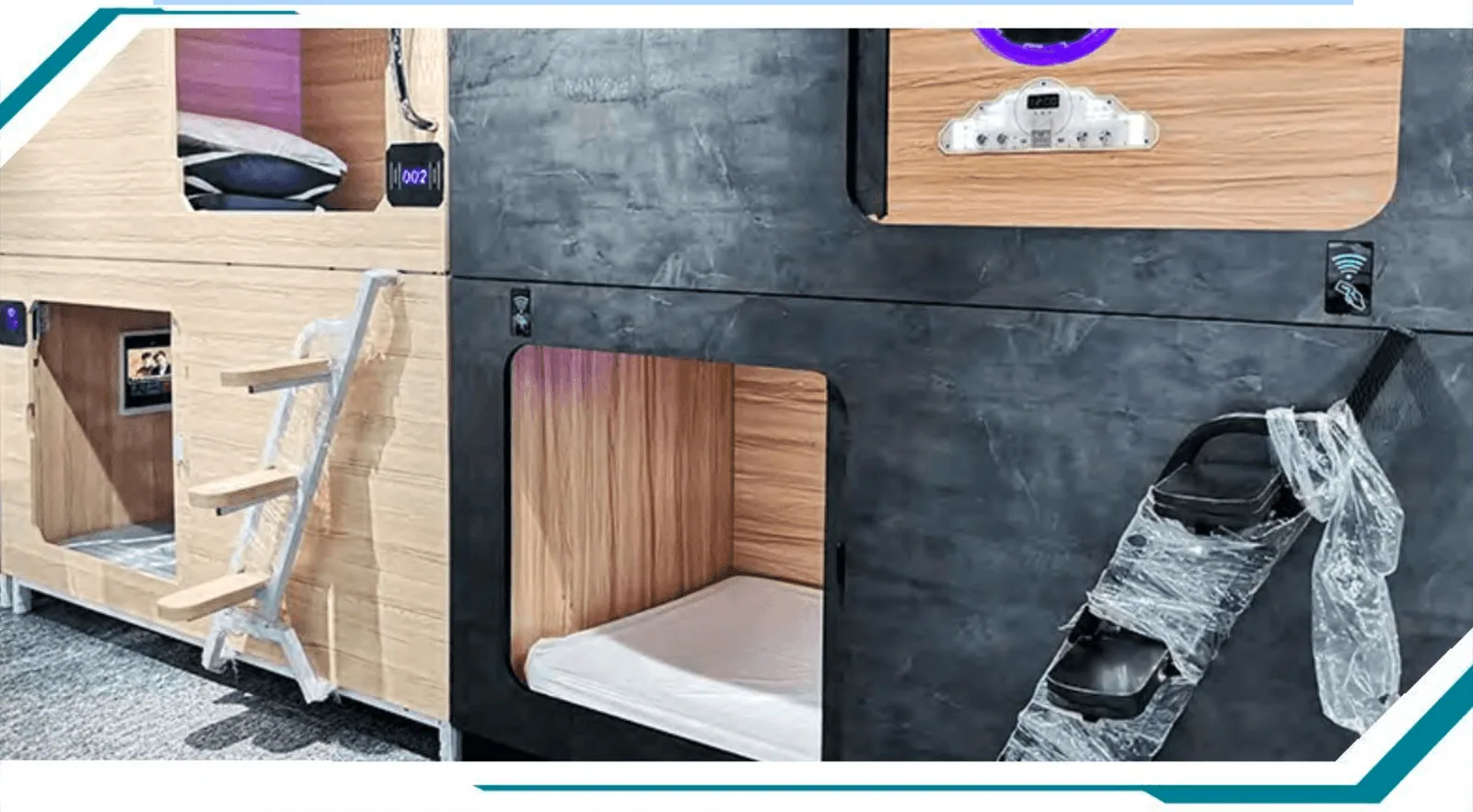
Wooden Series - Horizontal Single
Premium eco multi-layer board construction with metal frame, offering natural wood-grain aesthetics while maintaining all essential capsule bed features.
Market deep-dive
The Mirzapur pod-hotel opportunity
Mirzapur is not just a name made famous by a streaming series. It is a district with 17,000 years of continuous human habitation, where Palaeolithic rock art adorns the caves of Morhana Pahar and Emperor Ashoka's minor rock edicts mark the sandstone hills of Chandan Shahid. The Chunar Fort, perched 280 feet above the Ganges on a rocky spur of the Kaimur range, has been seized and surrendered by Babur, Sher Shah Suri, Akbar, the Marathas and the British, each recognising that controlling this fortress meant controlling the destiny of northern India. Today, that same strategic position at the confluence of the Vindhya mountains and the Gangetic plain makes Mirzapur a natural transit chokepoint, funnelling millions of travellers along the Howrah-Delhi railway mainline and the Grand Trunk Road corridor, all of whom need affordable, hygienic rest.
The spiritual heart of the district beats at Vindhyachal, where the Vindhyavasini Devi Temple, one of Hinduism's 51 Shakti Peeths, draws over one crore pilgrims annually. During each Navratri, daily footfall surges to four to seven lakh, overwhelming the handful of dharamshalas and basic lodges. The sacred Trikona Parikrama circuit connecting Vindhyavasini, the Kali Khoh cave temple where Goddess Kali rests in khechari mudra inside a natural Vindhya gorge, and the Ashtabhuja temple dedicated to Maha Saraswati creates a three-point pilgrimage that keeps devotees in the district for six to twelve hours, precisely the window where a sleeping-pod hotel becomes indispensable, offering hourly air-conditioned rest between darshan visits and train departures.
Beyond pilgrimage, Mirzapur's economy has been shaped for centuries by its craft clusters. The Mirzapur-Bhadohi carpet belt is the world's largest handmade carpet weaving cluster, engaging 3.2 million artisans and exporting GI-tagged dhurries and hand-knotted rugs to Europe, the Middle East and North America. Chunar's sandstone quarries, the very source of stone for the Ashokan Pillars at Sarnath, still supply building stone across Uttar Pradesh. Brassware and lacquerware workshops line the old city lanes. These industries bring a steady stream of trade buyers, export agents, and cooperative officials who currently find no branded accommodation option between Varanasi and Prayagraj. A pod hotel positioned near Mirzapur Railway Station or the carpet market would capture this business-traveller segment alongside the pilgrim flow.
The district's natural landscape adds a third demand layer that peaks during the monsoon. Wyndham Falls, named after a British-era collector, cascades through the Vindhya foothills fifteen kilometres from Mirzapur city, drawing weekend trekkers from Varanasi and Prayagraj. Tanda Falls, Siddhanath ki Dari, and the forested ridges of Kotwan-Patehara offer genuine eco-tourism potential in a state not known for waterfalls. With Varanasi just sixty-five kilometres away, Prayagraj eighty-five, and the Lal Bahadur Shastri International Airport seventy-two kilometres distant, Mirzapur sits within easy reach of two of India's biggest pilgrimage cities yet offers Tier 3 rental costs a fraction of either. For a pod hotel operator, this means high demand driven by Vindhyachal pilgrims, railway transit passengers, medical college attendants, and carpet-trade visitors, combined with low operating costs, a compelling unit-economics equation that few districts in eastern Uttar Pradesh can match.
Mirzapur pod hotel — FAQs
Why does Mirzapur need a sleeping pod hotel when it already has dharamshalas near Vindhyachal?+
Vindhyachal's dharamshalas fill up days before every Navratri, leaving lakhs of pilgrims without shelter. Even outside peak season the temple draws thousands daily. A capsule hotel offers air-conditioned privacy, hourly booking for short darshan trips, secure luggage storage, and 24/7 hygienic facilities at rates far below a conventional hotel.
Where is the best location for a Japanese-style pod hotel in Mirzapur district?+
Two locations stand out: within 1-2 km of the Vindhyavasini Temple complex in Vindhyachal, capturing the year-round pilgrim flow and Navratri surge, or near Mirzapur Railway Station on the Howrah-Delhi mainline, serving transit passengers, medical college attendants, and carpet-trade visitors. Both guarantee high footfall without seasonal dependency.
What is a nap pod, and how is it different from a regular budget hotel in Mirzapur?+
A nap pod is a self-contained capsule with a comfortable bed, climate control, charging ports, and a privacy screen, bookable by the hour. Unlike Mirzapur's existing budget lodges (which require full-night bookings and often lack AC or clean linen), pods let a pilgrim rest for 4 hours between temple visits or a rail passenger nap during a 3-hour layover, paying only for the time used.
How many tourists visit Mirzapur and Vindhyachal every year?+
The Vindhyavasini Shakti Peeth alone recorded over 1 crore (10 million) visitors in 2025, with Navratri peaks seeing 4-7 lakh daily footfall. Add Chunar Fort visitors, Wyndham Falls trekkers, carpet-trade buyers, and rail passengers, and Mirzapur district sees well over 1.2 crore transient visitors annually, a massive under-served accommodation market.
Is a Chinese pod hotel or capsule hotel profitable in a Tier 3 town like Mirzapur?+
Yes. Mirzapur's economics favour pods because rent and labour costs are low while demand is disproportionately high, driven by Vindhyachal pilgrimage, railway transit, and medical college footfall. A 50-pod setup at 70% occupancy and an ADR of around Rs 799 generates strong unit economics, especially when Navratri surges can command premium rates.
Can pod hotels near Mirzapur serve tourists visiting Varanasi and Prayagraj as well?+
Absolutely. Varanasi is just 65 km away and Prayagraj 85 km. During peak seasons like Kumbh Mela, Dev Deepawali, and wedding season, both cities face severe hotel shortages. Mirzapur pods serve as affordable overflow accommodation for budget pilgrims doing the Kashi-Vindhyachal-Prayagraj triangle. The Purvanchal Expressway and improved NH connectivity make this corridor viable.
Start your Mirzapur pod hotel with BIDUA
Sign up to design your space in 3D, build a presentation, and get a quotation + ROI from one dashboard — or talk to our team for a custom Mirzapur plan.