Tier 1 pod-hotel market · Uttar Pradesh
Sleeping Pods & Capsule Hotels in Varanasi — Smart Stays for India's Spiritual Capital
Over 110 million tourist visits in 2024 alone dwarf the resident population, creating year-round transient accommodation demand that far exceeds the city's ~12,000 registered hotel beds
Population & catchment
36.8 lakh (2011 Census); urban agglomeration ~14.4 lakh; estimated ~42-44 lakh district-wide by 2026
Urban pull
43.4% urban, 56.6% rural — one of the most urbanised districts in eastern UP with 2,395 persons per sq km
Economic base
Varanasi's economy rests on three pillars: the centuries-old Banarasi silk-weaving industry (GI-tagged since 2009, employing roughly 100,000 weavers across 25,000 families), heavy public-sector manufacturing anchored by Banaras Locomotive Works and BHEL, and an exploding tourism sector that drew over 11 crore visitors in 2024 — surpassing Goa and Shimla as India's fastest-growing tourism hub. The Kashi Vishwanath Corridor, inaugurated in December 2021, has welcomed 10 crore pilgrims in its first three years, transforming the city's hospitality economics.
Around Varanasi
Key landmarks and footfall hubs that drive short-stay demand in Varanasi.
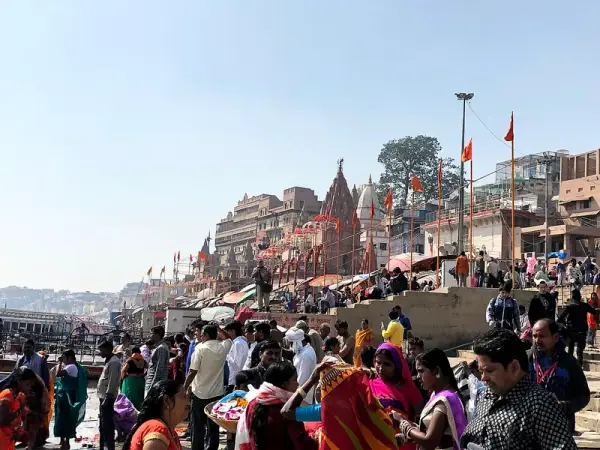
Dashashwamedh Ghat on the Ganges, Varanasi
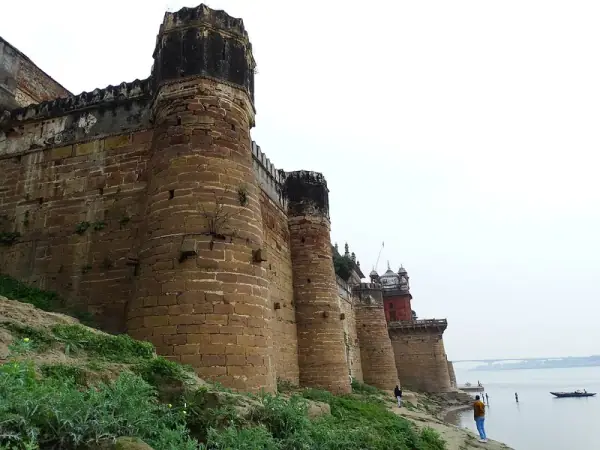
Ramnagar Fort on the banks of the Ganga, Varanasi
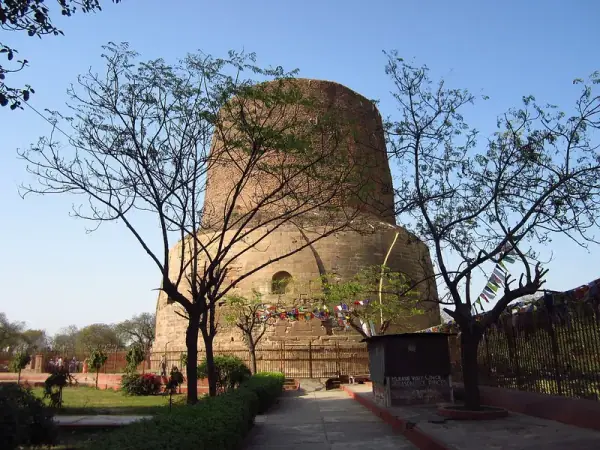
Dhamek Stupa at Sarnath — site of Buddha's first sermon
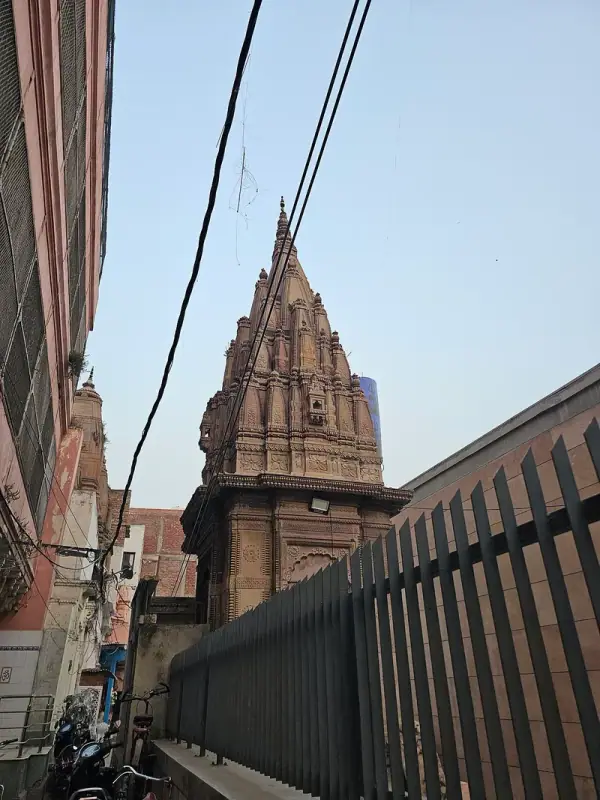
Shri Kashi Vishwanath Temple, Varanasi
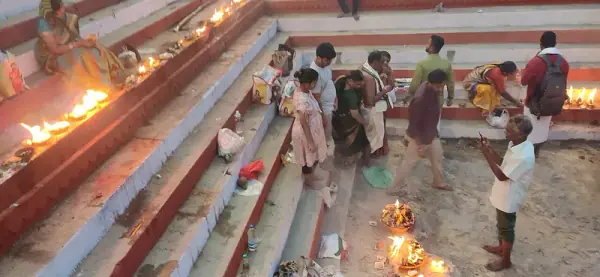
Varanasi ghats panorama at dusk
Why a pod hotel works in Varanasi
Despite 110 million annual visitors and near-full hotel occupancy year-round, Varanasi has only ~12,000 registered hotel beds — a catastrophic supply-demand mismatch. Budget travellers, temple pilgrims on darshan trips, medical attendants at BHU hospital, coaching students, and transit passengers at India's busiest eastern railway junction all need affordable, hygienic, short-stay accommodation that traditional hotels cannot provide at scale. Pod hotels fill this gap with 4-8 hour micro-stays at a fraction of hotel rates, especially near ghats, railway stations, BHU campus, and Sarnath.
Varanasi is simultaneously one of the world's oldest continuously inhabited cities, Hinduism's holiest pilgrimage destination (Kashi, the City of Light), a UNESCO-nominated Buddhist circuit anchor (Sarnath, 8 km away), PM Modi's parliamentary constituency with massive infrastructure investment, and a major railway junction connecting eastern India. Over 110 million tourists visited in 2024, with near-full hotel occupancy year-round. The city also draws medical patients from across eastern UP and Bihar to BHU's AIIMS-grade hospital, thousands of coaching students, and industrial workers at BLW and BHEL.
Best ways to use pods here
- Pilgrim overflow near Kashi Vishwanath and ghat area — millions of darshan visitors need 4-8 hour rest stops between temple queues and Ganga Aarti
- Railway station transit pods at Varanasi Junction — 350+ daily trains, passengers routinely wait 4-12 hours between connections
- Medical attendant accommodation near Sir Sunderlal Hospital / IMS-BHU — families from rural eastern UP and Bihar need affordable overnight stays
- Student and coaching aspirant housing near Lanka-BHU corridor — thousands of UPSC exam students need budget micro-rooms
- Buddhist circuit tourist pods near Sarnath — international visitors from SE Asia and East Asia on multi-day pilgrimage circuits
Where the demand sits in Varanasi
Transit & travel
- •Varanasi Junction — one of northern India's busiest railway stations, 350+ daily trains
- •Varanasi City, Manduadih, Kashi, Bhulanpur stations — suburban rail network
- •Lal Bahadur Shastri International Airport (VNS) — 4 million+ passengers/year, 19th busiest in India
- •NH-2 (Grand Trunk Road) and NH-7 — major highway intersection
- •Ganga Expressway — new high-speed corridor linking Varanasi to Meerut/Delhi
- •Varanasi Multi-Modal Terminal — India's first inland waterway terminal on the Ganga
Healthcare demand
- •Sir Sunderlal Hospital, BHU — 1,500-bed AIIMS-upgraded tertiary hospital, largest in eastern UP
- •IMS-BHU — 7th-ranked medical college in India (NIRF 2024), thousands of daily OPD patients
- •Heritage Hospital, Marwari Hospital — private multi-specialty facilities
- •Kabir Chaura District Hospital — government district-level healthcare
Education & coaching
- •Banaras Hindu University (BHU) — 30,000+ students, Asia's largest residential university
- •IIT (BHU) Varanasi — premier engineering institute, 5,000+ students
- •Sampurnanand Sanskrit Vishwavidyalaya — India's oldest Sanskrit institution (est. 1791)
- •Mahatma Gandhi Kashi Vidyapith — established 1921, major state university
- •UPSC coaching hub in Lanka-Sigra-Durgakund — thousands of aspirants, budget alternative to Delhi
Industry & trade
- •Banaras Locomotive Works (BLW) — electric locomotives for Indian Railways, 400-hectare campus
- •Banarasi silk weaving clusters — 40,000+ weavers producing GI-tagged brocades and sarees
- •BHEL ancillary suppliers — industrial components manufacturing belt
- •Varanasi-Mirzapur carpet weaving belt — one of India's largest carpet production zones
Tourism & pilgrimage
- •Kashi Vishwanath Temple and Corridor — 10 crore visitors since 2021, India's most-visited Shiva shrine
- •84 Ghats along the Ganga — Dashashwamedh (Ganga Aarti), Manikarnika, Assi, Tulsi, Scindia
- •Sarnath (8 km) — Buddha's first sermon site, Dhamek Stupa, Ashoka Pillar Lion Capital, 1.5M visitors/year
- •Ramnagar Fort (14 km) — 1750 Mughal-era fort-palace with vintage car museum
- •Sankat Mochan Temple, Durga Temple, Tulsi Manas Temple — major Hindu pilgrimage circuit
- •Prayagraj Triveni Sangam (121 km) — Kumbh Mela site, massive pilgrim overflow into Varanasi
Profit & ROI projection for Varanasi
A starter model based on a minimum 50 pods at 70% occupancy and an indicative ₹1,400/pod/night. Costs use the same itemised basis as our full ROI calculator — pods, add-ons, 18% GST, transport, fit-out and full monthly running cost.
Important: this is only an ASSUMPTION-based projection — not an accurate quote or a guarantee.
The real cost, occupancy, pricing and profit will change with your exact location, property rent, season, competition and how you run the business. Treat these figures as a planning estimate only. For real numbers, use the full calculator or get a custom quote from BIDUA.
Total investment
₹88.7 lakh
50 pods + add-ons + GST + fit-out
Monthly revenue
₹14.7 lakh
35 of 50 pods filled/night
Monthly net profit
₹8.0 lakh
55% margin after all costs
Payback
~11 mo
109% annual ROI
Break-even occupancy ≈ 20% — you only need this much filled to cover all costs; everything above is profit.
| 50 pods (BIDUA mix) | ₹40,30,000 |
| Add-ons (mattress, bedding, panels, safe lock, table) | ₹16,25,200 |
| GST @ 18% (pods + add-ons) | ₹10,17,936 |
| Transport (warehouse → site) | ₹4,00,000 |
| Fit-out, AC, reception, branding + rent deposit | ₹18,00,000 |
| Total investment | ₹88,73,136 |
| Revenue (50 × 70% × ₹1,400 × 30) | ₹14,70,000 |
| Fixed costs (rent, staff, power, housekeeping…) | – ₹3,27,000 |
| Variable (OTA + marketing + gateway, 23%) | – ₹3,38,100 |
| Net profit / month | ₹8,04,900 |
| Net profit / year | ₹96,58,800 |
Indicative Tier-1 assumptions based on Varanasi's 110M+ annual tourist footfall and near-full hotel occupancy. Actual returns depend on location, season, and operator execution — these are not a guarantee. Figures are indicative estimates, not guarantees.
Varanasi pod-hotel business plan & study
A step-by-step plan to launch a capsule / sleeping-pod hotel in Varanasi — from picking the right location to licences, setup, pricing and reaching profitable occupancy.
Demand drivers
21+
transit, hospital, student & tourism footfall points
Space needed (50 pods)
2250–2750 sq ft
single rented floor + reception & washrooms
Break-even occupancy
20%
fill above this and you are in profit
Indicative payback
~11 months
on ₹88.7 lakh all-in setup
1. Pick the right location
Target a floor near Sir Sunderlal Hospital, BHU — 1,500-bed AIIMS-upgraded tertiary hospital, largest in eastern UP or Varanasi City, Manduadih, Kashi, Bhulanpur stations — suburban rail network. Best opening use-case: Pilgrim overflow near Kashi Vishwanath and ghat area — millions of darshan visitors need 4-8 hour rest stops between temple queues and Ganga Aarti.
2. Plan investment & funding
Budget about ₹88.7 lakh all-in for 50 pods (pods + add-ons + 18% GST + transport + fit-out & deposit). Many operators fund this with a mix of own capital + a small business/MSME loan against projected cash flow.
3. Licences & compliance
Arrange a municipal trade licence, GST registration, fire safety NOC, police/guest verification (where required), and basic building & sanitation approvals before launch.
4. Build & launch
BIDUA shares a free 3D layout, then delivers and helps install the pods. Civil, electrical, AC and reception fit-out typically takes ~30–45 days, so you can open quickly on a leased floor.
5. Pricing & operations
Start at ~₹1,400/pod/night, and add hourly slots near hospitals for day-rest demand. Run lean with a small reception + housekeeping team; keep pods clean, private and secure to earn repeat stays.
6. Marketing & occupancy
List on OTAs (MakeMyTrip, Booking.com, OYO, Goibibo) + Google Business Profile, and tie up with nearby hospitals, coaching institutes and tour operators to push occupancy past the 20% break-even quickly.
Key risks & how to manage them
Low occupancy in early months. Open with OTA listings + hospital/coaching tie-ups; use hourly pricing to fill day-time.
High rent eating margins. Choose a slightly off-main but accessible floor near Varanasi Junction — one of northern India's busiest railway stations, 350+ daily trains; rent is the biggest lever.
Seasonality / exam & festival peaks. Flex pricing up in peak weeks; offer weekly/monthly pod rentals to students for a stable base.
Cleanliness & safety complaints. Invest in housekeeping, safe locks and CCTV — reputation drives repeat and OTA ratings.
Recommended pod setup for Varanasi
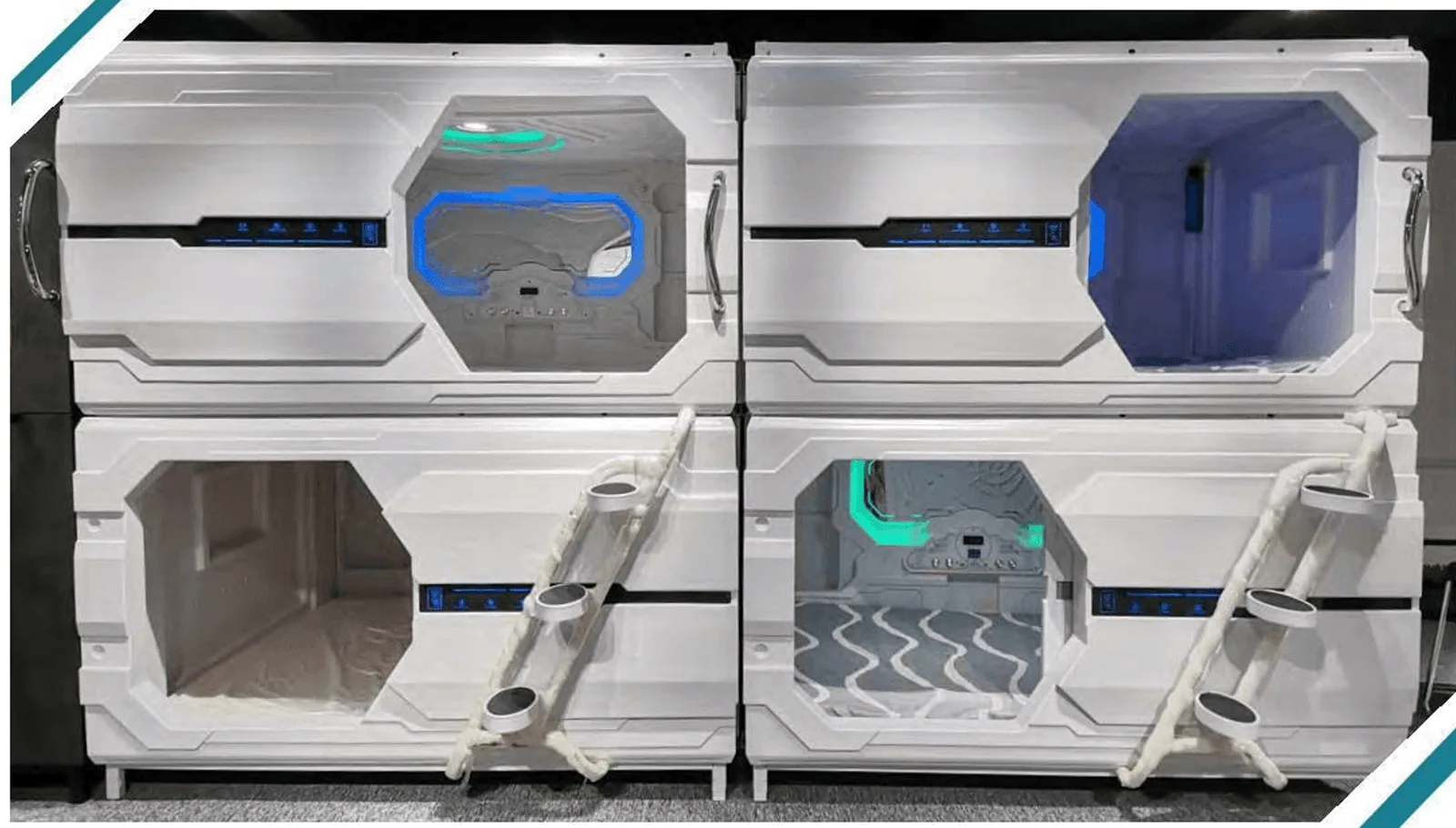
50-pod mixed deployment: 30 Galaxy Series single pods (pilgrim/transit micro-stays near station and ghats), 15 Galaxy Double pods (couples/families on temple tourism), 5 accessible pods (elderly pilgrims and medical visitors). Premium tier justified by Tier-1 tourist footfall and year-round demand.
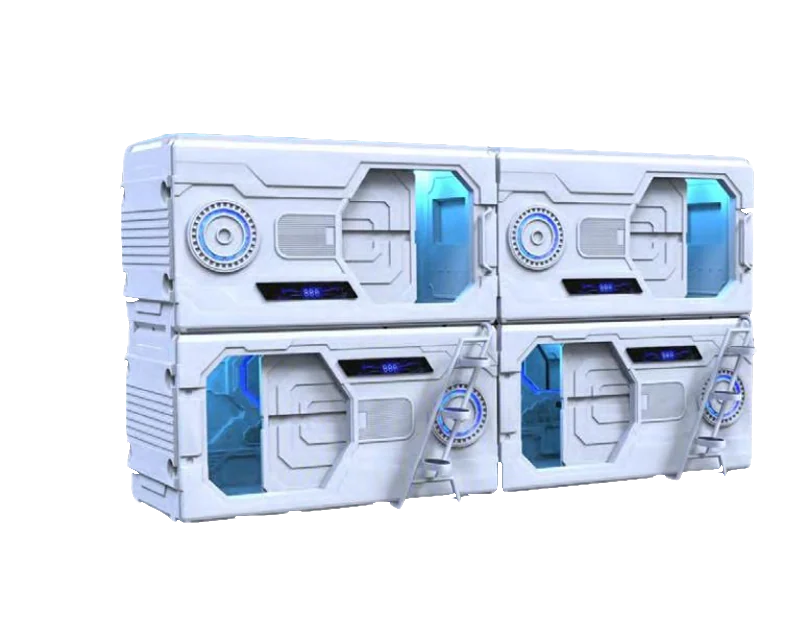
GALAXY Series - Horizontal Single
Standard ABS shell with metal frame featuring TV slot, security sliding door, and ergonomic non-slip ladder. Perfect for hotels, airports, and commercial applications.
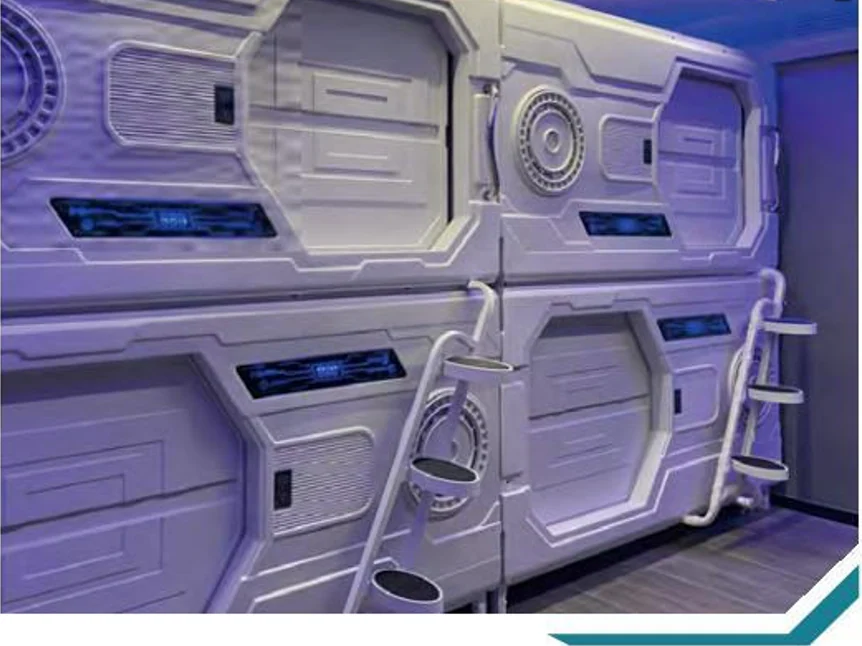
GALAXY Series - Horizontal Double
Spacious double variant with all premium GALAXY features, designed for couples or guests requiring extra space in commercial facilities.
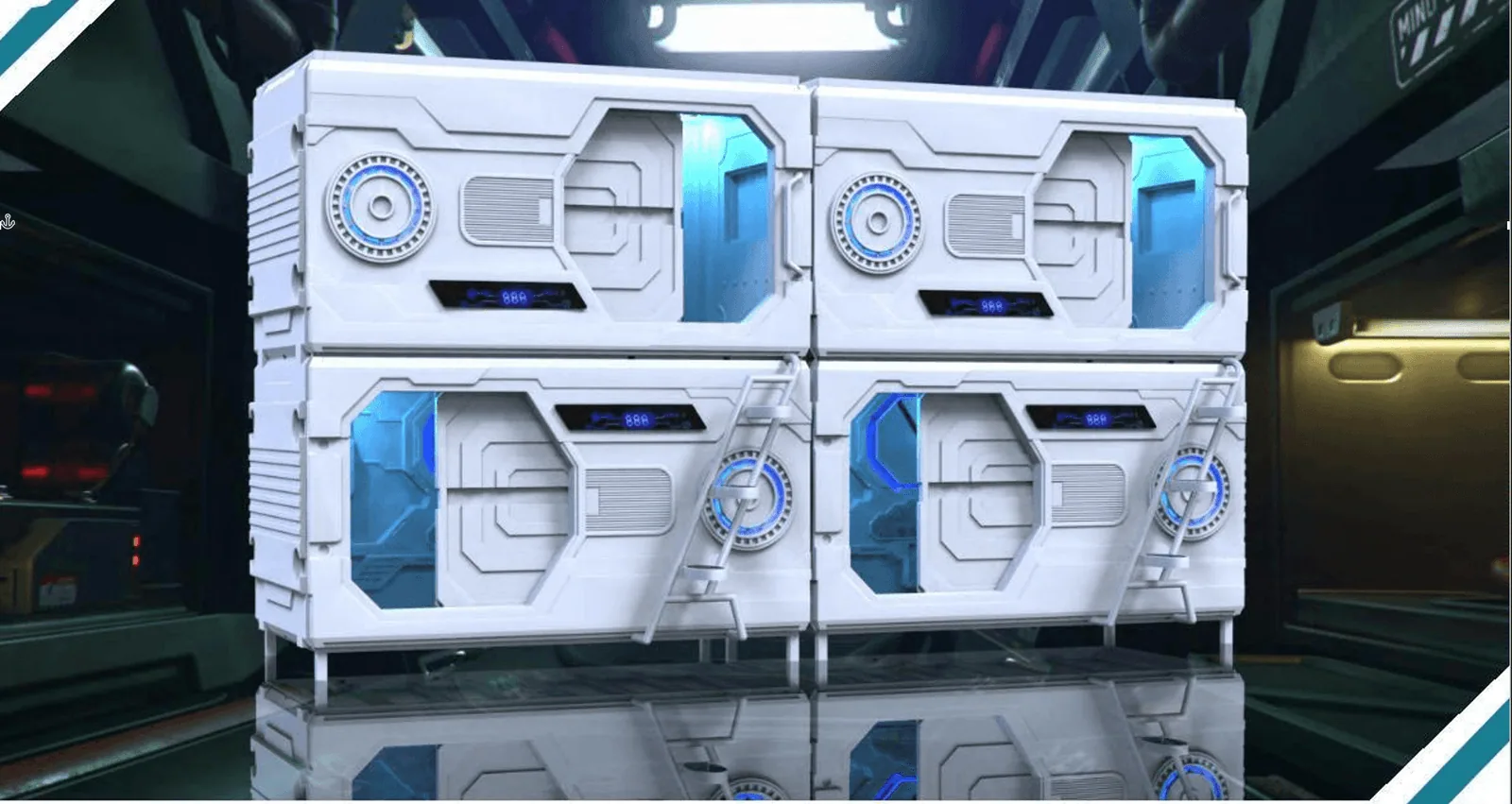
SPACE Series - Horizontal Single
Standard SPACE series with mirror panel, sliding door, TV slot, and intelligent LED controls. Perfect for hotels and commercial applications.
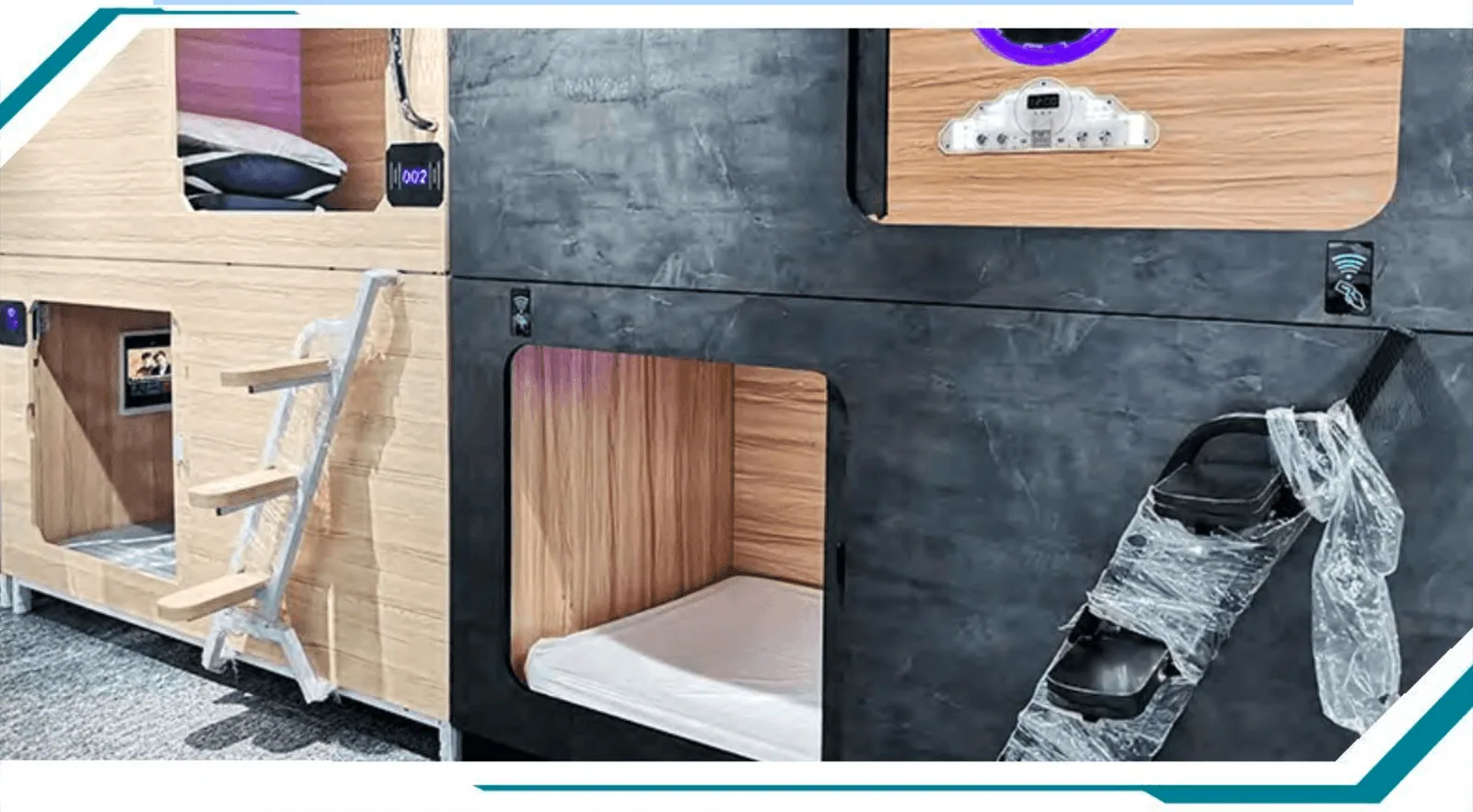
Wooden Series - Horizontal Single
Premium eco multi-layer board construction with metal frame, offering natural wood-grain aesthetics while maintaining all essential capsule bed features.
Market deep-dive
The Varanasi pod-hotel opportunity
Varanasi is not merely a city — it is a civilisation compressed into 1,535 square kilometres along the western bank of the Ganga. Known as Kashi, the City of Light, it has been continuously inhabited for over 3,000 years, making it one of the oldest living cities on Earth. Mark Twain observed that Varanasi is older than history, older than tradition, older even than legend. Today, this ancient identity collides with staggering modern numbers: over 110 million tourists visited in 2024, the Kashi Vishwanath Corridor has welcomed 10 crore pilgrims since its 2021 inauguration, and the city serves as Prime Minister Modi's own parliamentary constituency, channelling unprecedented infrastructure investment into roads, railways, and India's first inland waterway terminal.
The economic engine of Varanasi runs on silk, steel, and spirituality. The Banarasi saree industry, bearing a Geographical Indication tag since 2009, sustains roughly 40,000 weavers who produce some of India's most coveted textiles on handlooms passed down through generations of Momin Ansari craftsmen. Banaras Locomotive Works, spread across 400 hectares, manufactures WAP-7 and WAG-9 electric locomotives for Indian Railways and exports to ten countries. Banaras Hindu University, founded in 1916 as Asia's largest residential university, houses IIT-BHU and the AIIMS-upgraded Sir Sunderlal Hospital, which together pump thousands of students, researchers, patients, and attendant families into the city's accommodation market daily.
Eight kilometres northeast of the ghats lies Sarnath, where Siddhartha Gautama delivered his first sermon in the Deer Park around 528 BCE, setting the Wheel of Dharma in motion. The Lion Capital of Ashoka's pillar, excavated here, became independent India's national emblem. Sarnath drew 1.5 million visitors in 2018 — heavily weighted toward Japanese, Korean, Thai, and Sri Lankan pilgrims already familiar with capsule hotel culture. Combined with Prayagraj's Triveni Sangam just 121 kilometres away and its periodic Kumbh Mela crowds that spill into Varanasi, the region forms one of the densest pilgrimage corridors on the planet, yet remains acutely short of affordable, hygienic, short-stay accommodation.
This is precisely the gap that pod hotels are built to fill. Varanasi Junction processes over 350 trains daily, the airport handles 4 million passengers annually, and the new Ganga Expressway will funnel western UP traffic directly into the city — yet only 12,000 registered hotel beds exist to absorb this tidal demand. Sleeping pods stationed near the railway station capture transit passengers between connections; pods near the Godowlia-Dashashwamedh corridor serve pilgrims resting between temple queues and the evening Ganga Aarti; pods in the Lanka-BHU belt house coaching aspirants and medical attendants. No other accommodation format can deliver air-conditioned privacy, digital check-in, and hourly pricing at the density and affordability that Varanasi's unique demand profile requires.
Varanasi pod hotel — FAQs
Why does Varanasi need sleeping pods when it already has thousands of hotels and dharamshalas?+
Varanasi received over 110 million visitors in 2024 but has only about 12,000 registered hotel beds. Dharamshalas cater to a specific pilgrim demographic but lack privacy, hygiene standards, and climate control. Sleeping pods bridge this gap by offering clean, air-conditioned, tech-enabled micro-stays at one-third the cost of a hotel room — ideal for the millions of pilgrims, transit passengers, and medical attendants who need just 4-8 hours of rest.
Where are the best locations to set up a capsule hotel or Japanese pod hotel in Varanasi?+
Three zones offer the highest pod demand: (1) Near Varanasi Junction railway station, where 350+ daily trains create constant transit demand; (2) The Godowlia-Dashashwamedh Ghat corridor, where millions of pilgrims arrive for Kashi Vishwanath darshan and Ganga Aarti; (3) The Lanka-BHU belt, serving 30,000+ university students, coaching aspirants, and families visiting Sir Sunderlal Hospital. Sarnath (8 km) is a strong secondary location for Buddhist circuit tourists.
How much does it cost to stay in a nap pod or budget hourly hotel in Varanasi?+
BIDUA sleeping pods in Varanasi are designed for affordability: a 4-hour micro-stay costs roughly one-third of a standard hotel room, while an overnight 8-12 hour stay is priced competitively at around Rs 1,200-1,600. This makes pod hotels the most cost-effective option for pilgrims doing short darshan visits, railway transit passengers, and students — far cheaper than Varanasi's increasingly expensive hotel rooms which average Rs 2,500-5,000 during peak season.
Is there demand for Chinese-style pod hotels or capsule hotels from international tourists visiting Varanasi and Sarnath?+
Absolutely. Sarnath alone attracted 336,000 international visitors in 2019, predominantly from Japan, South Korea, Sri Lanka, Thailand, and China — countries where capsule hotels are already a familiar concept. With Varanasi's international airport now serving Kathmandu, Sharjah, and Bangkok routes (4 million+ passengers per year), foreign visitors actively seek the clean, compact, tech-enabled pod experience they know from home, especially near Sarnath's Buddhist circuit.
Can pod hotels near BHU serve students and medical visitors in Varanasi?+
Yes, this is one of Varanasi's strongest pod use cases. BHU's 30,000+ students create demand for affordable accommodation in the Lanka-Durgakund corridor, while Sir Sunderlal Hospital (1,500 beds, AIIMS-upgraded, largest referral hospital in eastern UP) draws thousands of patients and attendant families daily from surrounding districts. Pod hotels near BHU can serve both markets — students on monthly micro-rent plans and medical attendants on nightly stays.
What is the expected return on investment for a pod hotel business in Varanasi?+
With 50 pods at 70% occupancy and an average nightly rate of Rs 1,400 (justified by Varanasi's Tier-1 tourist demand and chronic hotel shortage), the revenue potential is strong. Varanasi's year-round pilgrimage calendar — from Dev Deepawali to Mahashivratri to the daily Ganga Aarti — eliminates the seasonal troughs that affect most Indian tourist cities. The shared ROI model on our website provides a transparent breakdown including GST, fit-out costs, and full operating expenses.
Start your Varanasi pod hotel with BIDUA
Sign up to design your space in 3D, build a presentation, and get a quotation + ROI from one dashboard — or talk to our team for a custom Varanasi plan.