Tier 3 pod-hotel market · Madhya Pradesh
Sleeping Pods & Capsule Hotel in Sheopur — Gateway to Kuno's Cheetahs
A predominantly tribal, agrarian district: the Saharia tribe is ~23% of the population. Long classed as a backward district, it is now economically reshaped by the Kuno cheetah project and the Gwalior gauge-conversion railway.
Population & catchment
District ~6.88 lakh (2011 census: 687,861); estimated ~8.5-9 lakh by 2026. Sheopur town ~1.05 lakh (2011: 105,026), the district HQ.
Urban pull
Heavily rural — district density just 104/km2 across a large 6,606 km2 area, the third least populous district in Madhya Pradesh. Sheopur and Vijaypur are the main urban pockets.
Economic base
Sheopur's economy rests on rain-fed and Chambal-canal agriculture (the Saharia tribe forms the bulk of the rural workforce) and a celebrated wooden lacquer-craft cottage industry. Once tagged among India's most backward districts, it is now being repositioned around conservation tourism through Kuno National Park, the only place in India where wild cheetahs roam, plus the upgrade of the Gwalior-Sheopur narrow-gauge line to broad gauge.
Around Sheopur
Key landmarks and footfall hubs that drive short-stay demand in Sheopur.
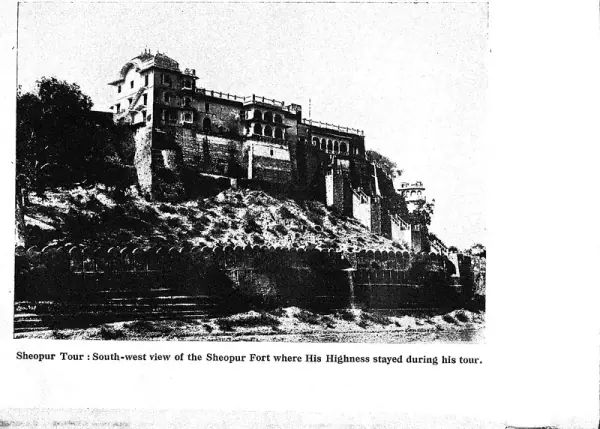
Sheopur Fort (Garh), founded c. 1537
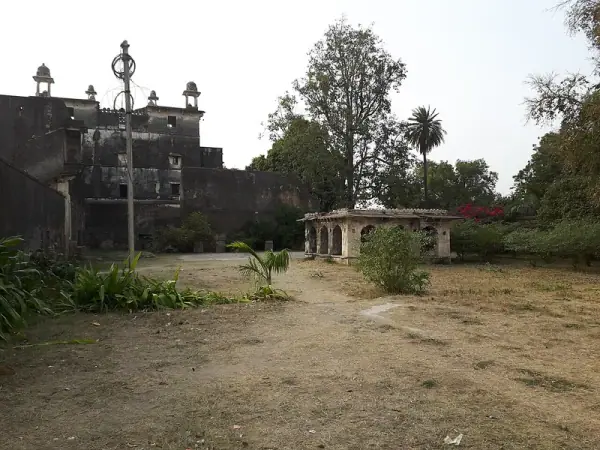
Jain temple inside Sheopur Fort
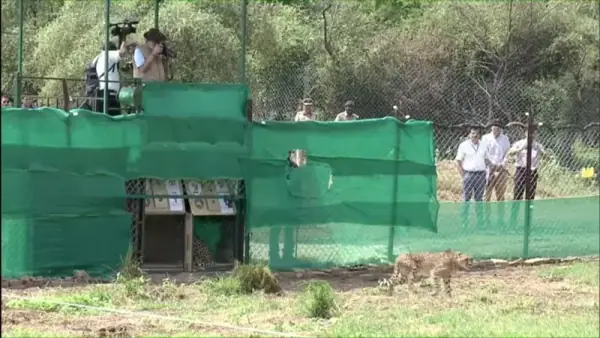
Cheetah at Kuno National Park (Project Cheetah)
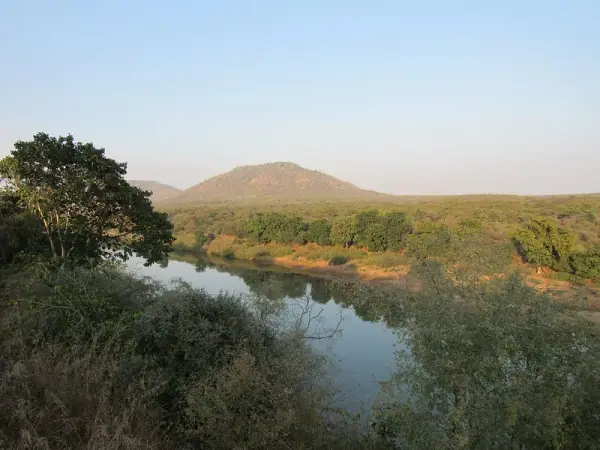
Kuno river flowing through Kuno National Park
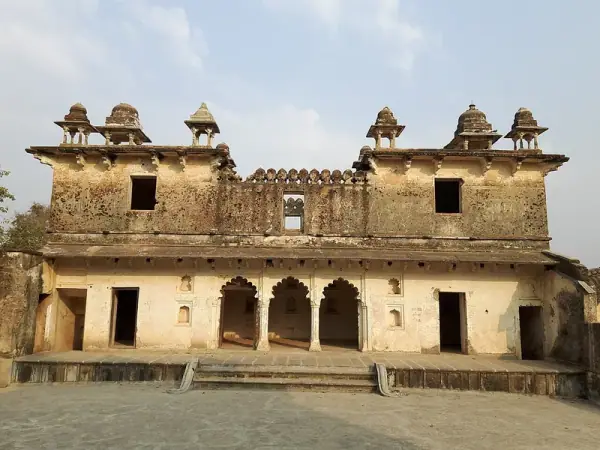
Darbar hall inside Sheopur Fort
Why a pod hotel works in Sheopur
Sheopur has shot from obscure backward district to the address of India's flagship wildlife story — Kuno's cheetahs — yet the town has almost no organised, hygienic, affordable lodging. Visitors face a stark choice between a handful of basic lodges/guesthouses in Sheopur town and pricey forest resorts near the gates, with nothing standardised for solo travellers, researchers, journalists, hospital attendants or railway crews. A 50-pod BIDUA capsule hotel fills the missing budget-but-clean middle, capturing cheetah-tourism overflow, patient-attendant demand and the coming railway uplift.
Sheopur sits in the far north-west corner of Madhya Pradesh on the Seep river (a Chambal tributary), bordering Rajasthan on two sides and linked to Gwalior (~211 km) by road and the historic narrow-gauge line now being converted to broad gauge. It is the gateway to Kuno National Park, which has put this once-remote town on the national and international map. Demand is seasonal and event-driven: cheetah-tourism peaks, pilgrimage and fair crowds, attendants of patients travelling to bigger hospitals, and a steady trickle of officials, researchers, journalists and railway/contract workers.
Best ways to use pods here
- Kuno cheetah tourists, photographers and wildlife researchers needing a clean, affordable base before early-morning safaris
- Attendants of patients referred to Sheopur District Hospital (and those staging onward to Gwalior) needing cheap overnight stays
- Journalists, conservation NGO staff and government/forest officials on short Project Cheetah and field visits
- Railway, survey and contractor crews on the Gwalior-Sheopur-Kota broad-gauge works needing weeks-long bunk-style lodging
- Backpackers and self-drive travellers routing between Gwalior, Ranthambhore and the Chambal ravines who want an hourly/nightly nap stop
Where the demand sits in Sheopur
Transit & travel
- •Gwalior Light Railway narrow-gauge terminus (Sheopur) — under conversion to broad gauge, future direct Gwalior link
- •Planned Gwalior-Sheopur-Kota broad-gauge corridor (DPR stage for the 94 km Sheopur-Digod/Kota new line)
- •Sheopur bus stand — road links to Gwalior, Morena, Shivpuri and into Rajasthan (Baran/Kota, Sawai Madhopur)
- •Gwalior Airport (~200 km) — nearest airport and main fly-in point for Kuno visitors
- •Vijaypur and Karahal sub-division road junctions toward Kuno
Healthcare demand
- •District Hospital, Sheopur (main referral centre for the district)
- •Community Health Centres at Vijaypur and Karahal
- •Tribal-area sub-centres serving Saharia communities
- •Referrals onward to Gwalior medical colleges/hospitals for tertiary care
Education & coaching
- •Government PG / degree college, Sheopur
- •Government ITI Sheopur (vocational training)
- •District schools and Eklavya Model Residential School for tribal students
- •Coaching centres preparing students for state exams who later test in Gwalior
Industry & trade
- •Sheopur wooden lacquer-craft artisan cluster
- •Agri mandis (grain/oilseed markets) in Sheopur and Vijaypur
- •Chambal canal command agro-processing and storage
- •Railway broad-gauge conversion worksites and depots
Tourism & pilgrimage
- •Kuno National Park — India's only wild-cheetah habitat (Project Cheetah, 2022 onward)
- •Sheopur Fort (Garh) — founded c. 1537 by Gaur Rajputs, with Jain temple and Saharia Museum
- •Kaketo / Chambal-region reservoirs and the Chambal ravines
- •Seep river ghats and local temples in and around Sheopur town
- •Gateway flow toward Ranthambhore (Rajasthan) and the Chambal Gharial Sanctuary
Profit & ROI projection for Sheopur
A starter model based on a minimum 50 pods at 70% occupancy and an indicative ₹800/pod/night. Costs use the same itemised basis as our full ROI calculator — pods, add-ons, 18% GST, transport, fit-out and full monthly running cost.
Important: this is only an ASSUMPTION-based projection — not an accurate quote or a guarantee.
The real cost, occupancy, pricing and profit will change with your exact location, property rent, season, competition and how you run the business. Treat these figures as a planning estimate only. For real numbers, use the full calculator or get a custom quote from BIDUA.
Total investment
₹89.7 lakh
50 pods + add-ons + GST + fit-out
Monthly revenue
₹8.4 lakh
35 of 50 pods filled/night
Monthly net profit
₹3.6 lakh
43% margin after all costs
Payback
~25 mo
48% annual ROI
Break-even occupancy ≈ 31% — you only need this much filled to cover all costs; everything above is profit.
| 50 pods (BIDUA mix) | ₹40,30,000 |
| Add-ons (mattress, bedding, panels, safe lock, table) | ₹16,25,200 |
| GST @ 18% (pods + add-ons) | ₹10,17,936 |
| Transport (warehouse → site) | ₹4,00,000 |
| Fit-out, AC, reception, branding + rent deposit | ₹19,00,000 |
| Total investment | ₹89,73,136 |
| Revenue (50 × 70% × ₹800 × 30) | ₹8,40,000 |
| Fixed costs (rent, staff, power, housekeeping…) | – ₹2,87,000 |
| Variable (OTA + marketing + gateway, 23%) | – ₹1,93,200 |
| Net profit / month | ₹3,59,800 |
| Net profit / year | ₹43,17,600 |
Indicative Tier-3 assumptions for Sheopur, not a guarantee; actual ADR and occupancy will swing with the cheetah-tourism season, Kuno safari permits and the broad-gauge railway timeline. Figures are indicative estimates, not guarantees.
Sheopur pod-hotel business plan & study
A step-by-step plan to launch a capsule / sleeping-pod hotel in Sheopur — from picking the right location to licences, setup, pricing and reaching profitable occupancy.
Demand drivers
18+
transit, hospital, student & tourism footfall points
Space needed (50 pods)
2250–2750 sq ft
single rented floor + reception & washrooms
Break-even occupancy
31%
fill above this and you are in profit
Indicative payback
~25 months
on ₹89.7 lakh all-in setup
1. Pick the right location
Target a floor near District Hospital, Sheopur (main referral centre for the district) or Planned Gwalior-Sheopur-Kota broad-gauge corridor (DPR stage for the 94 km Sheopur-Digod/Kota new line). Best opening use-case: Kuno cheetah tourists, photographers and wildlife researchers needing a clean, affordable base before early-morning safaris.
2. Plan investment & funding
Budget about ₹89.7 lakh all-in for 50 pods (pods + add-ons + 18% GST + transport + fit-out & deposit). Many operators fund this with a mix of own capital + a small business/MSME loan against projected cash flow.
3. Licences & compliance
Arrange a municipal trade licence, GST registration, fire safety NOC, police/guest verification (where required), and basic building & sanitation approvals before launch.
4. Build & launch
BIDUA shares a free 3D layout, then delivers and helps install the pods. Civil, electrical, AC and reception fit-out typically takes ~30–45 days, so you can open quickly on a leased floor.
5. Pricing & operations
Start at ~₹800/pod/night, and add hourly slots near hospitals for day-rest demand. Run lean with a small reception + housekeeping team; keep pods clean, private and secure to earn repeat stays.
6. Marketing & occupancy
List on OTAs (MakeMyTrip, Booking.com, OYO, Goibibo) + Google Business Profile, and tie up with nearby hospitals, coaching institutes and tour operators to push occupancy past the 31% break-even quickly.
Key risks & how to manage them
Low occupancy in early months. Open with OTA listings + hospital/coaching tie-ups; use hourly pricing to fill day-time.
High rent eating margins. Choose a slightly off-main but accessible floor near Gwalior Light Railway narrow-gauge terminus (Sheopur) — under conversion to broad gauge, future direct Gwalior link; rent is the biggest lever.
Seasonality / exam & festival peaks. Flex pricing up in peak weeks; offer weekly/monthly pod rentals to students for a stable base.
Cleanliness & safety complaints. Invest in housekeeping, safe locks and CCTV — reputation drives repeat and OTA ratings.
Recommended pod setup for Sheopur
50 single galaxy pods on a ~3,000-3,500 sqft floor in Sheopur town near the bus stand / district hospital and Kuno-access road, mixing nightly and hourly (short-stay) rates with secure luggage lockers, strong Wi-Fi and an early-checkout breakfast for safari-goers.
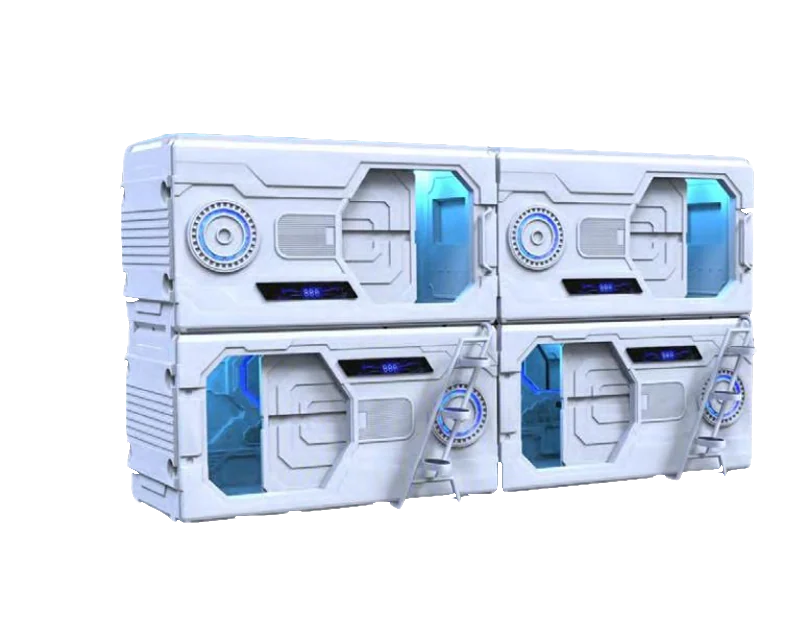
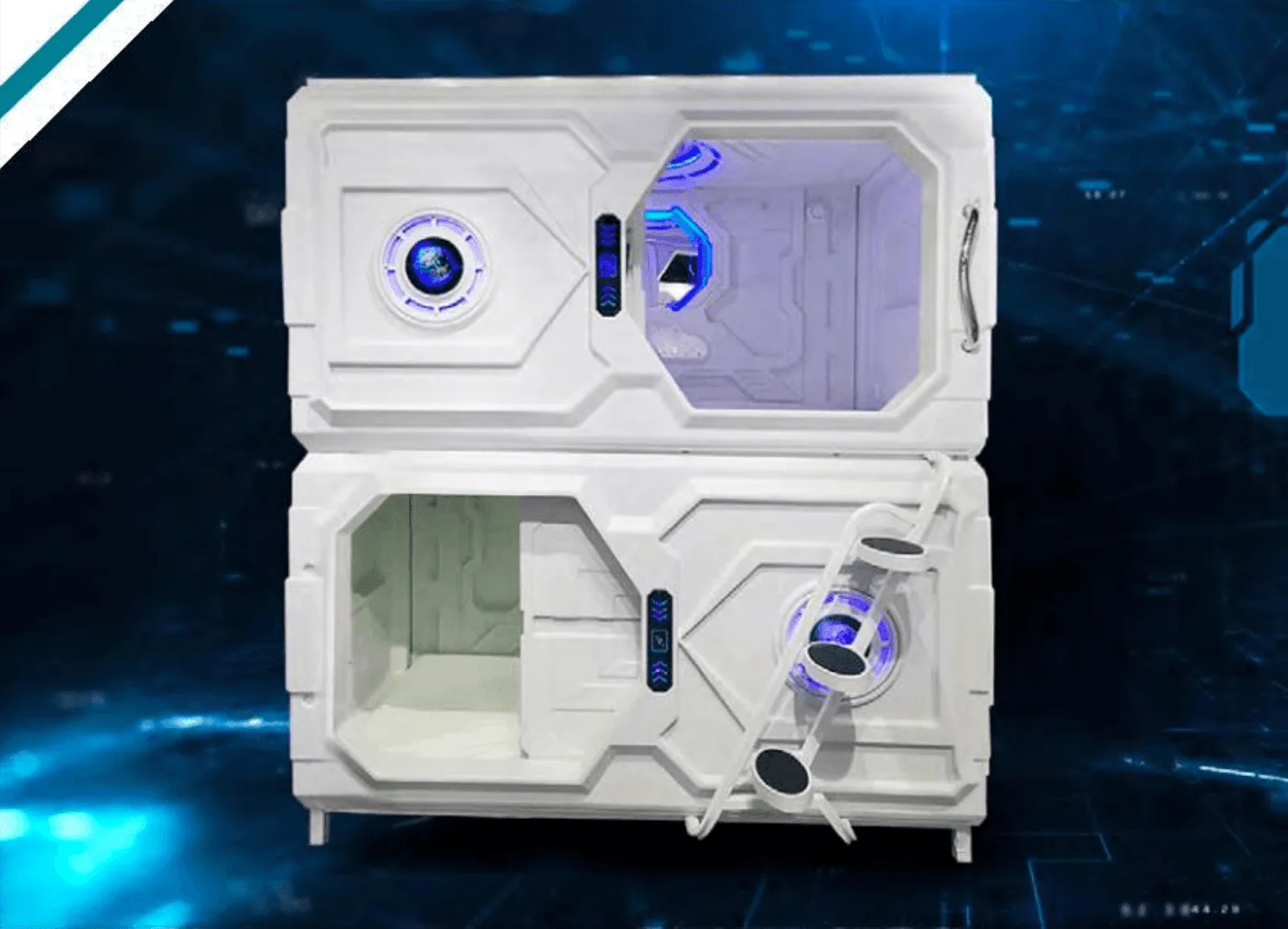
GALAXY Series - Horizontal Single
Standard ABS shell with metal frame featuring TV slot, security sliding door, and ergonomic non-slip ladder. Perfect for hotels, airports, and commercial applications.
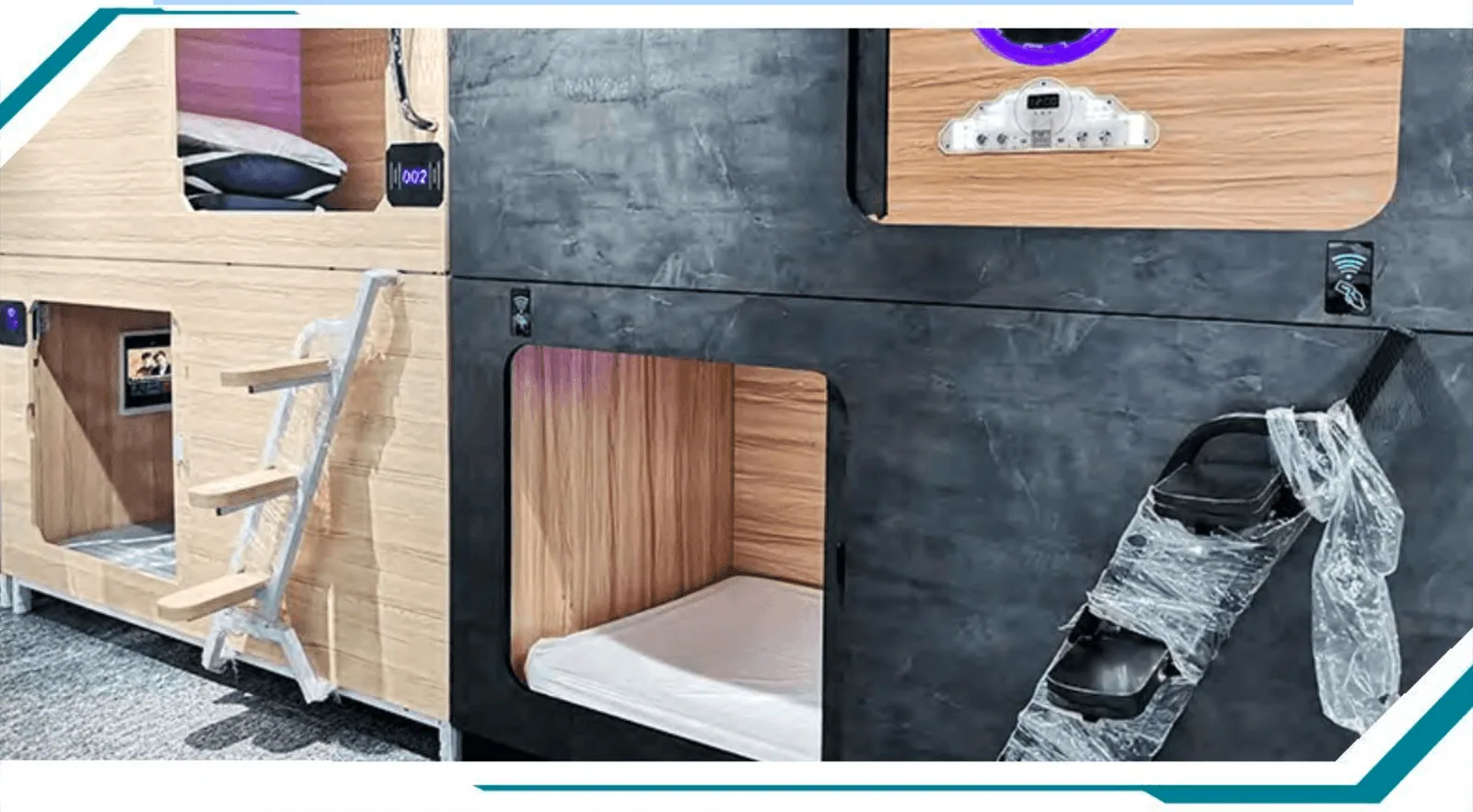
Wooden Series - Horizontal Single
Premium eco multi-layer board construction with metal frame, offering natural wood-grain aesthetics while maintaining all essential capsule bed features.
Market deep-dive
The Sheopur pod-hotel opportunity
Sheopur wears two faces at once. For centuries it was a quiet, agrarian corner of north-west Madhya Pradesh — a town on the Seep river whose name literally means 'town on the Seep', guarded by a fort the Gaur Rajputs founded around 1537 and later held by the Scindias until Independence. Its people, nearly a quarter of them from the Saharia tribe, lived off Chambal-fed fields and a delicate craft of carved, lacquered woodwork prized across the region. Long listed among India's most backward districts, Sheopur seemed destined to stay off the map. Then the cheetahs came — and a forgotten district became a global headline overnight.
That headline is Kuno National Park. Spread across roughly 749 sq km of Sheopur's forested east, Kuno was chosen as the site of Project Cheetah: in September 2022 eight cheetahs flew in from Namibia, followed by twelve from South Africa in 2023, ending the species' seven-decade absence from India. Kuno is now the only place on the subcontinent where you can hope to see a wild cheetah, drawing tourists, wildlife photographers, researchers, NGO staff and a steady stream of national and international journalists. Yet the town that anchors this story has almost no organised lodging — a handful of basic guesthouses and a few costly forest resorts, with nothing clean, standardised and affordable in between.
Geography sharpens the opportunity. Sheopur sits ~211 km from Gwalior, whose airport and junction are the main arrival points for Kuno, and the historic Gwalior Light Railway narrow-gauge line is being converted to broad gauge — with a further new corridor planned onward to Kota in Rajasthan. As that rail link matures, day-trippers and overnight visitors will pour in along it, and self-drive travellers already route through Sheopur between Gwalior, the Chambal ravines and Ranthambhore. Layer in the everyday demand the district generates — attendants of patients at the District Hospital, forest and administration officials, and railway and survey crews on the broad-gauge works — and a clear, year-round need for budget beds emerges.
A 50-pod BIDUA capsule hotel answers that need precisely. Picture a clean, climate-controlled floor near the bus stand and District Hospital on the Kuno-access road, offering private sleeping pods by the night or the hour, with lockers, fast Wi-Fi and an early breakfast tuned to dawn safaris. It gives a solo wildlife photographer an affordable base, a hospital attendant a dignified place to rest, a railway crew weeks of bunk-style lodging, and a backpacker a cheap nap stop on the Gwalior-Ranthambhore run. In a town where the world now comes to see cheetahs but has nowhere modest to sleep, a pod hotel turns Sheopur's most famous asset into a steady, defensible hospitality business.
Sheopur pod hotel — FAQs
Is there a sleeping pod or capsule hotel in Sheopur for Kuno National Park visitors?+
Not yet — and that is precisely the gap. Sheopur town has only basic lodges and a few pricier forest resorts near Kuno's gates. A BIDUA capsule hotel would give cheetah-safari tourists, photographers and researchers a clean, affordable, hostel-style pod to crash in before the early-morning drive into the park.
What is a sleeping pod and how is it different from a normal Sheopur hotel room?+
A sleeping pod (also called a Japanese or Chinese pod hotel, nap pod or capsule hotel) is a private, climate-controlled sleeping berth with a comfortable mattress, light, charging point and locker. You pay per person, nightly or hourly, instead of for a whole room — ideal for solo Kuno visitors and budget travellers passing through Sheopur.
Can I book a pod hourly or for a short nap between safaris and bus connections?+
Yes — pods suit hourly and short-stay use far better than full hotel rooms. A traveller arriving on the Gwalior road, an attendant waiting at the district hospital, or a safari-goer freshening up before an evening drive can book a budget nap pod by the hour and only pay for the time used.
Why does Sheopur, a small town, need a capsule hotel at all?+
Because Sheopur is now the gateway to Kuno — the only place in India with wild cheetahs — and demand has outgrown its lodging. Add patient-attendants at the District Hospital, railway broad-gauge crews, forest officials and journalists, and there is steady year-round need for clean, cheap, standardised pod stays.
Where would a BIDUA pod hotel ideally sit in Sheopur?+
Near the Sheopur bus stand and District Hospital, on the road that feeds toward Kuno National Park and Vijaypur/Karahal. That location captures three streams at once: cheetah tourists heading to the park, medical-travel attendants, and transit passengers using the bus and (soon) broad-gauge rail link to Gwalior.
How will the Gwalior-Sheopur broad-gauge railway affect pod-hotel demand?+
Significantly. The old narrow-gauge line is being converted to broad gauge, with a further new line planned onward to Kota in Rajasthan. Easier rail access will multiply Kuno day-trippers and overnight visitors arriving via Gwalior, exactly the budget-conscious, solo-and-pair travellers a capsule hotel is built to serve.
Start your Sheopur pod hotel with BIDUA
Sign up to design your space in 3D, build a presentation, and get a quotation + ROI from one dashboard — or talk to our team for a custom Sheopur plan.