Tier 3 pod-hotel market · Uttar Pradesh
Pod Hotel in Shravasti — Capsule Stays at India's Holiest Buddhist City
One of India's fastest-growing districts by population (30.5% decadal growth 2001-2011); 68.8% Hindu, 30.8% Muslim; significant Tharu tribal population along the Nepal border; literacy at just 46.7% — lowest in UP
Population & catchment
~11.2 lakh (2011 Census); estimated ~14-15 lakh by 2026 given 30%+ decadal growth
Urban pull
Only 3.5% urban (Bhinga town ~38,600 urban residents) — overwhelmingly rural district
Economic base
Shravasti's economy rests almost entirely on subsistence agriculture — paddy, wheat, sugarcane, and pulses cultivated on the fertile alluvial floodplains of the West Rapti River. The Tharu tribal community produces distinctive applique embroidery and grass-woven handicrafts (ODOP product), marketed locally and nationally. Government employment, border trade with Nepal, and a nascent Buddhist heritage-tourism sector round out the economic base, though the district remains ranked among India's most backward by NITI Aayog.
Around Shravasti
Key landmarks and footfall hubs that drive short-stay demand in Shravasti.
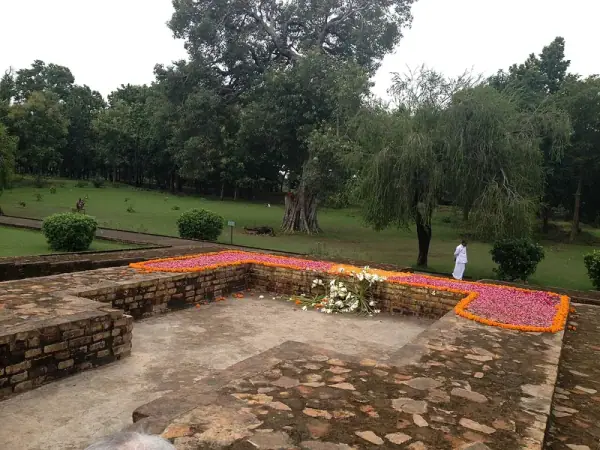
Jetavana Monastery Ruins, Shravasti
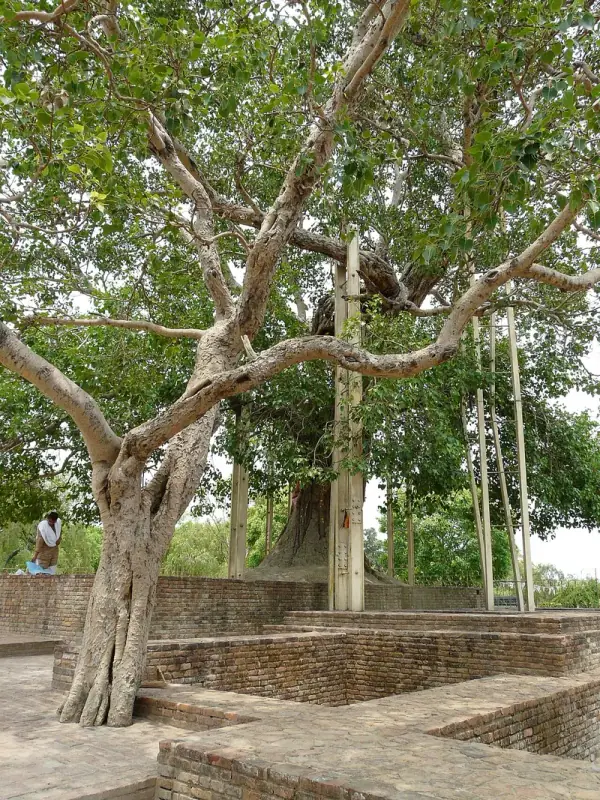
Anandabodhi Tree at Jetavana
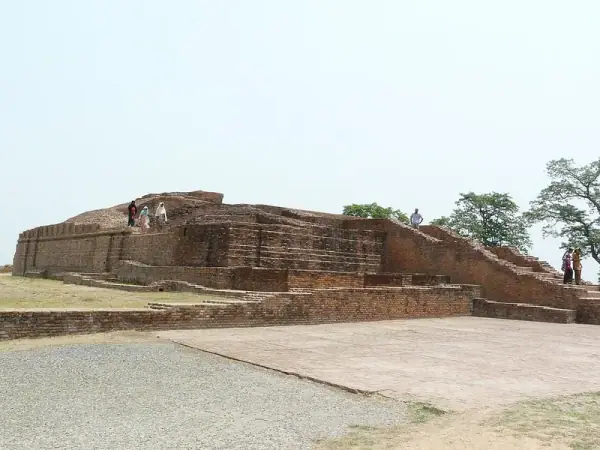
Anathapindika Stupa at Jetavana
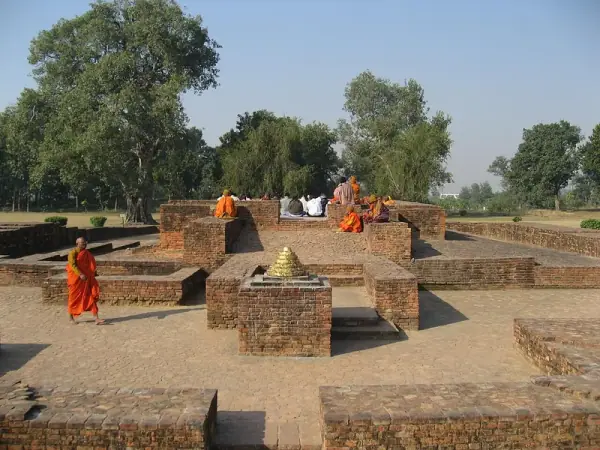
Gandhakuti — Buddha's Dwelling at Jetavana
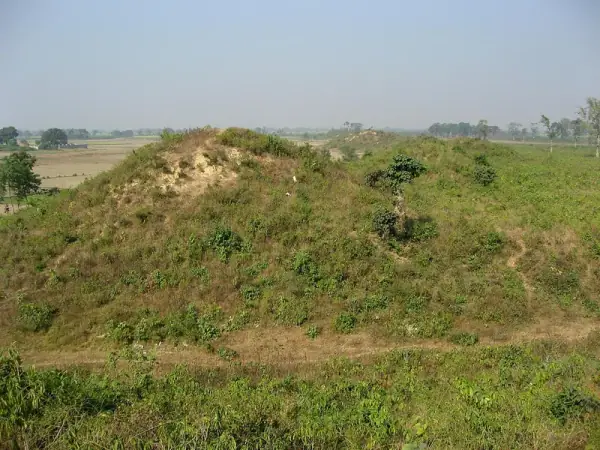
Ancient City Wall of Shravasti (Maheth)
Why a pod hotel works in Shravasti
Shravasti receives international Buddhist pilgrims year-round but has virtually zero branded accommodation — no chain hotels, no hostels, only a handful of dharamshalas and basic guesthouses near Jetavana. International visitors (Korean, Thai, Sri Lankan groups) currently either day-trip from Balrampur/Gonda or endure substandard lodging. The UP government's Rs 4,200-crore Buddhist Circuit push is about to transform visitor volumes, but the accommodation supply is not keeping pace. A clean, safe, climate-controlled pod hotel near the Jetavana complex would be the first modern micro-stay option in the entire district.
Shravasti sits on the international Buddhist pilgrimage circuit linking Lumbini (Nepal), Kapilvastu, Kushinagar, and Sarnath. Tens of thousands of devotees from Thailand, South Korea, Sri Lanka, Myanmar, Japan, Cambodia, and Tibet visit Jetavana annually. The UP government's Rs 4,200-crore Buddhist Circuit investment is channelling major infrastructure funds into Shravasti. Additionally, the Indo-Nepal border proximity generates cross-border transit, while Rapti-basin agriculture and government postings drive domestic movement through Bhinga.
Best ways to use pods here
- Buddhist pilgrimage micro-stays near Jetavana — international and domestic devotees needing clean, affordable overnight stays during meditation retreats and monastery visits
- Transit pods at Balrampur Road or Bhinga bus stand — overnight rest for passengers on the Gonda-Shravasti-Nepal corridor who arrive late or depart early
- Government and NGO worker accommodation — officers, health workers, teachers, and development-project staff on postings to India's most aspirational district
- Katarniaghat wildlife safari base — nature tourists visiting the Terai tiger reserve need a comfortable overnight option closer than Bahraich town
- Student and exam-season housing — youth from Shravasti's villages travelling to Bhinga or Balrampur for competitive exams, college admissions, and vocational training
Where the demand sits in Shravasti
Transit & travel
- •Balrampur Railway Station — nearest railhead, 17 km from Shravasti town
- •Gonda Junction — major rail hub 50 km south, trains to Delhi, Mumbai, Kolkata, Lucknow
- •SH-26 and SH-96A — state highway corridors through the district
- •Lucknow Airport (Chaudhary Charan Singh) — nearest major airport, ~170 km
- •Indo-Nepal border crossings — Sonauli route connects to Lumbini (Nepal) via Balrampur
Healthcare demand
- •Shravasti Combined District Hospital, Bhinga — multi-specialty with emergency services
- •Community Health Centres at Ikauna, Jamunaha, and Hariharpur block headquarters
- •Balrampur District Hospital — 17 km, higher-specialty referral centre
- •Gonda Medical College — ~50 km, nearest tertiary-care teaching hospital
Education & coaching
- •Jawahar Navodaya Vidyalaya, Samhar Pura — residential CBSE school
- •Government Inter Colleges in Bhinga, Ikauna, and Jamunaha tehsils
- •Degree colleges affiliated to Deen Dayal Upadhyaya University, Gorakhpur
- •Gonda and Balrampur higher-education centres — students commute from Shravasti
Industry & trade
- •Shravasti Kisan Sahkari Chini Mills — cooperative sugar processing at Nanpara
- •Tharu tribal handicraft clusters — women-led home-based applique and grass-weaving units
- •Rice and wheat milling units scattered across Bhinga-Ikauna corridor
- •ODOP facilitation centre for Tharu embroidery — training and market-linkage hub
Tourism & pilgrimage
- •Jetavana Monastery ruins (Sahet-Mahet) — where Buddha spent 24 monsoon retreats; ASI-protected UNESCO tentative list site
- •Anandabodhi Tree — second-holiest tree in Buddhism, planted from original Bodhi Tree sapling
- •Gandhakuti (Buddha's dwelling) and Anathapindika Stupa — active pilgrimage and meditation sites
- •International monasteries — Thai Wat, Korean temple, Sri Lankan, Myanmar, and Tibetan monasteries with resident monks
- •Shravasti Flower Park (Buddha Park) — landscaped gardens near the archaeological zone
- •Katarniaghat Wildlife Sanctuary — 400 sq km Terai forest with tigers, gharials, rhinos; ~80 km via Bahraich
- •Devi Patan Temple, Tulsipur (Balrampur) — major Shakti Peeth, ~50 km east
- •Lumbini (Nepal) — Buddha's birthplace, ~160 km via Sonauli border crossing
Profit & ROI projection for Shravasti
A starter model based on a minimum 50 pods at 70% occupancy and an indicative ₹650/pod/night. Costs use the same itemised basis as our full ROI calculator — pods, add-ons, 18% GST, transport, fit-out and full monthly running cost.
Important: this is only an ASSUMPTION-based projection — not an accurate quote or a guarantee.
The real cost, occupancy, pricing and profit will change with your exact location, property rent, season, competition and how you run the business. Treat these figures as a planning estimate only. For real numbers, use the full calculator or get a custom quote from BIDUA.
Total investment
₹74.2 lakh
50 pods + add-ons + GST + fit-out
Monthly revenue
₹6.8 lakh
35 of 50 pods filled/night
Monthly net profit
₹3.0 lakh
44% margin after all costs
Payback
~25 mo
49% annual ROI
Break-even occupancy ≈ 30% — you only need this much filled to cover all costs; everything above is profit.
| 50 pods (BIDUA mix) | ₹40,30,000 |
| Add-ons (mattress, bedding, panels, safe lock, table) | ₹16,25,200 |
| GST @ 18% (pods + add-ons) | ₹10,17,936 |
| Transport (warehouse → site) | ₹4,00,000 |
| Fit-out, AC, reception, branding + rent deposit | ₹3,50,000 |
| Total investment | ₹74,23,136 |
| Revenue (50 × 70% × ₹650 × 30) | ₹6,82,500 |
| Fixed costs (rent, staff, power, housekeeping…) | – ₹2,25,000 |
| Variable (OTA + marketing + gateway, 23%) | – ₹1,56,975 |
| Net profit / month | ₹3,00,525 |
| Net profit / year | ₹36,06,300 |
Indicative Tier 3 assumptions for a small-town Buddhist pilgrimage site with seasonal international tourist peaks. Actual revenue will depend on location proximity to Jetavana, pilgrimage season timing (Oct-Mar peak), and the pace of Buddhist Circuit infrastructure development. These figures are estimates, not a guarantee. Figures are indicative estimates, not guarantees.
Shravasti pod-hotel business plan & study
A step-by-step plan to launch a capsule / sleeping-pod hotel in Shravasti — from picking the right location to licences, setup, pricing and reaching profitable occupancy.
Demand drivers
21+
transit, hospital, student & tourism footfall points
Space needed (50 pods)
2250–2750 sq ft
single rented floor + reception & washrooms
Break-even occupancy
30%
fill above this and you are in profit
Indicative payback
~25 months
on ₹74.2 lakh all-in setup
1. Pick the right location
Target a floor near Shravasti Combined District Hospital, Bhinga — multi-specialty with emergency services or Gonda Junction — major rail hub 50 km south, trains to Delhi, Mumbai, Kolkata, Lucknow. Best opening use-case: Buddhist pilgrimage micro-stays near Jetavana — international and domestic devotees needing clean, affordable overnight stays during meditation retreats and monastery visits.
2. Plan investment & funding
Budget about ₹74.2 lakh all-in for 50 pods (pods + add-ons + 18% GST + transport + fit-out & deposit). Many operators fund this with a mix of own capital + a small business/MSME loan against projected cash flow.
3. Licences & compliance
Arrange a municipal trade licence, GST registration, fire safety NOC, police/guest verification (where required), and basic building & sanitation approvals before launch.
4. Build & launch
BIDUA shares a free 3D layout, then delivers and helps install the pods. Civil, electrical, AC and reception fit-out typically takes ~30–45 days, so you can open quickly on a leased floor.
5. Pricing & operations
Start at ~₹650/pod/night, and add hourly slots near hospitals for day-rest demand. Run lean with a small reception + housekeeping team; keep pods clean, private and secure to earn repeat stays.
6. Marketing & occupancy
List on OTAs (MakeMyTrip, Booking.com, OYO, Goibibo) + Google Business Profile, and tie up with nearby hospitals, coaching institutes and tour operators to push occupancy past the 30% break-even quickly.
Key risks & how to manage them
Low occupancy in early months. Open with OTA listings + hospital/coaching tie-ups; use hourly pricing to fill day-time.
High rent eating margins. Choose a slightly off-main but accessible floor near Balrampur Railway Station — nearest railhead, 17 km from Shravasti town; rent is the biggest lever.
Seasonality / exam & festival peaks. Flex pricing up in peak weeks; offer weekly/monthly pod rentals to students for a stable base.
Cleanliness & safety complaints. Invest in housekeeping, safe locks and CCTV — reputation drives repeat and OTA ratings.
Recommended pod setup for Shravasti
30-50 Economy-grade pods in a ground-floor setup near the Jetavana archaeological zone or Bhinga town centre. Include multilingual signage (English, Hindi, Thai, Korean) for international pilgrims. Add 24/7 security, locker storage for backpackers, and a basic cafeteria. A second kiosk-style 10-pod unit at Balrampur railway station approach road would capture transit demand. Climate control is essential — Shravasti summers exceed 45 degrees Celsius and monsoons bring high humidity.

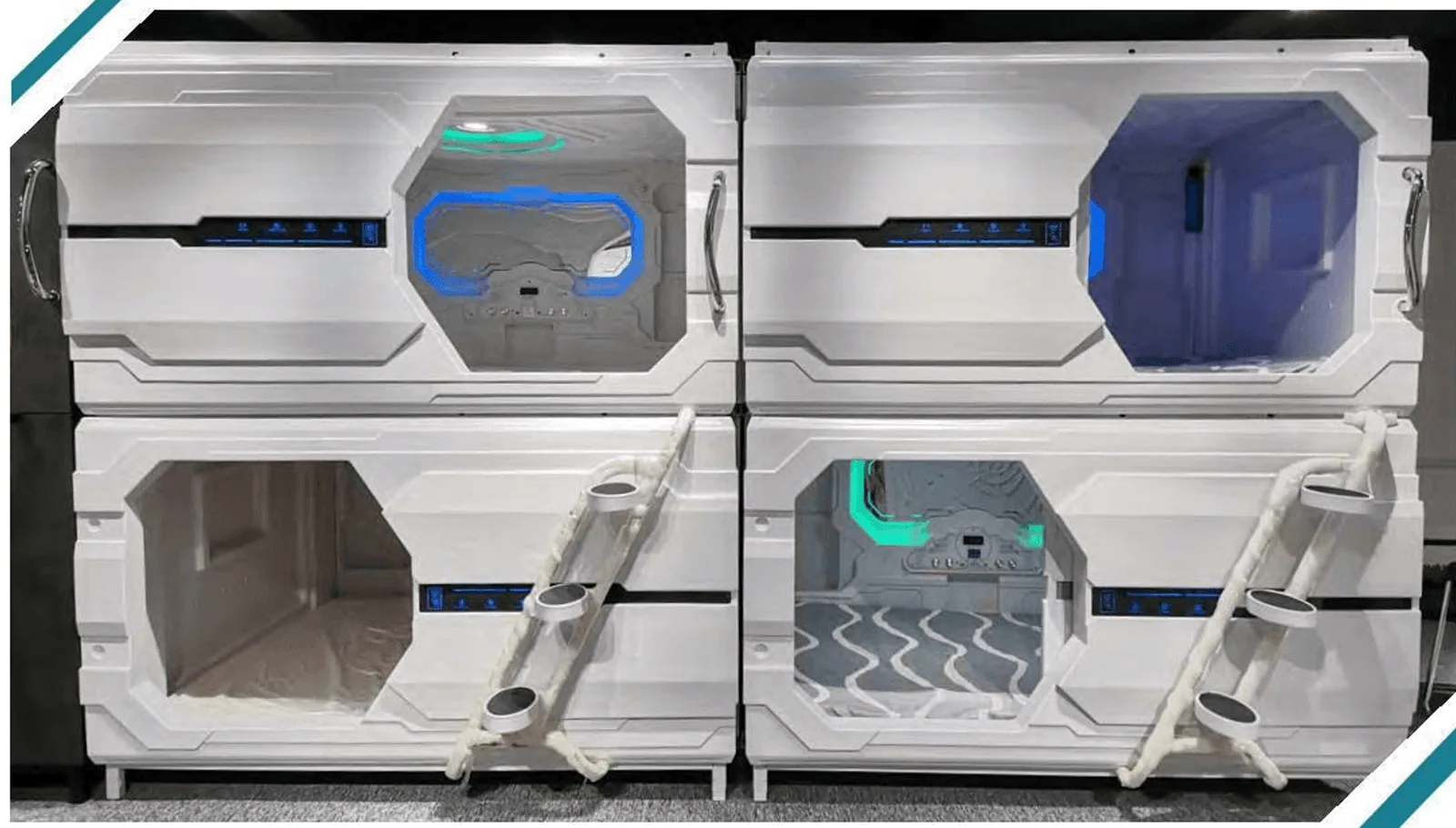
GALAXY Series - Horizontal Single
Standard ABS shell with metal frame featuring TV slot, security sliding door, and ergonomic non-slip ladder. Perfect for hotels, airports, and commercial applications.
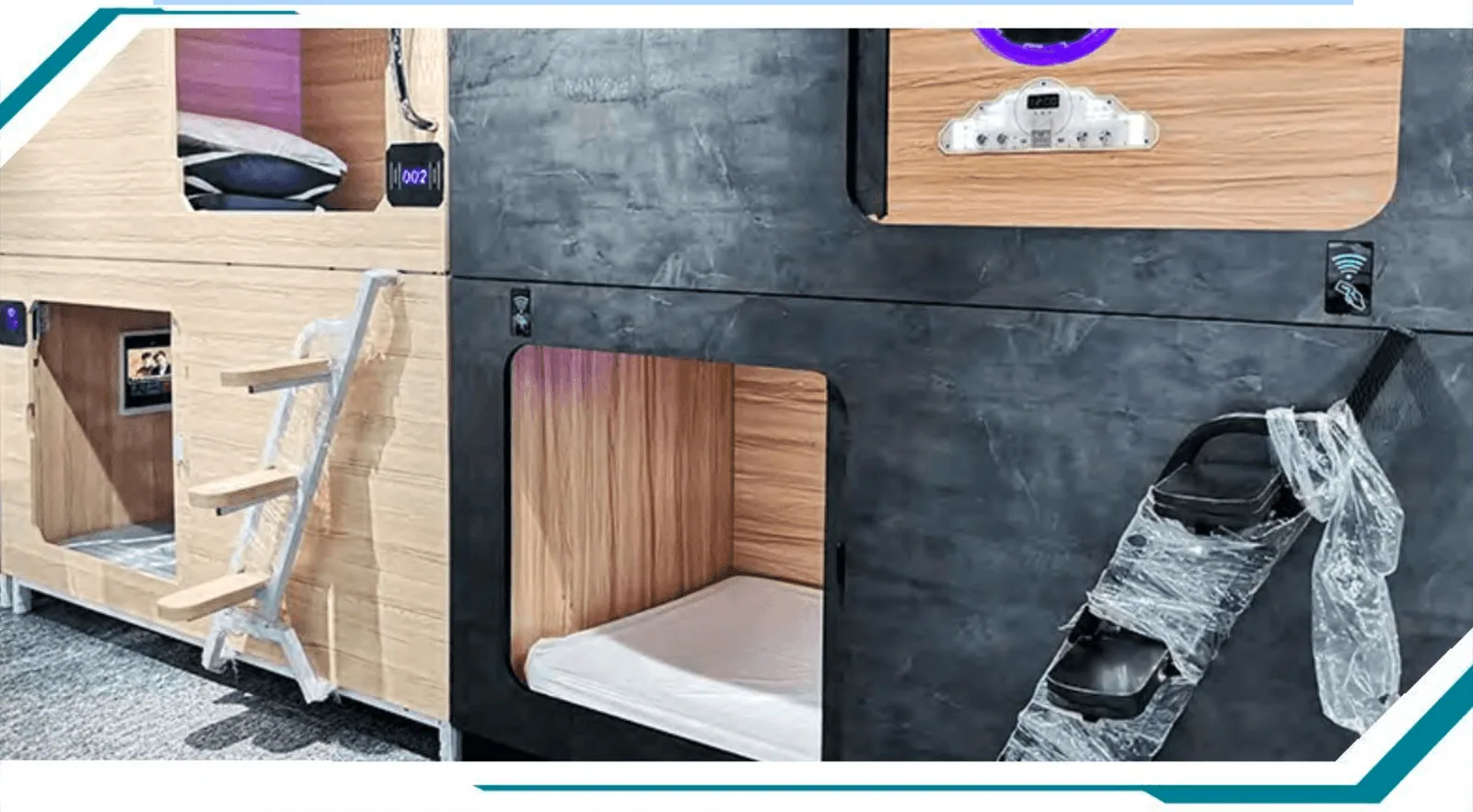
Wooden Series - Horizontal Single
Premium eco multi-layer board construction with metal frame, offering natural wood-grain aesthetics while maintaining all essential capsule bed features.
Market deep-dive
The Shravasti pod-hotel opportunity
Shravasti is not just another small Terai district — it is one of the most sacred geographies in all of Buddhism. The ruins at Sahet-Mahet, where Siddhartha Gautama spent twenty-four of his forty-five monsoon retreats, contain the Jetavana Monastery, the Gandhakuti where he dwelt, and the Anandabodhi Tree grown from a sapling of the original Bodhi Tree at Bodh Gaya. The Archaeological Survey of India maintains these UNESCO tentative-list ruins, while monasteries built by Thailand, South Korea, Sri Lanka, Myanmar, and Tibet form a living international Buddhist campus. Over 61 lakh visitors toured UP's Buddhist Circuit in the first nine months of 2025 alone, and the state government's Rs 4,200-crore investment pipeline names Shravasti as a Phase-1 priority. Yet this district of over 11 lakh people has zero chain hotels.
Carved from Bahraich district in 1997 and headquartered at the quiet town of Bhinga on the banks of the West Rapti River, Shravasti remains one of India's most backward districts by NITI Aayog rankings. Its economy turns on subsistence agriculture — paddy, wheat, and sugarcane fed by the Rapti's fertile alluvial plains — and on the Tharu tribe's centuries-old applique embroidery, now the district's official ODOP product. The nearest railhead at Balrampur is 17 kilometres away; the nearest major junction at Gonda is 50 kilometres. This remoteness has kept commercial accommodation away, but it has also preserved a compelling market vacuum: international pilgrims arrive in organised groups from Bangkok and Seoul, find nowhere clean to sleep, and either retreat to Gonda or endure substandard dharamshalas.
The demand drivers extend well beyond Jetavana. Katarniaghat Wildlife Sanctuary — a 400-square-kilometre Terai forest sheltering tigers, gharials, one-horned rhinos, and Gangetic dolphins — lies roughly 80 kilometres away via Bahraich and funnels wildlife tourists through Shravasti's road network. Devi Patan Temple, one of the 51 Shakti Peeths, sits 50 kilometres east in Tulsipur and draws lakhs of Hindu pilgrims annually. The Indo-Nepal border crossing at Sonauli connects Shravasti to Lumbini, Buddha's birthplace, making overnight pod stays a natural transit solution for cross-border pilgrim circuits. Add government officers, NGO workers, and health personnel posted to this aspirational district, and you have year-round baseline occupancy that does not depend solely on tourist seasons.
A BIDUA Pods installation near the Jetavana archaeological zone — 30 to 50 economy-grade climate-controlled capsules with multilingual signage in Hindi, English, Thai, and Korean — would be the first modern micro-stay option in the entire district. The investment thesis is straightforward: Shravasti's accommodation supply is near zero, its demand is international and government-backed, and the UP Buddhist Circuit infrastructure push is about to multiply footfall. Tier-3 economics keep rent and fit-out costs low while pilgrimage premiums support a viable nightly rate. For an investor seeking a first-mover advantage in India's spiritual-tourism corridor, Shravasti offers a rare combination of sacred geography, policy tailwinds, and an almost untouched hospitality market.
Shravasti pod hotel — FAQs
Why would a sleeping pod hotel work in a small district like Shravasti?+
Shravasti is one of Buddhism's holiest cities — Buddha spent 24 monsoon retreats at Jetavana Monastery here. International pilgrims from Thailand, South Korea, Sri Lanka, Myanmar, and Japan visit year-round, yet the district has virtually no branded accommodation. A sleeping pod hotel fills this gap with clean, climate-controlled, affordable micro-stays that appeal to budget-conscious devotees and backpackers alike.
How is a capsule hotel near Jetavana different from the dharamshalas already available?+
Existing dharamshalas and basic guesthouses near the Jetavana archaeological zone offer minimal amenities — no air conditioning, inconsistent water supply, and limited security. A Japanese-style capsule hotel provides individual climate-controlled pods with personal lighting, USB charging, secure lockers, and 24/7 staffing — a significant upgrade for international visitors accustomed to higher hygiene and safety standards.
What is the peak tourist season for pod hotels in Shravasti?+
The primary pilgrimage and tourism season runs from October through March, when pleasant winter weather draws the largest international Buddhist groups. However, monsoon-season visitors from Nepal and domestic travellers on the Lumbini-Kushinagar circuit maintain year-round baseline demand. Nap pods can also serve government and NGO workers posted here throughout the year.
Are there budget hotel or hourly hotel alternatives in Shravasti currently?+
No. Shravasti has no chain hotels, no hourly hotels, and no modern budget accommodation brands. The UP Tourism Bungalow and a few private guesthouses are the only options. This near-total absence of competition makes it an ideal first-mover market for a pod hotel concept, especially with the Rs 4,200-crore Buddhist Circuit investment pipeline about to transform visitor infrastructure.
Can a Chinese-style pod hotel in Shravasti attract international Buddhist tourists?+
Absolutely. Pod hotels originated in Japan and are now popular across East and Southeast Asia — precisely the regions that send the most pilgrims to Shravasti. Thai, Korean, Japanese, and Chinese Buddhist groups are already familiar with capsule-hotel concepts. Multilingual signage and culturally sensitive design (vegetarian food options, meditation-friendly quiet hours) would make BIDUA Pods a natural fit for this international clientele.
What nearby attractions support pod hotel demand beyond Jetavana?+
Within 80 km, Katarniaghat Wildlife Sanctuary (part of Dudhwa Tiger Reserve) attracts eco-tourists seeking tigers, gharials, and Gangetic dolphins. Devi Patan Shakti Peeth temple in Tulsipur (~50 km) draws Hindu pilgrims. The Indo-Nepal border corridor funnels transit passengers, and Lumbini — Buddha's birthplace in Nepal — is reachable via a day-trip through Sonauli, making Shravasti a natural overnight base on the cross-border Buddhist circuit.
Start your Shravasti pod hotel with BIDUA
Sign up to design your space in 3D, build a presentation, and get a quotation + ROI from one dashboard — or talk to our team for a custom Shravasti plan.