Tier 2 pod-hotel market · Uttar Pradesh
Sleeping Pods & Capsule Hotel in Ayodhya — Affordable Pilgrim Stays Near Ram Mandir
Floating population dwarfs resident count — over 110 million pilgrim-tourists visited in just H1 2024, creating massive transient accommodation demand that far exceeds existing hotel capacity

Population & catchment
~24.7 lakh (2011 Census: 24,70,996); estimated ~32 lakh (3.2 million) in 2025 across 2,522 sq km
Urban pull
About 28% urban (6.89 lakh in 2011), with rapid urbanisation driven by post-Ram Mandir construction boom and Navya Ayodhya township development
Economic base
Ayodhya's economy has pivoted from a primarily agrarian base — sugarcane-jaggery processing (ODOP product), rice milling, and wheat cultivation along the fertile Saryu floodplain — into India's fastest-growing religious tourism hub. The Ram Mandir consecration in January 2024 catalysed a $10 billion infrastructure revamp: land prices near the temple rose tenfold, Rs 4,200 Cr in hotel MoUs were signed for 142 new properties, and the Maharishi Valmiki International Airport handled 1.1 million passengers in its first full year. Handloom weaving, small-scale manufacturing, and two universities anchor the non-tourism economy.
Around Ayodhya
Key landmarks and footfall hubs that drive short-stay demand in Ayodhya.
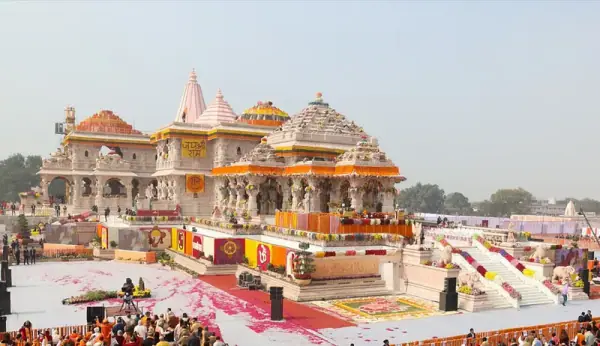
Ram Mandir (Shri Ram Janmabhoomi Mandir), Ayodhya
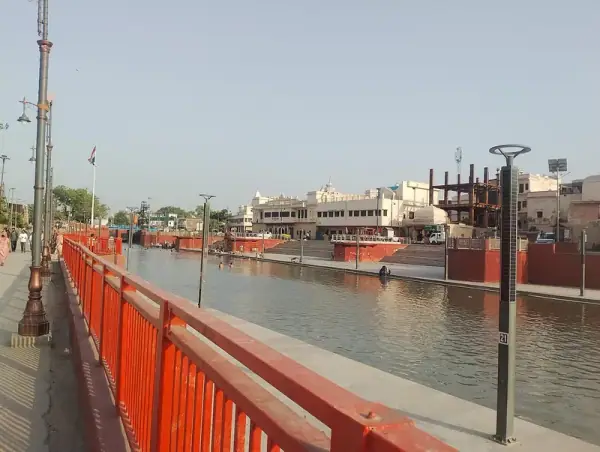
Ram ki Paidi Ghats on the Saryu River
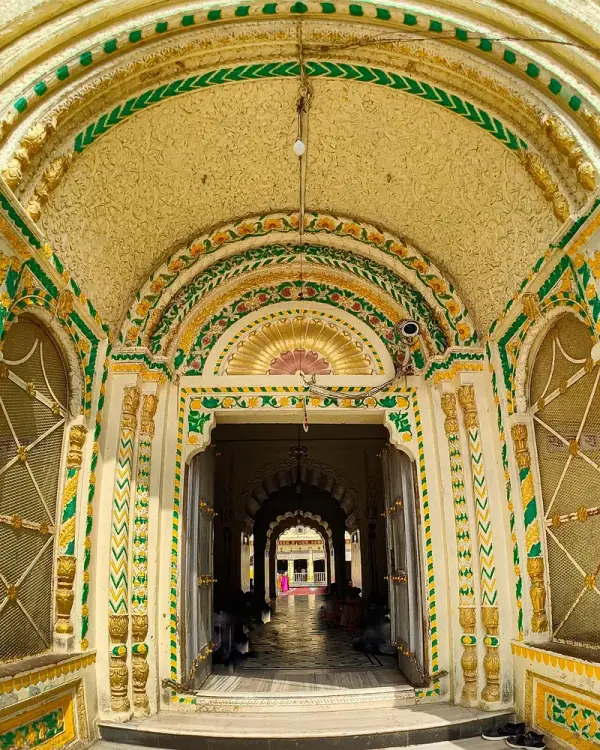
Kanak Bhawan Temple, Ayodhya
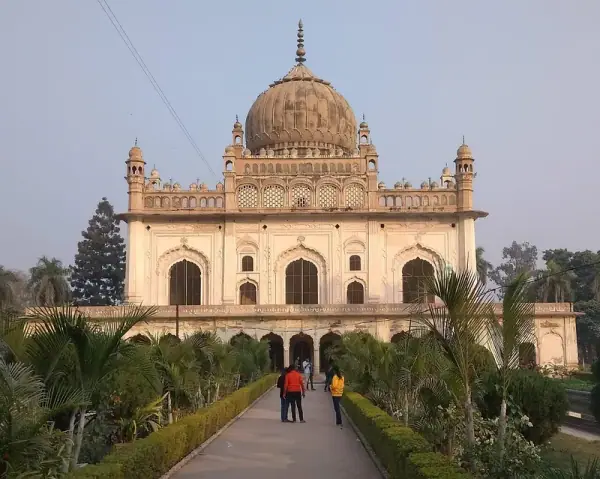
Gulab Bari — Tomb of Nawab Shuja-ud-Daula, Faizabad

Saryu River Night View, Ayodhya
Why a pod hotel works in Ayodhya
Ayodhya receives over 110 million pilgrim-visitors annually but has a severe accommodation bottleneck — most existing options are either dharamshalas with no privacy or newly built luxury hotels priced beyond the average devotee's budget. The 142 hotels under construction skew toward 3-star and above. There is virtually no clean, tech-enabled, hourly/nightly micro-stay option for the vast middle segment: overnight transit pilgrims arriving by train or bus at odd hours, airport passengers on layovers, medical attendants at the trauma centre, university students, and construction workers on the Rs 10,000 Cr building boom. BIDUA Pods fill this exact gap — hygienic, air-conditioned, affordable capsule stays that serve the pilgrim masses, not just the luxury tourist.
Ayodhya is India's fastest-growing pilgrimage destination, drawing over 110 million visitors in H1 2024 alone after the Ram Mandir consecration. The new Maharishi Valmiki International Airport (6 domestic routes), Ayodhya Dham Junction railway station, and NH-27/NH-330 highway network funnel pilgrims, tourists, business travellers, and construction workers through the district year-round. Ramayana Circuit rail and bus links to Janakpur (Nepal) add cross-border traffic.
Best ways to use pods here
- Near Ayodhya Dham Junction railway station — overnight capsule stays for pilgrims arriving on late-night/early-morning trains from Lucknow, Varanasi, and Delhi before temple darshan
- Adjacent to Maharishi Valmiki International Airport — nap pods and layover stays for the 1.1M+ annual air passengers, especially during flight delays and early departures
- Ram ki Paidi / Hanuman Garhi pilgrim corridor — hourly and nightly pods for devotees wanting clean rest between temple visits and ghat rituals without booking full hotel rooms
- Near Rajarshi Dashrath Medical College & District Hospital — affordable multi-night stays for patient attendants and families, especially during trauma centre emergencies
- Navya Ayodhya township and construction corridor — weekly pod-stay packages for migrant construction workers and project supervisors on the Rs 10,000 Cr infrastructure buildout
Where the demand sits in Ayodhya
Transit & travel
- •Ayodhya Dham Junction & Ayodhya Cantt railway stations (Northern Railway broad-gauge mainline to Lucknow, Varanasi, Delhi)
- •Maharishi Valmiki International Airport — 1.1 million passengers in FY 2024-25; flights to Delhi, Mumbai, Bengaluru, Hyderabad, Chennai, Ahmedabad; Rs 1,625 Cr expansion to 6 million annual capacity
- •NH-27 (east-west trans-India highway) and NH-330/330A connecting Lucknow (130 km), Gorakhpur (140 km), Prayagraj (160 km), Varanasi (200 km)
- •New Rs 219 Cr inter-state bus terminal serving Ramayana Circuit routes including cross-border Ayodhya-Janakpur (Nepal) service
- •Rudauli and Goshainganj railway stations serving rural tehsils
Healthcare demand
- •Rajarshi Dashrath Autonomous State Medical College & attached 300-bed District Hospital — new Rs 33 Cr, 110-bed trauma centre under construction
- •District Women Hospital and Sri Ram Hospital (government facilities serving pilgrim medical emergencies)
- •Dr. Brij Kishor Homeopathic Medical College & Hospital
- •Ayodhya Children Hospital & Heart Centre and Ayodhya Phaco Center Eye Hospital (private specialty care)
- •Bhagawan Rishab Dev Eye Hospital and The Leprosy Mission Hospital
Education & coaching
- •Dr. Ram Manohar Lohia Avadh University (est. 1975) — affiliates 36+ colleges across the division; offers B.Tech, arts, science, law programmes
- •Acharya Narendra Deva University of Agriculture & Technology, Kumarganj — premier UP agricultural research institution
- •K.S. Saket P.G. College, Ayodhya — major undergraduate/postgraduate centre
- •Government Polytechnic, Faizabad (AICTE-approved diploma engineering) and IET Faizabad (TEQIP-3 listed)
- •Rajarshi Dashrath Autonomous State Medical College — 100-seat MBBS intake drawing students state-wide
Industry & trade
- •Sugarcane-jaggery processing cluster — Ayodhya is an ODOP (One District One Product) hub for jaggery, linked to dense sugarcane cultivation across the Saryu floodplain
- •Rice milling belt — multiple small and medium mills process kharif paddy for domestic and regional markets
- •Handloom and powerloom weaving units producing cotton mufflers, fabrics, and textiles
- •Rs 10,155 Cr infrastructure and hospitality construction boom — 142 new hotels under MoU, Navya Ayodhya township (200 hectares), Ayodhya Haat riverfront project
- •Flour milling, footwear manufacturing, and small-scale MSME trading clusters in Faizabad town
Tourism & pilgrimage
- •Ram Mandir (Shri Ram Janmabhoomi Mandir) — consecrated January 2024; presiding deity Balak Ram; India's most-visited new temple
- •Hanuman Garhi — Ayodhya's most popular shrine; four-sided hilltop fort accessed by 76 steps; statue of Maa Anjani with Bal Hanuman
- •Ram ki Paidi — iconic Saryu River ghat complex; site of the Guinness World Record 2023 Diwali display (2.22 million oil lamps)
- •Kanak Bhawan — ornate temple dedicated to Sita and Rama, traditionally a wedding gift from Queen Kaikeyi
- •Gulab Bari & Bahu Begum ka Maqbara — ASI-protected Nawabi-era tombs of Shuja-ud-Daula and his wife; Mughal gardens and Imambara
- •Nageshwarnath Temple (established by Kush, son of Rama), Treta ke Thakur, Swarg Dwar, Mani Parbat (Ashokan stupa), and Guptar Ghat
- •Ramayana Circuit connectivity — sister-city link to Janakpur (Nepal, Sita's birthplace); Korean memorial for Queen Heo Hwang-ok legend
Profit & ROI projection for Ayodhya
A starter model based on a minimum 50 pods at 70% occupancy and an indicative ₹1,000/pod/night. Costs use the same itemised basis as our full ROI calculator — pods, add-ons, 18% GST, transport, fit-out and full monthly running cost.
Important: this is only an ASSUMPTION-based projection — not an accurate quote or a guarantee.
The real cost, occupancy, pricing and profit will change with your exact location, property rent, season, competition and how you run the business. Treat these figures as a planning estimate only. For real numbers, use the full calculator or get a custom quote from BIDUA.
Total investment
₹82.7 lakh
50 pods + add-ons + GST + fit-out
Monthly revenue
₹10.5 lakh
35 of 50 pods filled/night
Monthly net profit
₹5.1 lakh
49% margin after all costs
Payback
~16 mo
74% annual ROI
Break-even occupancy ≈ 26% — you only need this much filled to cover all costs; everything above is profit.
| 50 pods (BIDUA mix) | ₹40,30,000 |
| Add-ons (mattress, bedding, panels, safe lock, table) | ₹16,25,200 |
| GST @ 18% (pods + add-ons) | ₹10,17,936 |
| Transport (warehouse → site) | ₹4,00,000 |
| Fit-out, AC, reception, branding + rent deposit | ₹12,00,000 |
| Total investment | ₹82,73,136 |
| Revenue (50 × 70% × ₹1,000 × 30) | ₹10,50,000 |
| Fixed costs (rent, staff, power, housekeeping…) | – ₹2,97,000 |
| Variable (OTA + marketing + gateway, 23%) | – ₹2,41,500 |
| Net profit / month | ₹5,11,500 |
| Net profit / year | ₹61,38,000 |
Indicative estimates for Ayodhya's Tier 2 pilgrim-tourism market (post-Ram Mandir boom). Actual ADR may be higher during Ram Navami, Diwali, and Parikrama seasons. These are assumptions for illustration, not a guarantee of returns. Figures are indicative estimates, not guarantees.
Ayodhya pod-hotel business plan & study
A step-by-step plan to launch a capsule / sleeping-pod hotel in Ayodhya — from picking the right location to licences, setup, pricing and reaching profitable occupancy.
Demand drivers
22+
transit, hospital, student & tourism footfall points
Space needed (50 pods)
2250–2750 sq ft
single rented floor + reception & washrooms
Break-even occupancy
26%
fill above this and you are in profit
Indicative payback
~16 months
on ₹82.7 lakh all-in setup
1. Pick the right location
Target a floor near Rajarshi Dashrath Autonomous State Medical College & attached 300-bed District Hospital — new Rs 33 Cr, 110-bed trauma centre under construction or Maharishi Valmiki International Airport — 1.1 million passengers in FY 2024-25; flights to Delhi, Mumbai, Bengaluru, Hyderabad, Chennai, Ahmedabad; Rs 1,625 Cr expansion to 6 million annual capacity. Best opening use-case: Near Ayodhya Dham Junction railway station — overnight capsule stays for pilgrims arriving on late-night/early-morning trains from Lucknow, Varanasi, and Delhi before temple darshan.
2. Plan investment & funding
Budget about ₹82.7 lakh all-in for 50 pods (pods + add-ons + 18% GST + transport + fit-out & deposit). Many operators fund this with a mix of own capital + a small business/MSME loan against projected cash flow.
3. Licences & compliance
Arrange a municipal trade licence, GST registration, fire safety NOC, police/guest verification (where required), and basic building & sanitation approvals before launch.
4. Build & launch
BIDUA shares a free 3D layout, then delivers and helps install the pods. Civil, electrical, AC and reception fit-out typically takes ~30–45 days, so you can open quickly on a leased floor.
5. Pricing & operations
Start at ~₹1,000/pod/night, and add hourly slots near hospitals for day-rest demand. Run lean with a small reception + housekeeping team; keep pods clean, private and secure to earn repeat stays.
6. Marketing & occupancy
List on OTAs (MakeMyTrip, Booking.com, OYO, Goibibo) + Google Business Profile, and tie up with nearby hospitals, coaching institutes and tour operators to push occupancy past the 26% break-even quickly.
Key risks & how to manage them
Low occupancy in early months. Open with OTA listings + hospital/coaching tie-ups; use hourly pricing to fill day-time.
High rent eating margins. Choose a slightly off-main but accessible floor near Ayodhya Dham Junction & Ayodhya Cantt railway stations (Northern Railway broad-gauge mainline to Lucknow, Varanasi, Delhi); rent is the biggest lever.
Seasonality / exam & festival peaks. Flex pricing up in peak weeks; offer weekly/monthly pod rentals to students for a stable base.
Cleanliness & safety complaints. Invest in housekeeping, safe locks and CCTV — reputation drives repeat and OTA ratings.
Recommended pod setup for Ayodhya
50-pod mixed deployment: 30 horizontal single pods (pilgrim/transit core), 10 double/couple pods (family pilgrims), 10 premium pods with luggage lockers (airport/business travellers). Climate-controlled with HEPA filtration essential for Ayodhya's humid subtropical summers. 24/7 front desk for odd-hour train/flight arrivals. Shoe-storage and prayer-mat provision as pilgrim amenities.
GALAXY Series - Horizontal Single
Standard ABS shell with metal frame featuring TV slot, security sliding door, and ergonomic non-slip ladder. Perfect for hotels, airports, and commercial applications.

SPACE Series - Horizontal Single
Standard SPACE series with mirror panel, sliding door, TV slot, and intelligent LED controls. Perfect for hotels and commercial applications.
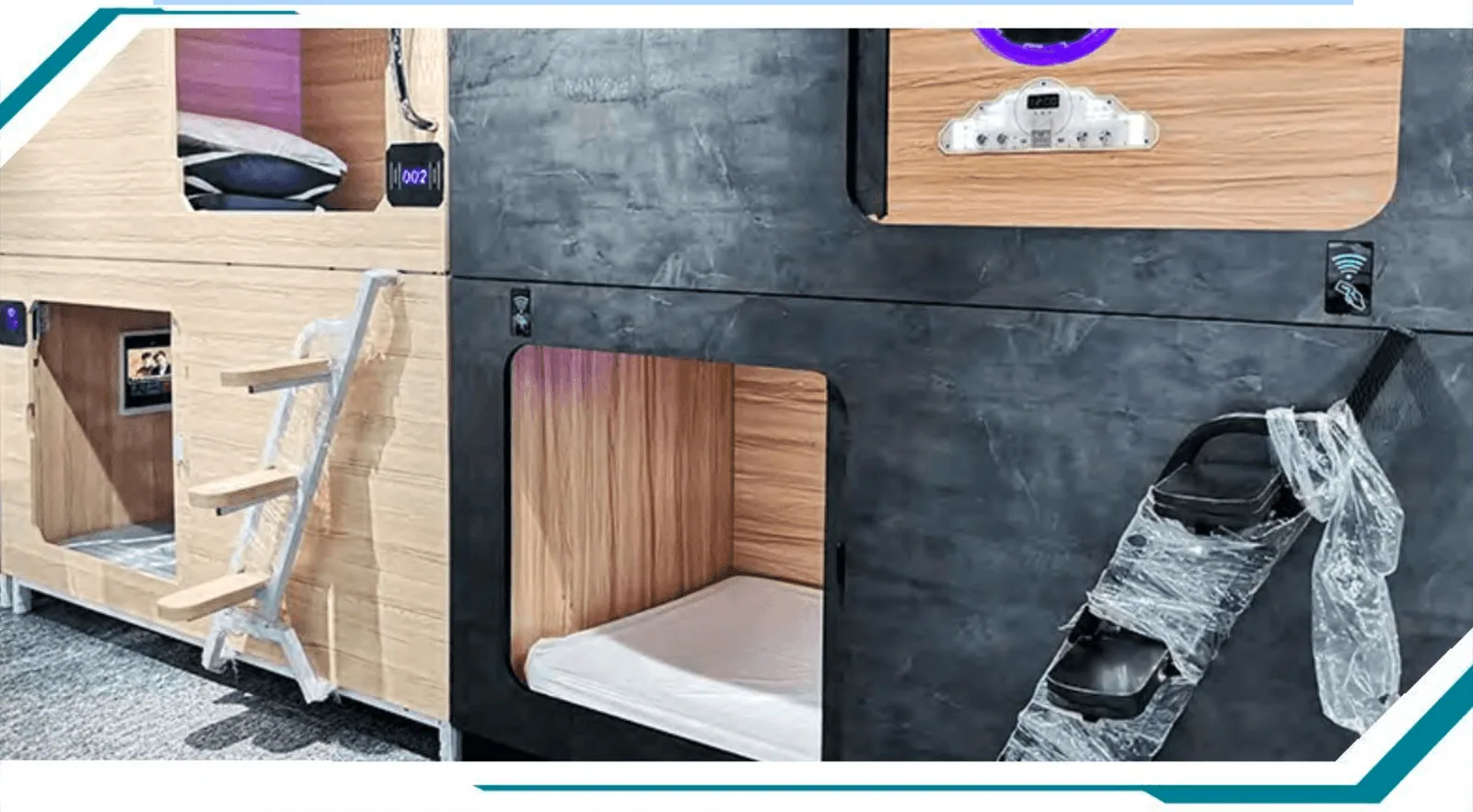
Wooden Series - Horizontal Single
Premium eco multi-layer board construction with metal frame, offering natural wood-grain aesthetics while maintaining all essential capsule bed features.
Market deep-dive
The Ayodhya pod-hotel opportunity
Ayodhya is not just another temple town — it is the spiritual nucleus of the world's largest democracy, reborn. For millennia revered as the birthplace of Lord Rama and capital of the ancient Kosala kingdom, Ayodhya spent centuries as a quiet pilgrimage backwater known locally as Faizabad. The consecration of the Ram Mandir in January 2024 changed everything overnight. Within six months, 110 million visitors poured in — more than Varanasi sees in a full year — making Ayodhya the most-visited destination in Uttar Pradesh. A ten-billion-dollar infrastructure overhaul followed: a new international airport, modernised railway junctions, widened national highways, and 142 hotel projects worth Rs 4,200 crore. Yet for all this investment, the vast majority of pilgrims — middle-income families arriving by train at midnight or bus at dawn — still find no clean, affordable, private place to rest.
The district's identity runs far deeper than any single monument. The Saryu River, believed by devotees to flow from the heavens, threads through the city past Ram ki Paidi's iconic ghats — where 2.22 million oil lamps set a Guinness World Record during Diwali 2023. Hanuman Garhi, a hilltop fortress-temple reached by 76 stone steps, draws as many daily visitors as Ram Mandir itself. Kanak Bhawan, traditionally gifted by Queen Kaikeyi to Sita, gleams with ornate carvings. In Faizabad, the Nawabi-era Gulab Bari preserves the rose-garden tomb of Shuja-ud-Daula beside his wife Bahu Begum's grand maqbara — a reminder that this district's heritage is both Hindu and Islamic, ancient and Mughal. Nageshwarnath Temple, Mani Parbat's Ashokan stupa, and Guptar Ghat add archaeological depth that keeps scholars and spiritual seekers exploring for days, not hours.
Beyond pilgrimage, Ayodhya's economy pulses with agrarian energy. The fertile Saryu floodplain supports dense sugarcane cultivation that feeds the district's ODOP jaggery-processing cluster — a government-recognised specialty product. Rice mills dot the rural tehsils of Rudauli and Bikapur, while handloom weavers in Faizabad produce cotton mufflers and fabrics with generations-old techniques. Dr. Ram Manohar Lohia Avadh University anchors higher education for the entire Ayodhya division, and Acharya Narendra Deva University of Agriculture at Kumarganj is a premier research institution. The Rajarshi Dashrath Medical College, with a new 110-bed trauma centre under construction, serves as the healthcare backbone for eastern Uttar Pradesh. Each of these sectors — education, healthcare, agriculture, construction — generates its own stream of transient visitors who need affordable overnight accommodation.
For a BIDUA Pods operator, Ayodhya presents a once-in-a-generation market entry window. The pilgrim volume is staggering and year-round — Ram Navami in spring, Parikrama season in monsoon, the spectacular Diwali celebration in autumn, and steady daily footfall throughout winter. The airport's planned expansion from 1.1 million to 6 million annual passengers will multiply transit-stay demand. Hospital attendants, university students, construction supervisors on the Rs 10,000 Cr building boom, and Ramayana Circuit tourists transiting to Janakpur in Nepal all need exactly what pods deliver: hygienic, climate-controlled, tech-enabled micro-stays at a fraction of hotel prices. A 50-pod installation near Ayodhya Dham Junction or the Hanuman Garhi pilgrim corridor, priced at Rs 800-1,200 per night, could realistically achieve 70%+ occupancy while serving the demographic that every luxury hotel in town is ignoring. Ayodhya's transformation is just beginning — and the pod-hotel window will not stay open long.
Ayodhya pod hotel — FAQs
Why does Ayodhya need sleeping pods or capsule hotels when so many new hotels are being built?+
The 142 hotels under construction in Ayodhya mostly target the 3-star-and-above segment, with nightly rates of Rs 3,000-15,000. But the overwhelming majority of Ayodhya's 110 million+ annual visitors are middle-income pilgrims who currently rely on overcrowded dharamshalas or skip overnight stays entirely. Sleeping pods bridge this gap — offering clean, air-conditioned, private rest at Rs 800-1,200 per night, making them the ideal budget accommodation for devotees, transit passengers, and hospital attendants.
What is a Japanese-style pod hotel, and how would it work near Ram Mandir or Hanuman Garhi?+
A Japanese pod hotel (also called a capsule hotel or nap pod facility) provides compact, fully enclosed sleeping capsules with individual climate control, lighting, charging ports, and privacy screens. Near Ayodhya's temple corridor — Ram Mandir, Hanuman Garhi, Kanak Bhawan — pods let pilgrims rest for a few hours between darshan queues or stay overnight without the cost or commitment of a full hotel room. They are especially valuable during peak seasons like Ram Navami and Diwali when conventional rooms sell out.
Are nap pods suitable near Ayodhya's new airport for travellers on layovers?+
Absolutely. Maharishi Valmiki International Airport handled over 1.1 million passengers in FY 2024-25, with flights arriving from Delhi, Mumbai, Bengaluru, and other cities. Many pilgrims arrive on early-morning flights or face delays. Airport-adjacent nap pods offer 2-6 hour rest slots at a fraction of hotel prices — a format already proven at airports worldwide. As the airport expands to 6 million annual passengers, pod demand near the terminal will only grow.
Can a budget pod hotel or hourly hotel in Ayodhya serve hospital visitors and medical attendants?+
Yes — this is one of the strongest use cases. Rajarshi Dashrath Medical College's 300-bed District Hospital and upcoming 110-bed trauma centre draw patients and families from across eastern UP. Attendants often need affordable multi-night stays nearby but cannot afford hotels at Rs 2,000+ per night. Pod hotels near the hospital offer clean, secure rest at Rs 800-1,000 per night with 24/7 access, lockers, and shared amenities — far better than sleeping in hospital corridors.
What occupancy rates can a Chinese-style capsule hotel or pod hotel expect in Ayodhya?+
Ayodhya's pilgrim footfall is among the highest in India — over 22 crore visitors by mid-October 2025. Unlike seasonal tourist towns, religious tourism in Ayodhya runs year-round with peaks during Ram Navami (March-April), Diwali (October-November), and Parikrama season. A well-located 50-pod facility near the railway station or temple corridor can realistically target 65-75% average annual occupancy, with near-100% during festivals. The key is 24/7 operations to capture odd-hour train and flight arrivals.
Is Ayodhya a good market to invest in a sleeping pod franchise or capsule hotel business?+
Ayodhya is arguably India's single best emerging market for pod hotels. The combination of massive pilgrim volume (110M+ annually), a severe mid-budget accommodation gap, Rs 10,000+ Cr in infrastructure investment, a brand-new airport, and year-round religious tourism creates ideal conditions. Real estate is still more affordable than metros, monthly rents for suitable commercial space run Rs 70,000-1,20,000, and the pilgrim demographic perfectly matches pod pricing. Early movers in Ayodhya's pod-hotel segment will benefit from first-mover advantage in a market growing faster than any other Indian temple town.
Start your Ayodhya pod hotel with BIDUA
Sign up to design your space in 3D, build a presentation, and get a quotation + ROI from one dashboard — or talk to our team for a custom Ayodhya plan.