Tier 2 pod-hotel market · Uttar Pradesh
Pod Hotel in Mathura — Smart Sleep for India's Krishna Capital
One of India's highest floating-to-resident population ratios: Janmashtami alone draws 3.5-6 million devotees, creating acute short-stay accommodation pressure that far exceeds hotel supply.
Population & catchment
25.5 lakh (2011 Census: 25,47,184; estimated ~30 lakh by 2026)
Urban pull
29.7% urban; city proper 4.4 lakh (2011) — floating pilgrim population adds 1-1.25 lakh daily, surging to several times the city population on festivals
Economic base
Mathura's economy rests on three pillars: the Indian Oil Corporation Mathura Refinery (8 MMTPA, one of Asia's largest) anchoring heavy industry, a massive pilgrimage-tourism economy serving 65+ million annual visitor-trips to Krishna circuit sites, and a traditional handicrafts sector centred on textile printing, silver ornaments, brass fittings, and the iconic Mathura Peda confectionery. The Indian Army I Corps Strike Formation cantonment adds a significant defence-sector payroll.
Around Mathura
Key landmarks and footfall hubs that drive short-stay demand in Mathura.
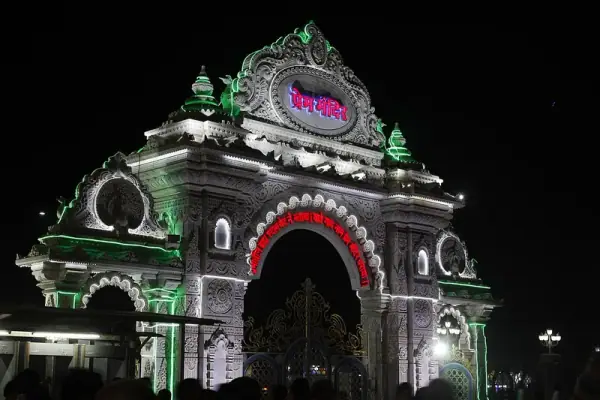
Prem Mandir, Vrindavan — white marble Krishna temple
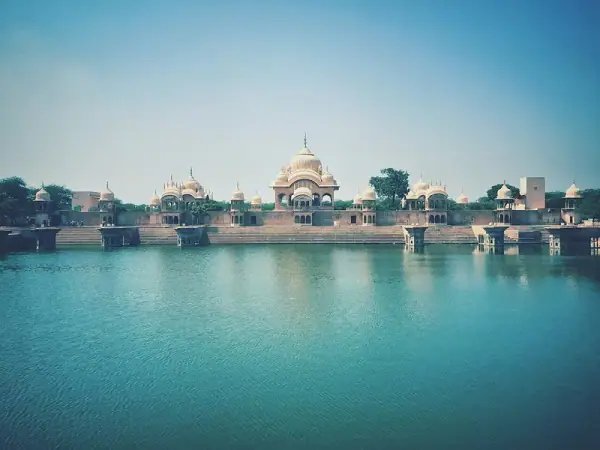
Kusum Sarovar — sacred reservoir with Rajasthani cenotaphs near Govardhan
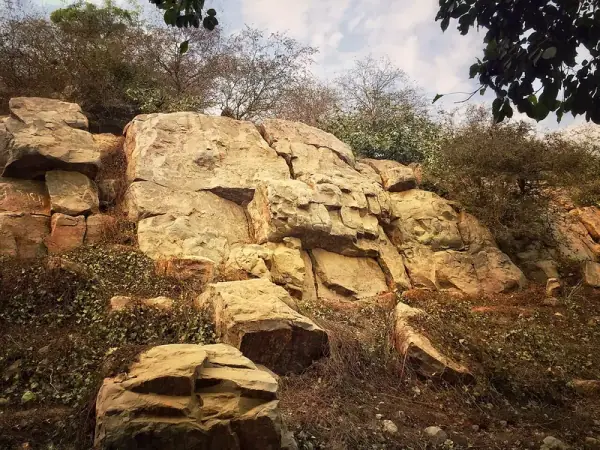
Govardhan Hill — sacred centre of Braj, natural form of Krishna
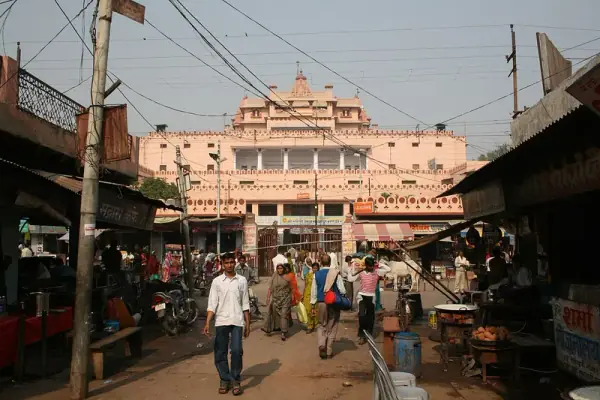
Mathura Temple — Krishna Janmasthan complex
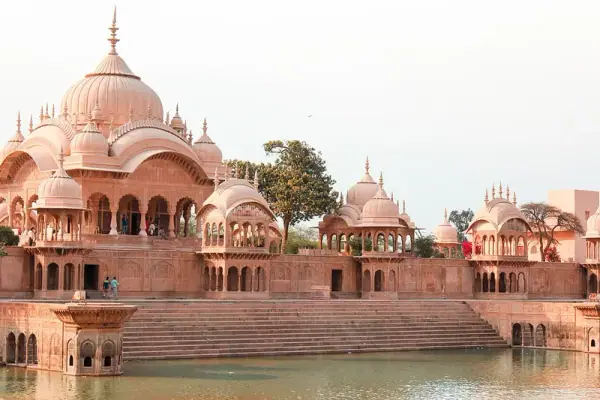
Kusum Sarovar cenotaph chhatris at dusk
Why a pod hotel works in Mathura
Mathura-Vrindavan receives over 65 million visitor-trips annually yet has only a handful of branded budget hotels — most pilgrims rely on overcrowded dharamshalas, ashram floors, or wildly overpriced rooms during peak festivals. There is virtually zero capsule or pod accommodation in the district. Pod hotels fill the critical gap between bare-floor dharamshalas and unaffordable heritage hotels, offering pilgrims clean, private, air-conditioned sleep at hourly or nightly rates that fit the ₹500-1000 pilgrim budget. The 8 MMTPA IOC refinery and Army cantonment add steady weekday corporate demand that smooths out seasonal pilgrim peaks.
Mathura-Vrindavan is India's single largest pilgrimage cluster, drawing over 65 million visitor-trips annually. The district sits on the Delhi-Agra Golden Triangle corridor (NH-19, Yamuna Expressway), making it a natural stopover for both devotees and Taj Mahal-bound tourists. Indian Army I Corps cantonment personnel, IOC refinery contract workers, and 10,000+ GLA University students add year-round non-pilgrim demand.
Best ways to use pods here
- Near Mathura Junction / bus stand for overnight pilgrims arriving on 200+ daily trains and inter-state buses before dawn temple darshan
- Vrindavan temple zone (Banke Bihari / ISKCON corridor) for devotees needing 4-8 hour rest pods between parikramas and aarti schedules
- IOC Mathura Refinery gate area for contract engineers, vendor reps, and turnaround shutdown crews on multi-day assignments
- GLA University / medical college belt for visiting parents, exam candidates, and students needing quiet overnight study pods
- Govardhan parikrama starting point for pilgrims needing pre-dawn rest before the 25-km circumambulation walk
Where the demand sits in Mathura
Transit & travel
- •Mathura Junction (14 platforms, 200+ daily trains incl. Rajdhani/Shatabdi/Gatimaan on Delhi-Mumbai & Delhi-Chennai lines)
- •Mathura Cantt station (Western Railway interchange)
- •Yamuna Expressway (Greater Noida-Agra, 6-lane, direct NCR link ~2.5 hrs)
- •NH-19 (old NH-2 Grand Trunk Road, Delhi-Kolkata) through city centre
- •NH-44 (north-south national corridor) passes through district
- •Agra (Kheria) Airport 60 km; Delhi IGI Airport 160 km
Healthcare demand
- •K.D. Medical College & Hospital (1,050 beds, 250 doctors — largest private facility)
- •Krishna Mohan Medical College & Hospital (MBBS intake 150/yr, tertiary care since 2016)
- •SKS Hospital Medical College (NMC-recognised, rural health focus)
- •District Hospital Mathura (government, 300+ beds)
- •Rama Hospital network presence (4,000+ beds across UP)
Education & coaching
- •GLA University (110-acre campus, 10,000+ students, 85% placement rate, NAAC A+)
- •UP Pt. Deen Dayal Upadhyaya Veterinary Science University (state's first independent vet university)
- •BSA College of Engineering & Technology
- •R.K. Group of Institutions (engineering, pharmacy, dental, teacher education)
- •Sanskriti University (multi-faculty private university)
Industry & trade
- •Indian Oil Corporation Mathura Refinery (8.0 MMTPA, one of Asia's largest, commissioned 1982)
- •Mathura Cantonment — Indian Army I Corps Strike Formation HQ (armoured, infantry, artillery, air defence divisions)
- •Textile printing & dyeing hub (Chowk Bazaar, Holi Gate — sari, dhoti, niwar industry)
- •Silver ornaments & jewellery manufacturing cluster
- •Water tap & brass fittings manufacturing zone
Tourism & pilgrimage
- •Shri Krishna Janmabhoomi Temple Complex (believed birthplace of Lord Krishna, millions of annual visitors)
- •Vrindavan (15 km, ~5,500 temples — Banke Bihari, Prem Mandir, ISKCON Krishna-Balaram, Radha Raman, Govind Dev)
- •Govardhan Hill (21 km, 25-km parikrama circuit — Radha Kund, Kusum Sarovar, Manasi Ganga, Daan Ghati Mandir)
- •Barsana (50 km, Radha Rani Temple, world-famous Lathmar Holi festival)
- •Vishram Ghat & 25 ghats on Yamuna (daily evening aarti, boat rides)
- •Dwarkadheesh Temple (est. 1814, Vallabhacharya tradition, grand Holi & Jal Vihar festivals)
- •Mathura Museum (Kushan & Gupta-era sculptures, Mathura School of Art collection)
- •Taj Mahal, Agra (58 km — UNESCO World Heritage, 7-8 million annual visitors)
- •Agra Fort & Fatehpur Sikri (UNESCO, within 60-100 km)
Profit & ROI projection for Mathura
A starter model based on a minimum 50 pods at 70% occupancy and an indicative ₹999/pod/night. Costs use the same itemised basis as our full ROI calculator — pods, add-ons, 18% GST, transport, fit-out and full monthly running cost.
Important: this is only an ASSUMPTION-based projection — not an accurate quote or a guarantee.
The real cost, occupancy, pricing and profit will change with your exact location, property rent, season, competition and how you run the business. Treat these figures as a planning estimate only. For real numbers, use the full calculator or get a custom quote from BIDUA.
Total investment
₹84.7 lakh
50 pods + add-ons + GST + fit-out
Monthly revenue
₹10.5 lakh
35 of 50 pods filled/night
Monthly net profit
₹5.1 lakh
49% margin after all costs
Payback
~17 mo
72% annual ROI
Break-even occupancy ≈ 26% — you only need this much filled to cover all costs; everything above is profit.
| 50 pods (BIDUA mix) | ₹40,30,000 |
| Add-ons (mattress, bedding, panels, safe lock, table) | ₹16,25,200 |
| GST @ 18% (pods + add-ons) | ₹10,17,936 |
| Transport (warehouse → site) | ₹4,00,000 |
| Fit-out, AC, reception, branding + rent deposit | ₹14,00,000 |
| Total investment | ₹84,73,136 |
| Revenue (50 × 70% × ₹999 × 30) | ₹10,48,950 |
| Fixed costs (rent, staff, power, housekeeping…) | – ₹2,97,000 |
| Variable (OTA + marketing + gateway, 23%) | – ₹2,41,259 |
| Net profit / month | ₹5,10,692 |
| Net profit / year | ₹61,28,298 |
Indicative Tier 2 assumptions for Mathura — actual ADR may spike 30-50% during Janmashtami / Holi / Radhashtami festival weeks; rent varies by proximity to temple zones vs. highway corridors. These figures are estimates for planning, not a guarantee of returns. Figures are indicative estimates, not guarantees.
Mathura pod-hotel business plan & study
A step-by-step plan to launch a capsule / sleeping-pod hotel in Mathura — from picking the right location to licences, setup, pricing and reaching profitable occupancy.
Demand drivers
25+
transit, hospital, student & tourism footfall points
Space needed (50 pods)
2250–2750 sq ft
single rented floor + reception & washrooms
Break-even occupancy
26%
fill above this and you are in profit
Indicative payback
~17 months
on ₹84.7 lakh all-in setup
1. Pick the right location
Target a floor near K.D. Medical College & Hospital (1,050 beds, 250 doctors — largest private facility) or Mathura Cantt station (Western Railway interchange). Best opening use-case: Near Mathura Junction / bus stand for overnight pilgrims arriving on 200+ daily trains and inter-state buses before dawn temple darshan.
2. Plan investment & funding
Budget about ₹84.7 lakh all-in for 50 pods (pods + add-ons + 18% GST + transport + fit-out & deposit). Many operators fund this with a mix of own capital + a small business/MSME loan against projected cash flow.
3. Licences & compliance
Arrange a municipal trade licence, GST registration, fire safety NOC, police/guest verification (where required), and basic building & sanitation approvals before launch.
4. Build & launch
BIDUA shares a free 3D layout, then delivers and helps install the pods. Civil, electrical, AC and reception fit-out typically takes ~30–45 days, so you can open quickly on a leased floor.
5. Pricing & operations
Start at ~₹999/pod/night, and add hourly slots near hospitals for day-rest demand. Run lean with a small reception + housekeeping team; keep pods clean, private and secure to earn repeat stays.
6. Marketing & occupancy
List on OTAs (MakeMyTrip, Booking.com, OYO, Goibibo) + Google Business Profile, and tie up with nearby hospitals, coaching institutes and tour operators to push occupancy past the 26% break-even quickly.
Key risks & how to manage them
Low occupancy in early months. Open with OTA listings + hospital/coaching tie-ups; use hourly pricing to fill day-time.
High rent eating margins. Choose a slightly off-main but accessible floor near Mathura Junction (14 platforms, 200+ daily trains incl. Rajdhani/Shatabdi/Gatimaan on Delhi-Mumbai & Delhi-Chennai lines); rent is the biggest lever.
Seasonality / exam & festival peaks. Flex pricing up in peak weeks; offer weekly/monthly pod rentals to students for a stable base.
Cleanliness & safety complaints. Invest in housekeeping, safe locks and CCTV — reputation drives repeat and OTA ratings.
Recommended pod setup for Mathura
50 pods in a mixed Premium + Standard configuration: 30 Standard pods (₹799-999/night) for pilgrims and transit travellers, 15 Premium pods (₹1099-1299/night) for refinery/cantonment professionals, and 5 Female-Only pods near the Vrindavan temple belt. Hourly booking (₹149-249 for 4 hrs) is essential given the pilgrim pattern of short rest between temple visits. Luggage lockers and shoe storage are critical amenities for this market.
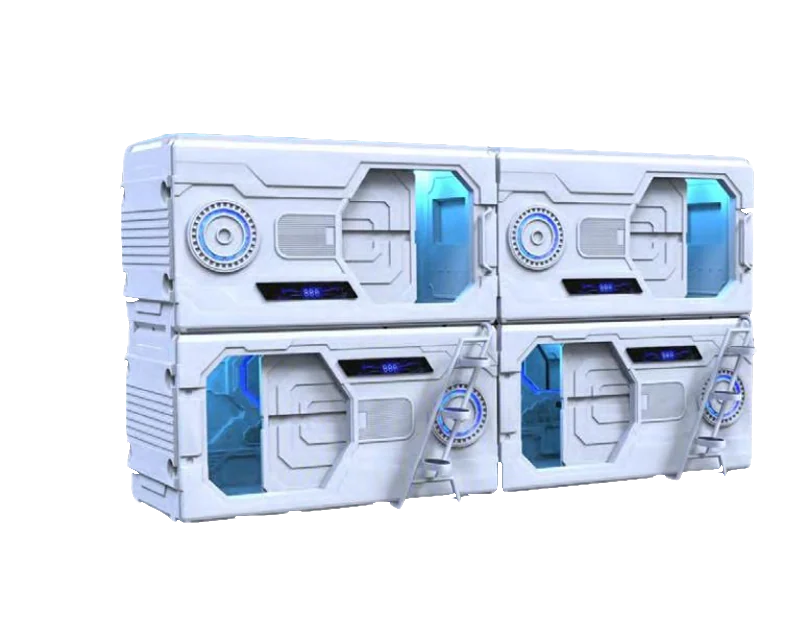
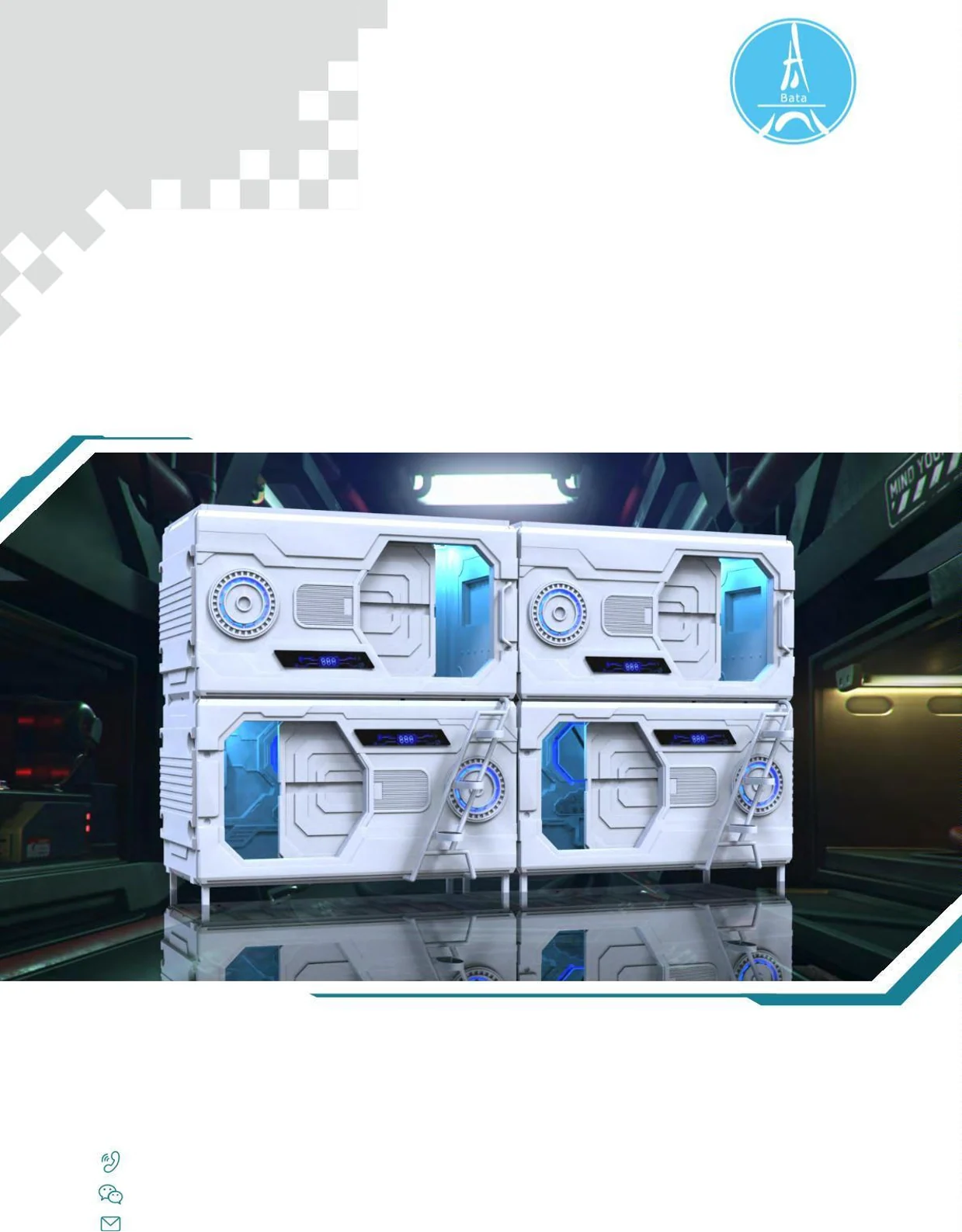
GALAXY Series - Horizontal Single
Standard ABS shell with metal frame featuring TV slot, security sliding door, and ergonomic non-slip ladder. Perfect for hotels, airports, and commercial applications.
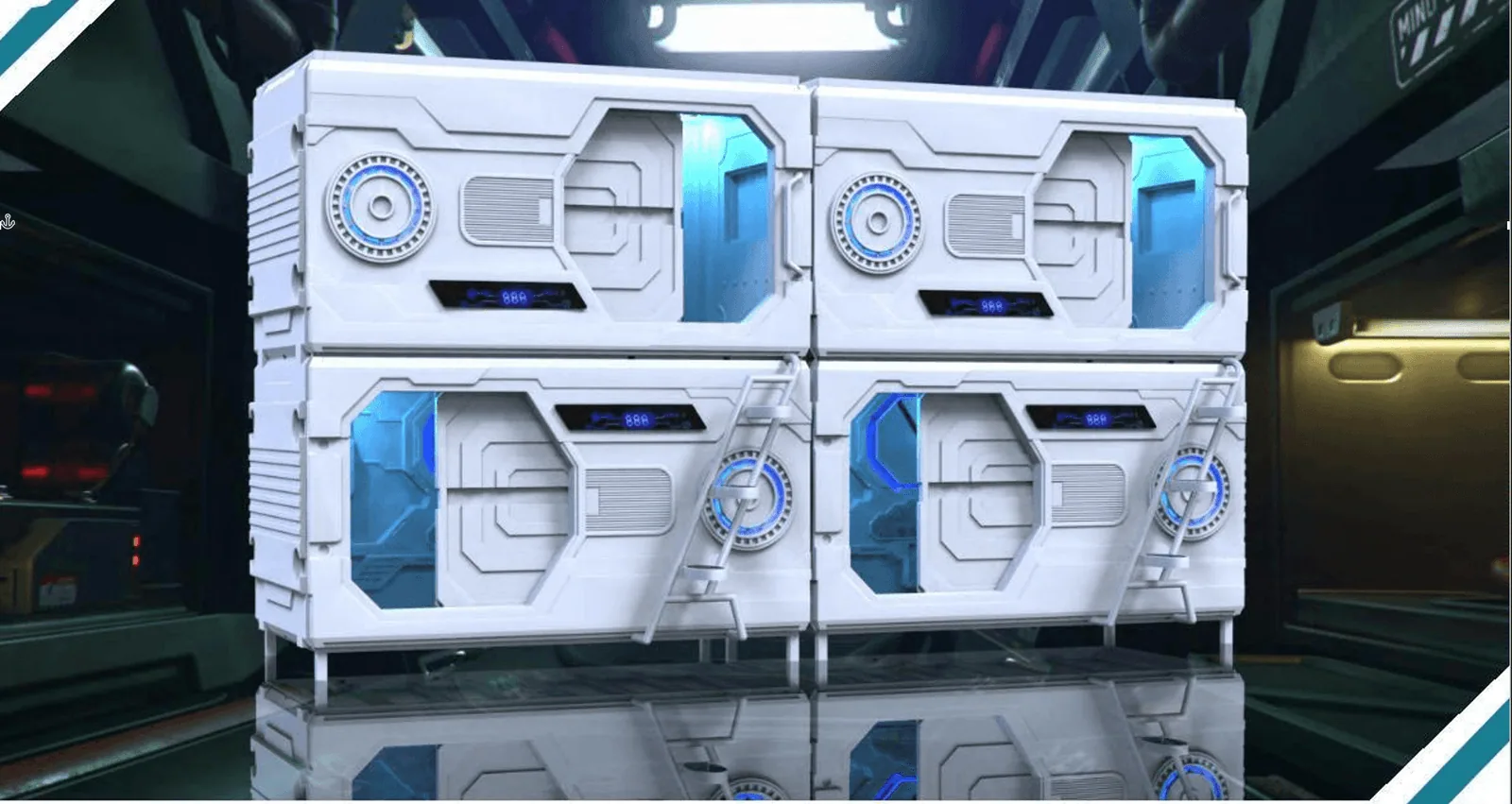
SPACE Series - Horizontal Single
Standard SPACE series with mirror panel, sliding door, TV slot, and intelligent LED controls. Perfect for hotels and commercial applications.
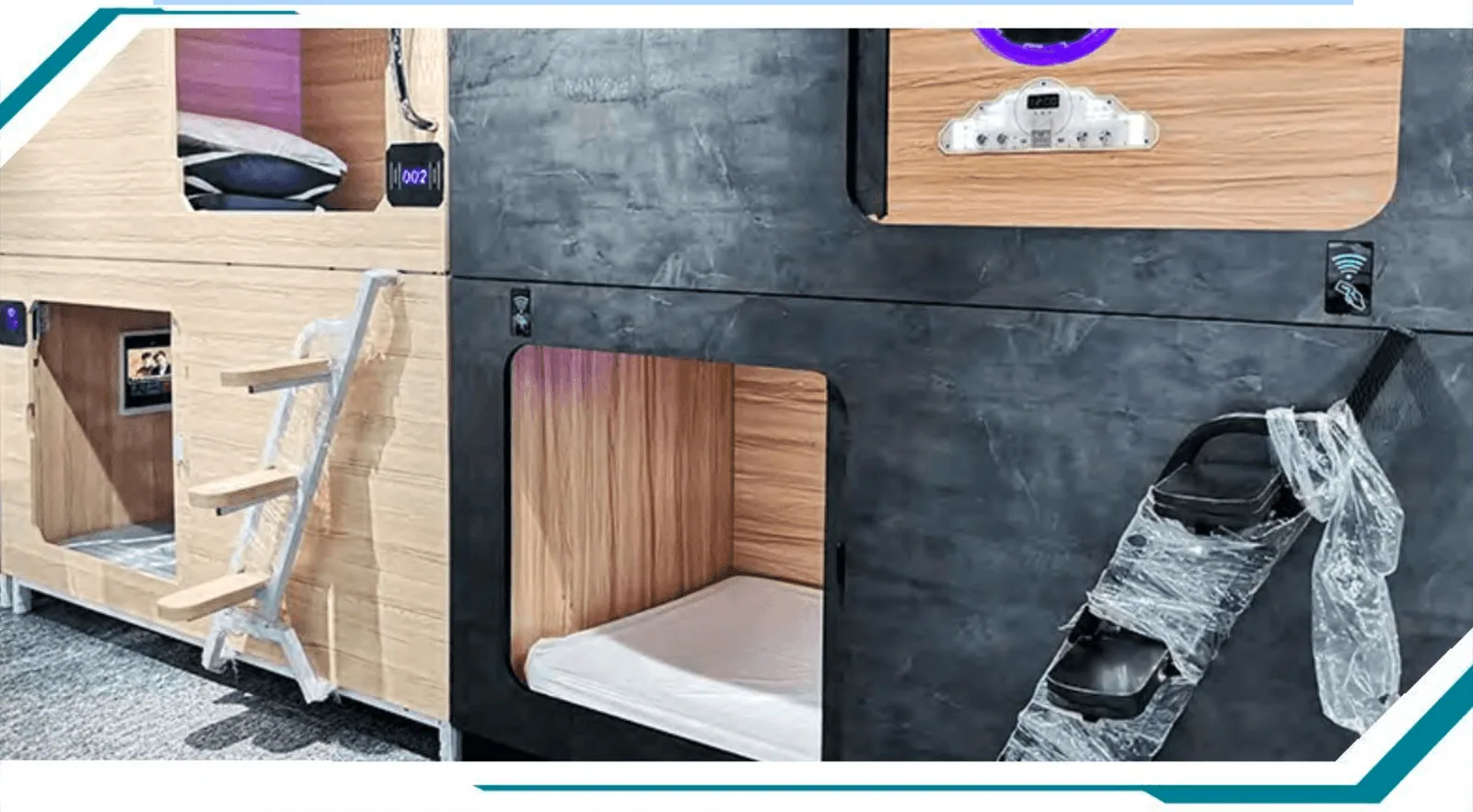
Wooden Series - Horizontal Single
Premium eco multi-layer board construction with metal frame, offering natural wood-grain aesthetics while maintaining all essential capsule bed features.
Market deep-dive
The Mathura pod-hotel opportunity
Mathura is not merely a dot on India's map — it is the spiritual axis of Krishna devotion, one of Hinduism's seven moksha-granting cities (Sapta Puri), and the economic nucleus of the Braj cultural region. The district's identity radiates from Shri Krishna Janmabhoomi, the prison-cell shrine believed to mark the exact spot of Krishna's birth, drawing a staggering 65 million annual visitor-trips. But Mathura is also an industrial heavyweight: the Indian Oil Corporation's 8-million-tonne Mathura Refinery, one of Asia's largest, has fuelled the Delhi NCR's energy needs since 1982, while the Indian Army's I Corps Strike Formation maintains its cantonment here as a strategic western-border command. This rare convergence of pilgrimage, petroleum, and defence creates year-round accommodation demand that the city's ageing dharamshalas and handful of mid-range hotels simply cannot absorb.
The Krishna circuit extends well beyond Mathura city into a constellation of sacred towns within the district, each generating its own wave of pilgrims. Vrindavan, just 15 kilometres north, hosts an astonishing 5,500 temples — Banke Bihari, ISKCON Krishna-Balaram, Prem Mandir, Radha Raman, Govind Dev — and draws devotees from every continent. Govardhan Hill, 21 kilometres away, offers the sacred 25-km parikrama past Kusum Sarovar, Radha Kund, and Manasi Ganga. Barsana's Radha Rani Temple explodes each spring with Lathmar Holi, broadcast worldwide. Nandgaon, Gokul, and Mahavan complete the Chaurasi Kos Braj Parikrama circuit. Each site has its own festival calendar — Janmashtami, Radhashtami, Guru Purnima, Jhulan Yatra — staggering peak demand across most months of the year rather than concentrating it into a single season.
Mathura's position on India's busiest transport corridor amplifies its pod potential. The city sits at the intersection of NH-19 (the historic Grand Trunk Road linking Delhi to Kolkata) and the six-lane Yamuna Expressway, placing it just 2.5 hours from Greater Noida and 50 minutes from the Taj Mahal in Agra. Mathura Junction, with 14 platforms and 200-plus daily trains including Rajdhani, Shatabdi, and Gatimaan Express services, is one of northern India's major rail interchanges. Agra's Kheria airport sits 60 kilometres south, and Delhi IGI is 160 kilometres northwest. This connectivity makes Mathura a natural Golden Triangle stopover — tourists bound for Agra's UNESCO sites frequently add a Vrindavan day-trip, and pod hotels near the Junction or expressway exit would capture both pilgrim and transit-tourist demand with short-stay flexibility.
The commercial case for pod hotels in Mathura is unusually strong because three distinct demand streams overlap with minimal seasonality. First, the pilgrimage economy runs twelve months — Krishna devotion has no off-season, and the festival calendar (Janmashtami in August, Holi in March, Radhashtami in September, Kartik Parikrama in November) creates periodic surges. Second, the IOC refinery and Army cantonment generate steady weekday corporate demand from engineers, vendors, defence personnel, and their families. Third, GLA University's 10,000-plus students and multiple medical colleges bring a student-and-parent visiting population, especially during admission and exam seasons. A 50-pod installation near Mathura Junction or the Vrindavan temple belt, offering hourly bookings alongside nightly rates, can realistically target 70% average occupancy — with festival-week ADR premiums of 30-50% above baseline. Mathura does not need to be sold on hospitality; it needs modern, affordable, space-efficient hospitality that matches the scale of its visitor traffic.
Mathura pod hotel — FAQs
Why does Mathura need a sleeping pod hotel when dharamshalas already exist?+
Mathura's dharamshalas serve a purpose but most offer dormitory floors with shared bathrooms and no climate control. A Japanese-style capsule hotel fills the gap between free-but-basic dharamshalas and expensive heritage hotels, giving pilgrims and tourists a private, air-conditioned sleeping pod with personal charging ports and secure luggage storage — at a fraction of standard hotel rates. With over 65 million annual visitor-trips and festival surges that overwhelm existing supply, pod hotels address a genuine capacity shortage.
Where is the best location for a pod hotel or capsule hotel in Mathura?+
Three zones offer the strongest demand: (1) within 500 metres of Mathura Junction railway station, where 200+ daily trains deposit pilgrims at all hours; (2) along the Vrindavan temple belt near Banke Bihari Temple and ISKCON, where devotees need short 4-8 hour rest pods between parikramas; and (3) near the IOC Mathura Refinery gate on NH-19, capturing contract workers and vendor representatives on multi-day assignments.
Can a nap pod or hourly hotel work in a pilgrimage city like Mathura-Vrindavan?+
Absolutely — pilgrimage cities are ideal for hourly nap pods. Devotees in Mathura-Vrindavan typically attend early-morning mangala aarti (4:30 AM), then need rest before noon darshan, then again before the evening Yamuna aarti. A 4-hour pod booking at ₹149-249 fits this rhythm perfectly. During Janmashtami alone, 3.5-6 million visitors flood the city in 48 hours, and most would gladly pay for a clean, private rest pod rather than sleeping on station platforms.
What occupancy can a budget capsule hotel expect in Mathura year-round?+
Mathura has three demand layers that smooth seasonality: (1) year-round pilgrimage traffic to Krishna Janmabhoomi, Vrindavan, and Govardhan; (2) steady weekday corporate demand from the IOC Mathura Refinery (8 MMTPA), Army cantonment, and university visitors; and (3) massive festival spikes during Janmashtami, Holi (especially Barsana's Lathmar Holi), Radhashtami, and the Braj Chaurasi Kos Parikrama season. A well-located pod hotel can realistically target 70%+ average annual occupancy.
How is a Chinese or Japanese pod hotel different from a regular budget hotel in Mathura?+
A pod hotel (also called a capsule hotel) uses modular sleeping pods stacked in space-efficient configurations, allowing 50 pods in the floor area that would fit only 15-20 standard hotel rooms. Each pod includes a comfortable mattress, LED lighting, USB charging, ventilation, and a privacy screen or door. This means lower per-unit construction cost, faster fit-out (8-12 weeks vs. 6-12 months for a traditional hotel), and nightly rates as low as ₹799 — making it viable in Mathura's pilgrim-budget market.
Is there demand for pod hotels near Govardhan Hill and the parikrama route?+
Strong demand exists. The Govardhan parikrama is a 25-km barefoot walk that most pilgrims start before dawn and complete in 5-6 hours. Many arrive the previous evening from Delhi or Agra and need overnight rest near the starting point. Pod hotels at Govardhan town or near Kusum Sarovar would serve both overnight pilgrims and those needing post-parikrama recovery rest. During Guru Purnima and the monsoon parikrama season, millions converge on Govardhan, and current lodging is woefully inadequate.
Start your Mathura pod hotel with BIDUA
Sign up to design your space in 3D, build a presentation, and get a quotation + ROI from one dashboard — or talk to our team for a custom Mathura plan.