Tier 3 pod-hotel market · Uttar Pradesh
Pod Hotel in Hapur: Sleeping Pods for India's Grain Mandi Capital & Garhmukteshwar Pilgrim Gateway
High population density + NCR proximity + massive seasonal pilgrim influx at Garhmukteshwar (40-45 lakh during Kartik Mela) + daily grain-mandi trader traffic = strong, year-round short-stay demand that far outstrips the town's limited hotel inventory.

Population & catchment
Hapur district has a population of approximately 13.4 lakh (1,338,311 per 2011 Census), making it the smallest district by area in Uttar Pradesh at just 660 sq km — but densely packed at ~2,028 persons per sq km.
Urban pull
About 30.6% of the population is urban (4.1 lakh), concentrated in Hapur city (2.6 lakh), Pilkhuwa (84,000) and Garhmukteshwar. The remaining 69.4% is rural, with strong daily migration into Hapur town for trade, healthcare and transit.
Economic base
Hapur's economy is anchored by its famous grain and jaggery mandi — one of North India's largest wholesale agricultural markets — alongside a robust stainless steel pipe and tube manufacturing cluster that exports nationally and internationally. The town also hosts the Government of India's IGMRI (Indian Grain Storage Management & Research Institute, est. 1958), Pilkhuwa's century-old handloom textile industry employing over 10,000 workers, and a growing medical-education corridor with two MBBS-granting colleges and attached hospitals.
Around Hapur
Key landmarks and footfall hubs that drive short-stay demand in Hapur.
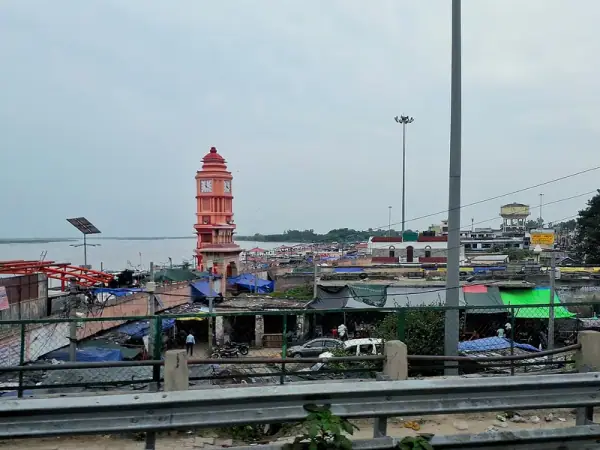
Brijghat on the Ganga, Garhmukteshwar
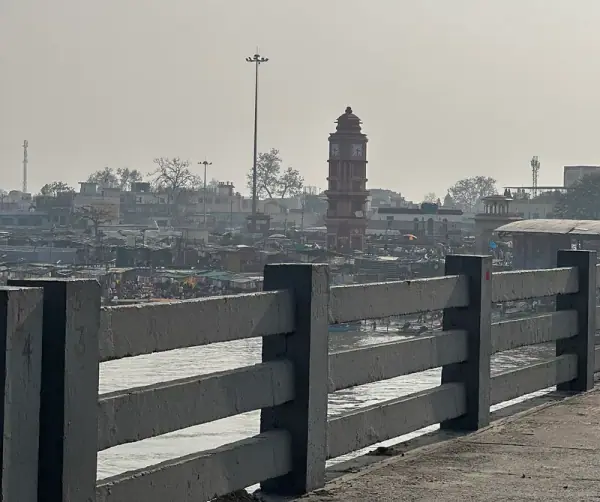
Clock tower and ghat at Garhmukteshwar
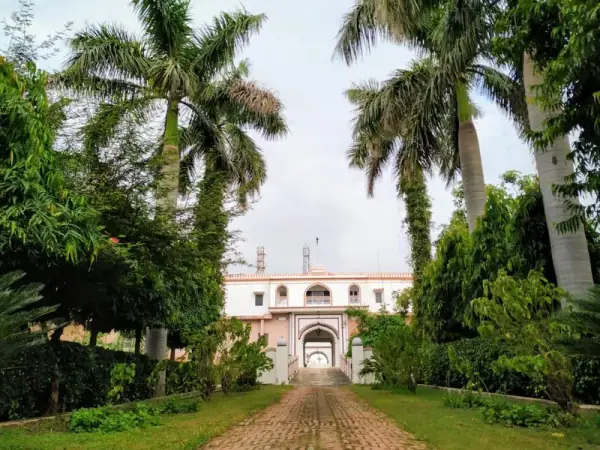
Kuchesar Mud Fort — 1734 Jat-era heritage fort

Ganga waters at Garhmukteshwar
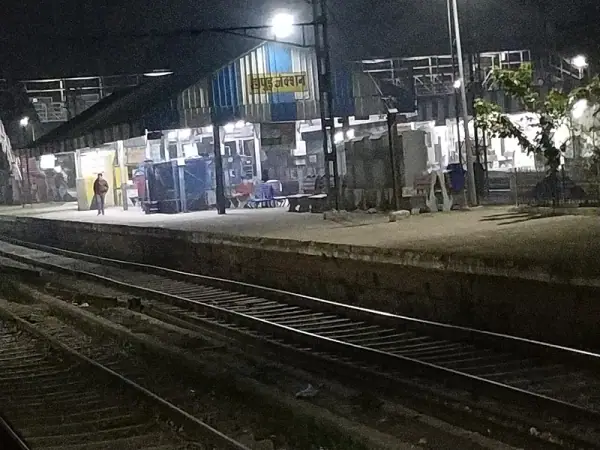
Hapur Junction Railway Station
Why a pod hotel works in Hapur
Hapur town has virtually no branded or organised budget-hotel supply, yet it generates daily footfall from one of North India's busiest grain mandis, a stainless steel manufacturing cluster, two MBBS-granting medical colleges with 800 beds combined, and the Garhmukteshwar Kartik Purnima Mela (40-45 lakh pilgrims). Travellers currently choose between overpriced small lodges or uncomfortable dharamshalas. A pod hotel fills the gap with clean, private, climate-controlled rest at mandi-trader-friendly rates — a format that does not exist anywhere in Hapur district today.
Hapur sits on the Delhi-Moradabad railway mainline and NH-9 (old NH-24), just 60 km east of New Delhi, making it a daily transit corridor for tens of thousands of commuters, traders and pilgrims. The Garhmukteshwar Kartik Purnima Mela alone draws 40-45 lakh devotees annually to the Ganga ghats within the district. Hapur's grain mandi is one of North India's largest wholesale wheat and jaggery markets, pulling buyers from across UP, Haryana and Rajasthan. Pilkhuwa's handloom textile cluster attracts wholesale fabric buyers year-round. Rama Medical College (500-bed) and GS Medical College (300-bed) generate a steady flow of patient attendants needing affordable overnight rest. Engineering and medical students at Monad University, Raj Kumar Goel Engineering College and coaching centres need term-time and exam-season accommodation. Most of these travellers — mandi traders staying one night, mela pilgrims, patient families, transit commuters — need clean, affordable, hourly-to-overnight rest that the town's limited hotel stock cannot provide at the right price point.
Best ways to use pods here
- Near Hapur Junction / grain mandi — serving daily mandi traders, steel-industry buyers and railway transit passengers arriving on the Delhi-Moradabad mainline
- Garhmukteshwar / Brijghat pilgrim corridor — year-round Ganga ritual visitors plus massive Kartik Purnima Mela spike (40-45 lakh devotees)
- NH-9 highway strip between Hapur and Pilkhuwa — capturing long-haul truckers, textile wholesale buyers visiting Pilkhuwa's handloom cluster, and Delhi-Moradabad road traffic
- Near Rama Medical College or GS Medical College — patient attendants, visiting families and exam-season medical students needing 1-3 night affordable stays
- Monad University / engineering college belt — student exam-takers, visiting parents and campus recruitment visitors during peak academic seasons
Where the demand sits in Hapur
Transit & travel
- •Hapur Junction railway station (5 platforms; Delhi-Moradabad mainline + Meerut-Khurja branch; trains to Lucknow, Varanasi, Dehradun, Guwahati, Amritsar)
- •NH-9 (Delhi-Moradabad highway) passing through Hapur city — 60 km to Delhi, 34 km to Ghaziabad
- •Proposed RRTS Rapid Rail extension from Ghaziabad to Hapur (part of Delhi-Meerut RRTS network)
- •Delhi-Meerut Expressway accessible via Ghaziabad (34 km) for high-speed NCR connectivity
- •Garhmukteshwar-Hapur road corridor serving pilgrimage traffic to Brijghat ghats
Healthcare demand
- •Rama Medical College, Hospital & Research Centre (500-bed tertiary care, est. 2011)
- •GS Medical College & Hospital (300-bed, 150 MBBS seats, NMC-recognised)
- •Saraswati Medical College, Pilkhuwa
- •District Hospital Hapur and government CHCs across three tehsils
Education & coaching
- •Monad University (engineering, management, law — attracts students from across western UP)
- •Raj Kumar Goel Engineering College, Pilkhuwa (affiliated to AKTU)
- •GS Medical College (MBBS, affiliated to CCS University Meerut)
- •Rama Medical College (MBBS, nursing, paramedical programmes)
- •JMS Group of Institutions and ATMS Group of Institutions
Industry & trade
- •Hapur grain mandi — one of North India's largest wholesale wheat and jaggery (gur) markets
- •IGMRI — Indian Grain Storage Management & Research Institute (est. 1958, Government of India)
- •Stainless steel pipe and tube manufacturing cluster (multiple export-oriented factories)
- •Pilkhuwa handloom textile cluster (1,400+ power looms, 120 medium-scale units, 10,000+ workers)
- •Paper cone, papad and sewing machine manufacturing units across Hapur tehsil
- •Babugarh Cantonment — EBS (Equine Breeding Stud), Indian Army recruitment centre
Tourism & pilgrimage
- •Brijghat, Garhmukteshwar — sacred Ganga ghats considered as holy as Haridwar's Har Ki Pauri; Kartik Purnima Mela (40-45 lakh devotees annually, 'mini-Kumbh' status)
- •Mukteshwar Mahadev Temple, Garhmukteshwar — ancient Shiva temple mentioned in Skanda Purana and Mahabharata
- •Kuchesar Mud Fort (25 km, now heritage hotel) — 1734 Jat-era fort with Mughal-British architecture
- •Hastinapur Wildlife Sanctuary (partially within district, 2,073 sq km) — Swamp Deer, Gharials, Jain pilgrimage sites
- •Sabli Shiv Mandir and Chandi Mandir — local Hindu pilgrimage sites in Hapur city
Profit & ROI projection for Hapur
A starter model based on a minimum 50 pods at 70% occupancy and an indicative ₹750/pod/night. Costs use the same itemised basis as our full ROI calculator — pods, add-ons, 18% GST, transport, fit-out and full monthly running cost.
Important: this is only an ASSUMPTION-based projection — not an accurate quote or a guarantee.
The real cost, occupancy, pricing and profit will change with your exact location, property rent, season, competition and how you run the business. Treat these figures as a planning estimate only. For real numbers, use the full calculator or get a custom quote from BIDUA.
Total investment
₹82.7 lakh
50 pods + add-ons + GST + fit-out
Monthly revenue
₹7.9 lakh
35 of 50 pods filled/night
Monthly net profit
₹3.5 lakh
44% margin after all costs
Payback
~24 mo
51% annual ROI
Break-even occupancy ≈ 30% — you only need this much filled to cover all costs; everything above is profit.
| 50 pods (BIDUA mix) | ₹40,30,000 |
| Add-ons (mattress, bedding, panels, safe lock, table) | ₹16,25,200 |
| GST @ 18% (pods + add-ons) | ₹10,17,936 |
| Transport (warehouse → site) | ₹4,00,000 |
| Fit-out, AC, reception, branding + rent deposit | ₹12,00,000 |
| Total investment | ₹82,73,136 |
| Revenue (50 × 70% × ₹750 × 30) | ₹7,87,500 |
| Fixed costs (rent, staff, power, housekeeping…) | – ₹2,57,000 |
| Variable (OTA + marketing + gateway, 23%) | – ₹1,81,125 |
| Net profit / month | ₹3,49,375 |
| Net profit / year | ₹41,92,500 |
These are indicative assumptions for a Tier 3 NCR-adjacent town, not a guarantee. Actual results depend on location, execution, seasonality (Kartik Mela peak can push occupancy above 90%) and local operating costs. Use the full ROI calculator on our website for a detailed projection. Figures are indicative estimates, not guarantees.
Hapur pod-hotel business plan & study
A step-by-step plan to launch a capsule / sleeping-pod hotel in Hapur — from picking the right location to licences, setup, pricing and reaching profitable occupancy.
Demand drivers
19+
transit, hospital, student & tourism footfall points
Space needed (50 pods)
2250–2750 sq ft
single rented floor + reception & washrooms
Break-even occupancy
30%
fill above this and you are in profit
Indicative payback
~24 months
on ₹82.7 lakh all-in setup
1. Pick the right location
Target a floor near Rama Medical College, Hospital & Research Centre (500-bed tertiary care, est. 2011) or NH-9 (Delhi-Moradabad highway) passing through Hapur city — 60 km to Delhi, 34 km to Ghaziabad. Best opening use-case: Near Hapur Junction / grain mandi — serving daily mandi traders, steel-industry buyers and railway transit passengers arriving on the Delhi-Moradabad mainline.
2. Plan investment & funding
Budget about ₹82.7 lakh all-in for 50 pods (pods + add-ons + 18% GST + transport + fit-out & deposit). Many operators fund this with a mix of own capital + a small business/MSME loan against projected cash flow.
3. Licences & compliance
Arrange a municipal trade licence, GST registration, fire safety NOC, police/guest verification (where required), and basic building & sanitation approvals before launch.
4. Build & launch
BIDUA shares a free 3D layout, then delivers and helps install the pods. Civil, electrical, AC and reception fit-out typically takes ~30–45 days, so you can open quickly on a leased floor.
5. Pricing & operations
Start at ~₹750/pod/night, and add hourly slots near hospitals for day-rest demand. Run lean with a small reception + housekeeping team; keep pods clean, private and secure to earn repeat stays.
6. Marketing & occupancy
List on OTAs (MakeMyTrip, Booking.com, OYO, Goibibo) + Google Business Profile, and tie up with nearby hospitals, coaching institutes and tour operators to push occupancy past the 30% break-even quickly.
Key risks & how to manage them
Low occupancy in early months. Open with OTA listings + hospital/coaching tie-ups; use hourly pricing to fill day-time.
High rent eating margins. Choose a slightly off-main but accessible floor near Hapur Junction railway station (5 platforms; Delhi-Moradabad mainline + Meerut-Khurja branch; trains to Lucknow, Varanasi, Dehradun, Guwahati, Amritsar); rent is the biggest lever.
Seasonality / exam & festival peaks. Flex pricing up in peak weeks; offer weekly/monthly pod rentals to students for a stable base.
Cleanliness & safety complaints. Invest in housekeeping, safe locks and CCTV — reputation drives repeat and OTA ratings.
Recommended pod setup for Hapur
50-pod mixed configuration: 35 standard horizontal single pods for mandi traders and transit passengers, 10 premium double-bed pods for families (pilgrim and medical attendant segments), and 5 hourly-rest nap pods near the entrance for quick-turnaround railway and highway users. Wi-Fi, locker storage and mobile charging essential; a small prayer/wash area adds value for the pilgrim segment.
GALAXY Series - Horizontal Single
Standard ABS shell with metal frame featuring TV slot, security sliding door, and ergonomic non-slip ladder. Perfect for hotels, airports, and commercial applications.
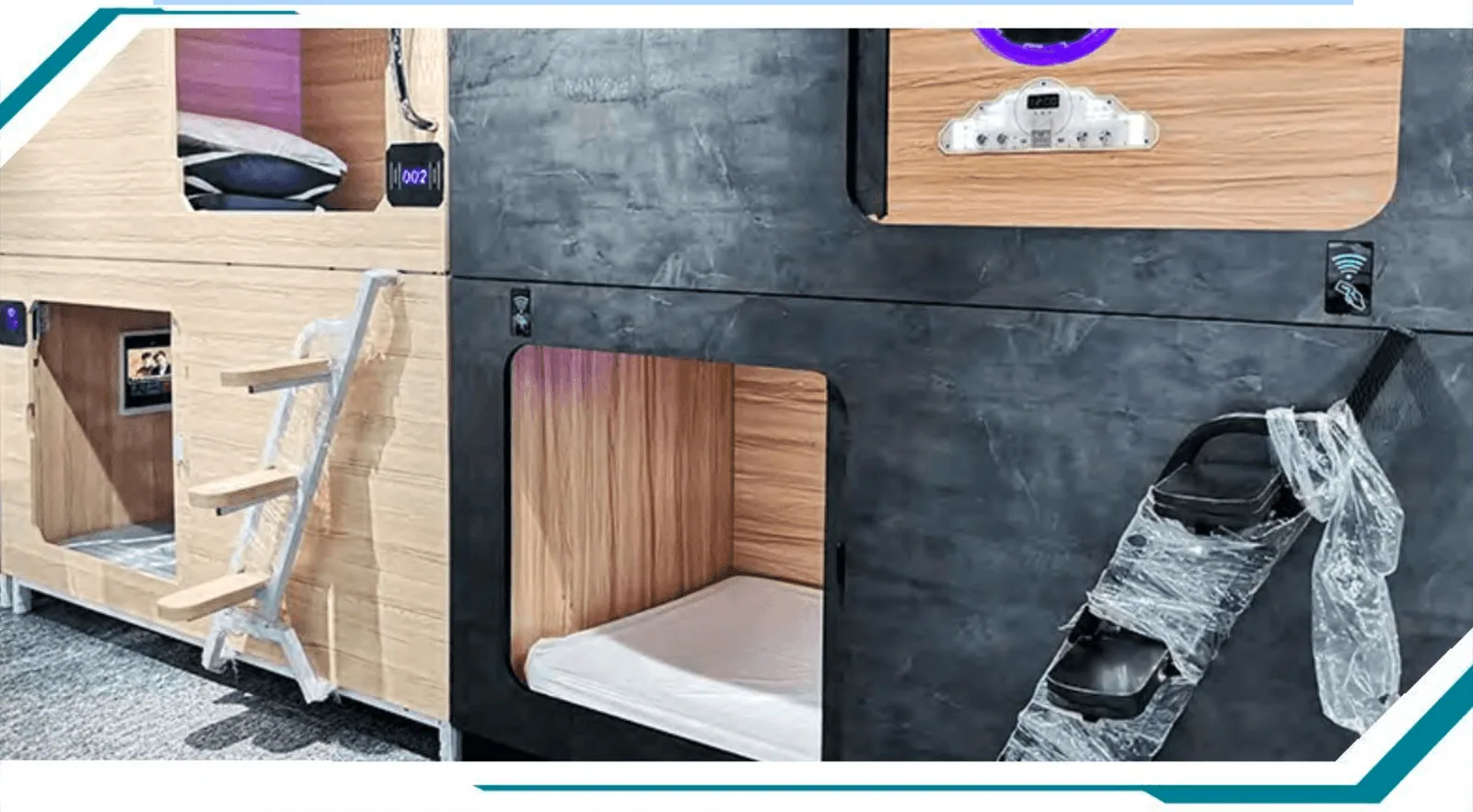
Wooden Series - Horizontal Single
Premium eco multi-layer board construction with metal frame, offering natural wood-grain aesthetics while maintaining all essential capsule bed features.
Market deep-dive
The Hapur pod-hotel opportunity
Hapur is not just another dot on the NCR periphery — it is a district with a commercial identity older than many Indian state capitals. Founded in the tenth century and documented in Akbar's Ain-i-Akbari as a productive revenue division, the town rose to prominence on the strength of its grain and jaggery mandi, which remains one of North India's largest wholesale agricultural markets to this day. The Government of India recognised Hapur's centrality to food logistics by establishing the Indian Grain Storage Management and Research Institute (IGMRI) here in 1958 — one of only a handful of such national facilities. This agricultural backbone pulls thousands of commission agents, transporters and wholesale buyers into the town daily, creating a persistent demand for affordable, short-duration rest that the town's thin hotel stock simply cannot absorb.
What makes Hapur's pod opportunity genuinely distinctive is its three-engine demand structure. The first engine is industry: alongside the grain mandi, Hapur hosts a stainless steel pipe and tube manufacturing cluster that exports across India and overseas, while the adjoining town of Pilkhuwa operates a 150-year-old handloom textile industry with over 1,400 power looms and 10,000 workers producing bed sheets, khadi and cotton furnishings for national and international markets. The second engine is healthcare and education: Rama Medical College's 500-bed hospital and GS Medical College's 300-bed facility together generate a constant stream of patient attendants, visiting doctors and exam-taking students who need clean overnight accommodation at budget rates. Monad University and Raj Kumar Goel Engineering College add thousands of visiting parents and exam candidates each season.
The third — and perhaps most dramatic — demand engine is pilgrimage. Garhmukteshwar, within Hapur district, is home to Brijghat on the Ganga, a site considered as sacred as Haridwar's Har Ki Pauri. The annual Kartik Purnima Ganga Snan Mela draws an astonishing 40 to 45 lakh devotees over just a few days, earning it 'mini-Kumbh' status from the UP government. Year-round, families arrive at Brijghat for asthi visarjan (immersion of ashes), ritual bathing and ancestor worship at the ancient Mukteshwar Mahadev Temple — a site referenced in the Mahabharata and Skanda Purana. Just 25 km away, the 1734 Kuchesar Mud Fort, now a heritage hotel, attracts weekend tourists from Delhi, while the vast Hastinapur Wildlife Sanctuary extends partly into the district, adding eco-tourism visitors seeking Swamp Deer and Gharial sightings.
For a sleeping-pod investor, Hapur offers a rare trifecta: rock-bottom commercial rents typical of a Tier 3 town, a location on the Delhi-Moradabad rail and highway spine with a proposed RRTS rapid-rail extension from Ghaziabad, and a demand base that ranges from dawn-arriving mandi traders and steel-factory buyers to pilgrim families and medical-college attendants. A 50-pod installation near Hapur Junction or the grain mandi — or a seasonal-plus-permanent setup near Garhmukteshwar's Brijghat — could tap into footfall that most investors do not even realise exists in a town this close to Delhi. The former Prime Minister Chaudhary Charan Singh was born in this district; Hapur has always punched above its weight, and a capsule-hotel format lets a hospitality entrepreneur do the same.
Hapur pod hotel — FAQs
Why does Hapur need a sleeping pod hotel when it is only 60 km from Delhi?+
Despite its proximity to Delhi, Hapur is a self-contained commercial hub. Thousands of grain and jaggery traders visit the mandi daily, steel-industry buyers visit factories, and Garhmukteshwar's Kartik Purnima Mela draws 40-45 lakh pilgrims who need on-the-spot rest. Patient attendants at Rama and GS Medical Colleges also need affordable overnight stays. These travellers need clean, affordable rest right here in Hapur — not a 60 km commute back to Delhi. Capsule hotels fill this gap perfectly.
What is a Japanese-style capsule hotel, and how would it work in a town like Hapur?+
A Japanese pod hotel (also called a capsule hotel or nap pod) provides a private, air-conditioned sleeping pod with a lockable space, charging points and fresh linen — at a fraction of traditional hotel rates. In Hapur, this format is ideal for mandi traders who arrive at dawn and need a few hours' rest, pilgrims returning from Brijghat's Ganga ghats, student exam-takers, and patient families at the medical colleges. Hourly and nightly rates keep it affordable for Hapur's price-sensitive traveller base.
Where is the best location for a pod hotel in Hapur district?+
Three high-footfall zones stand out: (1) near Hapur Junction railway station and the grain mandi, where traders and transit passengers converge daily; (2) along NH-9 between Hapur city and Pilkhuwa, capturing highway travellers and textile-industry visitors; and (3) near Garhmukteshwar/Brijghat, where a seasonal-to-year-round pilgrim flow creates demand for budget overnight accommodation close to the Ganga ghats.
How much does it cost to stay in a budget sleeping pod or nap pod in Hapur?+
BIDUA Pods targets a nightly rate of approximately Rs 700-800 per pod in Hapur — significantly cheaper than the limited hotels available in the town, which often charge Rs 1,200-2,500 for basic rooms. Hourly rest options during the day can be even more affordable. This price point is designed for Hapur's core users: mandi traders, Pilkhuwa textile buyers, medical college attendants, and Garhmukteshwar pilgrims.
Is there enough year-round demand in Hapur for a Chinese-style pod hotel, or is it seasonal?+
Demand is genuinely year-round. The grain mandi and steel factories operate daily across all seasons. Medical colleges run continuous OPD and emergency services with attendants needing rest. The Kartik Purnima Mela at Garhmukteshwar (October-November) creates a massive seasonal spike of 40-45 lakh pilgrims, but Brijghat sees steady pilgrimage traffic throughout the year for ritual bathing, asthi visarjan (last rites) and ancestor worship. Engineering and medical exam seasons add further peaks.
What is the expected return on investment for a pod hotel franchise near Hapur's mandi or railway station?+
Based on a 50-pod setup at 70% average occupancy and a nightly rate of Rs 750, the indicative top-line revenue comes to approximately Rs 95+ lakh per year. With Hapur's relatively low commercial rents (Rs 40,000-60,000/month for suitable floor space near the mandi) and modest fit-out costs for a Tier 3 town, the investment payback period is competitive. The shared ROI model on our website provides a detailed, transparent projection — these are indicative assumptions, not a guarantee.
Start your Hapur pod hotel with BIDUA
Sign up to design your space in 3D, build a presentation, and get a quotation + ROI from one dashboard — or talk to our team for a custom Hapur plan.