Tier 2 pod-hotel market · Uttar Pradesh
Sleeping Pod Hotel in Meerut — Capsule Stays for India's Sports Capital & NCR Gateway
Part of the National Capital Region (NCR); population density 1,365/km2 ranks 6th in UP; 84.8% literacy far exceeds the state average. The Delhi-Meerut RRTS corridor (Namo Bharat) now carries over 1.25 lakh daily commuters, fusing Meerut into the NCR commuter belt and multiplying transit-linked pod demand.
Population & catchment
District ~34.4 lakh (2011 Census); Meerut city metro ~19.2 lakh (2026 est.)
Urban pull
51% urban, 49% rural — one of UP's most urbanised districts and an NCR member city
Economic base
Meerut is India's sports-goods capital, producing roughly 25% of the country's sports equipment exports through 3,500+ manufacturing units. It is simultaneously India's largest refined sugar producer, one of Asia's biggest gold markets (processing ~60 kg daily), and holds GI tags for both Meerut Scissors and Meerut Bugles. Industry contributes 36.5% to the local economy, well above the national average of 25.1%.
Around Meerut
Key landmarks and footfall hubs that drive short-stay demand in Meerut.
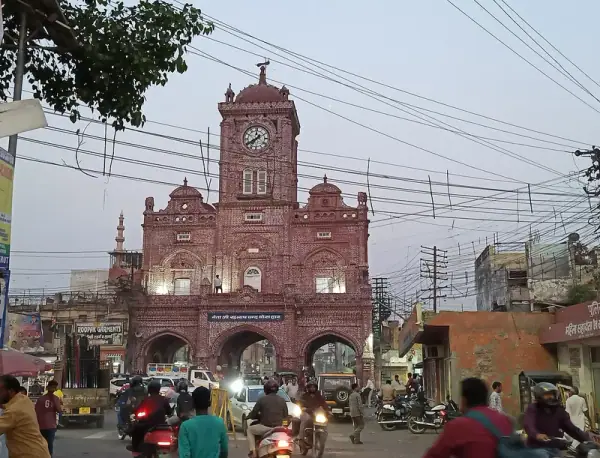
Meerut Clock Tower (Ghantaghar), completed 1914
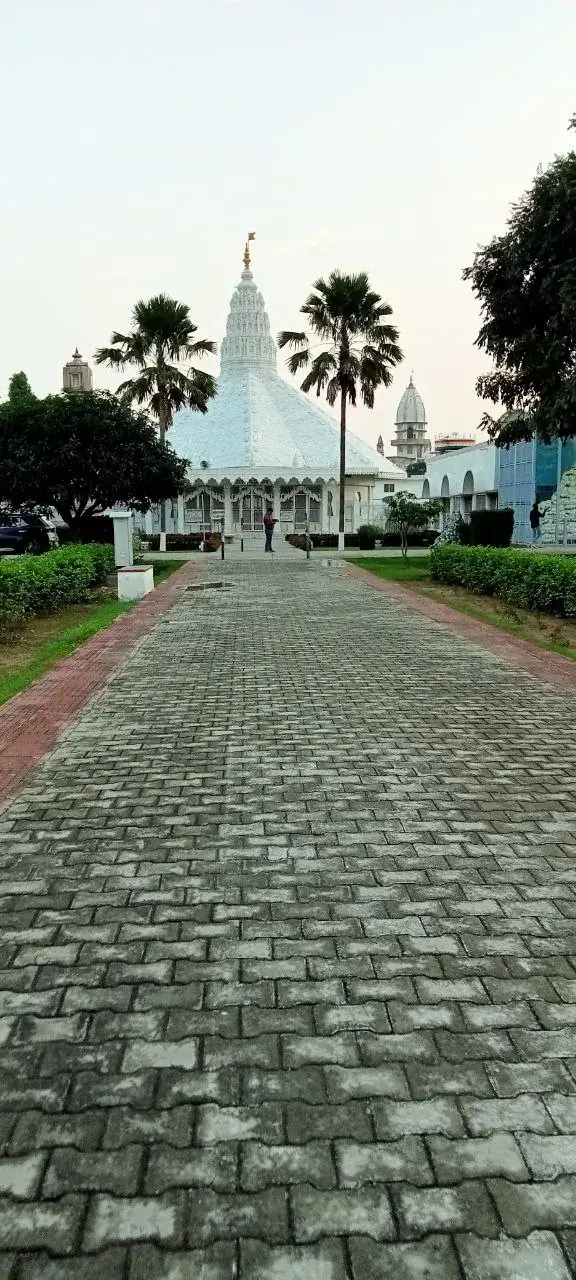
Jambudweep Jain cosmological park, Hastinapur
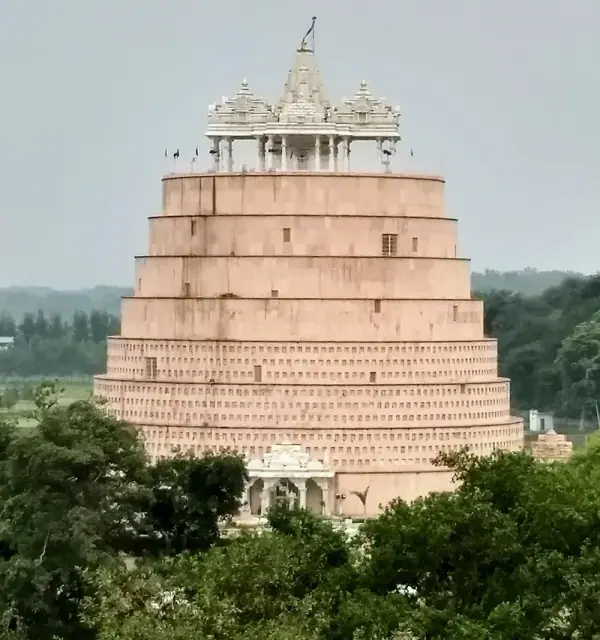
Ashtapad Teerth (46m Jain temple), Hastinapur
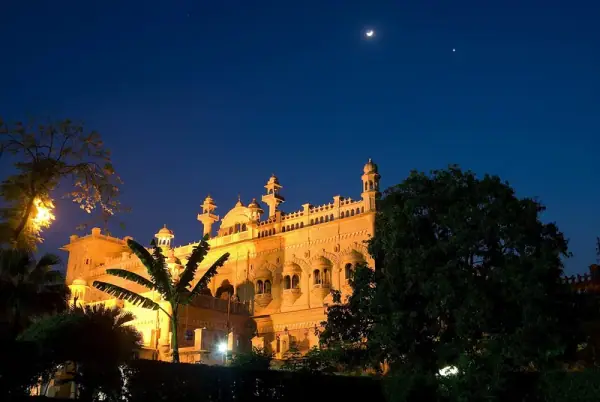
Mustafa Castle, Victorian-era heritage (1900), Meerut Cantonment
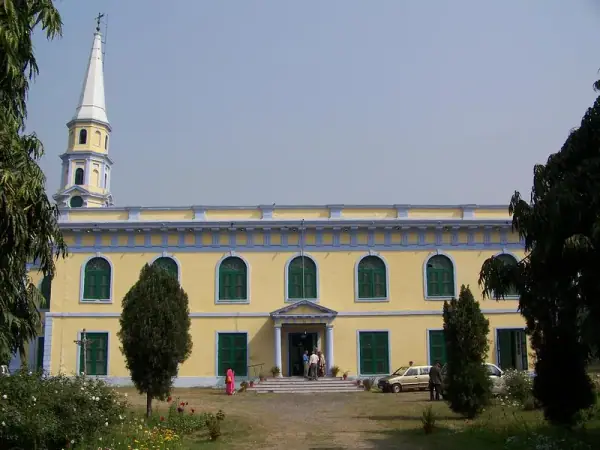
St. John's Church, North India's oldest garrison church (1819-22)
Why a pod hotel works in Meerut
Meerut has zero capsule hotels or sleeping-pod facilities despite being an NCR city with 1.25 lakh daily RRTS commuters, 90,000 sports-industry workers, massive student and medical populations, and year-round Hastinapur pilgrimage traffic. Budget hotels near the railway stations and bus terminals are dated and overpriced for the transit-stay segment. The Delhi-Meerut Expressway and upcoming Ganga Expressway create highway-halt demand that no pod brand has yet captured. With the RRTS turning Meerut into a 45-minute Delhi suburb, late-night commuters, business travellers, and event visitors need affordable hourly rest stops that traditional hotels do not offer.
Meerut sits at the junction of NH-58, NH-119, and the Delhi-Meerut Expressway — it is the gateway between Delhi-NCR and Uttarakhand hill stations. The Namo Bharat RRTS (82 km, fully operational Feb 2026) has turned it into a 45-minute suburb of Delhi, creating massive daily commuter transit with 1.25 lakh+ daily riders. Hastinapur (37 km) draws year-round Jain and Hindu pilgrims, while the annual Nauchandi Mela attracts lakhs. Industrial buyers from across India visit for sports goods sourcing, and the Ganga Expressway (under construction to Prayagraj) will add a new corridor.
Best ways to use pods here
- RRTS station-adjacent pods at Meerut South, Shatabdi Nagar, or Meerut North — serving 1.25 lakh daily commuters needing rest between Delhi runs
- Sports-goods sourcing hub near Partapur/Shastri Nagar industrial zones — overnight pods for bulk buyers visiting from across India
- Medical-attendant pods near LLRM Medical College and Subharti Hospital — affordable stays for families of patients at regional referral centres
- Hastinapur pilgrimage corridor pods — transit rest for Jain and Hindu pilgrims (37 km from city, year-round flow, peak during Paryushana and Navratri)
- University-belt pods near CCS University and Subharti campus — exam-season, interview, and visiting-parent overflow accommodation
Where the demand sits in Meerut
Transit & travel
- •Delhi-Meerut RRTS / Namo Bharat — 82 km rapid transit, 1.25 lakh+ daily riders, 14 stations including Meerut South, Shatabdi Nagar, Meerut North
- •Delhi-Meerut Expressway (90 km, operational since 2021) — sub-60-minute Delhi connectivity
- •Meerut City Junction and Meerut Cantonment railway stations — 20,000+ daily passengers to Delhi, 27 train pairs
- •NH-58 (Delhi-Haridwar), NH-119 (Moradabad), NH-235 — multi-directional highway hub
- •Ganga Expressway (under construction, Meerut to Prayagraj) — will be India's longest expressway
- •Eastern Dedicated Freight Corridor logistics hub proposed at Modipuram
Healthcare demand
- •LLRM Medical College — government teaching hospital and regional referral centre
- •Subharti Medical College and Hospital (private, 1000+ beds, deemed university hospital)
- •Nutema Hospital (110-bed multispecialty, Garh Road)
- •Valentis Cancer Hospital (specialised oncology centre since 2000)
- •IIMT Life Line Hospital (100-bed, NABH-accredited multispecialty)
Education & coaching
- •Chaudhary Charan Singh University (formerly Meerut University — affiliates 150+ colleges across Western UP)
- •Swami Vivekanand Subharti University (deemed university, multiple campuses)
- •IIMT University (oldest private engineering institute in region, est. 1997)
- •~50 engineering colleges and 7 pharmacy colleges — Western UP's education hub
- •Sir Chhotu Ram Institute of Engineering and Technology (government-run)
Industry & trade
- •Sports Goods Cluster — 3,500+ units, ~90,000 workers, 25% of India's sports exports (SG, SS, BDM brands)
- •Scissors Cluster — 175+ units, 25,000 workers, India's largest scissors hub (GI-tagged, 300-year heritage)
- •Meerut Bugle and Musical Instruments Cluster (GI-tagged, supplies Indian Army and police bands)
- •Daurala Industrial Area and Mawana Sugar Mills — India's largest refined sugar production
- •Modipuram Industrial Zone and gold jewellery market (60 kg daily, 40+ BIS hallmark showrooms)
Tourism & pilgrimage
- •Hastinapur — Mahabharata capital and Jain pilgrimage (birthplace of 3 Tirthankaras, Jambudweep, Ashtapad Teerth, 37 km from city)
- •Augarnath Temple — ancient Shiva temple linked to 1857 Revolt, self-manifested shivalinga
- •Nauchandi Mela — UP's second-largest fair after Kumbh, month-long, lakhs of visitors annually
- •Shahpeer Sahab ki Dargah — Mughal mausoleum built by Empress Nur Jahan (1628), ASI-protected national monument
- •Suraj Kund — Mahabharata-linked sacred tank where King Karna offered his divine armour to the Sun God
- •Mustafa Castle (Victorian-era castle, 1900) and St. John's Church (North India's oldest garrison church, 1819-22)
Profit & ROI projection for Meerut
A starter model based on a minimum 50 pods at 70% occupancy and an indicative ₹1,050/pod/night. Costs use the same itemised basis as our full ROI calculator — pods, add-ons, 18% GST, transport, fit-out and full monthly running cost.
Important: this is only an ASSUMPTION-based projection — not an accurate quote or a guarantee.
The real cost, occupancy, pricing and profit will change with your exact location, property rent, season, competition and how you run the business. Treat these figures as a planning estimate only. For real numbers, use the full calculator or get a custom quote from BIDUA.
Total investment
₹81.7 lakh
50 pods + add-ons + GST + fit-out
Monthly revenue
₹11.0 lakh
35 of 50 pods filled/night
Monthly net profit
₹5.3 lakh
48% margin after all costs
Payback
~15 mo
78% annual ROI
Break-even occupancy ≈ 26% — you only need this much filled to cover all costs; everything above is profit.
| 50 pods (BIDUA mix) | ₹40,30,000 |
| Add-ons (mattress, bedding, panels, safe lock, table) | ₹16,25,200 |
| GST @ 18% (pods + add-ons) | ₹10,17,936 |
| Transport (warehouse → site) | ₹4,00,000 |
| Fit-out, AC, reception, branding + rent deposit | ₹11,00,000 |
| Total investment | ₹81,73,136 |
| Revenue (50 × 70% × ₹1,050 × 30) | ₹11,02,500 |
| Fixed costs (rent, staff, power, housekeeping…) | – ₹3,17,000 |
| Variable (OTA + marketing + gateway, 23%) | – ₹2,53,575 |
| Net profit / month | ₹5,31,925 |
| Net profit / year | ₹63,83,100 |
Indicative Tier-2 NCR city assumptions — actual ADR, rent, and occupancy will vary by exact micro-location and season. These figures feed the shared ROI model and are not a guarantee of returns. Figures are indicative estimates, not guarantees.
Meerut pod-hotel business plan & study
A step-by-step plan to launch a capsule / sleeping-pod hotel in Meerut — from picking the right location to licences, setup, pricing and reaching profitable occupancy.
Demand drivers
22+
transit, hospital, student & tourism footfall points
Space needed (50 pods)
2250–2750 sq ft
single rented floor + reception & washrooms
Break-even occupancy
26%
fill above this and you are in profit
Indicative payback
~15 months
on ₹81.7 lakh all-in setup
1. Pick the right location
Target a floor near LLRM Medical College — government teaching hospital and regional referral centre or Delhi-Meerut Expressway (90 km, operational since 2021) — sub-60-minute Delhi connectivity. Best opening use-case: RRTS station-adjacent pods at Meerut South, Shatabdi Nagar, or Meerut North — serving 1.25 lakh daily commuters needing rest between Delhi runs.
2. Plan investment & funding
Budget about ₹81.7 lakh all-in for 50 pods (pods + add-ons + 18% GST + transport + fit-out & deposit). Many operators fund this with a mix of own capital + a small business/MSME loan against projected cash flow.
3. Licences & compliance
Arrange a municipal trade licence, GST registration, fire safety NOC, police/guest verification (where required), and basic building & sanitation approvals before launch.
4. Build & launch
BIDUA shares a free 3D layout, then delivers and helps install the pods. Civil, electrical, AC and reception fit-out typically takes ~30–45 days, so you can open quickly on a leased floor.
5. Pricing & operations
Start at ~₹1,050/pod/night, and add hourly slots near hospitals for day-rest demand. Run lean with a small reception + housekeeping team; keep pods clean, private and secure to earn repeat stays.
6. Marketing & occupancy
List on OTAs (MakeMyTrip, Booking.com, OYO, Goibibo) + Google Business Profile, and tie up with nearby hospitals, coaching institutes and tour operators to push occupancy past the 26% break-even quickly.
Key risks & how to manage them
Low occupancy in early months. Open with OTA listings + hospital/coaching tie-ups; use hourly pricing to fill day-time.
High rent eating margins. Choose a slightly off-main but accessible floor near Delhi-Meerut RRTS / Namo Bharat — 82 km rapid transit, 1.25 lakh+ daily riders, 14 stations including Meerut South, Shatabdi Nagar, Meerut North; rent is the biggest lever.
Seasonality / exam & festival peaks. Flex pricing up in peak weeks; offer weekly/monthly pod rentals to students for a stable base.
Cleanliness & safety complaints. Invest in housekeeping, safe locks and CCTV — reputation drives repeat and OTA ratings.
Recommended pod setup for Meerut
50-pod mixed deployment: 30 standard sleeping pods near an RRTS station or Meerut City Junction for transit commuters; 12 premium pods with luggage storage for business buyers visiting sports-goods factories; 8 family/accessible pods for medical attendants and pilgrimage overflow. Include hourly booking for RRTS commuters, 24/7 self-check-in kiosks, and a WhatsApp-based booking flow for industrial buyers.
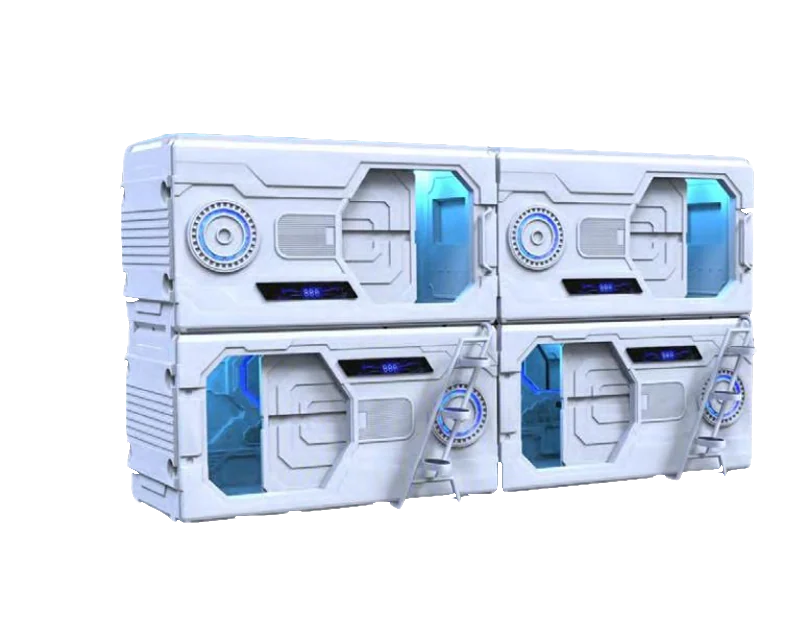
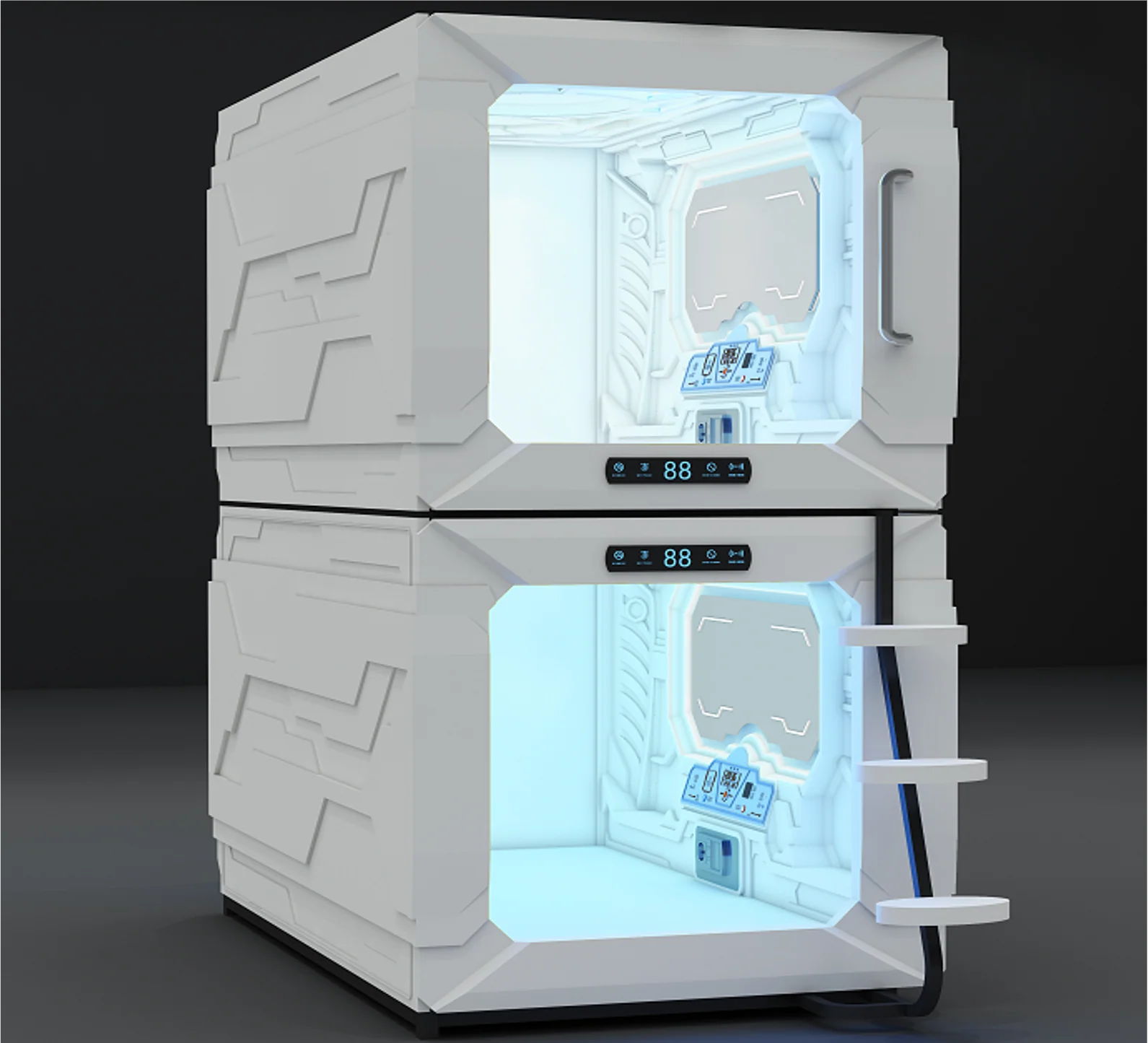
GALAXY Series - Horizontal Single
Standard ABS shell with metal frame featuring TV slot, security sliding door, and ergonomic non-slip ladder. Perfect for hotels, airports, and commercial applications.
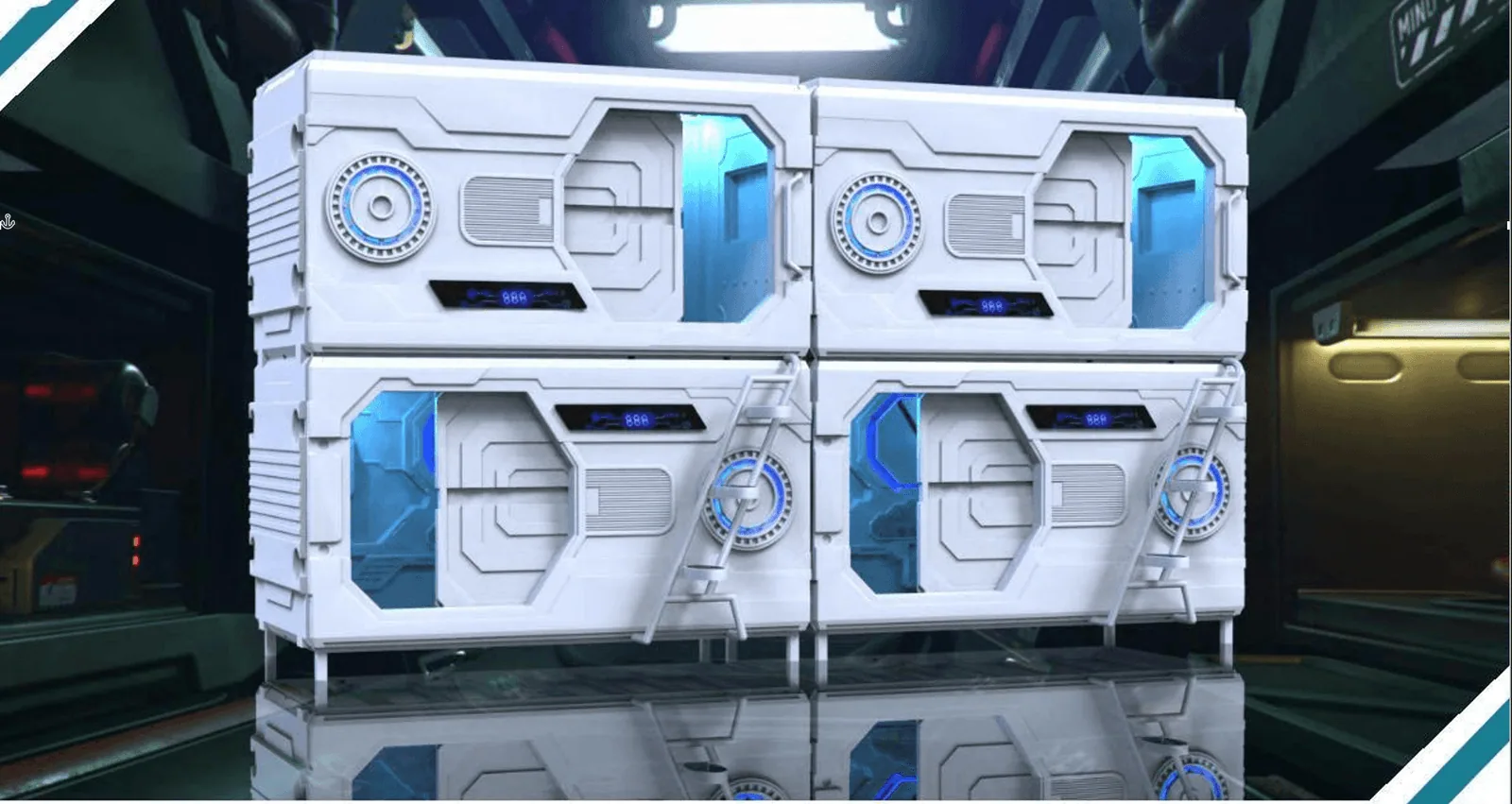
SPACE Series - Horizontal Single
Standard SPACE series with mirror panel, sliding door, TV slot, and intelligent LED controls. Perfect for hotels and commercial applications.
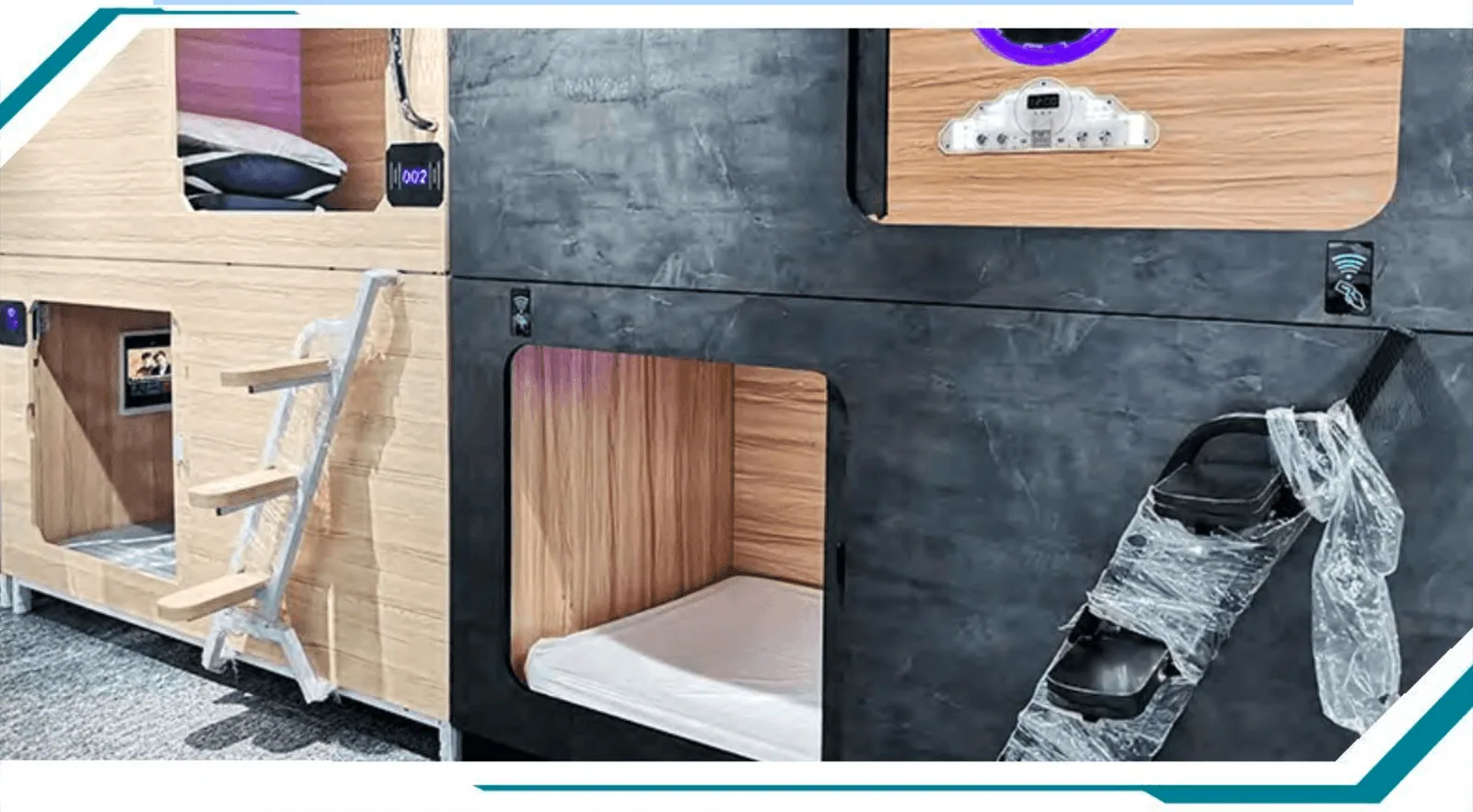
Wooden Series - Horizontal Single
Premium eco multi-layer board construction with metal frame, offering natural wood-grain aesthetics while maintaining all essential capsule bed features.
Market deep-dive
The Meerut pod-hotel opportunity
Meerut is not just another NCR satellite town — it is a city with a 3,000-year memory and a fiercely independent economic engine. The ancient capital of the Kuru kingdom at Hastinapur lies within its borders, and the Ashoka Pillar that now stands at Delhi's Feroz Shah Kotla was originally erected here during the Mauryan era. In 1857, Meerut's sepoys fired the first shots of India's independence struggle, coining the rallying cry 'Dilli Chalo' that echoed across a subcontinent. Today, with a district population exceeding 34 lakh and an urban metro approaching 20 lakh, Meerut pulses with commerce, faith, and transit — making it a prime canvas for India's first wave of sleeping-pod hotels in the NCR's eastern corridor.
The city's manufacturing identity is unmatched in diversity: Meerut produces roughly a quarter of India's sports equipment exports from over 3,500 SME units, holds GI tags for its century-old scissors and brass bugle crafts, and operates as India's largest refined sugar producer. Asia's busiest gold markets process 60 kilograms of the metal daily through 40-plus hallmarking showrooms. Mankind Pharma, Bestochem, and a sprawling cantonment add tens of thousands of jobs. This industrial density generates a constant inflow of business visitors, sourcing agents, and contract workers who need affordable, clean, short-stay accommodation — precisely the gap that capsule hotels fill between the overpriced hotels near the cantonment and the poorly maintained lodges around the railway station.
The February 2026 inauguration of the full 82-km Namo Bharat RRTS corridor has been transformative, slashing Delhi-Meerut travel to 45 minutes and generating ridership that already exceeds 1.25 lakh passengers daily. Combine this with the Delhi-Meerut Expressway, the under-construction Ganga Expressway, and a proposed Eastern Dedicated Freight Corridor logistics hub at Modipuram, and Meerut emerges as western UP's most connected transit node. Each corridor creates a distinct pod-demand profile: RRTS commuters needing 4-hour nap pods between shifts, expressway travellers wanting a clean highway halt, and logistics workers rotating through freight terminals. A 50-pod installation near Meerut City Junction or the Shatabdi Nagar RRTS station would tap all three flows simultaneously.
Beyond industry and transit, Meerut's pilgrimage and cultural calendar adds seasonal demand spikes that no competitor currently captures. Hastinapur's Jain temple complex — including the 46-metre Ashtapad Teerth and the Jambudweep cosmological park — draws devotees year-round, peaking during Paryushana. The month-long Nauchandi Mela, UP's second-largest fair after the Kumbh, brings lakhs of visitors each spring. The Augarnath Shiva temple, Shahpeer's Mughal mausoleum, and St. John's garrison church attract heritage tourists steadily. Meanwhile, CCS University and Subharti University anchor a student population that overflows conventional hostels during exams and convocations. For a pod-hotel operator, Meerut offers what few Tier-2 cities can: year-round, multi-segment demand from commuters, industrialists, pilgrims, patients, and students — all within a market with zero capsule-hotel competition.
Meerut pod hotel — FAQs
Why does Meerut need a sleeping pod hotel when it is so close to Delhi?+
Proximity to Delhi is exactly the demand driver. The Namo Bharat RRTS carries over 1.25 lakh commuters daily between Meerut and Delhi; many need a quick nap pod or rest stop between shifts, late arrivals, or early departures. A capsule hotel near an RRTS station captures this high-frequency, short-stay demand that full-service hotels cannot serve cost-effectively.
Where is the best location for a Japanese-style pod hotel in Meerut?+
Three zones stand out: (1) near Meerut City Junction or an RRTS station like Shatabdi Nagar for transit travellers, (2) the Partapur-Shastri Nagar industrial belt where sports-goods buyers arrive daily, and (3) near LLRM Medical College on Garh Road where patient attendants need affordable nightly stays. Each zone offers distinct, year-round demand for nap pods and budget capsule accommodation.
How much does it cost to stay in a sleeping pod in Meerut?+
BIDUA Pods targets an average nightly rate of around Rs 1,050 per pod in Meerut, with hourly booking options starting much lower for commuters who just need a 4-6 hour rest. This is 40-60% cheaper than a standard budget hotel room, while offering privacy, air conditioning, and smart-lock security — making capsule hotels the most affordable quality-stay option in the district.
Is there demand for pod hotels near Hastinapur pilgrimage sites?+
Absolutely. Hastinapur, just 37 km from Meerut city, is the birthplace of three Jain Tirthankaras and a major Hindu pilgrimage site linked to the Mahabharata. The Jambudweep and Ashtapad Teerth complexes draw devotees year-round, with peaks during Paryushana and Chaitra Navratri. A Chinese-style pod hotel on the Meerut-Hastinapur corridor would serve pilgrims seeking clean, affordable overnight rest without full hotel costs.
Can a capsule hotel in Meerut serve the sports goods industry?+
Meerut is one of only two cities in India (alongside Jalandhar) that mass-produces sports equipment, with over 3,500 manufacturing units and brands like SG and BDM. Buyers from across India and overseas visit regularly for bulk sourcing. A pod hotel near the Partapur or Shastri Nagar industrial areas offers these short-stay business visitors quick, clean budget accommodation — a segment currently underserved by Meerut's hotel market.
What is the expected ROI for a BIDUA Pods franchise in Meerut?+
At 50 pods with 70% average occupancy and an ADR of Rs 1,050, the indicative gross revenue is strong for a Tier-2 NCR city. Monthly rent around Rs 1.1 lakh and a fit-out deposit near Rs 11 lakh keep the capital outlay moderate. The shared ROI model on biduapods.com calculates full projections including GST, opex, and transport. Actual returns depend on micro-location, execution quality, and seasonal demand patterns — these are indicative assumptions, not guarantees.
Start your Meerut pod hotel with BIDUA
Sign up to design your space in 3D, build a presentation, and get a quotation + ROI from one dashboard — or talk to our team for a custom Meerut plan.